A rustic fence can do more than mark the edge of a yard. It can add warmth, texture, privacy, character, and a stronger connection to the landscape. Whether made from split rails, reclaimed boards, logs, stone, pickets, or woven branches, rustic fencing works best when it feels natural to the setting around it. These ideas are useful for country homes, cottage gardens, farmhouse yards, patios, vegetable gardens, and backyards that need a softer, more relaxed boundary.
1. Split Rail Rustic Fence
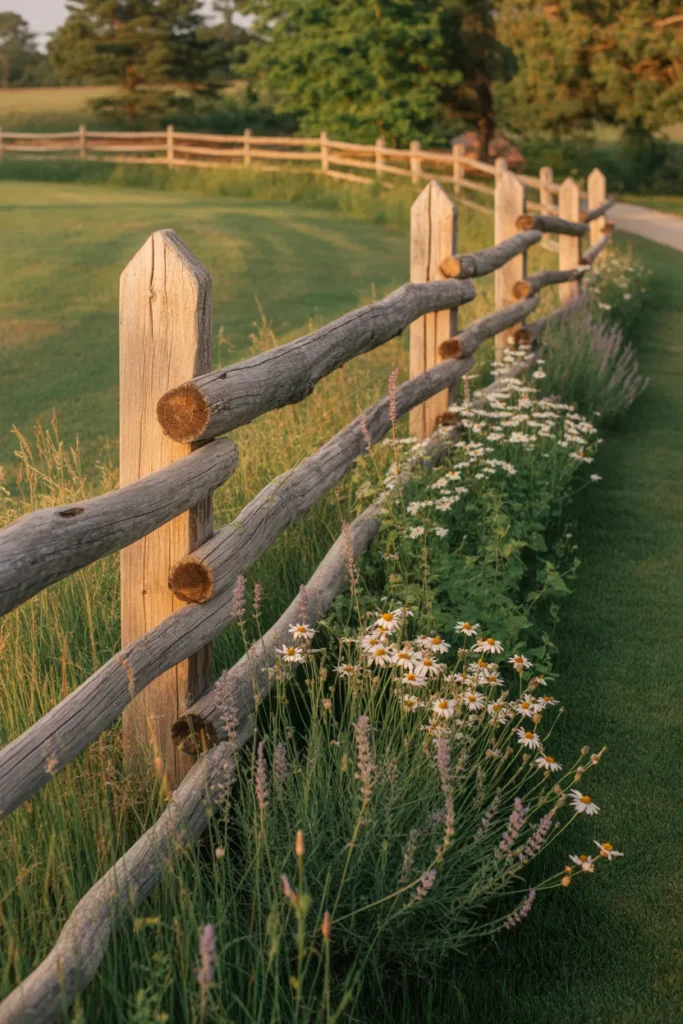
A split rail rustic fence is one of the most classic choices for country yards and open landscapes. It creates a boundary without blocking the view, which makes it ideal for larger yards, rural driveways, meadows, and farmhouse-style homes.
The beauty of this fence is its simplicity. Weathered wood rails, open spacing, and natural planting around the base make it feel relaxed and timeless. It works especially well when paired with wildflowers, gravel paths, or open lawn.
Tip: Let grass, flowers, or low planting soften the base so the fence feels settled into the landscape rather than placed on top of it.
2. Reclaimed Wood Rustic Fence
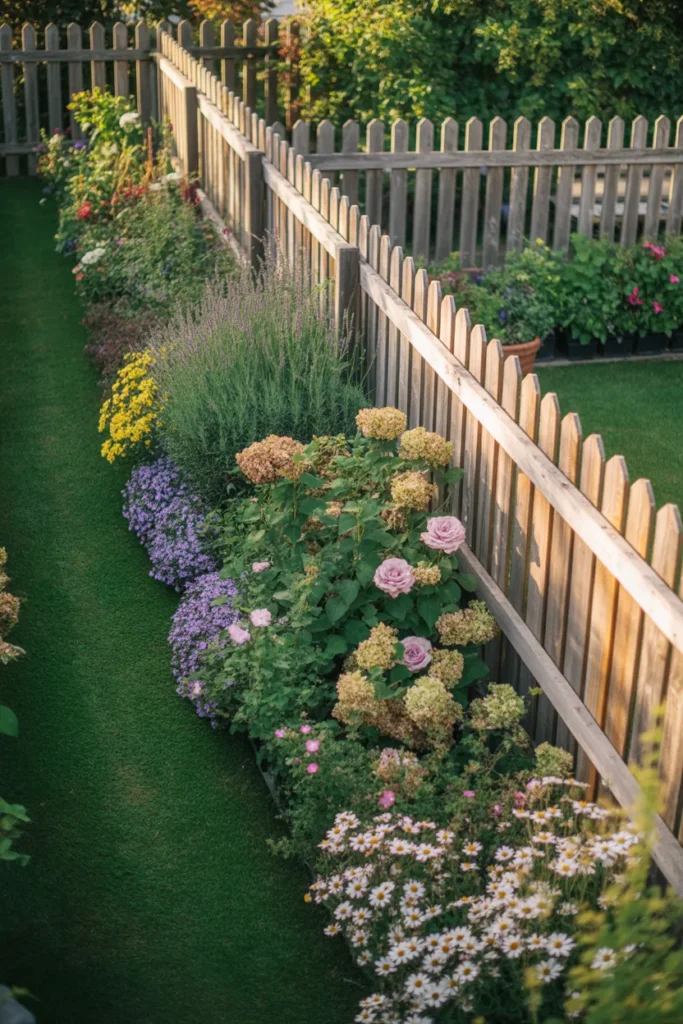
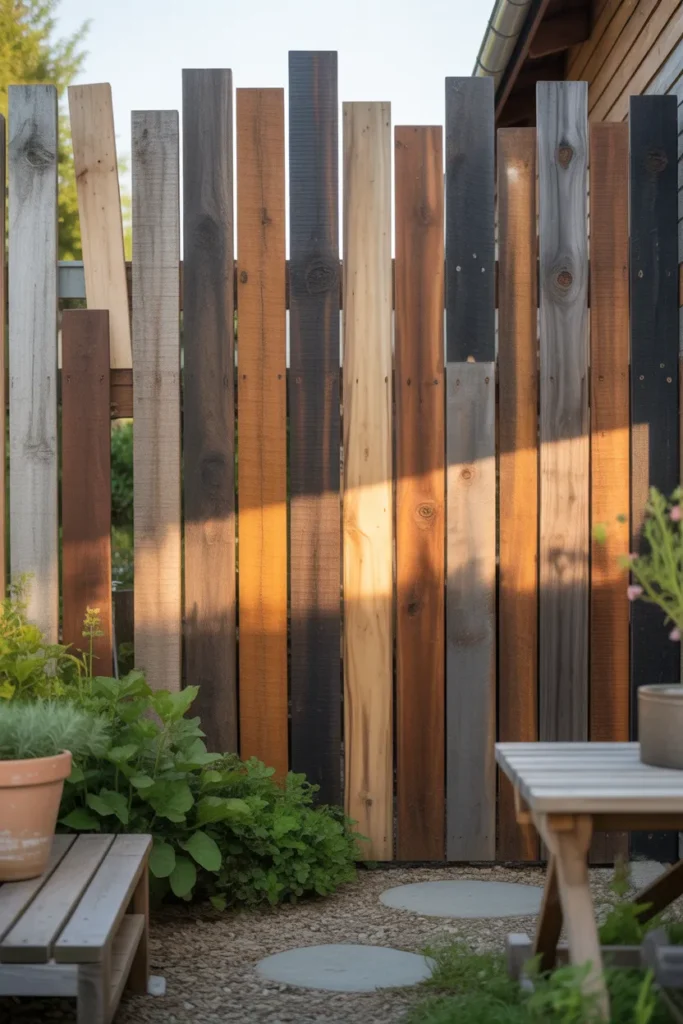
A reclaimed wood rustic fence is perfect when you want character and texture. Old boards often have natural weathering, nail marks, knots, and different tones that make the fence feel handmade and full of history.
This idea works well as a backyard privacy fence, patio backdrop, garden screen, or side yard feature. The mixed wood tones can look beautiful, but the design should still feel intentional. Keeping board thickness and spacing fairly consistent helps the fence look rustic without looking messy.
Tip: Seal reclaimed boards if you want to preserve their color and prevent them from aging too quickly outdoors.
3. Rustic Picket Fence
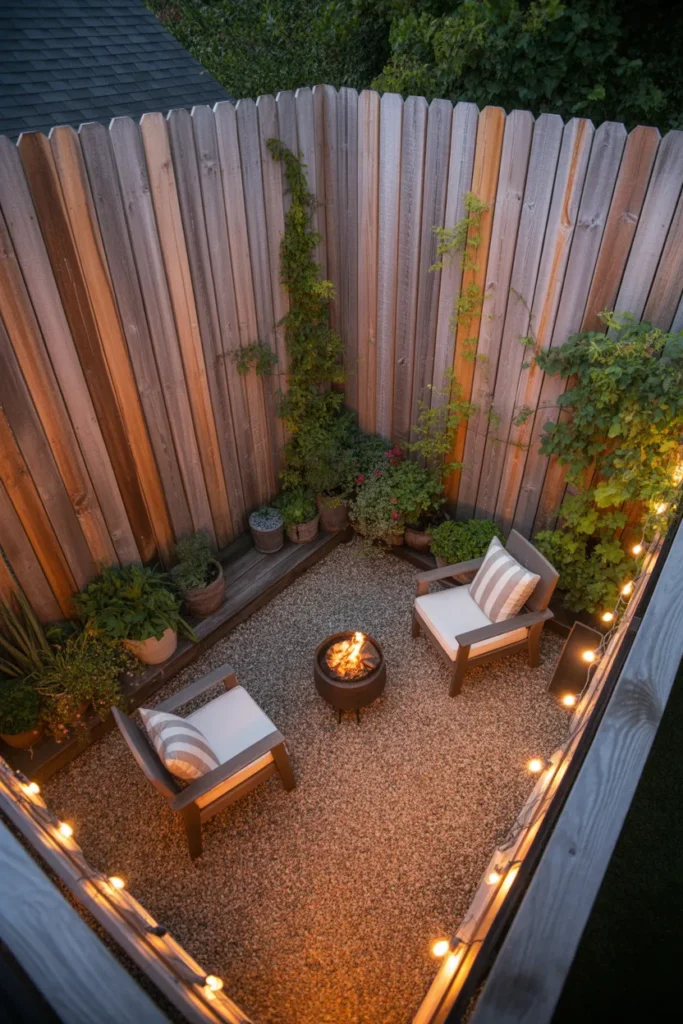
A rustic picket fence gives a yard a soft cottage feeling. Unlike a perfectly polished white picket fence, a rustic version can be weathered, distressed, natural wood, faded gray, or softly painted. It feels more relaxed and handmade.
This fence works beautifully around front gardens, cottage borders, herb gardens, and small backyard spaces. Flowers planted close to the fence make it feel even more charming.
Tip: Keep the fence low enough that flowers and garden views remain visible. A rustic picket fence looks best when it welcomes rather than blocks.
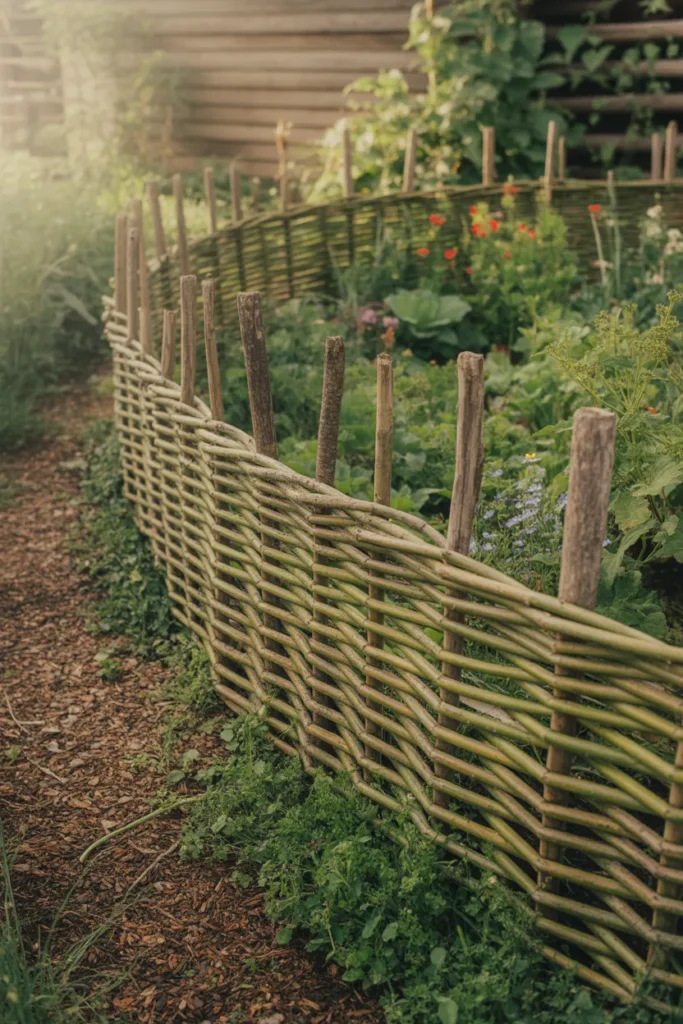
4. Wattle Garden Fence
A wattle garden fence is a traditional woven fence made from flexible branches. It is especially useful for vegetable gardens, herb beds, cottage borders, and natural garden edging. The woven texture adds a handmade quality that feels earthy and timeless.
This style is not meant for full privacy. It works best as a low decorative boundary that defines garden areas while keeping the planting visible.
Tip: Use wattle fencing around beds that already have a natural or cottage-style planting scheme so the fence feels integrated.
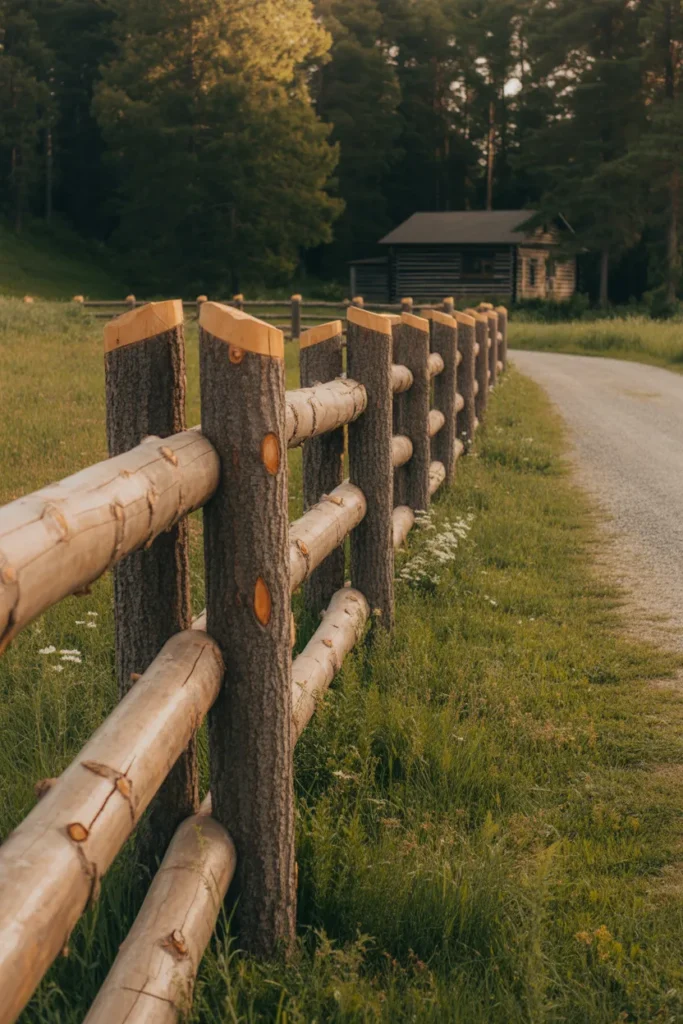
5. Rustic Privacy Fence
A rustic privacy fence is ideal when you want screening but do not want a cold or overly modern wall. Weathered boards, cedar planks, reclaimed timber, or rough-sawn wood can create privacy while still feeling warm and natural.
Because tall fences can feel heavy, plants and lighting are important. Potted plants, vines, string lights, and furniture can turn the fence into a cozy backyard backdrop.
Tip: Break up the height of the fence with plants at different levels. This makes the space feel softer and less enclosed.
Also Explore
14 Elegant Patio Garden Ideas That Transform Every Outdoor Space Beautifully
13 DIY Bird Bath Ideas That Are Easy Beautiful and Completely Charming
16 Bird Bath Bowl Ideas That Make Every Garden Beautifully Alive
14 Mud Kitchen Ideas You Can Build That Are Fun Easy and Completely Beautiful
14 Pool Party Decor Ideas That Make Every Summer Celebration Look Amazing
6. Stone and Wood Rustic Fence
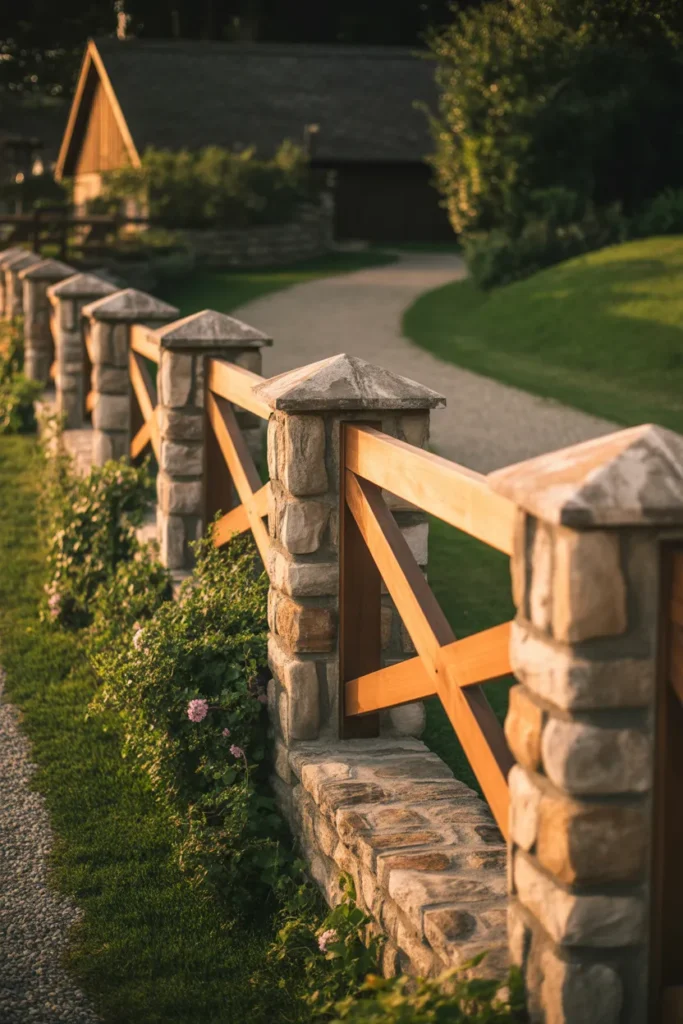
A stone and wood rustic fence combines the strength of stone with the warmth of timber. Stone pillars, low walls, or bases make the fence feel grounded, while wood rails or panels keep it natural and welcoming.
This idea works beautifully along driveways, garden entrances, country homes, and cottage landscapes. It also pairs well with gravel paths, climbing vines, and mature shrubs.
Tip: Match the stone to other materials on your property if possible, such as the house exterior, garden walls, or pathways.
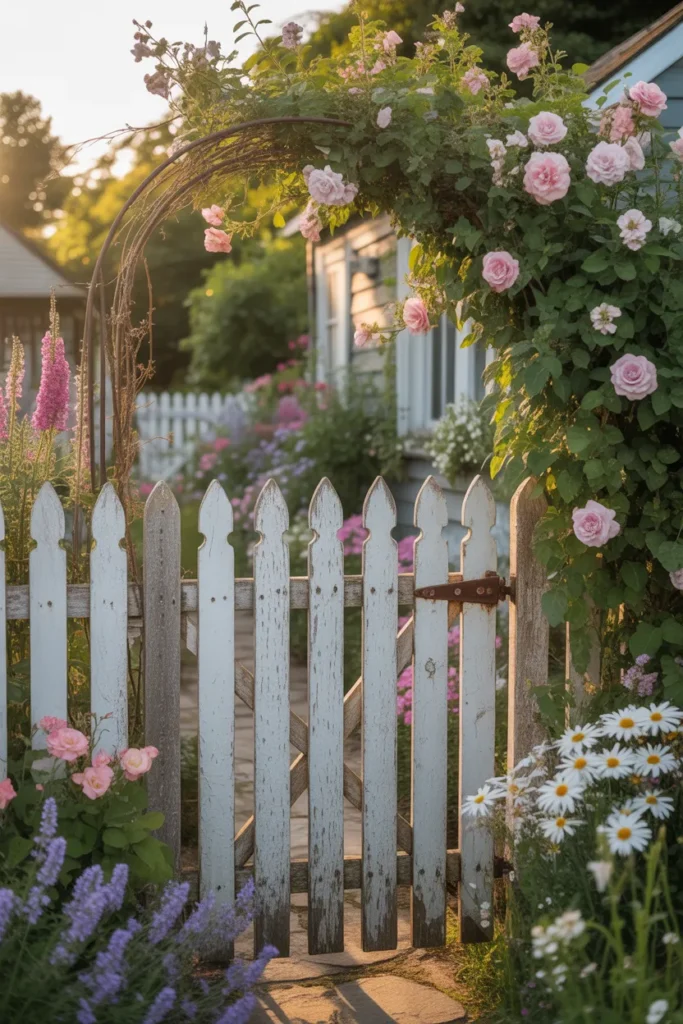
7. Rustic Farmhouse Fence
A rustic farmhouse fence is simple, practical, and welcoming. It often uses wood rails, whitewashed boards, natural posts, or lightly distressed finishes. This style works well along lawns, driveways, gardens, and front yards.
The fence should feel useful rather than overly decorative. Wildflowers, gravel paths, simple gates, and open spacing help create the relaxed farmhouse feeling.
Tip: Avoid making the fence too perfect. A slightly weathered or softened finish often looks more authentic for farmhouse style.
8. Rustic Fence with Climbing Plants
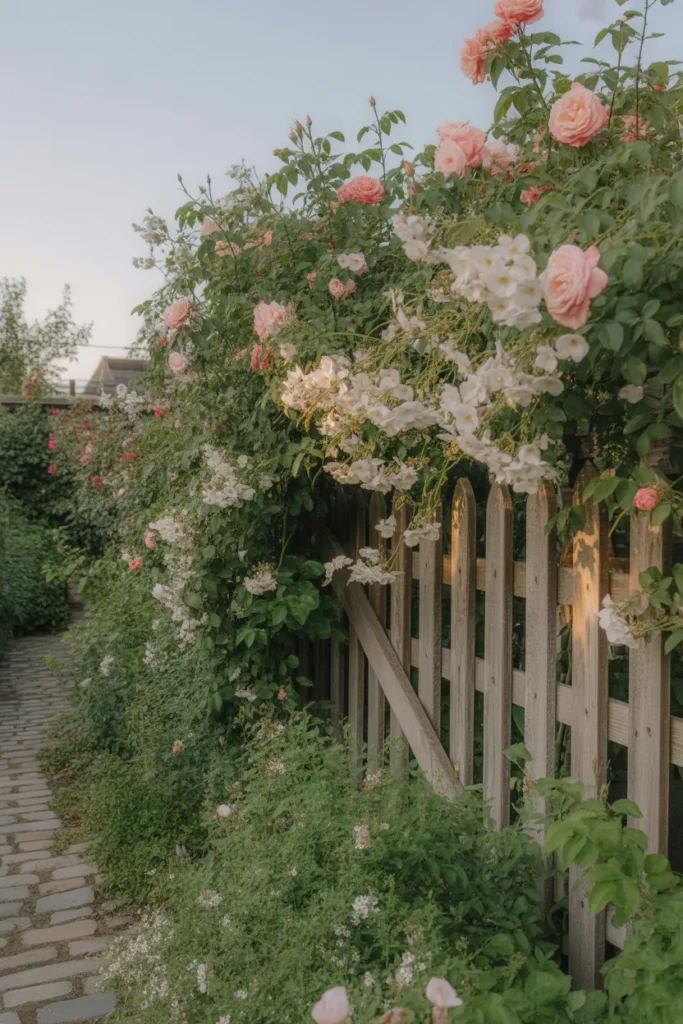
A rustic fence with climbing plants can become one of the most beautiful features in the garden. Roses, clematis, jasmine, honeysuckle, and ivy can soften the fence and make it feel alive.
This idea is especially helpful when the fence itself is plain. The wood provides structure, while the plants add color, fragrance, and seasonal interest.
Tip: Train climbing plants early and guide them evenly across the fence. This prevents growth from becoming heavy on one side.
9. Horizontal Rustic Wood Fence
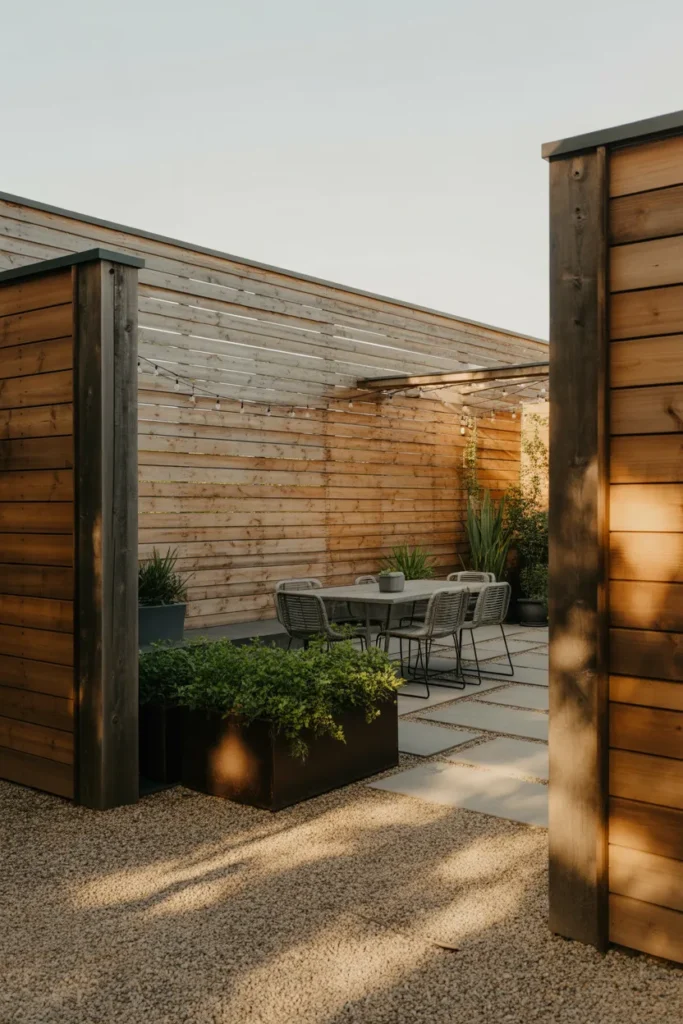
A horizontal rustic wood fence is a good choice if you want a fence that feels both natural and modern. The horizontal boards create a cleaner, wider look, while rough-sawn or weathered wood keeps the rustic character.
This style works well for patios, modern farmhouse yards, side yards, and smaller backyards that need privacy. It pairs nicely with gravel, concrete pavers, planters, and simple outdoor seating.
Tip: Keep the board spacing consistent. Even rustic fences look better when the structure is planned carefully.
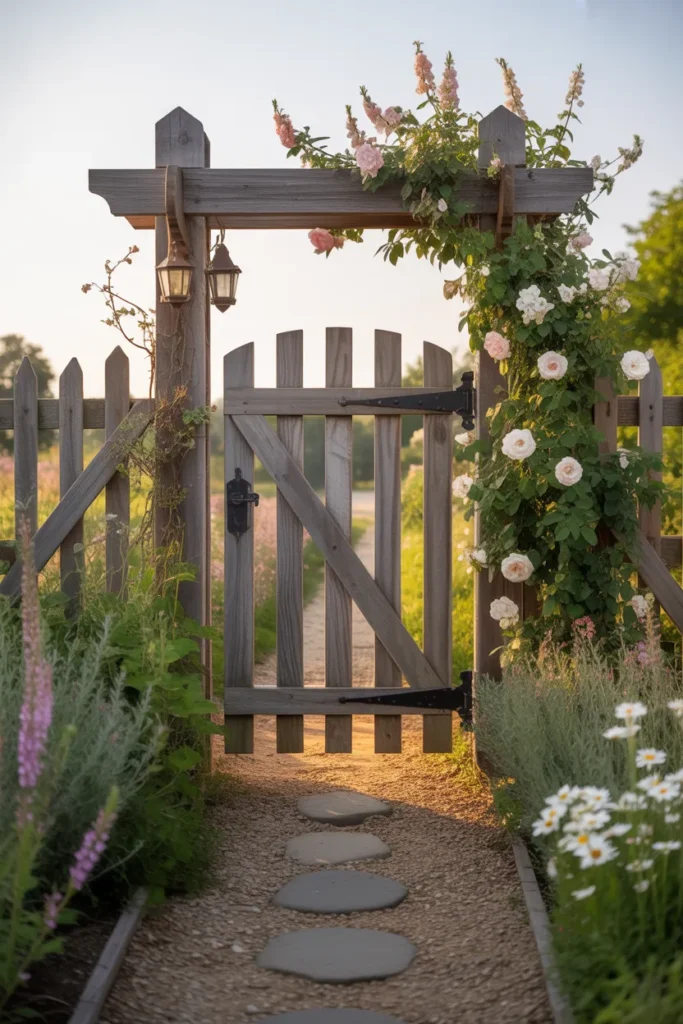
10. Rustic Fence with Garden Gate
A rustic fence with a garden gate creates a strong sense of entry. The gate can make a simple fence feel more charming, especially when paired with a path, climbing flowers, lanterns, or cottage planting.
This idea works well for front gardens, side yards, vegetable gardens, and backyard transitions. The gate should feel slightly more detailed than the fence so it becomes a natural focal point.
Tip: Add planting around the gate posts to make the entrance feel established and inviting.
11. Log Fence for Country Yards
A log fence is a rugged rustic option that works beautifully in rural, wooded, or cabin-style settings. Whole logs or half logs create a natural boundary that feels strong and connected to the land.
This type of fence looks best when surrounded by informal planting, wild grass, forest edges, gravel paths, or meadow-style landscaping. It may feel too heavy for a small urban yard, but it is perfect for larger country properties.
Tip: Let the natural shape and texture of the logs show. The charm of this fence comes from its rough and simple character.
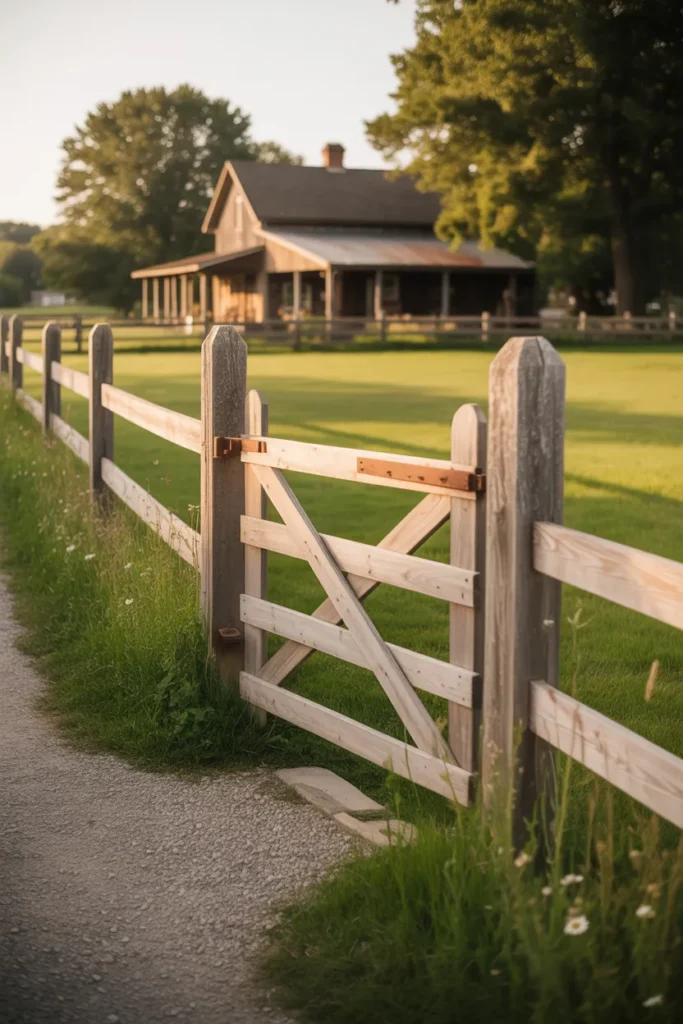
12. Rustic Fence with Flower Beds
A rustic fence with flower beds turns a boundary into a garden feature. Instead of leaving the fence bare, use it as a backdrop for layered planting. Tall flowers and grasses can sit near the fence, medium plants in the middle, and low plants along the front edge.
This idea works with picket fences, privacy fences, rail fences, and reclaimed wood fences. The flowers soften the structure and help the fence feel connected to the yard.
Tip: Choose plants with different bloom times so the fence line stays attractive through more of the year.
Conclusion
Rustic fences work best when they feel connected to the yard rather than separate from it. Natural wood, stone, woven branches, weathered boards, flowers, vines, and loose planting all help a fence feel warm and settled into the landscape. The right rustic fence can make a garden feel softer, a patio feel more private, a front yard feel more welcoming, or a country property feel more complete.
Before choosing a design, think about what the fence needs to do. A split rail fence is ideal for openness. A privacy fence is better for screening. A wattle fence works well for garden beds. A rustic gate creates charm and arrival. A flower-lined fence turns a boundary into a feature. When the material, height, planting, and purpose work together, a rustic fence can become one of the most beautiful and useful parts of the outdoor space.