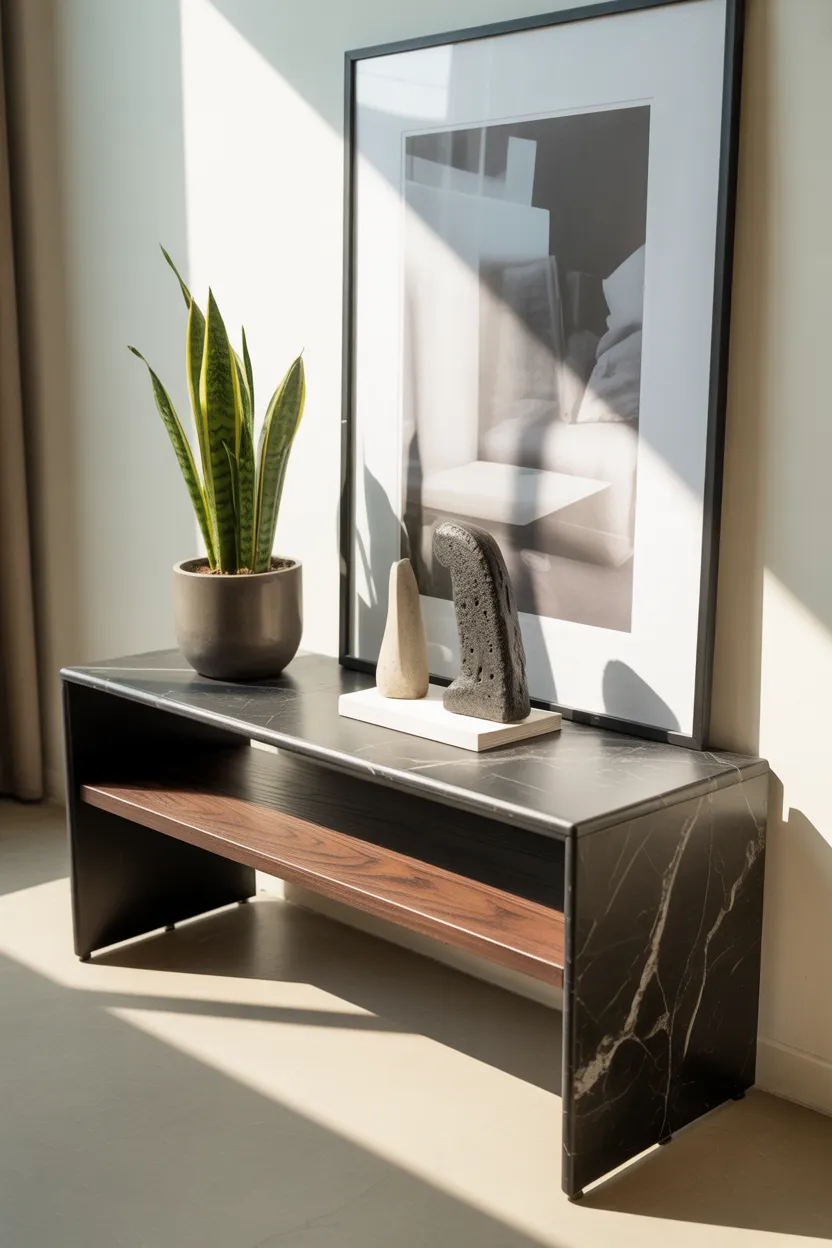
A small living room is not a design problem. It is a design challenge, and there is an enormous and important difference between the two. A problem has no good solution. A challenge has dozens of them, and the best ones do not just solve the size issue, they use it. They turn the intimacy into a feature, the limited wall space into a gallery, the small footprint into a reason to choose furniture that is more beautiful, more functional, and more considered than anything a large room would ever demand.
If you have been treating your small living room as something to apologize for, this post is here to change that perspective completely. Whether you have a narrow city apartment, a compact terraced house sitting room, a studio living space, or simply a room that never quite feels large enough, there are 27 decorating ideas here that will make you look at your small living room with entirely fresh eyes.
Some of these ideas cost nothing. Some require one good purchase. Some are a coat of paint and an afternoon. All of them work. Let’s get into it.
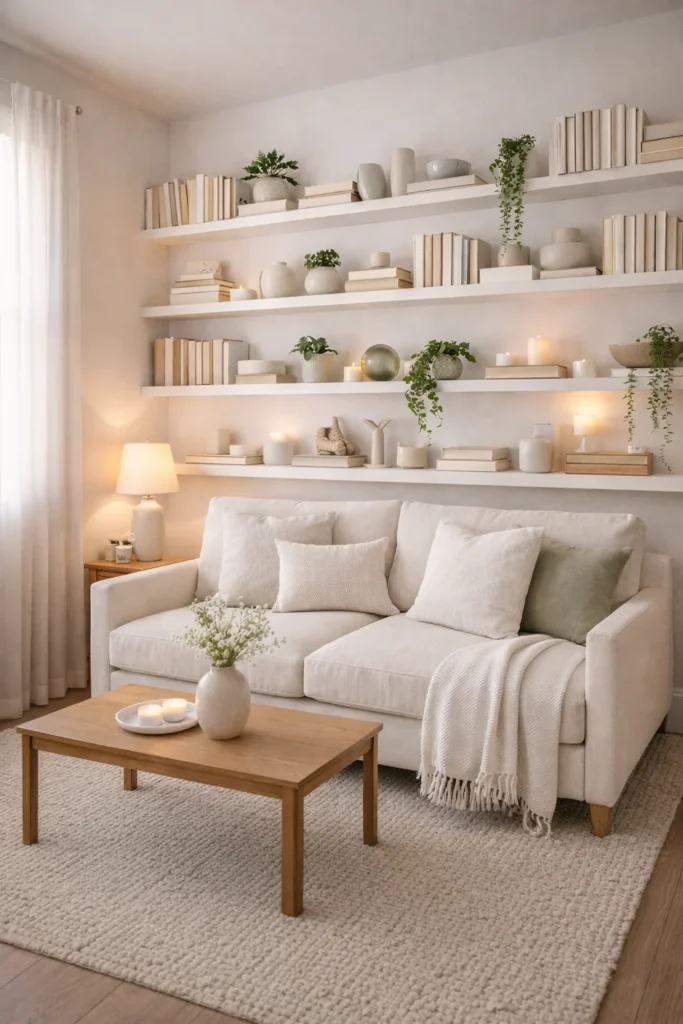
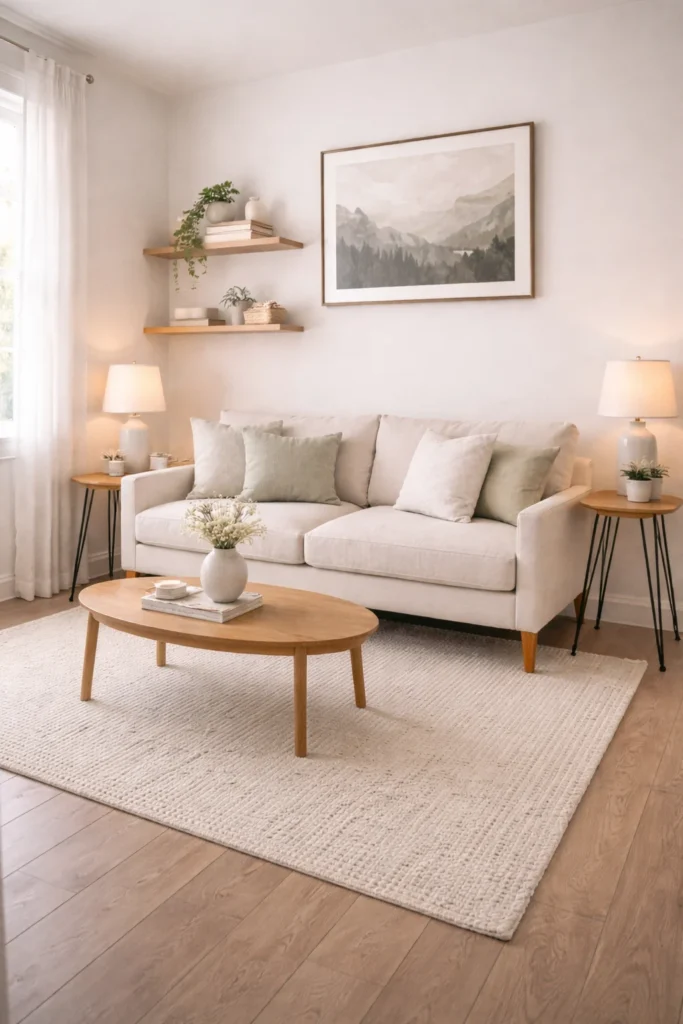
1. The Floating Shelf Wall Solution
When floor space is limited, the answer is almost always on the walls. A full feature wall of staggered floating shelves in warm white or natural oak does three things simultaneously, it provides storage, it creates a display surface for plants and ceramics and books, and it keeps the floor completely clear so the room can breathe. Styled thoughtfully in tonal neutrals with plants at varying heights, the shelf wall becomes the most beautiful feature in the room rather than a storage compromise.
Tip: Style your floating shelves in groups of three objects per shelf maximum, and deliberately leave negative space between groups. In a small room, that negative space on the shelves creates the same breathing room that clear floor space creates, it makes everything feel less crowded and more intentional.
2. Mirrors That Double the Space
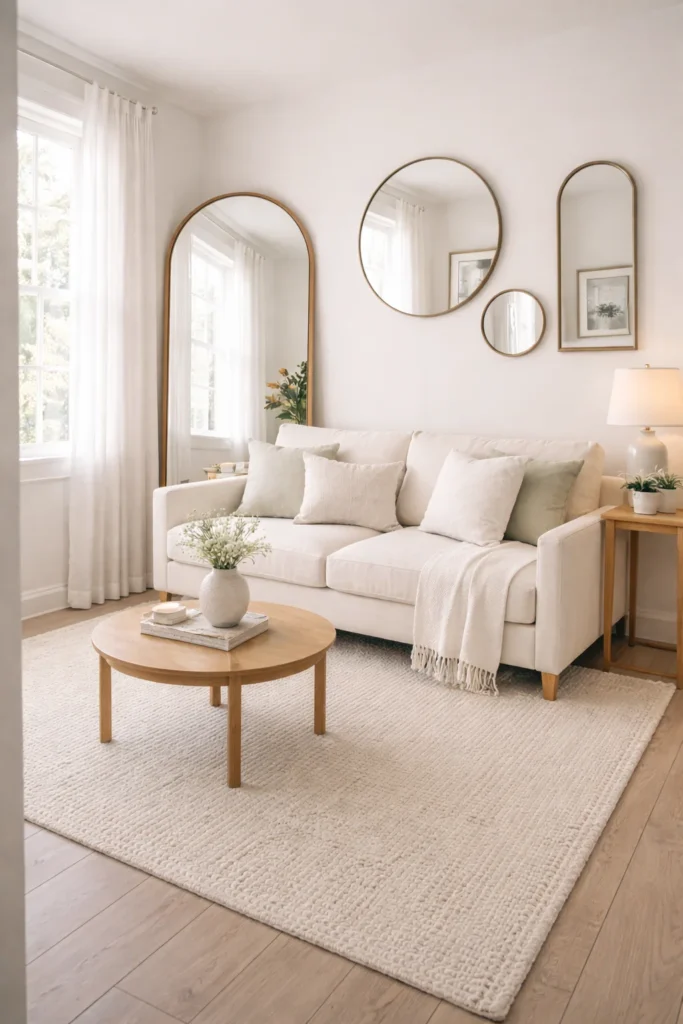
The large arched floor mirror is one of the most consistently effective small room tools available, and it costs a fraction of what a renovation would. Position it to directly reflect the room’s primary window and it visually doubles the depth of the room instantly. Add two or three smaller mirrors on the adjacent wall at varying heights and the room’s natural daylight gets redistributed to every corner, making the space feel open and considerably more generous than it actually is.
Tip: The position of your large floor mirror matters as much as its size. Always angle it or place it so that it reflects your best natural light source, a window, a doorway, or a lamp. A mirror reflecting a blank wall is a decorating opportunity missed. A mirror reflecting your window is a room transformed.
3. Slim Sofa Big Style
The single most impactful decision you can make in a small living room is the scale of your sofa. A slim two-seat sofa with a low profile, tight arms, and tapered wooden legs will make a small room feel twice as open as a large overstuffed sofa that fills the same space. The floor you can see beneath the sofa legs, the wall you can see beside the tight arms, and the ceiling you can see above the low back all contribute to a room that feels airy rather than cramped.
Tip: When shopping for a sofa for a small living room, measure the arm height, the back height, and the overall depth as carefully as you measure the width. A sofa that is sixty inches wide but forty inches deep will dominate a small room far more than a sofa that is seventy-two inches wide but only thirty-two inches deep. Depth matters most.
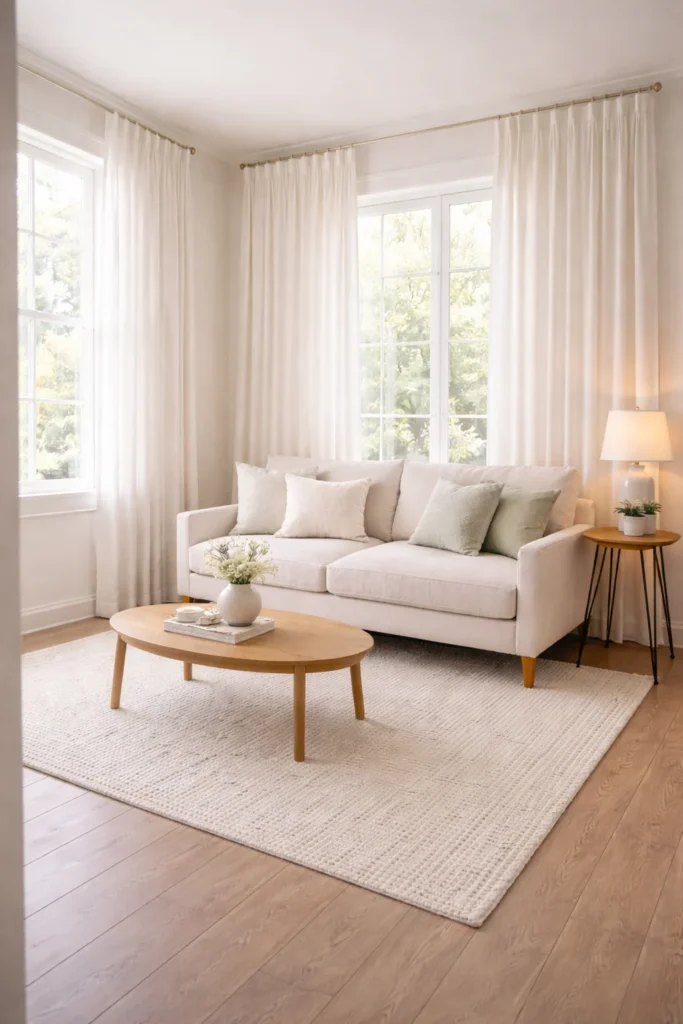
4. Floor to Ceiling Curtain Trick
This is one of the most affordable and most dramatic small room tricks available, and it requires nothing more than a drill, a higher curtain rod position, and longer curtains. By mounting your curtain rod at ceiling height rather than window height, the floor-to-ceiling panels draw the eye from the floor all the way up to the ceiling, creating an undeniable impression of taller ceilings and a more generous, more dramatic room. It costs the same as standard curtain hanging and delivers a completely different room.
Tip: Match your curtain color as closely as possible to your wall color. When the curtains and walls are the same tone, the eye reads the curtain as an extension of the wall rather than a separate element, which maximizes the height illusion. A cream curtain against a cream wall disappears into it beautifully and lets the ceiling height do all the impressive work.
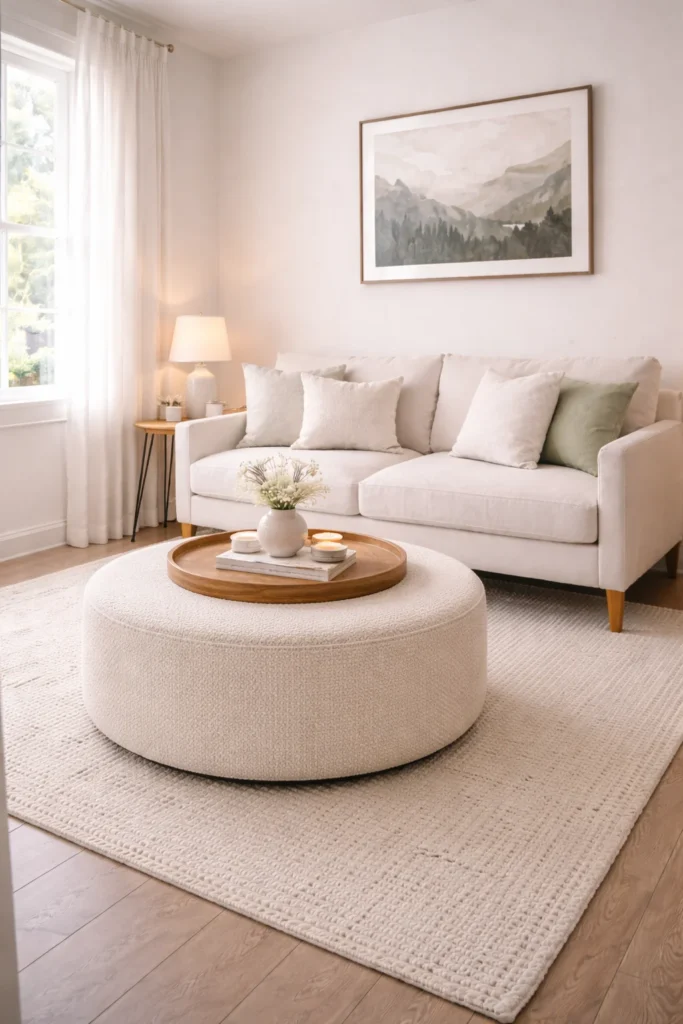
5. Multipurpose Ottoman Central
A large round upholstered ottoman doing three jobs simultaneously, coffee table, footrest, and extra seating, is one of the most intelligent furniture decisions available for a small living room. Styled with a round wooden tray holding a candle, a small vase, and a stack of books, it functions beautifully as a coffee table. Pulled away when guests arrive, it becomes extra seating. Pushed against the sofa at the end of the day, it becomes a footrest. Three jobs, one footprint, zero wasted space.
Tip: Always use a round wooden tray on top of the ottoman to create a stable flat coffee table surface. Without the tray, drinks and objects will sit unevenly on the upholstered surface. With it, the ottoman becomes a completely functional coffee table that also looks deliberately styled and beautiful.
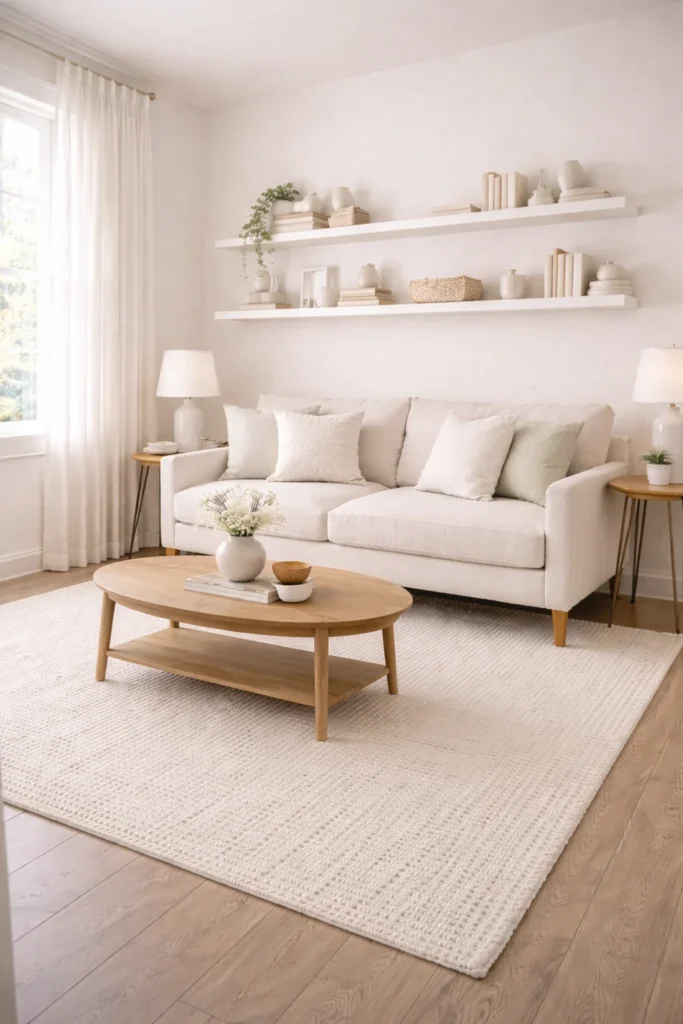
6. Neutral Palette Space Illusion
When walls, sofa, rug, and curtains all speak the same warm cream language, the eye cannot find a boundary to stop at and the room seems to continue beyond its actual walls. This seamless monochromatic neutral palette is one of the oldest and most reliable space-expanding strategies in interior design, and it works every time without exception. Texture, linen, bouclé, waffle cotton, jute, wood, does all the decorative work that color would normally do.
Tip: The key to making a monochromatic cream room feel warm rather than sterile is the tone of white you choose. Always go for warm whites with yellow or pink undertones rather than cool stark whites with grey or blue undertones. Warm cream walls, warm cream sofa, warm cream rug, the warmth holds the space together while the tonal consistency makes it feel expansive.
7. Built In Bookshelf Small Living Room
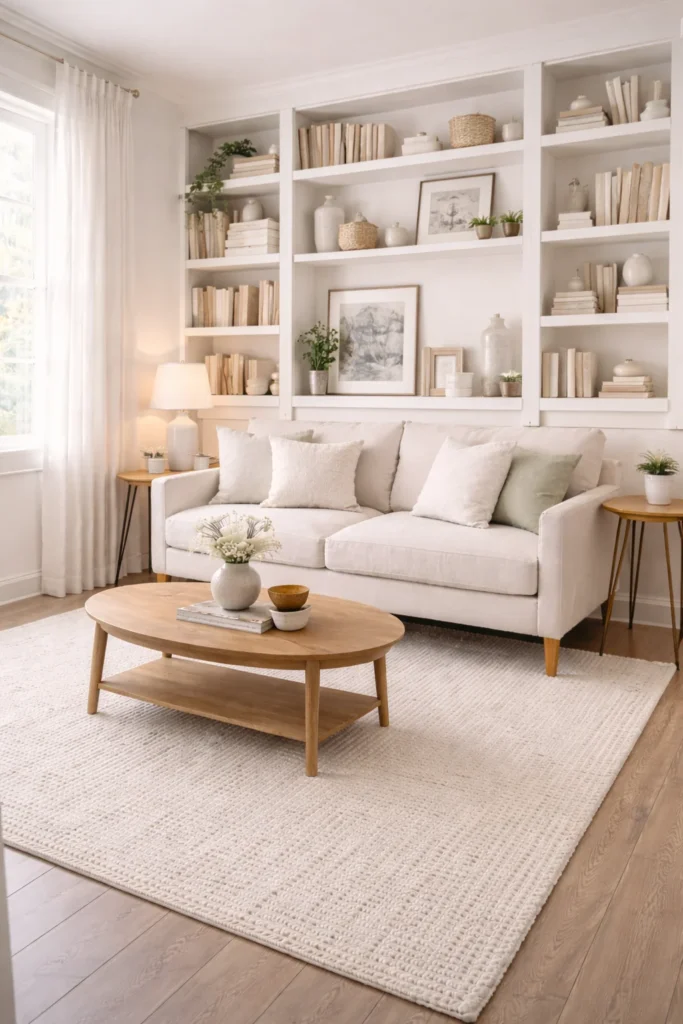
When bookshelves are built in rather than freestanding, they stop being furniture and become architecture. A floor-to-ceiling built-in bookshelf wall painted the same color as the surrounding walls integrates so seamlessly that it reads as a room feature rather than a storage unit. The floor remains completely clear, the display potential is enormous, and the room gains a sense of permanence, investment, and personality that no freestanding bookcase can replicate.
Tip: Paint your built-in shelves the exact same color as your walls, same paint, same finish. When shelves and walls share the same tone, the shelving recedes into the room architecture and the objects displayed on the shelves become the visual content rather than the shelves themselves. It is one coat of paint that changes everything about how a built-in looks and feels.
8. Vertical Garden Wall Feature
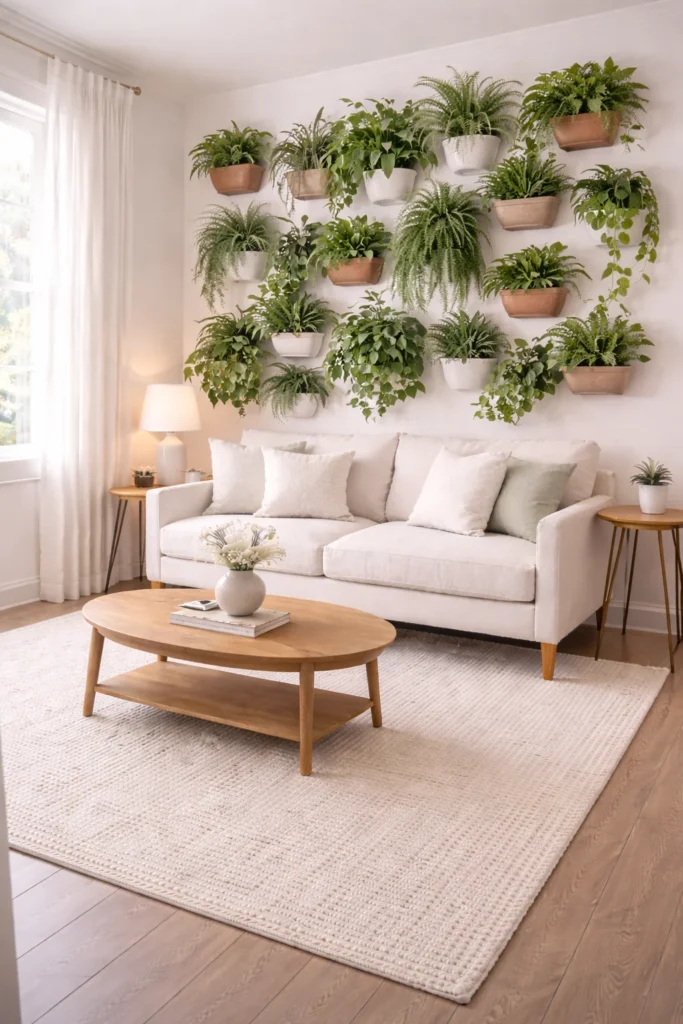
A vertical garden wall turns the small room’s most challenging element, a large blank wall, into its most spectacular feature. A collection of wall-mounted planters with trailing pothos, compact ferns, small succulents, and air plants creates a living installation that brings extraordinary botanical drama to even the smallest urban living room. The wall is no longer a boundary, it is an ecosystem.
Tip: Choose a self-watering planter system for your vertical garden wall rather than individual pots you need to water separately. Self-watering vertical systems are available at most garden centers and they make a vertical garden genuinely manageable in a small living room where getting to every individual plant for watering would otherwise be a significant inconvenience.
9. Nesting Tables Space Saver
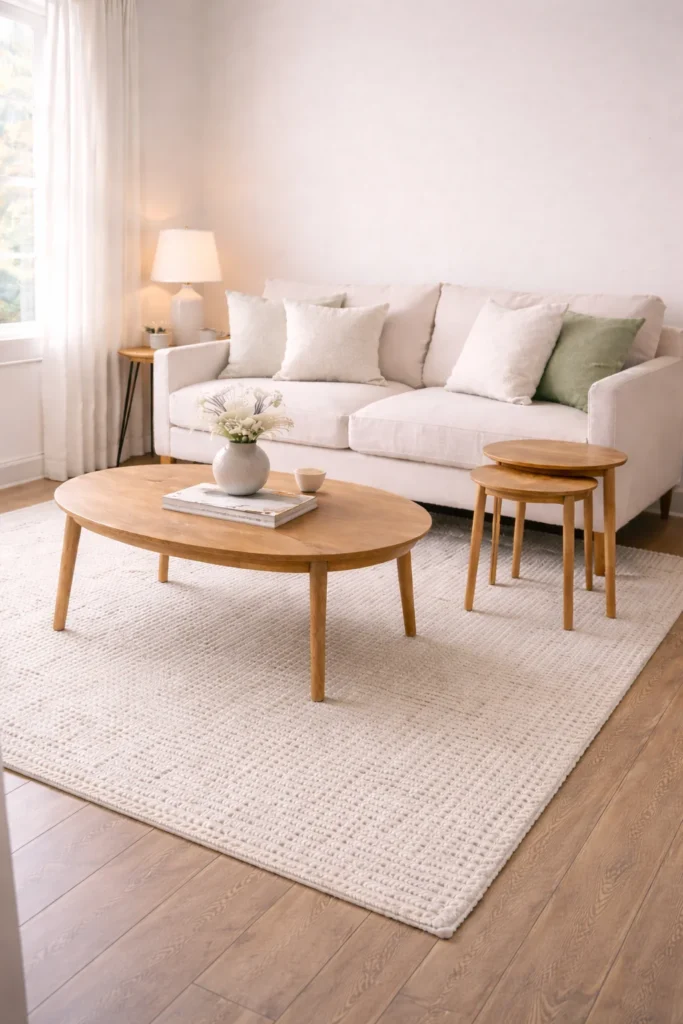
Nesting tables are the small living room’s most quietly brilliant furniture solution. Nested together they occupy the footprint of a single side table. Pulled apart they provide three independent surface levels for drinks, snacks, devices, and books. When guests arrive, pull all three out for maximum surface area. When they leave, nest them back into one elegant compact unit. No other coffee table solution offers that level of flexible functionality within such a small footprint.
Tip: When choosing nesting tables for a small living room, prioritize tables with legs rather than solid box bases. Legs allow you to see the floor beneath and through the nesting arrangement, which keeps the center of the small room feeling open and uncrowded even when all three tables are in use simultaneously.
10. Corner Sofa Small Room Done Right
A compact L-shaped corner sofa can actually free up more usable floor space in a small living room than a traditional two-seat sofa and armchair arrangement, because it fills the corner completely, a space that often goes partially wasted, and leaves the center of the room open. The key is scale: a compact corner sofa with a chaise section rather than a full L-shape, in a light upholstery with visible tapered legs, and with a small round coffee table rather than a large rectangular one.
Tip: Choose a corner sofa with a chaise section on the left or right rather than a full symmetrical L-shape. A chaise section provides the lounging and extra seating function of the L without extending as far into the room’s center, leaving more circulation space and making the room feel significantly less filled.
11. Wall Mounted TV Space Maximizer
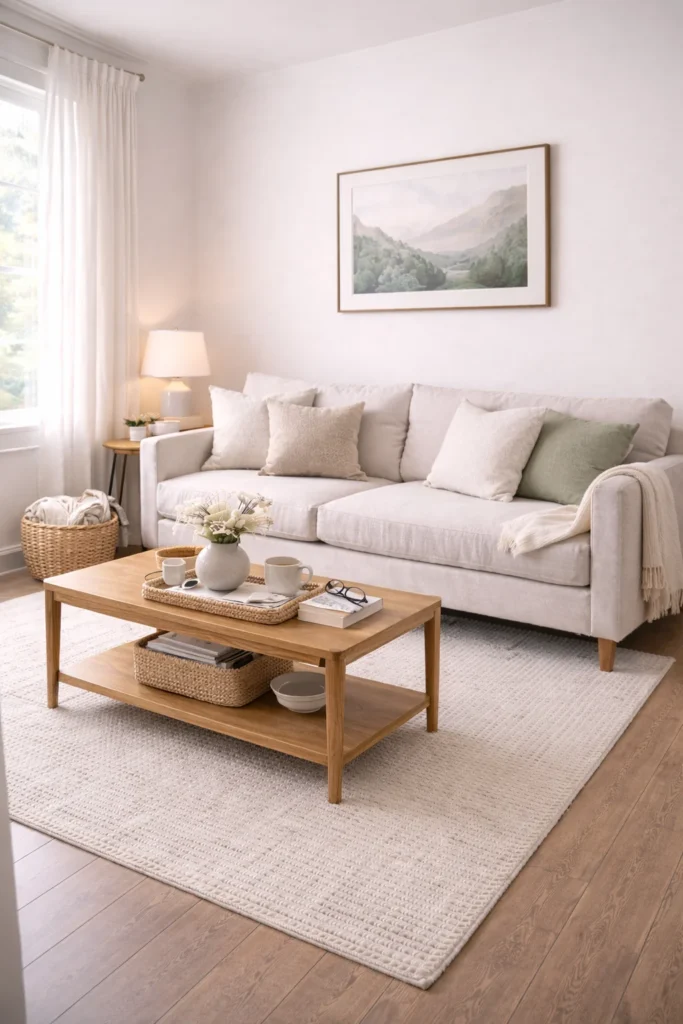
Mounting the TV on the wall and pairing it with a slim floating media console is one of the most transformative single decisions available for a small living room. The floor beneath the TV is freed completely, the room feels taller and more architectural, and the media console provides storage without the visual bulk of a traditional floor-standing TV unit. Add a floating shelf on each side of the TV at the same height as the console and you have a built-in wall unit effect without the cost or permanence.
Tip: Add an LED strip light behind the TV, a bias light, using a warm amber tone rather than cool white. It reduces eye strain during evening viewing, it adds a warm ambient glow to the TV wall that makes the small room feel more atmospheric and more finished, and it costs almost nothing to install. It is one of the smallest investments with the largest evening atmosphere return in a small living room.
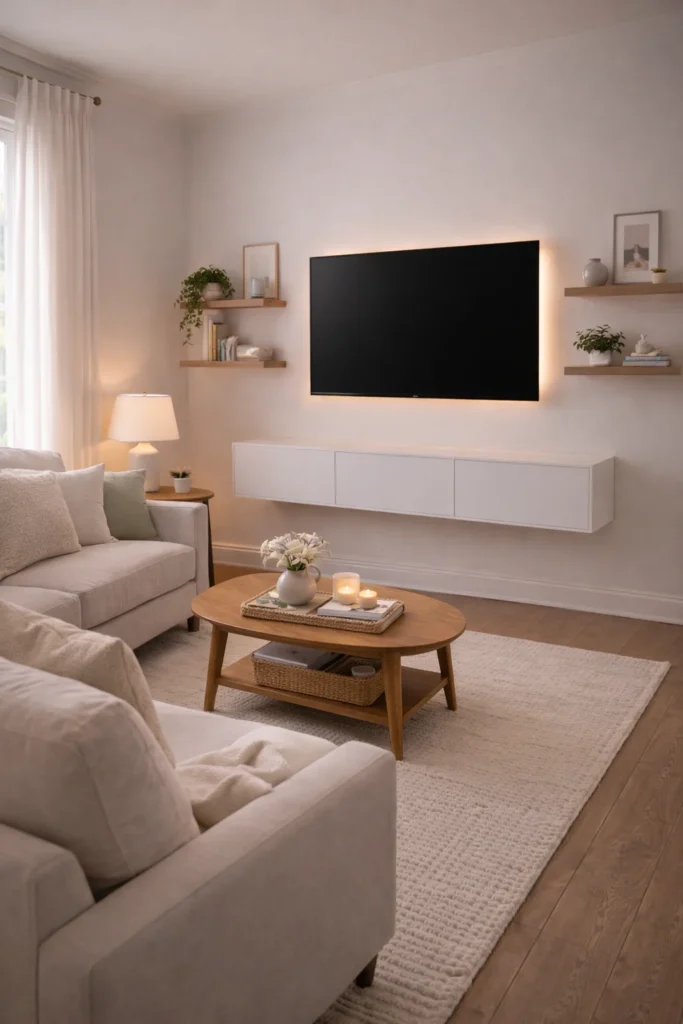
12. Light & Bright White Tiny Living Room
A tiny living room painted entirely in warm white, walls, ceiling, shelves, and curtains, is not a decorating surrender. It is a deliberate and effective strategy that uses reflected natural daylight as the room’s primary design element. When every surface reflects rather than absorbs the light, the room glows from within and the actual square footage becomes almost beside the point. Warm wood accents and a single plant keep the white from feeling clinical or cold.
Tip: The word warm is the most important word in this strategy. Use warm white paint with a yellow or pink undertone throughout, not stark cool white. Cool white in a tiny room will feel clinical and cold. Warm white in a tiny room will feel luminous and inviting. The difference between the two is the difference between a room that works and a room that does not.
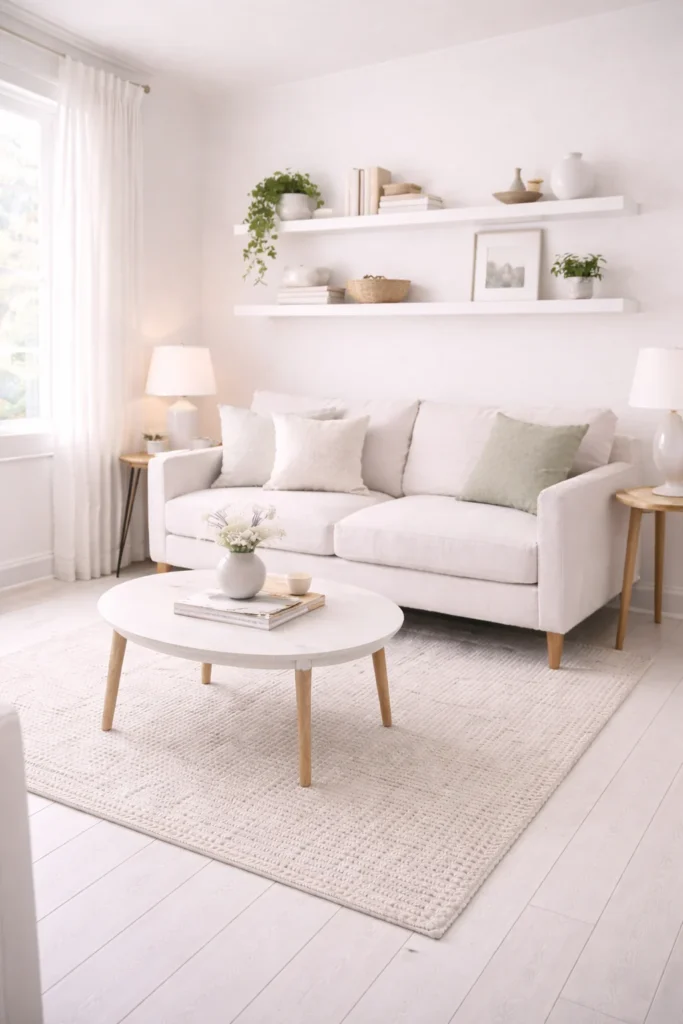
13. Scandinavian Small Living Room
The Scandinavian approach to small living rooms is perhaps the most philosophically aligned interior design style with the spatial challenge. Scandi design starts from the premise that everything unnecessary should be removed, that quality of light matters more than quantity of decoration, and that a few beautifully chosen objects in a clean space are worth infinitely more than a room full of average ones. For a small living room, this is not just a style, it is the perfect philosophy.
Tip: The single most impactful Scandi small room move is leaving your window completely undressed. No curtains, no blinds, nothing. The cool natural daylight that floods a window-undressed Scandi room is the room’s primary decorative element, and no curtain treatment, however beautiful, competes with it. If privacy is needed, use a simple white roller blind that rolls up completely out of sight during the day.
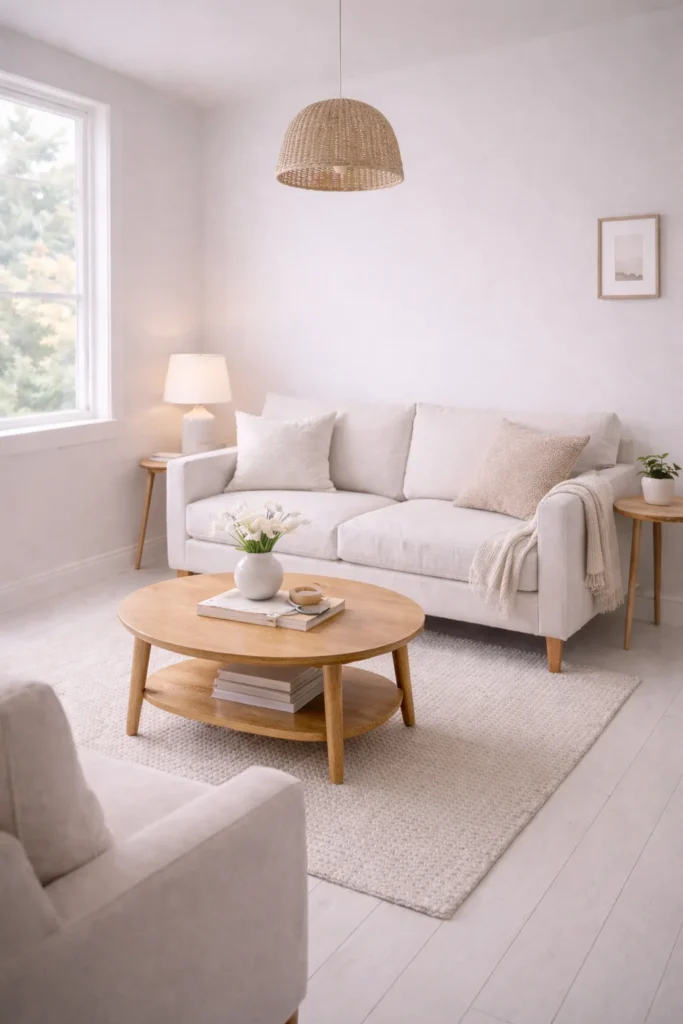
14. Bold Accent Wall Small Space
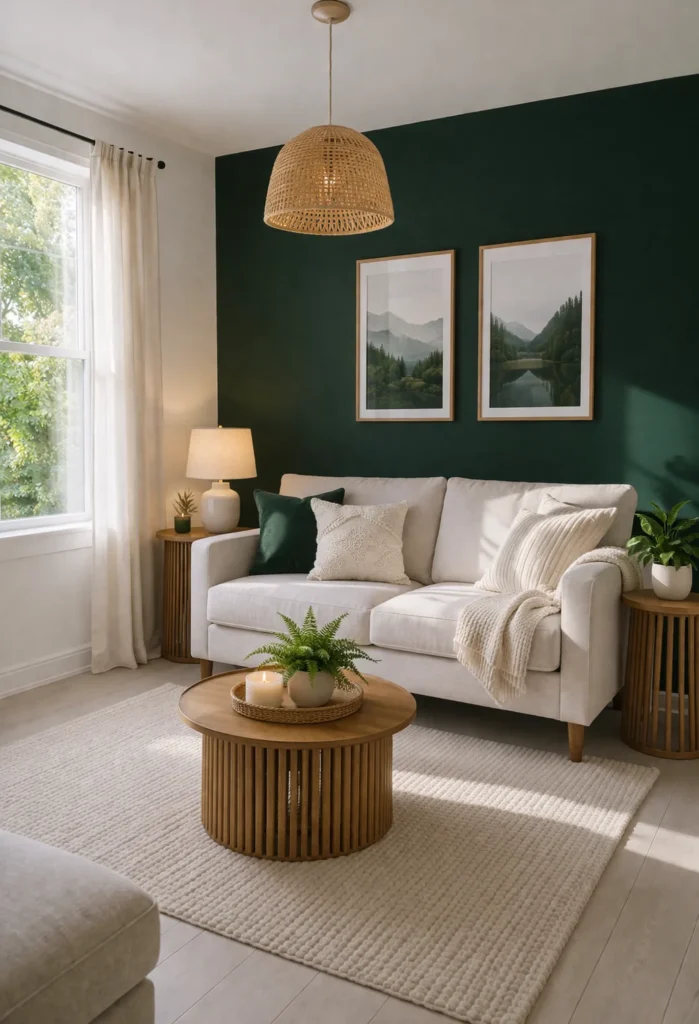
Counter to every instinct that says small rooms need light colors, a bold accent wall in a small living room creates visual depth that genuinely expands the perceived space. When one wall goes deep navy, forest green, or rich terracotta and the remaining walls stay white, the eye reads the bold wall as receding deeper into the distance, creating a sense of depth that flat white walls on every side simply cannot provide. One bold wall, three white walls, and a small room that feels unexpectedly spacious.
Tip: Always paint your accent wall in the same tone as one of your sofa throw pillows. That small color echo between the wall and the sofa creates an intentional visual connection that makes the bold wall feel designed into the room rather than applied to it as an afterthought. One pillow in the accent color costs less than ten dollars and ties the whole room together beautifully.
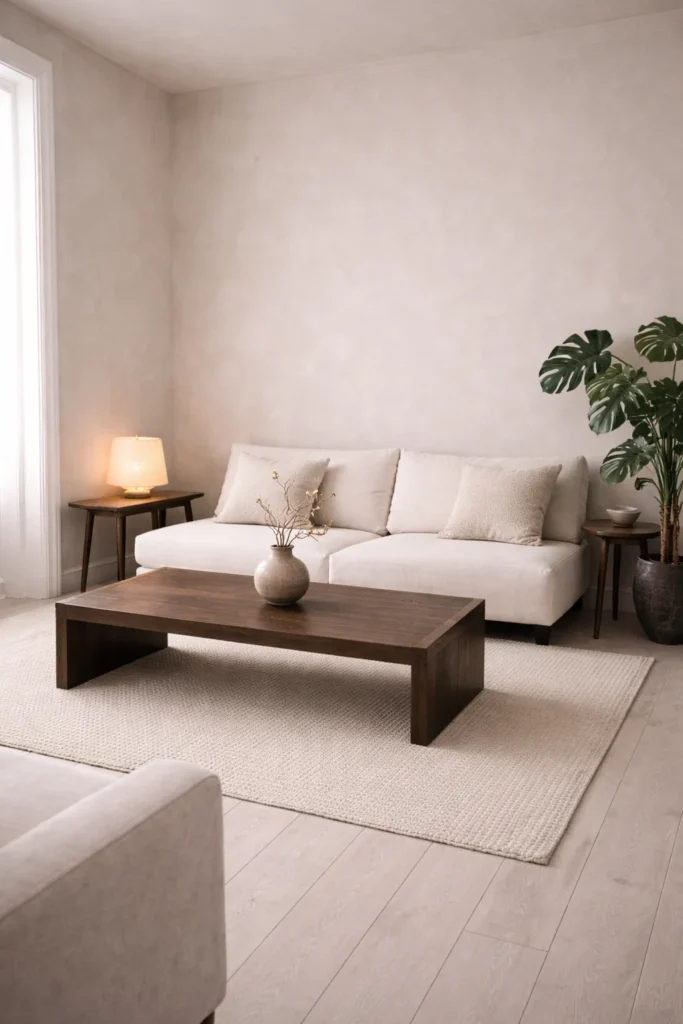
15. Japandi Tiny Living Room
A tiny living room decorated in the Japandi philosophy does not just manage its size, it celebrates it. The Japandi belief that constraint is the mother of beauty, that every object must earn its place, and that negative space is as valuable as occupied space turns a tiny living room into a meditation on what truly matters. A very low sofa, a dark oak coffee table, one monstera plant, and limewash plaster walls, four elements, infinite calm, one perfect tiny room.
Tip: Before decorating a Japandi tiny living room, do a full and ruthless subtraction exercise first. Remove every object from the room and only bring back the pieces that genuinely earn their place. Most Japandi rooms end up with sixty to seventy percent fewer objects than they started with, and they are always more beautiful for it. Subtraction is the hardest and most rewarding part of the Japandi design process.
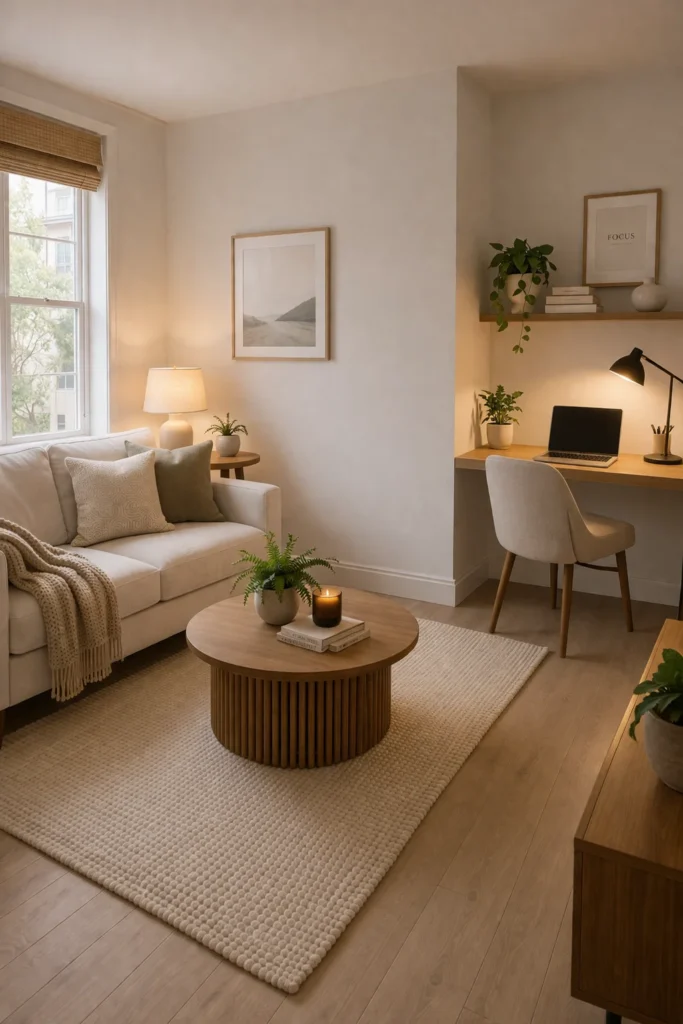
16. Sofa + Desk Dual Purpose Living Room
The dual-purpose living room is not a compromise forced by circumstance, it is a sophisticated design solution when executed with clarity and intention. A slim wall-mounted or narrow freestanding desk against one wall, paired with a stylish task chair that serves double duty as occasional guest seating, allows the room to be genuinely productive during the day and genuinely comfortable in the evening. The key is keeping the desk side impeccably clean so it does not visually contaminate the living room’s comfort zone.
Tip: Establish a daily ritual of clearing the desk surface completely at the end of the work day, close the laptop, clear the papers, tuck the chair in. That one two-minute action transforms the room instantly from a home office back to a living room, and it is the single habit that makes a dual-purpose room genuinely liveable rather than feeling permanently in-between two functions.
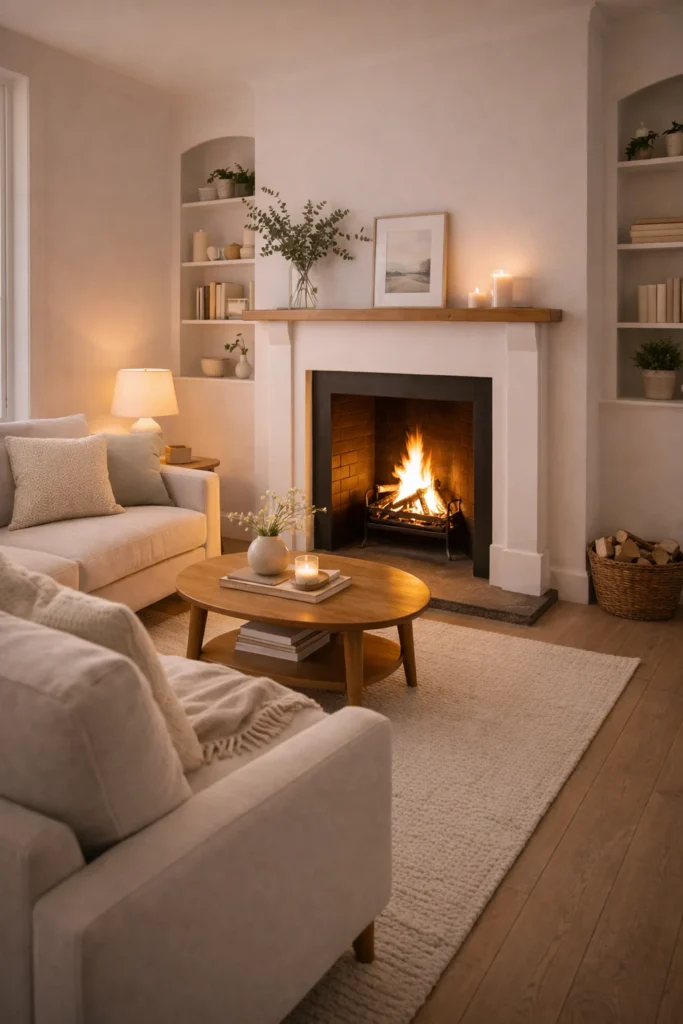
17. Small Living Room With Fireplace
A small living room with a fireplace has one of the most valuable and underappreciated spatial advantages in residential design, a natural focal point that organizes the entire room around it. Instead of struggling to define the room’s center, everything simply faces the fire: the sofa, the coffee table, the conversation, and the warmth. The fireplace does not just heat the room, it gives it purpose, direction, and an intimacy that larger rooms rarely achieve.
Tip: In a small living room, place your sofa closer to the fireplace than standard spacing guidelines suggest. Conventional advice recommends three feet between sofa and coffee table and coffee table and fireplace, but in a small room, bringing the sofa and coffee table six to twelve inches closer creates an intimacy that is genuinely cozy rather than cramped. The fire should feel close enough to warm you, that is the whole point.
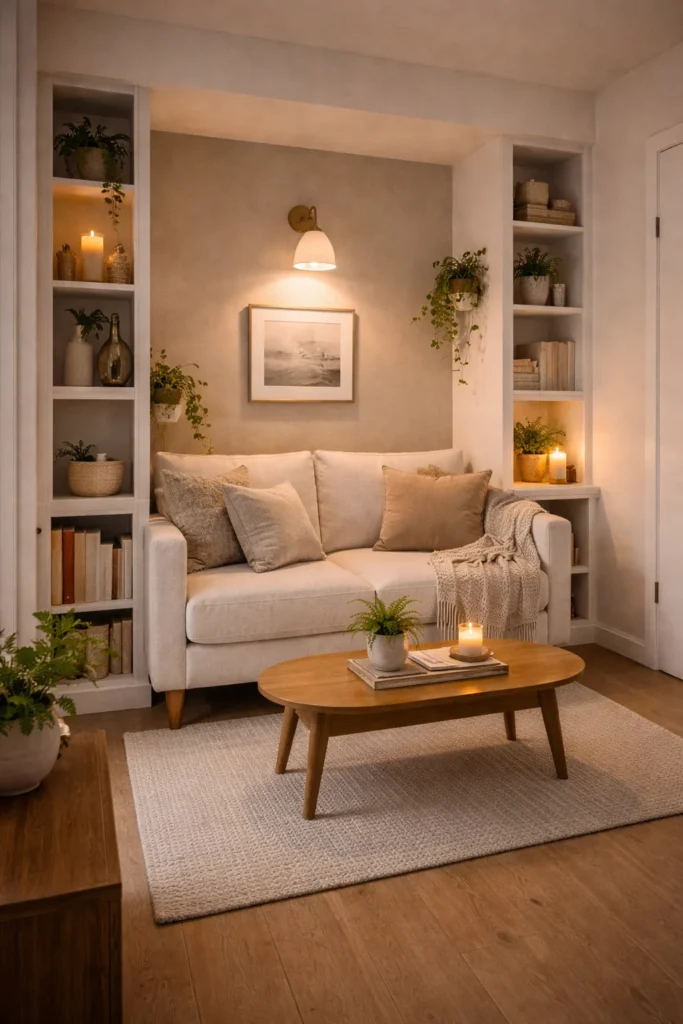
18. Two Seater Sofa Cozy Nook
When a two-seat sofa fits snugly within an alcove, between two built-in shelves, or into a defined nook space with books and plants on both sides and a warm pendant light above, the smallness of the space transforms entirely from a limitation into the room’s most coveted feature. The nook becomes the most desirable seat in the house, enclosed, warm, surrounded by beautiful things, and lit perfectly. People who visit will want to stay in it and never leave.
Tip: The secret to a truly cozy nook is enclosure on three sides. Back, left, and right. Built-in shelves on both sides of the sofa, even if they are only twelve inches deep, create the psychological sense of being contained and protected that makes a nook feel different from simply a sofa against a wall. That three-sided enclosure is the difference between a seat and a sanctuary.
19. Boho Small Living Room
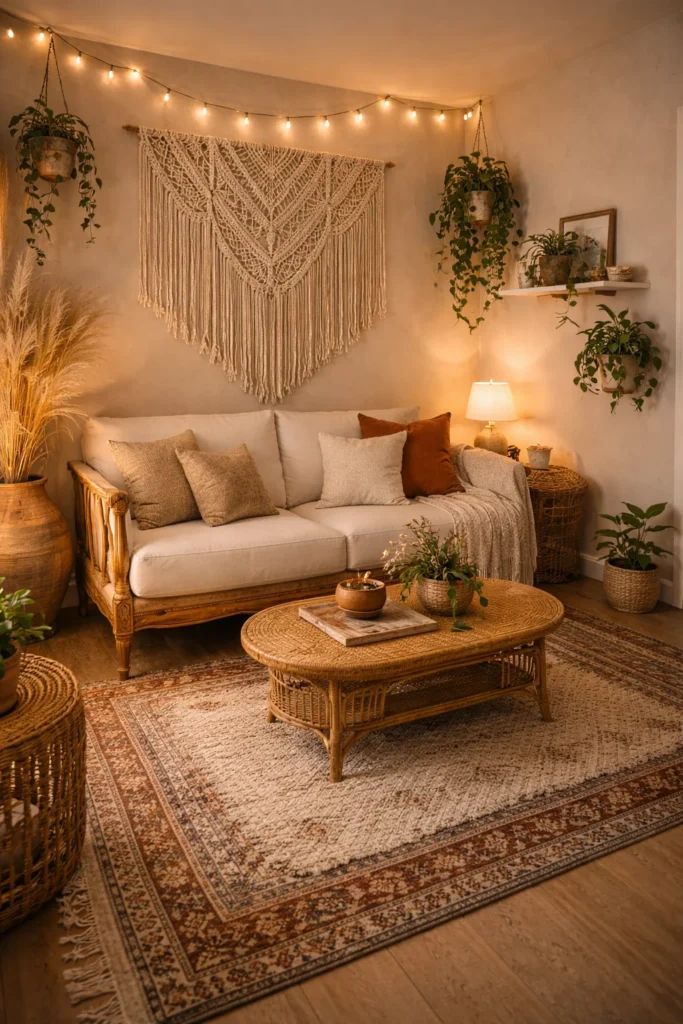
The boho approach to a small living room is one of the most counterintuitively effective. While most small room advice says remove and simplify, boho says layer, texture, and fill, and in a small room it works because the layering creates richness rather than clutter when every layer lives within the same warm earthy color story. A macramé wall hanging, rattan furniture, layered vintage rugs, trailing plants, and Edison string lights in a small room creates a space that feels like the most immersive and inviting room in any home.
Tip: The single most important rule for boho decorating in a small room is color discipline. Every layered rug, every throw pillow, every ceramic, every plant pot must live within the same warm earthy palette, tan, rust, cream, terracotta, and sage. That color consistency is the only thing separating beautiful boho richness from visual chaos, and in a small room the difference between the two is a matter of inches.
20. Dark & Moody Small Living Room
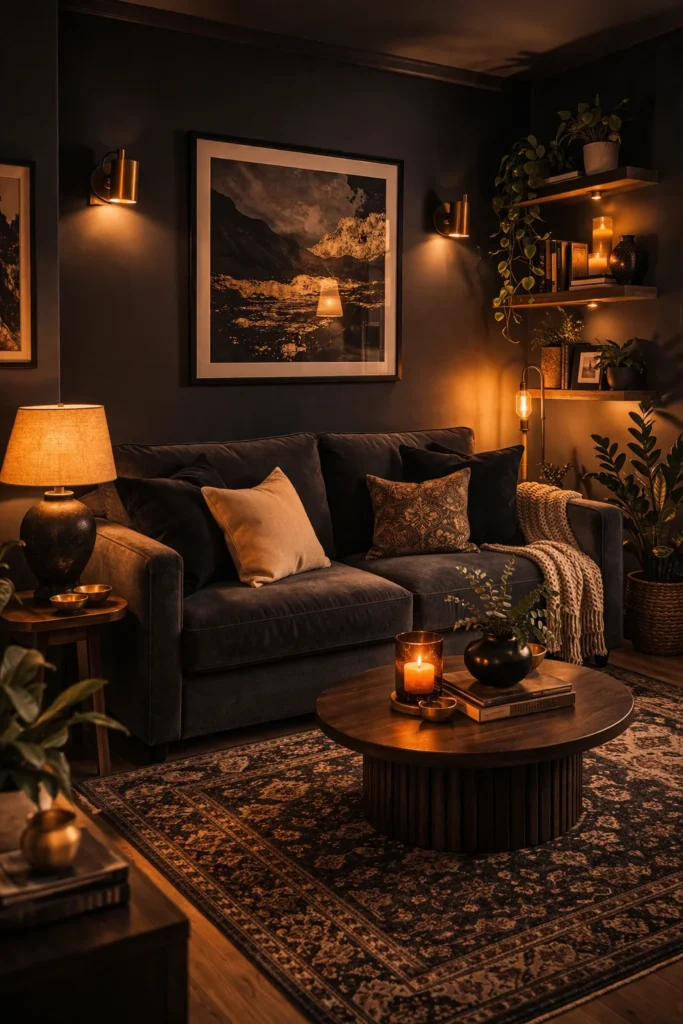
This is the small room idea that surprises everyone who tries it. Going dark, really dark, near-black charcoal dark, in a small living room does not make it feel smaller. It makes it feel more intimate, more dramatic, more personality-filled, and more deliberately designed than almost any other color approach available. The key is warm amber lighting. Dark walls need warm amber lamp light, not bright overhead light, and when that combination comes together, a small dark room becomes the most atmospheric room in the house.
Tip: When you paint a small room dark, switch all your light bulbs to the warmest available amber tone, 2200K or 2700K. Cool white bulbs in a dark room create a harsh, uncomfortable atmosphere. Warm amber bulbs in a dark room create pools of golden warmth that make the room feel like the most inviting place in the world to spend an evening. The color of the light bulb matters as much as the color of the paint in a dark small room.
21. Open Plan Small Living Dining
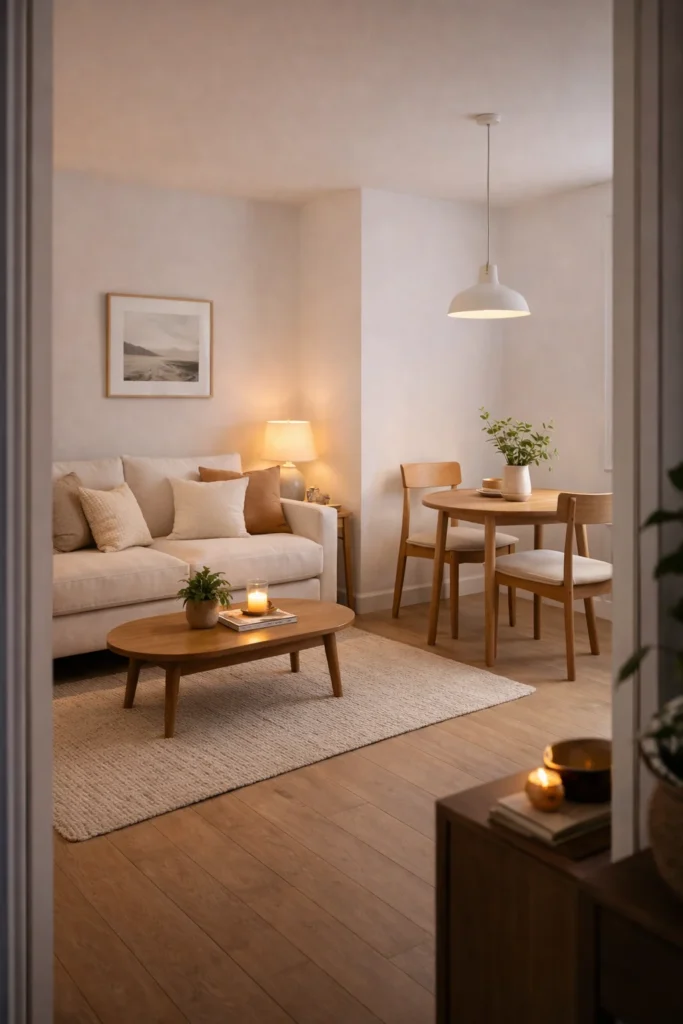
An open plan small living and dining space works beautifully when the two zones share a consistent design language, the same wood tone, the same wall color, the same neutral upholstery palette, while having distinct zone-specific elements that keep them legible as separate functional spaces. A rug beneath the sofa zone, a pendant light above the dining table, and consistent but zone-specific furniture all contribute to a combined space that feels cohesive and considered rather than cramped and confused.
Tip: A round dining table is almost always the right choice for a small open plan living and dining room. Round tables have no corners, they allow easier circulation in tight spaces, they seat more people per square foot than rectangular tables of equivalent size, and visually they soften the angular energy that a small room can accumulate from multiple pieces of rectangular furniture sharing a space.
22. Bay Window Small Living Room Seating
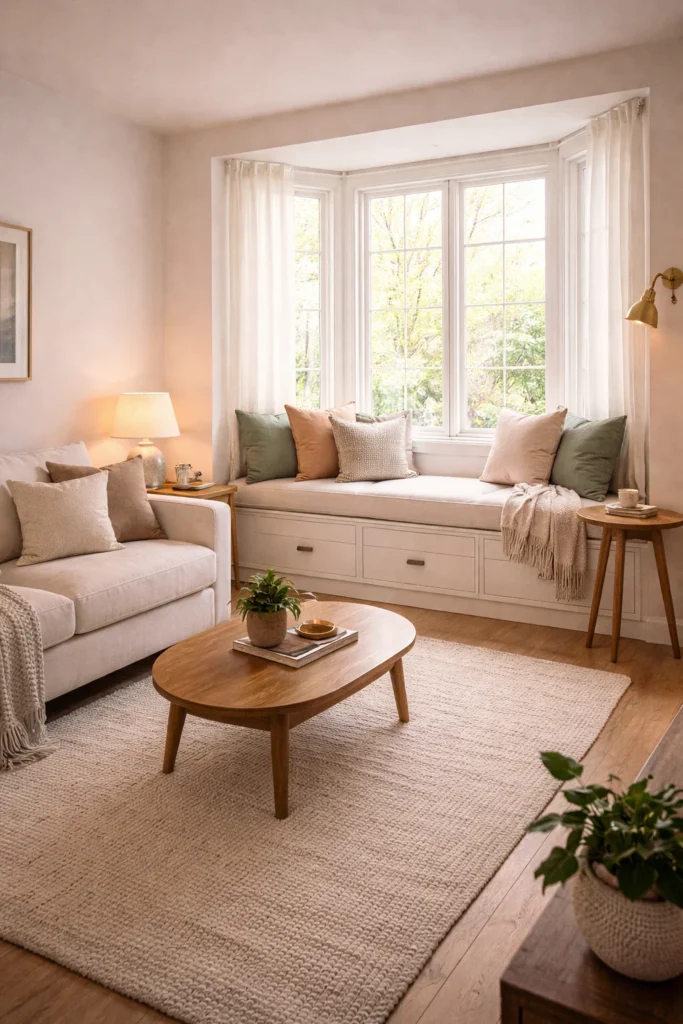
A bay window built-in seat is one of those home improvement projects that transforms the way a small living room feels and functions so profoundly that it is almost impossible to understand why every bay window does not already have one. The window seat provides extra seating for guests, a personal reading and sun-catching perch, storage in the drawers beneath for all the small room’s organizational needs, and a beautifully human-scaled architectural feature that gives the room genuine character.
Tip: When building or commissioning a bay window seat, make the seat depth at least eighteen inches from back to front and the seat height eighteen to twenty inches from floor to cushion top. Those dimensions allow the seat to function comfortably as actual seating rather than just a ledge with cushions on it. A window seat that is comfortable to actually sit in is used and loved. One that is too shallow or too low becomes a surface for objects rather than a seat for people.
23. Small Living Room Gallery Wall
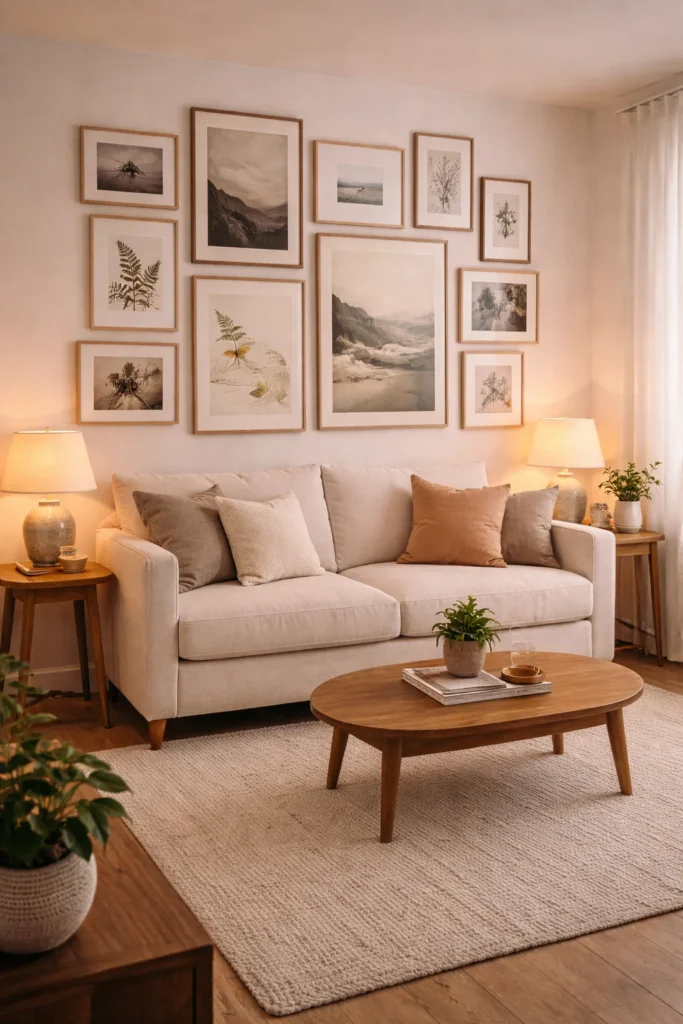
A gallery wall above the sofa in a small living room does something that almost no other decorating move can do, it draws the eye upward, it adds visual richness and personal character without occupying any floor space whatsoever, and it makes the room feel like it belongs to someone specific rather than being a generic furnished space. The collection of frames, prints, and photographs above the sofa tells the room’s story in a way that furniture alone never can.
Tip: Before hanging a single frame, lay your complete gallery arrangement on the floor and live with it for a day or two. Move pieces around, try different compositions, experiment with the relationship between small and large frames. The floor is a zero-cost, zero-hole laboratory for gallery wall composition, and the time spent there will save you from the frustrating experience of multiple wall holes while you find the arrangement that works.
24. Storage Coffee Table Hero
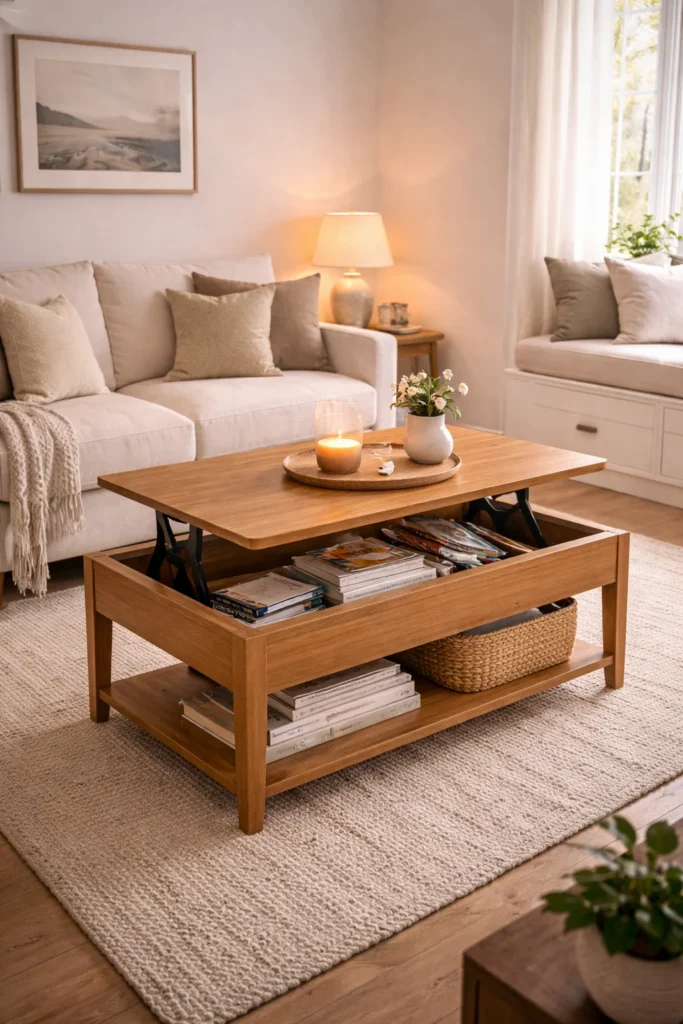
In a small living room where every piece of furniture must work harder than it would in a larger space, a storage coffee table is the most reliably excellent furniture choice available. Hidden storage for throws, magazines, board games, and remote controls in a piece of furniture that is already earning its floor space as a coffee table is exactly the kind of elegant double-functionality that transforms a small room from cluttered to organized without adding a single additional piece of furniture.
Tip: Always use a round wooden tray on top of any storage ottoman or lift-top coffee table to create a defined, stable coffee table surface. The tray visually signals that this is a coffee table surface rather than just the lid of a storage box, and it gives you a consistent styled surface to display your candle, your vase, and your books regardless of what the table’s storage function looks like beneath it.
25. Apartment Small Living Room
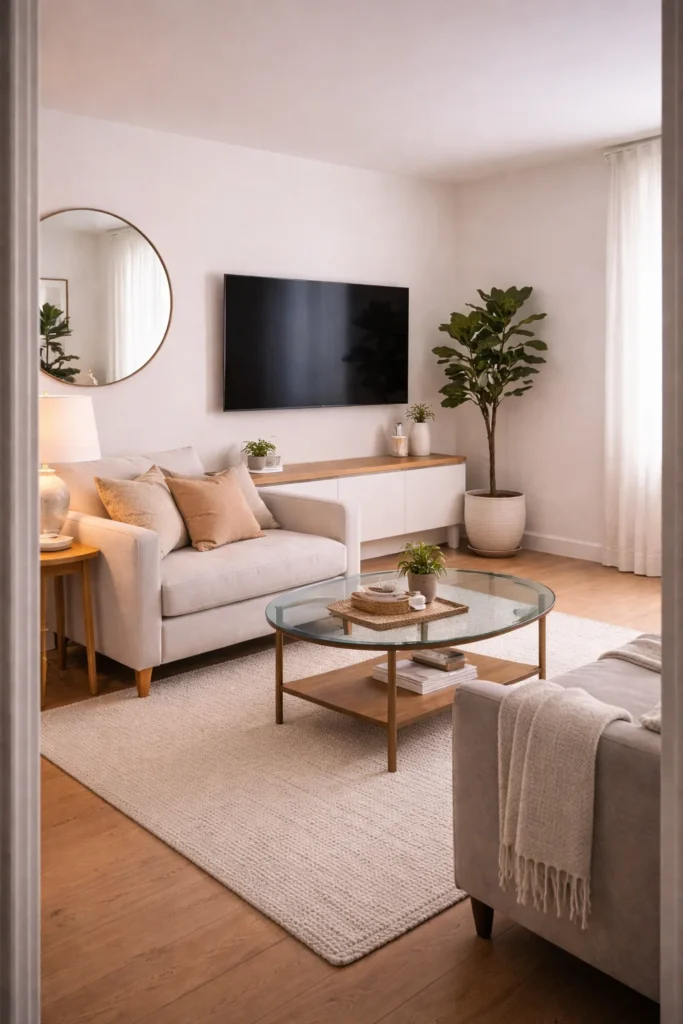
The apartment small living room is perhaps the most common and most universally relatable small room challenge, and it responds beautifully to a consistent set of smart decisions: wall-mount the TV, choose a glass or slim-leg coffee table that shows maximum floor, add one large mirror to amplify the natural light, use matching lamps on both side tables for a polished hotel-quality symmetry, and invest in one large indoor plant that gives the modern apartment living room its only organic warmth. Those five decisions, applied consistently, transform a generic apartment living room into a considered and genuinely beautiful space.
Tip: The one large indoor plant rule for apartment living rooms deserves its own emphasis. A single large and healthy plant, a fiddle leaf fig, a tall snake plant, a monstera, or an olive tree, does more for the warmth and livability of a modern apartment living room than almost any decorative purchase you could make at the same price point. One large plant beats five small plants every time for impact, presence, and the feeling that the apartment is truly alive.
26. Narrow Living Room Layout Solution
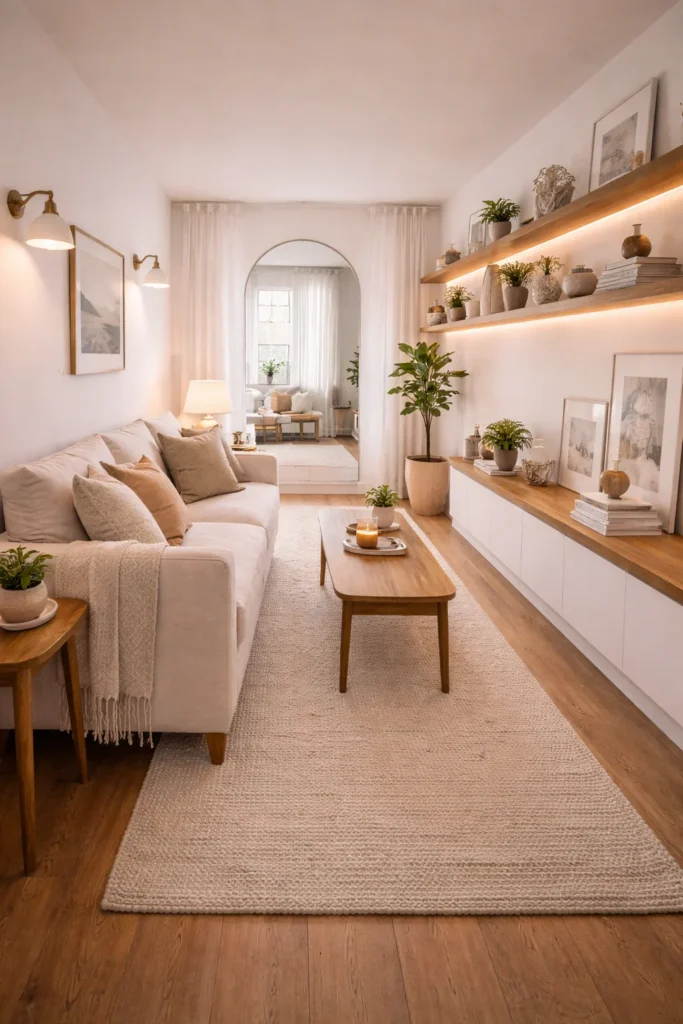
A narrow living room needs a layout strategy that acknowledges rather than fights its proportions. Sofa against one long wall, floating shelves on the opposite long wall, a slim rectangular coffee table running down the center, and a large mirror at the narrow end wall, this arrangement works with the room’s linearity rather than trying to make it feel square. The long runner rug down the center further embraces the narrow proportion, and the end wall mirror makes the room feel as if it continues beyond its actual boundary.
Tip: Embrace the word narrow and style the room as if it were a gallery. A gallery is narrow by design and we find it beautiful because every element faces us and presents itself clearly as we move through it. Style your narrow living room the same way, objects on the long wall shelves facing the sofa, art arranged along the long walls, a clear linear path from one end to the other. That gallery mindset turns a challenging proportion into a distinctive and beautiful room character.
27. Small Living Room Outdoor Connection
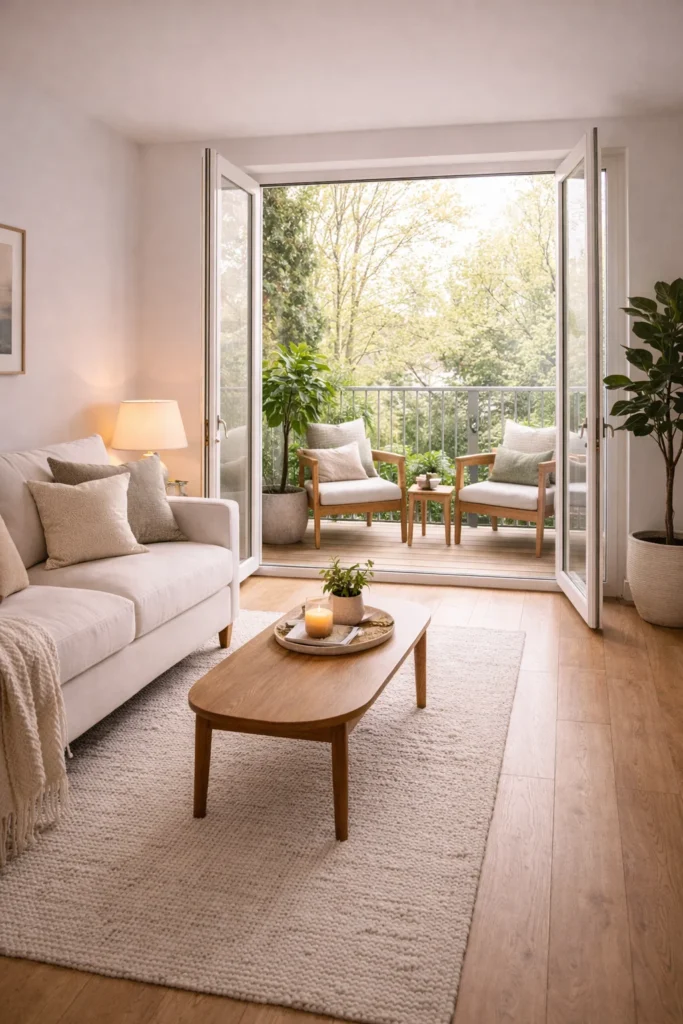
The most powerful and most completely free small room expansion strategy available is a direct visual and physical connection to the outdoors. Open the glass doors fully, let the outside in, and suddenly the small living room does not end at the glass, it continues into the garden, the balcony, or the courtyard beyond. The outdoor space becomes an extension of the living room, the natural light doubles, the air changes, and the room that felt small moments ago feels genuinely boundless.
Tip: Style your small balcony or garden space visible through the open doors with the same material language as your indoor living room, the same wood tones, the same plant types, the same neutral color palette. When the outdoor space reads as a visual extension of the indoor room rather than a completely separate space, the connection between them is seamless and the perceived size of the combined inside-outside room becomes genuinely generous.
Conclusion
The small living room that you have been apologizing for is about to become the room you cannot stop talking about. Because small rooms, when decorated with intention, restraint, and the kind of thoughtfulness that abundant space never demands, become some of the most beautiful and most characterful rooms in any home.
The twenty-seven ideas in this post cover every approach, from the purely practical mirror and curtain tricks to the more committed built-in shelves and window seat projects, from the bold dark moody room to the luminously white and airy one. What they all share is a refusal to treat the small room as a problem, and a willingness to look at its limitations as the exact conditions that produce the most interesting design thinking.
Your small living room is not waiting to be bigger. It is waiting to be taken seriously. Start with one idea from this list, the simplest, the most affordable, the one that excites you most, and watch what happens when a small room finally gets the attention it deserves.