Garden edging is the outdoor space element that most quietly and most consistently determines the overall quality of the garden’s visual organization because it sits at precisely the visual junction that most directly communicates whether the garden is genuinely considered and genuinely cared for or simply assembled without the organizing framework that separates a beautifully designed outdoor space from a collection of plants growing in proximity to a lawn. A beautifully edged garden communicates genuine personal care and real design intention from every border boundary. A poorly edged or unedged garden consistently makes even the most abundantly planted and the most lovingly tended planting feel most unfinished and most organizationally incomplete.
The most important DIY garden edging principle is installation quality over material cost. A carefully installed budget edging of reclaimed bricks at a consistent angle on a proper sand base consistently outperforms an expensively purchased metal edging strip hammered carelessly into the ground at inconsistent depths. The specific visual quality that makes garden edging most completely beautiful is almost never the material’s intrinsic expense but the consistency of the installation, the cleanliness of the line, the stability of the fixing, and the quality of the planting relationship that the installed edging creates with the garden plants on each side. The most beautifully edged gardens in the world are consistently the ones where someone has taken the most genuine care over the consistency of the installation rather than the ones where the most expensive edging products have been most carelessly applied.
From the most classically domestic brick soldier course to the most artistically personal painted rock display, from the most naturally organic woven willow to the most industrially contemporary corrugated metal profile, from the most warmly Mediterranean terracotta scallop to the most dramatically dark upright slate, from the most productively living herb row to the most creatively colorful glass bottle sequence, these 14 DIY garden edging ideas cover every aesthetic style, every material cost level, every installation skill requirement, and every personal garden vision to help you create the most beautifully defined and the most genuinely personal garden edge your outdoor space deserves.
1. DIY Brick Soldier Course Edging
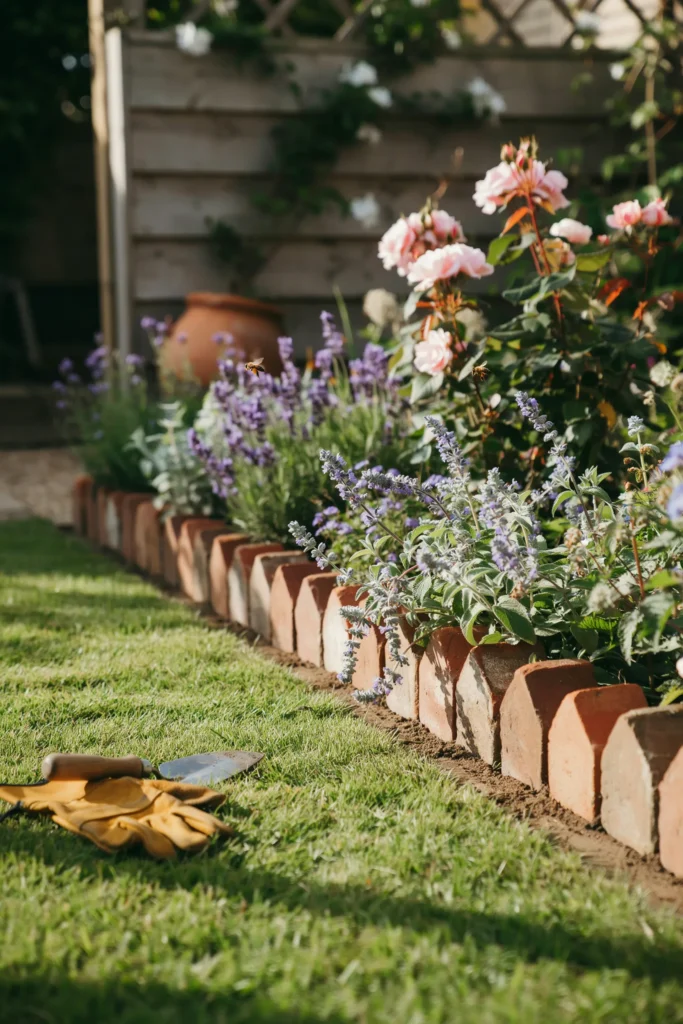
Red or buff clay bricks set on edge at a consistent forty-five degree angle in a clean sawtooth soldier course on a five centimeter compacted sand base with lavender, catmint, and roses spilling from the border creates the most classically domestic and the most genuinely traditional DIY garden edging available because warm clay bricks in a consistent sawtooth pattern create a garden edge of such complete classic warmth and such genuine traditional character that it makes every border junction feel most warmly and most honestly connected to the most beautiful domestic garden tradition available from any hard edging material.
Tip: Cut a simple angle guide from a scrap piece of timber at the required forty-five degree angle and use it as a consistent physical reference against each brick as you set it, as maintaining a precisely consistent brick angle throughout the complete soldier course is the single most important visual quality that makes a DIY brick edging look most professionally installed, and even small angle inconsistencies that are individually insignificant at each brick position accumulate into clearly visible irregularities across the complete edging run.
2. DIY Wood Log Slice Edging
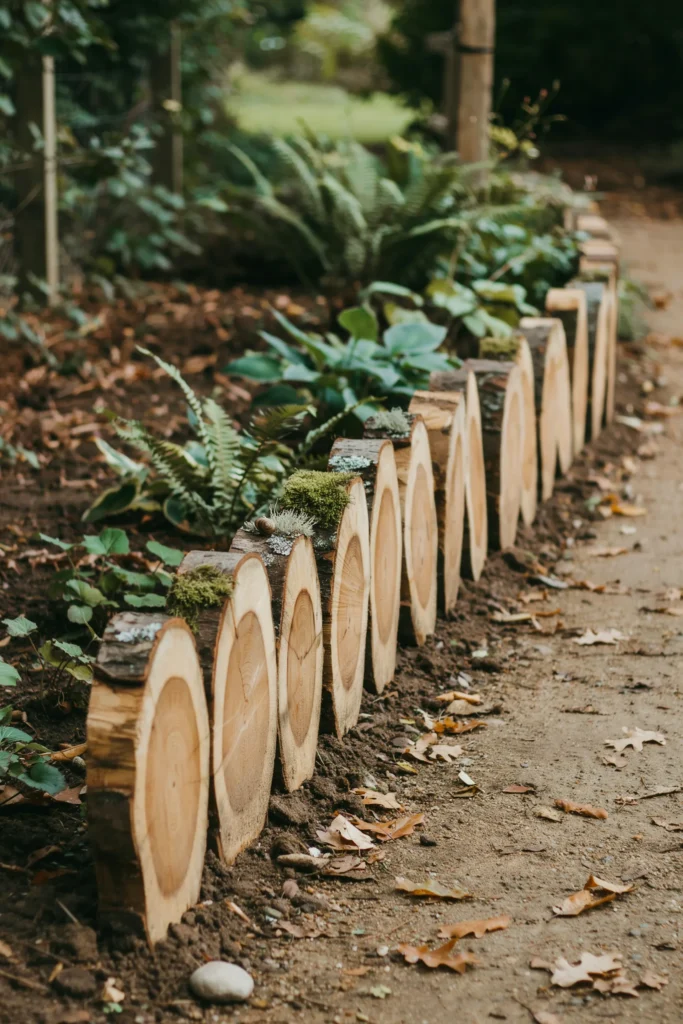
Cross-section wood slices at consistent fifteen to twenty centimeter height set in an upright row with growth rings visible, partially buried for stability, and treated with outdoor preservative, with shade-loving ferns and moss establishing beside and on the surfaces creates the most naturally woodland-beautiful and the most genuinely growth-ring-gorgeous DIY garden edging available because cross-section wood slices create an edging that is simultaneously the most naturally organic and the most genuinely unique garden border material, with each individual slice showing the specific growth ring history of a real living tree in the most honestly beautiful natural cross-section display available at any garden border edge.
Tip: Cut all wood slices from the same log or from logs of the same consistent diameter, as consistent diameter creates the most uniformly organized and the most visually satisfying edging row height, while slices from different diameter logs create an irregular varying height edging that looks most accidentally assembled rather than the most deliberately and most beautifully considered DIY wood slice garden border.
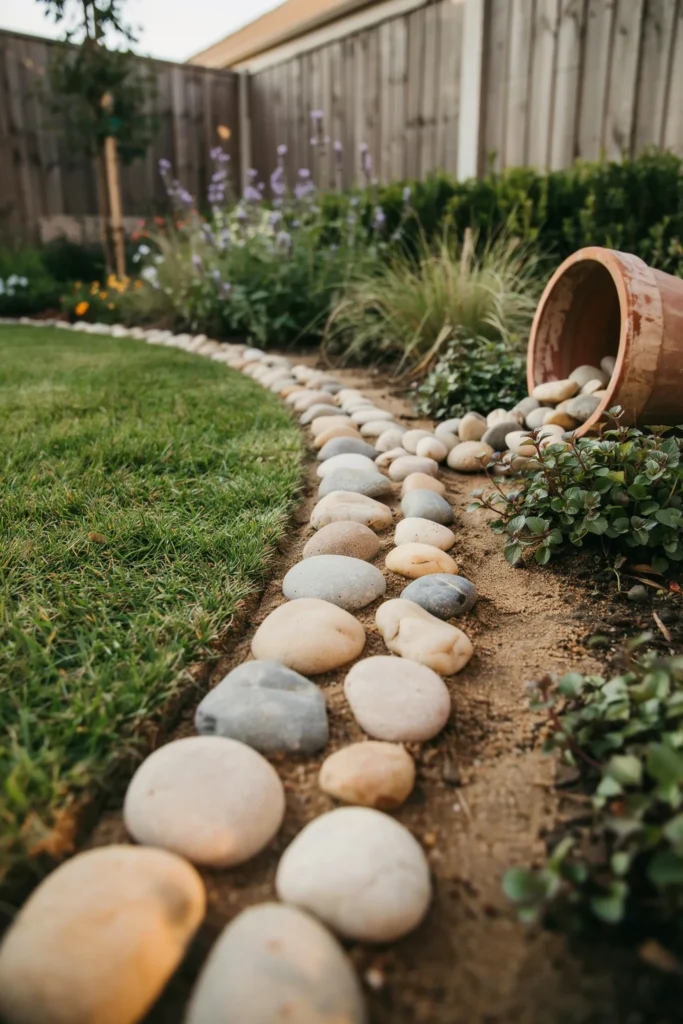
3. DIY Pebble River Stone Edging
Smooth river pebbles in warm grey, honey, cream, and tan tones in a dense fifteen centimeter wide band in a shallow sand bed with larger stones at the outer lawn-facing edge and smaller pebbles toward the border creates the most naturally decorative and the most completely organic DIY garden edging available because smooth river pebbles in varied warm natural tones create a garden edge that is simultaneously a clean functional border definition and a genuinely beautiful decorative garden feature that rewards close attention with the most naturally varied and the most organically warm natural stone surface available.
Tip: Spread a one centimeter deep layer of sharp sand along the complete pebble edging band position before placing the pebbles, as a shallow sand bed holds each pebble in the most stable position available during rainfall and garden traffic, prevents pebbles from pressing into soft soil and sinking unevenly over the growing season, and creates the most consistently level and the most completely organized pebble edging surface available from this inherently mobile loose material.
Also Explore
13 4th of July Porch Decor Ideas That Make Every Home Feel Festive
14 Outdoor String Light Ideas That Make Every Space Magical After Dark
12 Patriotic Star and Stripe Bow Ideas That Make Every Fourth of July Beautiful
13 Privacy Fence Ideas That Make Every Backyard Feel Like a Beautiful Sanctuary
14 Garden Birthday Decor Ideas That Turn Every Outdoor Party Into Pure Magic
4. DIY Corrugated Metal Edging
Strips of corrugated galvanized steel or Corten weathering steel cut from standard roofing sheet at fifteen centimeters height, inserted vertically to ten centimeters depth in the soil with architectural grasses and dark-foliaged perennials beside creates the most industrially confident and the most genuinely contemporary DIY garden edging available because the characteristic corrugation profile creates a border edge of such complete industrial personality that it makes the garden feel most deliberately designed as a contemporary outdoor space from the most freely available and the most economically accessible industrial material.
Tip: Cut corrugated metal edging strips wearing heavy leather gloves and using tin snips for shorter runs or an angle grinder with a metal-cutting disc for longer runs, and always file all cut edges smooth with a metal file immediately after cutting, as the cut edges of corrugated metal sheet are extremely sharp and can cause serious lacerations during installation and during subsequent garden maintenance unless they are properly filed smooth before any unprotected hand contact.
5. DIY Concrete Edging
Hand-poured concrete in timber form work at ten centimeters height and eight centimeters width with a steel-floated smooth finish, poured in one-meter sections with expansion joints, and architectural ornamental grass beside creates the most permanently clean and the most precisely achievable DIY garden edging available because properly mixed and properly poured concrete creates a border edge of complete permanent precision from the most basic and the most universally available construction materials, requiring no specialist skills beyond careful form work preparation and conscientious concrete mixing and finishing.
Tip: Construct the timber form work for DIY concrete edging from thin plywood strips or boards secured by short timber pegs driven into the soil, ensuring the form work is perfectly level by using a spirit level along the complete form work top edge before pouring any concrete, as the smoothly level top of the form work becomes the finished top surface of the concrete edging after the form work is removed, and any level inconsistency in the form work top creates a corresponding and permanently fixed uneven surface on the finished concrete edging that cannot be corrected without breaking out and repaying the affected section.

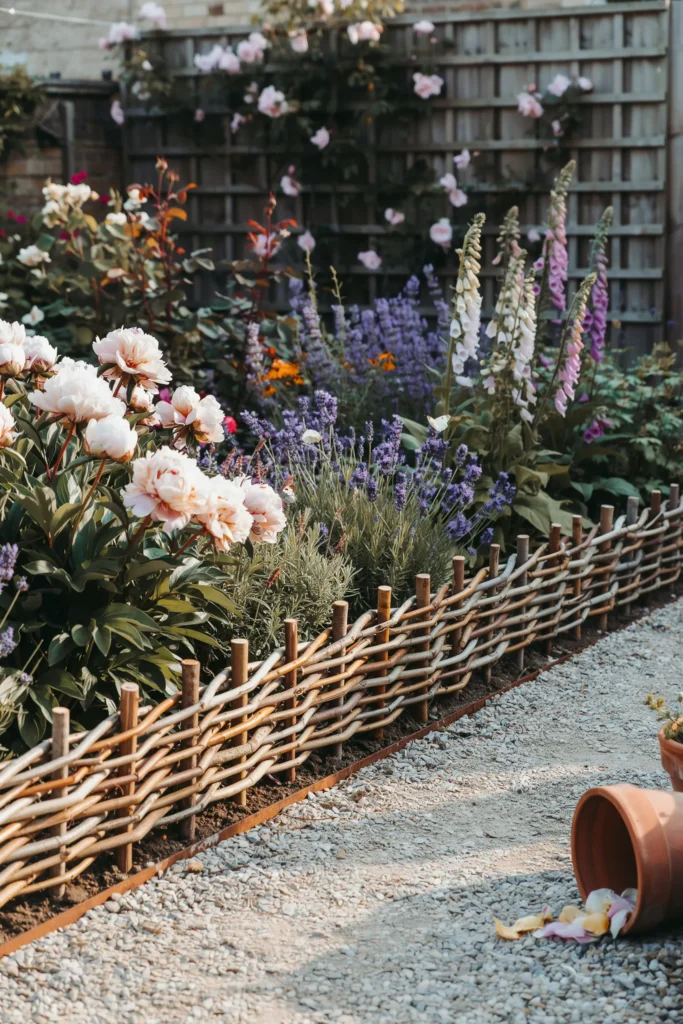
6. DIY Woven Willow Edging
Fresh willow withies woven in a continuous over-and-under basketweave between upright stakes at twenty centimeter intervals to twenty-five centimeter height with cottage peonies, foxgloves, and lavender spilling over the low weave creates the most charmingly rustic and the most genuinely ancient-craft DIY garden edging available because weaving fresh willow withies by hand in the traditional basketweave pattern is simultaneously the most satisfying and the most authentically personal DIY garden edging process available, creating a garden border from the most organically given natural material through the most honestly hand-made craft tradition.
Tip: Soak dried willow withies in a bucket of water for a minimum of two hours before weaving, or harvest fresh green willow withies in late winter while fully dormant for the best natural flexibility, as properly moistened or fresh-harvested willow withies bend most easily and most completely without splitting during the over-and-under weaving process, while dry or summer-harvested withies consistently split and break during weaving regardless of how carefully the weaving technique is applied.
7. DIY Painted Rock Edging
Smooth river rocks at eight to twelve centimeters diameter, cleaned, primed, painted with coordinated botanical or geometric designs in exterior acrylic paint, sealed with outdoor varnish, and arranged in a touching line with bright cottage flowers beside creates the most artistically personal and the most genuinely creative DIY garden edging available because painted rocks allow every gardener to create a completely unique and completely personal garden border from freely available natural materials through the most joyfully personal and the most honestly individual artistic process available in any DIY garden project.
Tip: Apply an exterior acrylic primer to all cleaned rock surfaces before painting the decorative designs, as a primer coat creates a significantly more smooth and more paint-receptive surface than unprimed bare rock, resulting in more vivid and more completely opaque painted designs with better long-term paint adhesion, while painted designs applied directly to unprimed rock surfaces consistently show the rock’s rough texture through the paint and experience significantly faster flaking and color fading than properly primed and properly painted alternatives.

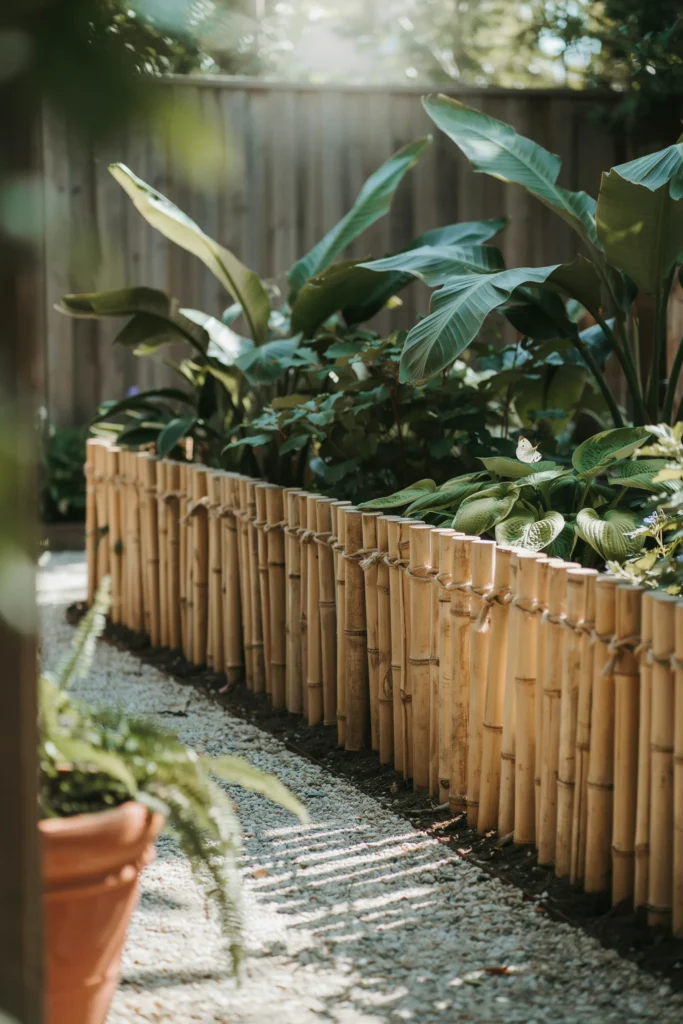
8. DIY Bamboo Edging
Natural bamboo canes cut to consistent twenty centimeter height, arranged in a tight vertical row with galvanized wire or jute rope threaded through at top and base, with cane bases pushed into the soil and bamboo oil applied annually, with tropical or cottage planting beside creates the most organically tropical and the most warmly sustainable DIY garden edging available because natural bamboo canes in a tight vertical row create a garden border definition of complete organic authenticity from the most sustainably renewable and the most genuinely warm natural material that any DIY garden edging project can most honestly and most beautifully utilize.
Tip: Thread the galvanized wire or jute rope through the bamboo cane row before pushing the cane bases into the soil, as threading the binding wire through the cane row while the canes are still free is significantly easier and creates a more evenly taut binding than attempting to thread the wire through a row of canes that are already inserted vertically into the soil, where each cane’s inserted base restricts its individual movement and makes even threading almost impossible without a dedicated threading tool.
9. DIY Terracotta Tile Edging
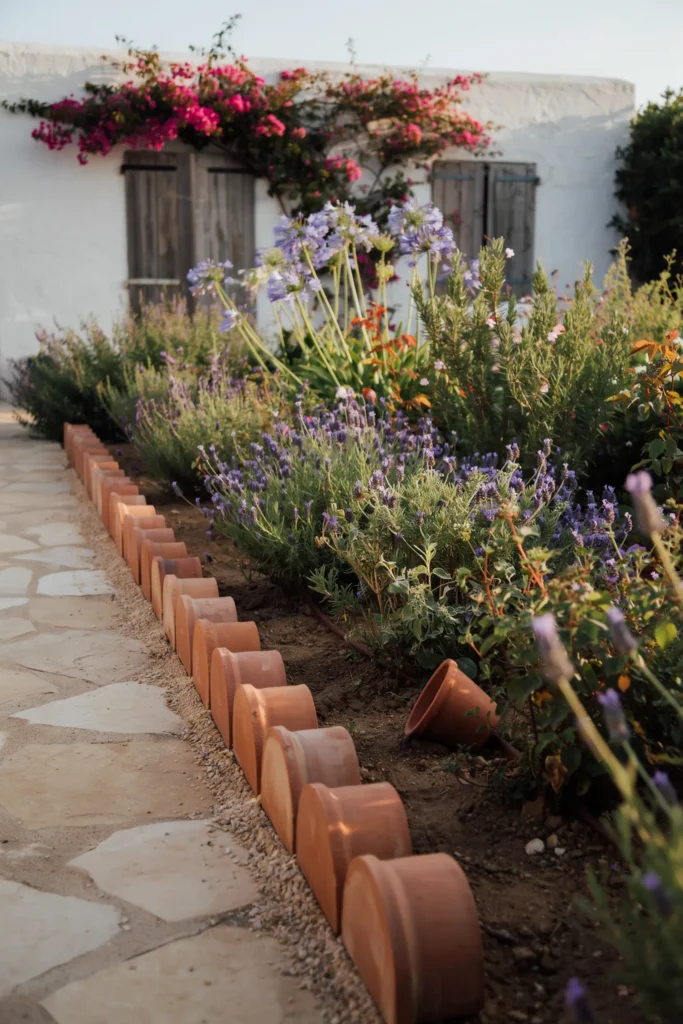
Traditional terracotta pantiles at fifteen to twenty centimeters set upright at alternating opposing angles creating a continuous scalloped pattern with Mediterranean lavender, rosemary, and agapanthus beside creates the most warmly Mediterranean and the most genuinely decorative DIY garden edging available because traditional terracotta pantiles set in an alternating pattern create a garden border definition of such complete Mediterranean warmth and such honestly decorative character from the most beautifully warm and the most historically authentic fired clay material available in any garden edging project.
Tip: Source traditional terracotta roofing pantiles from architectural salvage merchants or roofing salvage yards rather than purchasing new terracotta garden edging products, as genuine aged terracotta roofing pantiles from salvage sources bring an authentic warm patina and a genuine historical fired clay character that new terracotta products consistently lack for the same quality of warm Mediterranean garden edging, and aged salvage pantiles are frequently available at a significantly lower cost than purpose-made terracotta garden edging alternatives.
10. DIY Reclaimed Timber Edging
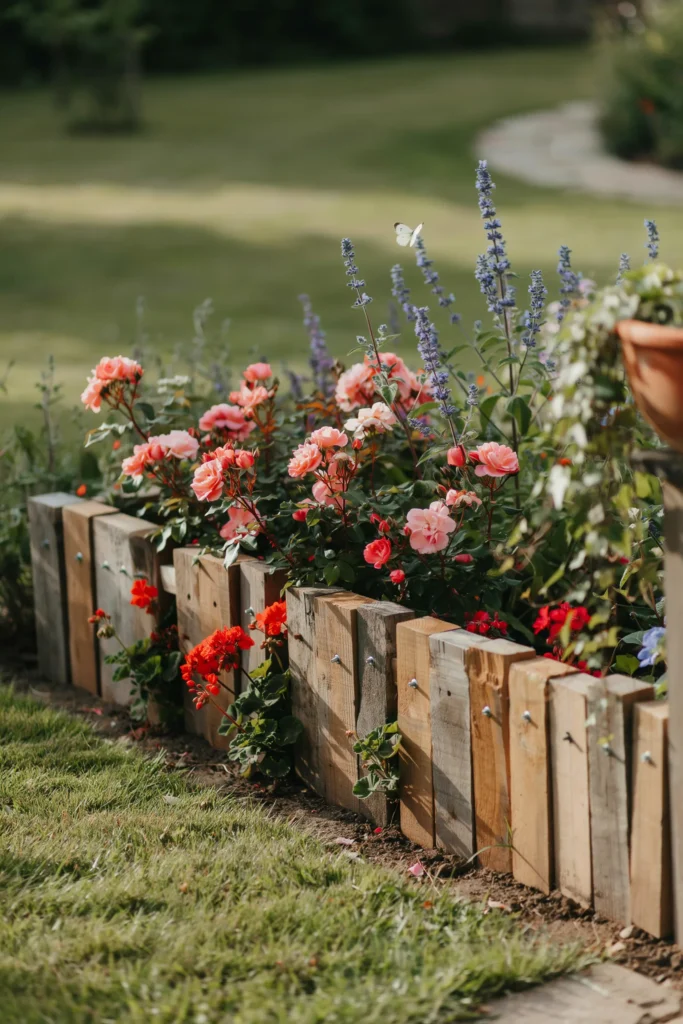
Salvaged timber boards with genuine aged patina secured horizontally to timber pegs at thirty centimeter intervals, with cottage roses, geraniums, and catmint growing over and against the aged timber, creates the most authentically characterful and the most materially warm DIY garden edging available because genuinely reclaimed and genuinely aged timber carries a quality of honest material history and real surface warmth that new timber, however carefully distressed, consistently cannot replicate for the same complete quality of authentic aged material character in any garden border definition.
Tip: Check all reclaimed timber boards for protruding nails, screws, or metal fragments before installation and remove or hammer them completely flat before using the boards as garden edging, as hidden metal protrusions in reclaimed timber create genuine safety hazards during garden maintenance when kneeling, planting, or working close to the edging surface, and a systematic inspection of all reclaimed board faces for metal protrusions is the most important safety step in any reclaimed timber DIY garden edging project.
11. DIY Glass Bottle Edging
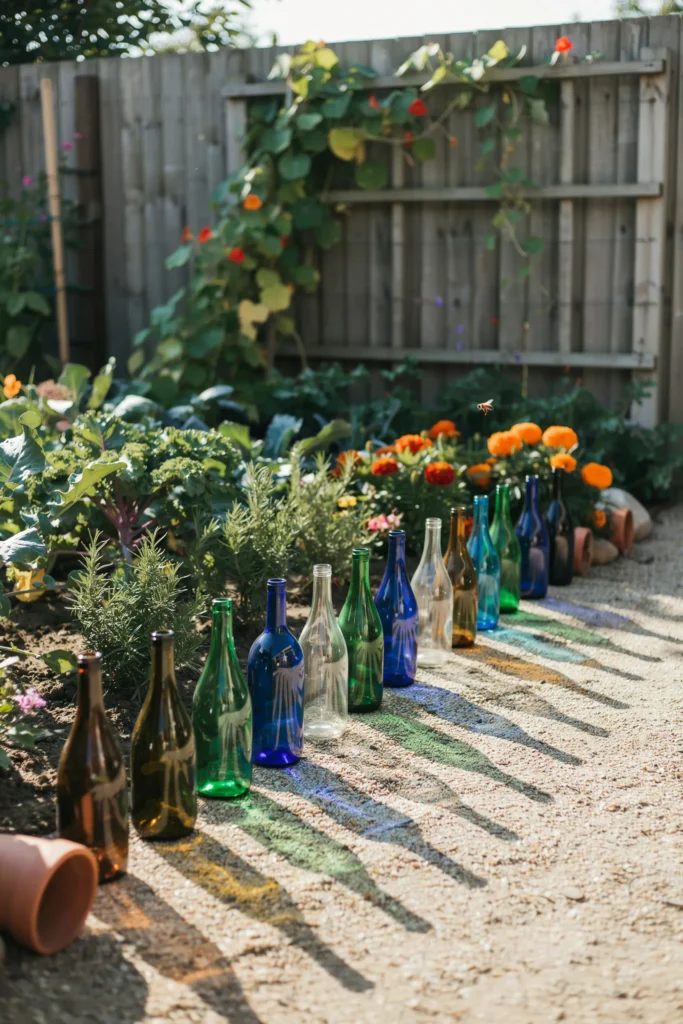
Glass bottles in emerald green, cobalt blue, and clear glass planted upside down neck-first in a consistent alternating color sequence at twenty-five centimeters height with cottage plants and afternoon sunlight creating beautiful colored light pools creates the most creatively personal and the most genuinely artistic DIY garden edging available because upside-down glass bottles in a considered color sequence create a garden border of such complete individual character and such extraordinary daily colored light quality that they transform the garden’s most functional boundary element into the most joyfully personal and the most honestly creative outdoor decorative feature available from the most completely freely available upcycled materials.
Tip: Select bottles of the most perfectly consistent neck diameter within each color for the upside-down bottle edging, as consistent neck diameter creates the most uniformly stable planting position in the soil, with each bottle sitting at the most consistent depth and the most consistent angle, while bottles of varying neck diameters sit at different depths and lean at different angles creating a visually inconsistent and structurally unstable edging line that looks most accidentally assembled rather than the most deliberately and the most artistically considered glass bottle garden border.
12. DIY Gabion Mini Edging
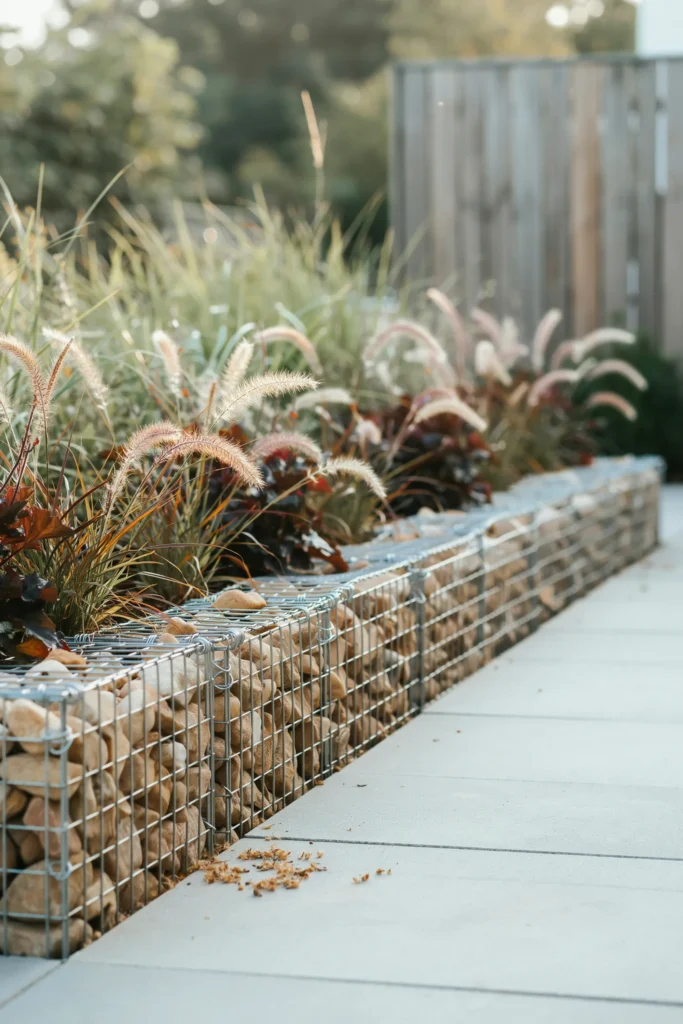
Small galvanized mesh gabion modules at twenty centimeters height filled with natural pebbles, grey slate chips, or warm buff fieldstone, placed end to end with bronze feather reed grass and dark ornamental sedge beside creates the most solidly substantial and the most genuinely industrial-natural DIY garden edging available because small stone-filled wire mesh gabion baskets create a garden border of complete geological material richness and genuine permanent visual weight that makes every border junction feel most completely grounded and most honestly defined by the most structurally honest and the most naturally substantial material available in any DIY garden edging construction.
Tip: Fill all gabion edging modules with the most visually attractive face stones placed deliberately by hand against the visible wire mesh faces before filling the interior volume with smaller less attractive stones using a trowel, as the visible face stones of small gabion edging modules are the primary aesthetic element of the complete gabion edging installation, and investing time in their deliberate hand-placement creates a significantly more visually beautiful and more naturally organized gabion edging than filling the complete basket mechanically with mixed stone sizes that place randomly selected stones of all sizes against the most visible wire mesh face.
13. DIY Living Herb Edging
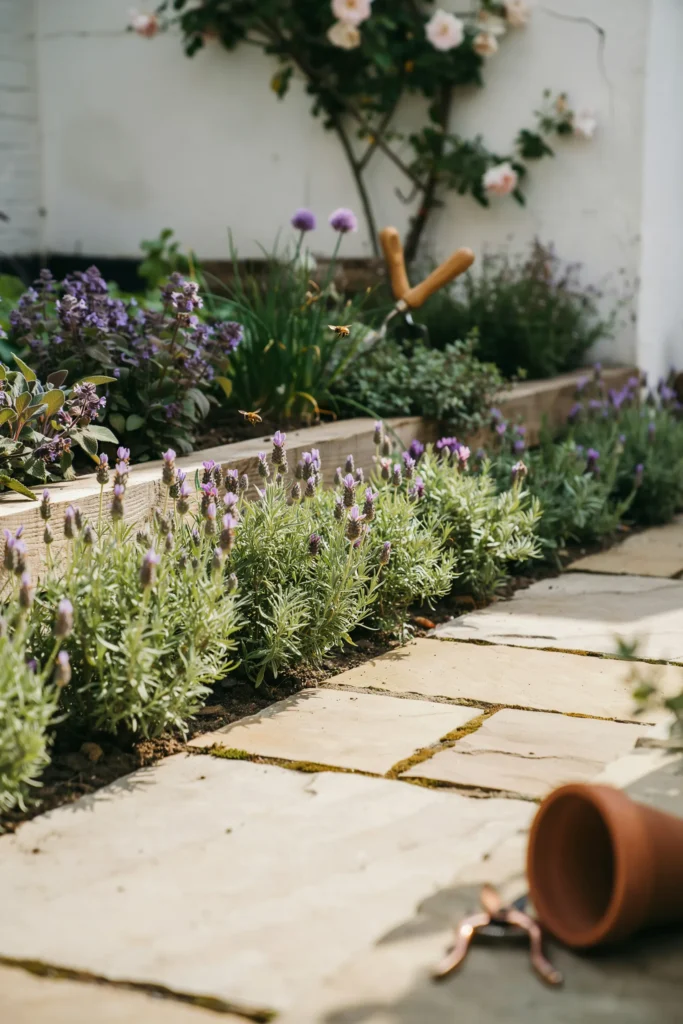
A consistent row of lavender plants at twenty-five centimeter intervals, or compact purple sage, or clump-forming chives, or creeping thyme, all planted in maximum sunlight and clipped annually after flowering to maintain compact form, with the main border planting behind creates the most fragrantly productive and the most genuinely botanical DIY garden edging available because a living herb edging is the only DIY garden edging that actively contributes to the garden’s botanical fragrance, its culinary productivity, and its ecological value for beneficial insects simultaneously, making it the most honestly alive and the most completely generous garden border definition available from any living plant material.
Tip: Clip lavender edging plants consistently with garden shears immediately after their summer flowering has finished, removing the complete spent flower stems and approximately one third of the current season’s green growth in a single consistent clipping, as this post-flowering clip is the single most important annual maintenance action that keeps lavender edging plants compact, densely foliated, and consistently flowering in subsequent seasons, while lavender plants left unclipped after flowering consistently become woody, open-centred, and sparsely flowering within two to three seasons of neglecting the annual post-flowering clip.
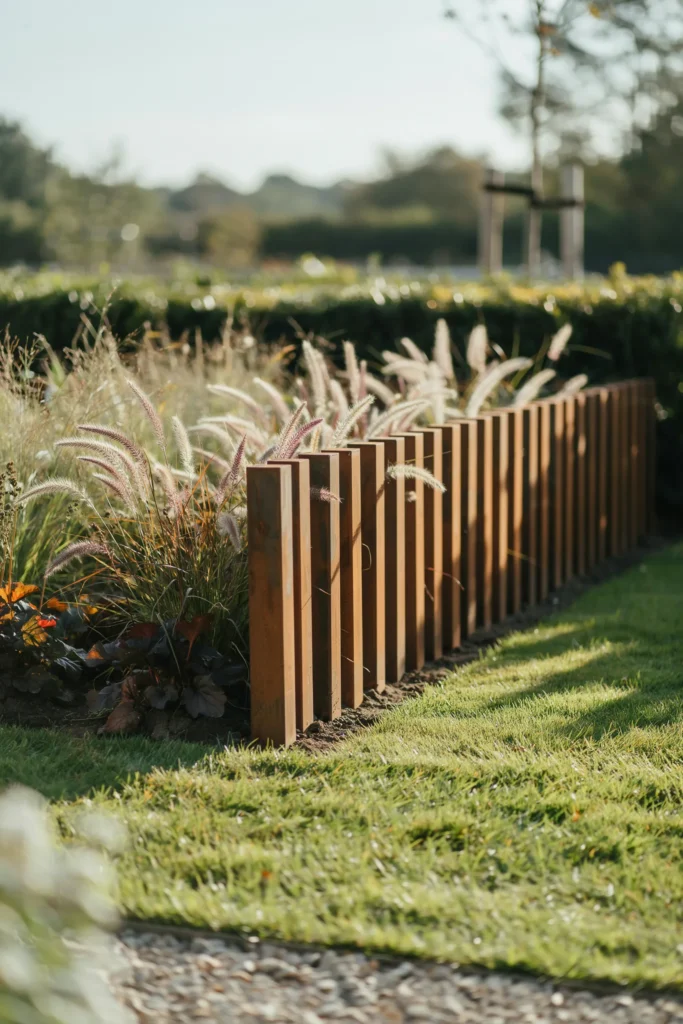
14. DIY Slate Upright Edging
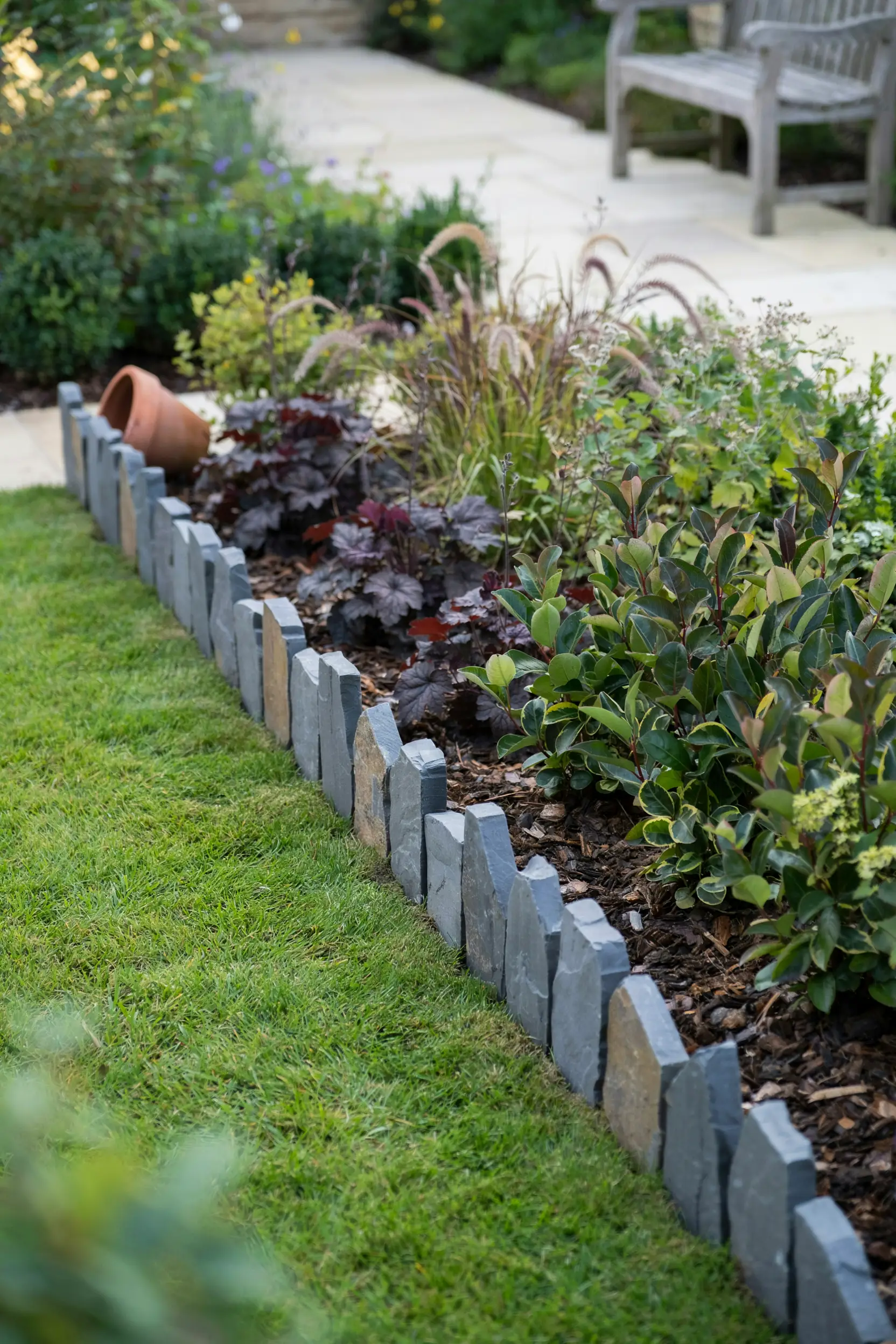
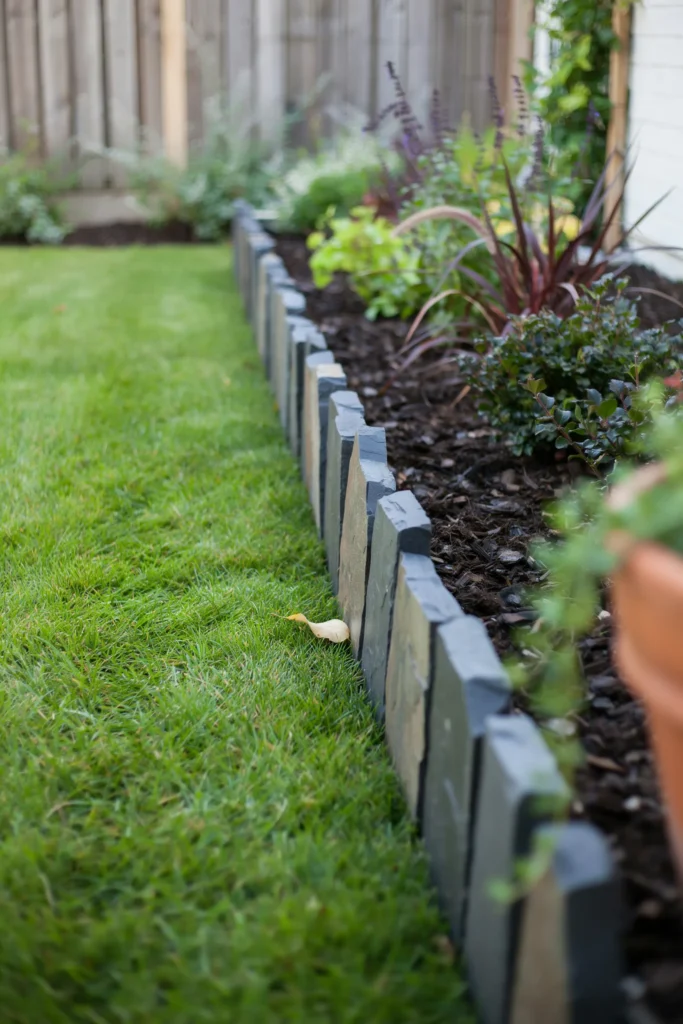
Dark grey or blue-grey natural slate pieces at fifteen to twenty centimeters height set upright on edge with eight centimeters buried in the soil for stability, with bright green lawn on one side and dark mulched border with architectural dark grasses on the other creates the most dramatically dark and the most genuinely mineral-beautiful DIY garden edging available because dark slate set upright creates a garden edge of such extraordinary contemporary drama and such honest geological mineral character that it makes every garden border junction feel most completely and most confidently defined by the most honestly beautiful and the most naturally dramatic dark mineral material available from roofing salvage suppliers at one of the most accessible price points in any hard DIY garden edging category.
Tip: Source natural slate edging pieces from roofing tile suppliers or roofing salvage merchants as off-cut or broken slate pieces rather than purchasing purpose-made garden slate edging products, as roofing salvage slate provides the most authentic dark mineral character and the most beautifully genuine geological quality available at a significantly lower cost than purpose-made alternatives, and properly sized off-cut roofing slate pieces set upright are visually indistinguishable from purpose-made garden slate edging while delivering the most complete quality of genuine natural slate mineral character.
Conclusion
DIY garden edging is the most personally rewarding and the most genuinely transformative garden project available at every skill level and every budget because it takes the garden’s most consistently functional and the most organizationally important element and makes it most completely personal through the specific choice of material, the specific quality of the installation care, and the specific relationship with the planting that grows most beautifully alongside it at every garden border boundary.
The fourteen DIY garden edging ideas in this post have demonstrated that genuinely beautiful and genuinely personally considered garden edges are achievable at every material cost, every installation skill level, and every aesthetic preference available in any residential garden. From the most classically domestic warm brick sawtooth to the most artistically personal painted rock arrangement. From the most naturally organic woven willow basketweave to the most industrially confident corrugated metal profile. From the most warmly Mediterranean terracotta scallop to the most dramatically dark upright slate edge. From the most fragrantly productive living herb row to the most creatively colorful glass bottle light display. From the most permanently clean hand-poured concrete to the most authentically characterful reclaimed timber board. Each edging treatment creates a completely different daily garden border experience while sharing the same fundamental quality: a garden edge that makes the outdoor space feel most genuinely considered, most warmly personal, and most completely organized as a whole composed garden rather than a collection of plants growing alongside an undefined boundary.
Choose the DIY garden edging idea that most genuinely fits your garden’s aesthetic character, your available installation time and skill level, your ongoing maintenance preference, and your honest personal vision of the most beautifully organized and the most completely considered outdoor space available. Install it with genuine care for the consistency of the line, the stability of the installation, and the adjacent planting that together make the edging most completely and most warmly beautiful as a total garden composition. And discover what every genuinely beautiful DIY garden edging ultimately and most consistently delivers: the specific and extraordinary quality of a garden so completely and so warmly organized that every person who sees it feels most genuinely and most completely that the outdoor space belongs to someone who most honestly and most completely loves every beautiful detail of it.