A hog wire fence is one of the most practical and visually flexible fence options for gardens, backyards, patios, decks, and rural properties. It creates a clear boundary without fully blocking the view, which makes it especially useful for homeowners who want structure but do not want the yard to feel closed in. Unlike solid privacy fencing, hog wire allows light, air, and visibility to move through the space. That makes it a smart choice for vegetable gardens, flower beds, dog-friendly yards, farmhouse landscapes, and scenic properties where the view matters.
The style can change dramatically depending on how the fence is framed. A cedar wood frame can make it feel warm and modern. Weathered timber can make it rustic and farmhouse-inspired. Black framing can make it sleek and contemporary. Stone posts can make it feel more permanent and refined. Climbing plants can soften the wire and turn the fence into a living garden feature. Raised beds, gravel paths, gates, lighting, and thoughtful planting can make a hog wire fence look much more intentional than a simple utility fence.
The biggest advantage of hog wire fencing is that it works with the landscape instead of hiding it. It can define a space while still showing the garden beyond. It can protect plants without making the garden feel boxed in. It can create a dog-friendly boundary while keeping the yard open and easy to supervise. With the right layout, materials, and finishing details, a hog wire fence can be both useful and beautiful.
These 12 hog wire fence ideas show different ways to use this simple fencing style for rustic gardens, modern backyards, farmhouse yards, raised beds, decks, gates, privacy planting, and more.
1. Rustic Hog Wire Garden Fence
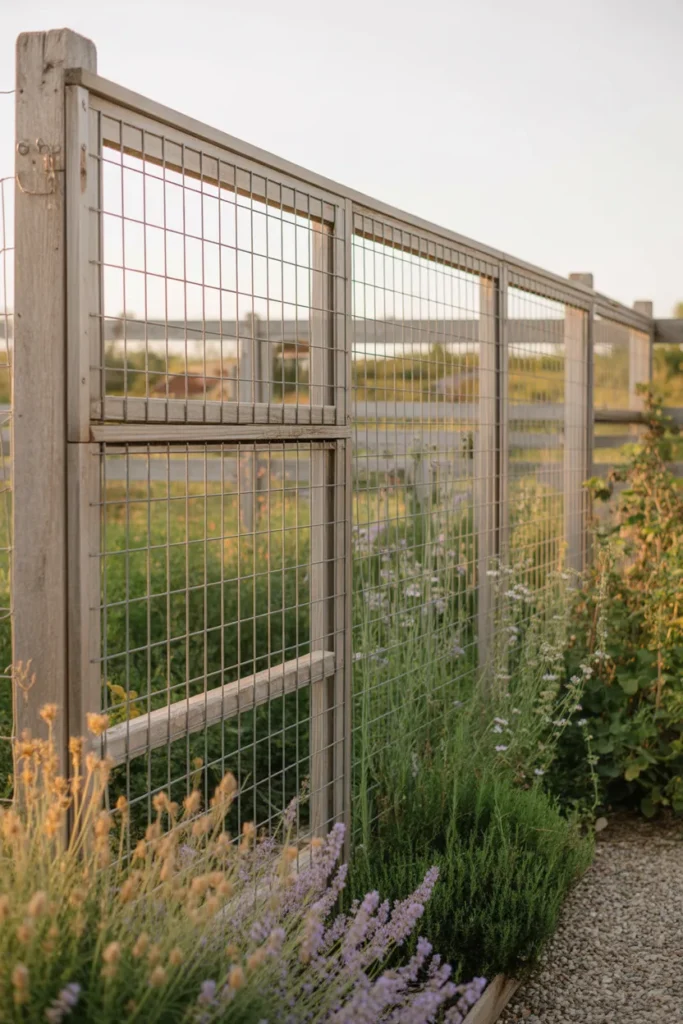
A rustic hog wire garden fence is a great choice for flower gardens, herb gardens, vegetable areas, and cottage-style backyards. The wire panels keep the garden visible while still creating a clear boundary. When framed with weathered wood or cedar, the fence feels natural rather than industrial.
This style works especially well when plants grow close to the fence. Flowers, herbs, tall grasses, and soft ground covers help blur the line between structure and garden. The result is a fence that feels useful but not harsh.
Tip: For the best result, think about the fence base as much as the fence itself. A bare dirt line can make the fence look unfinished, while lavender, herbs, mulch, gravel, or wildflowers can make it feel settled into the landscape. If the fence surrounds a vegetable garden, leave enough room along the inside edge for walking, watering, and harvesting without stepping on plants.
2. Modern Hog Wire Fence with Wood Frame
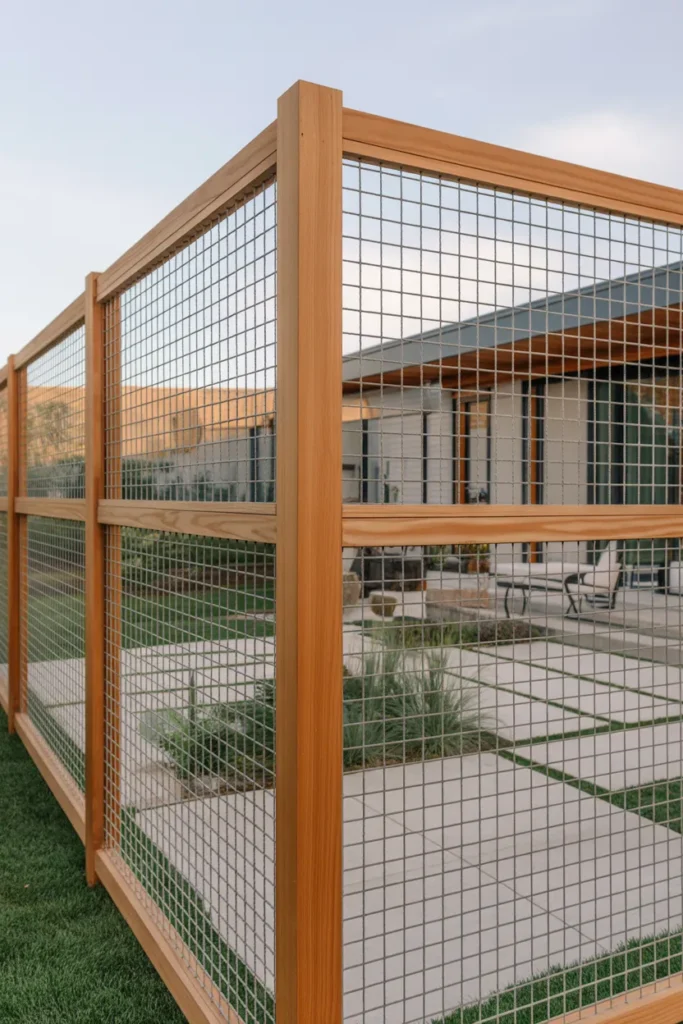
A modern hog wire fence with a wood frame is ideal for homeowners who want something open but still clean and designed. Smooth cedar, redwood, or dark-stained timber can turn simple wire panels into a contemporary backyard feature. The wood frame gives the fence structure, while the wire keeps the yard light and visible.
This design works well with patios, concrete pavers, gravel landscaping, ornamental grasses, and modern home exteriors. It is especially useful when a solid fence would make the yard feel smaller.
Tip: Clean lines matter most with this style. Keep panel sizes consistent, align the top rails carefully, and choose a stain color that complements your house exterior or patio materials. If the fence is near a seating area, consider matching the wood tone to outdoor furniture or decking so the whole backyard feels connected.
3. Hog Wire Fence for Backyard Privacy
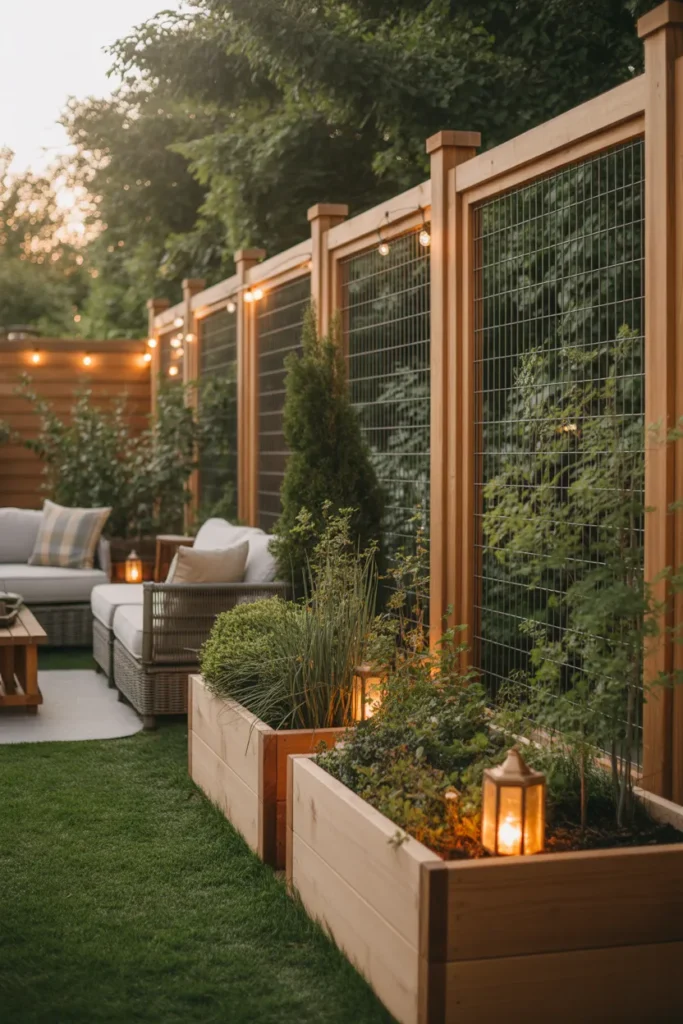
A hog wire fence is not naturally private, but it can become semi-private when paired with the right planting. This is a good option if you want screening without building a tall solid wall. The wire provides structure, while plants provide softness and coverage.
Tall grasses, evergreen shrubs, climbing vines, and planter boxes can all help reduce visibility. This approach works well for patios, side yards, and backyards where airflow and sunlight are still important.
Tip: Plan privacy in layers. Use taller plants at the back, medium shrubs in the middle, and lower plants at the front. If privacy is needed all year, include evergreen plants instead of relying only on seasonal flowers or vines. This prevents the fence line from becoming exposed during winter or dormant months.
4. Hog Wire Fence with Climbing Plants
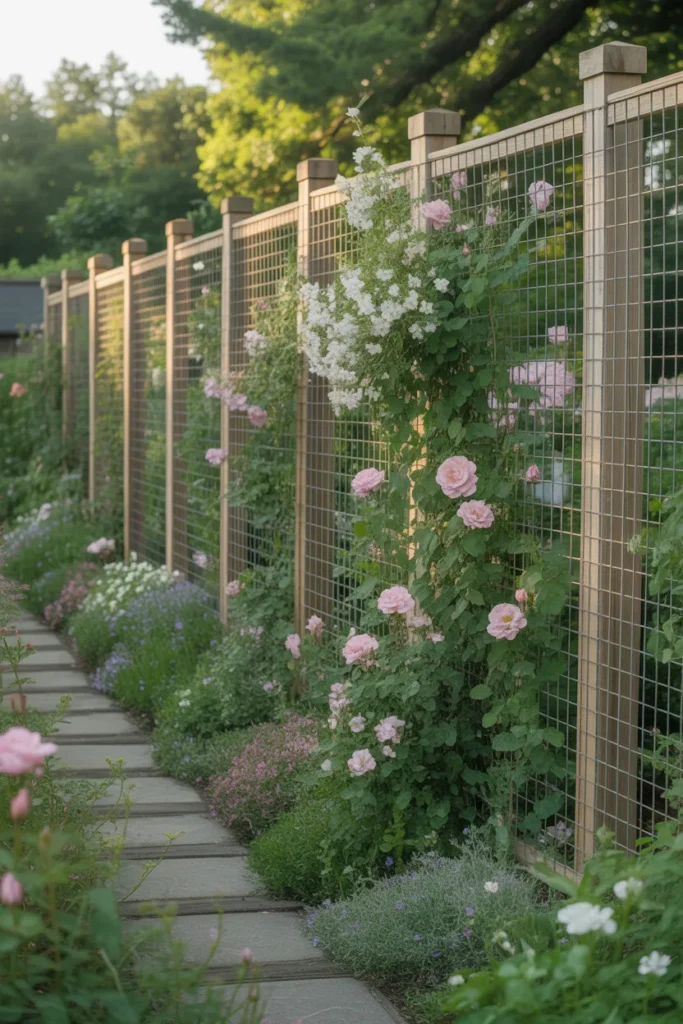
A hog wire fence with climbing plants is one of the most beautiful ways to soften wire fencing. The grid pattern naturally works like a trellis, making it useful for roses, clematis, jasmine, honeysuckle, ivy, peas, beans, or other climbing plants.
This idea works well along garden paths, patios, vegetable gardens, and cottage-style landscapes. Over time, the plants can make the fence feel less like a boundary and more like a living feature.
Tip: Choose climbing plants carefully. Some vines become heavy and need stronger support, while others need regular pruning. Train young plants gently through the wire when they are still flexible, and avoid letting vines build too much weight on one section of the fence. Balanced growth keeps the fence attractive and easier to maintain.
Also Explore
12 Hidden Privacy Fence Ideas That Make Every Garden Feel Completely Secluded
13 Privacy Fence Ideas That Make Every Backyard Feel Like a Beautiful Sanctuary
14 DIY Privacy Fence Ideas That Give Every Backyard Beautiful Boundaries on a Budget
16 Wood Fence with Wire Mesh Ideas That Give Every Yard Beautiful Boundaries and Open Views
12 Rustic Fence Ideas That Make Every Yard Feel Warm, Natural, and Charming
5. Farmhouse Hog Wire Fence
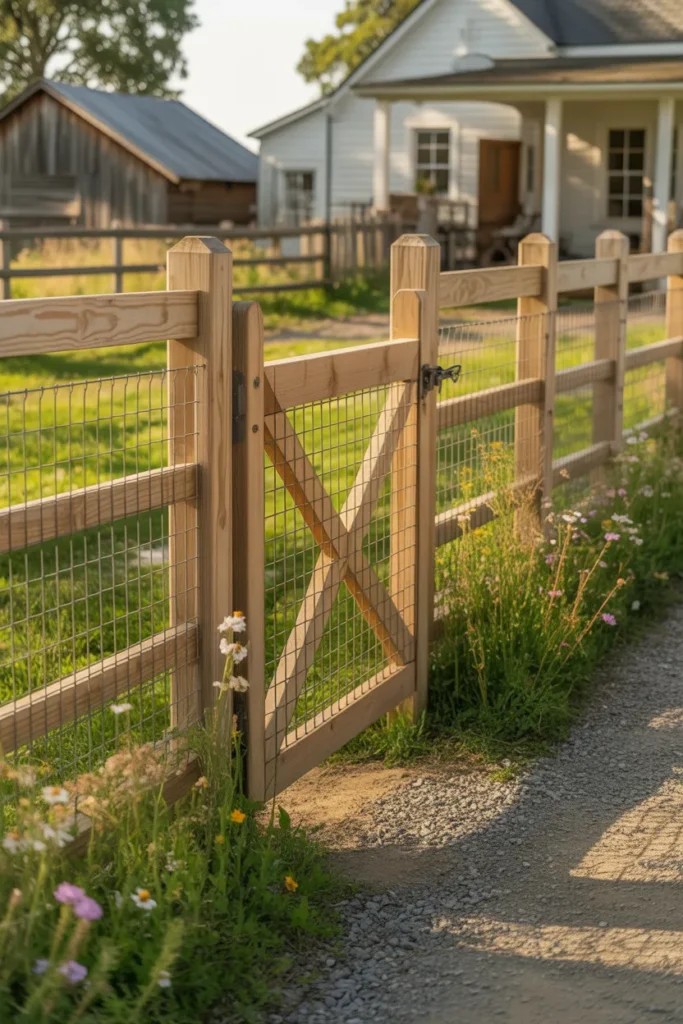
A farmhouse hog wire fence feels practical, open, and relaxed. It works beautifully along driveways, gardens, lawns, pasture edges, and front yards. The combination of wood posts and open wire panels fits naturally with rural homes and farmhouse exteriors.
This fence style looks best when it does not feel overly polished. A simple gate, gravel path, wildflowers, and natural wood finish can make it feel authentic and useful.
Tip: Keep the design honest and functional. Farmhouse fencing should feel like it belongs to the property, not like a decorative afterthought. Use sturdy posts, simple lines, and planting that fits the surrounding landscape. If the fence is near the front of the home, a matching gate can make the whole entrance feel more complete.
6. Hog Wire Fence with Garden Gate
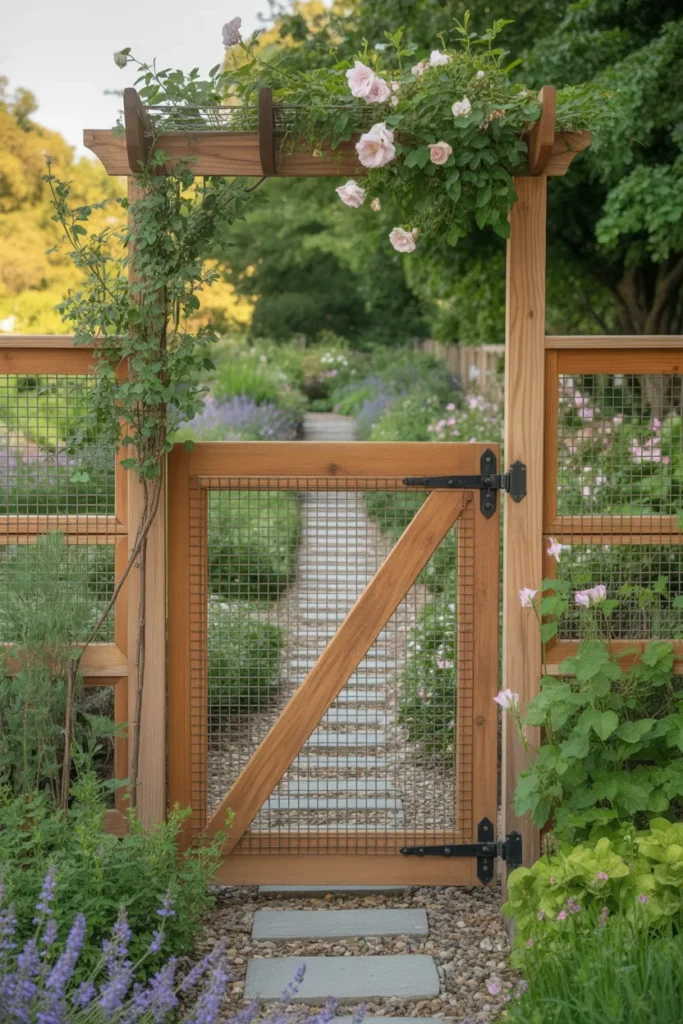
A hog wire fence with a garden gate adds both function and charm. The gate creates a clear entrance and makes the fence feel more intentional. It is especially useful for vegetable gardens, side yards, cottage gardens, and backyard transitions.
A matching wood-framed gate with hog wire infill keeps the design consistent. Simple hinges, a reliable latch, and planting around the posts can make the entrance feel welcoming and practical.
Tip: Build the gate stronger than the rest of the fence panels because it will be opened, closed, leaned on, and used more often. Make sure it is wide enough for your actual needs. If you use a wheelbarrow, garden cart, mower, or large planters, the gate should accommodate them comfortably.
7. Black Hog Wire Fence Design
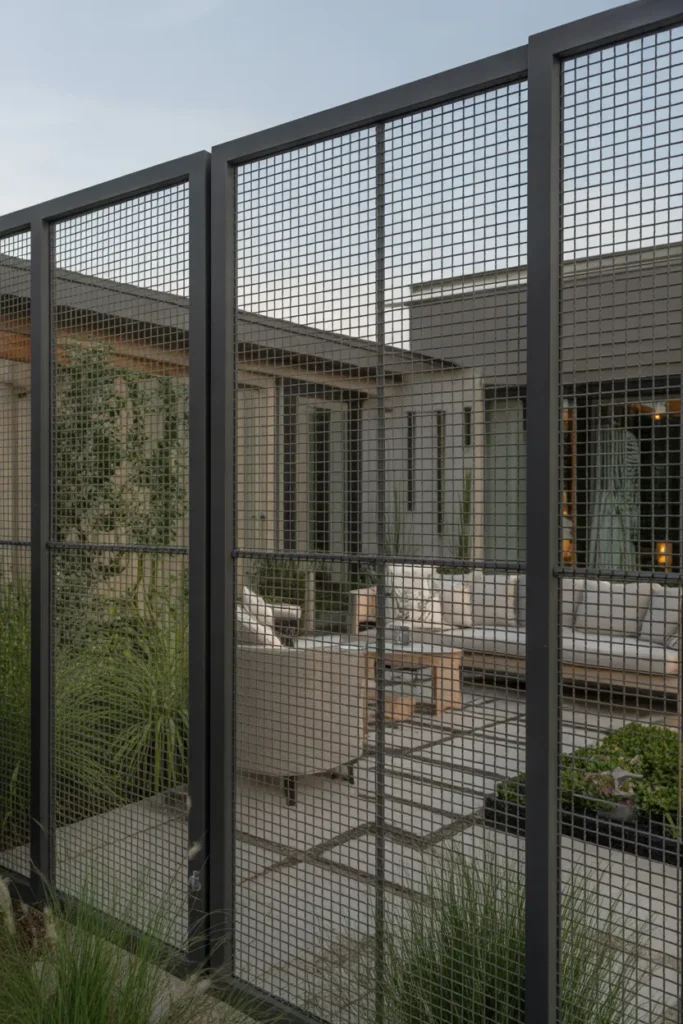
A black hog wire fence gives this practical fencing style a more modern and polished appearance. Black wire or black framing can make the fence visually recede into the landscape while still creating a clean boundary. It works well with contemporary homes, modern gardens, concrete pavers, gravel, and sculptural plants.
This style feels less rural than galvanized wire and can look more refined in compact backyards or patio spaces.
Tip: Use black fencing when you want the view beyond the fence to remain important. Dark wire often disappears visually better than shiny galvanized wire, especially when placed in front of plants or shaded areas. Pair it with simple planting and clean hardscaping so the overall look stays modern rather than busy.
8. Hog Wire Fence for Vegetable Garden
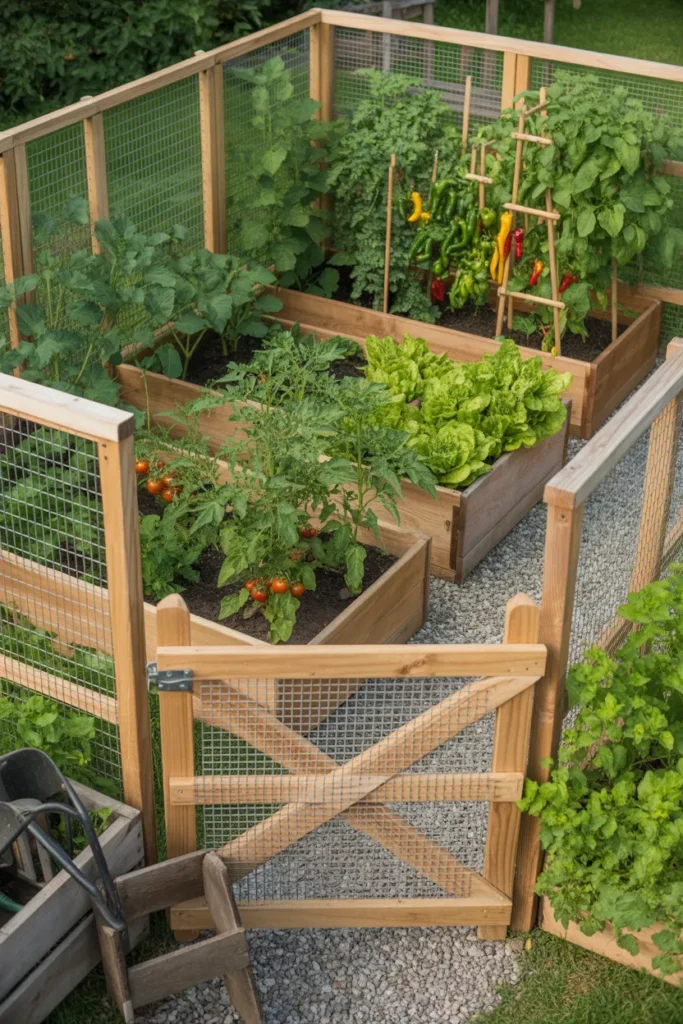
A hog wire fence is very practical for vegetable gardens because it protects the growing area while keeping sunlight and airflow available. It also lets you see the garden clearly from outside the fence, which makes it easier to monitor plant growth, watering needs, and pests.
This fence works well around raised beds, in-ground rows, herb gardens, and productive backyard spaces. A gate, gravel path, and organized beds can make the garden look attractive as well as functional.
Tip: Before building, think about what the fence needs to protect against. Small pets, larger dogs, rabbits, deer, or general foot traffic may require different fence heights, bottom gaps, and gate details. For productive gardens, also make the entrance wide and paths comfortable enough for daily maintenance.
9. Hog Wire Fence with Raised Beds
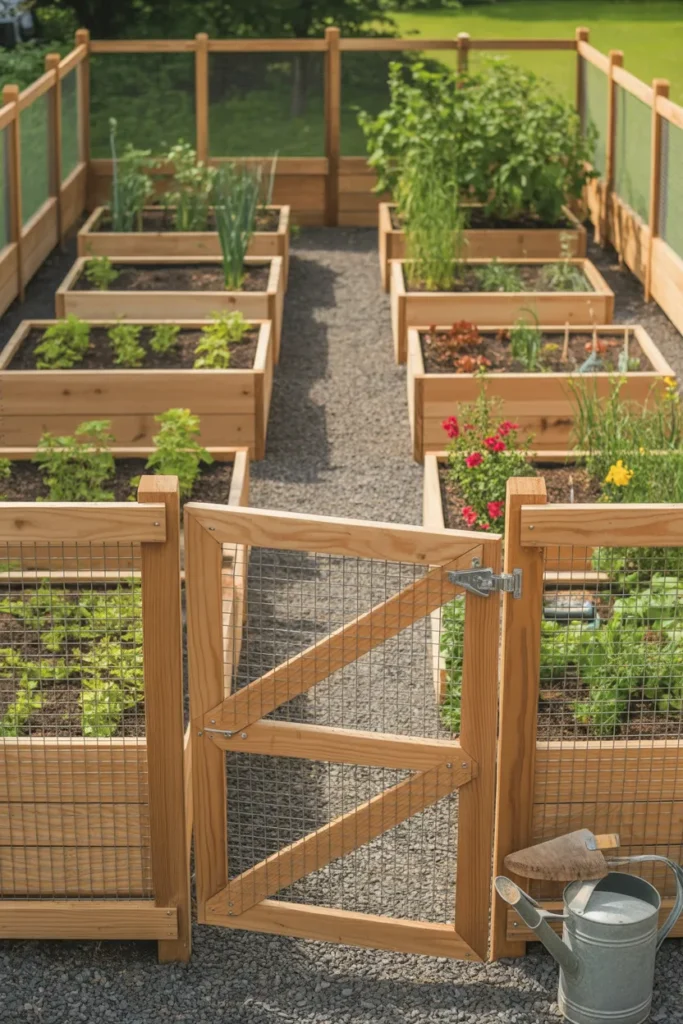
A hog wire fence with raised beds creates a garden that looks tidy, organized, and easy to maintain. The raised beds provide clear planting areas, while the fence defines the garden perimeter without hiding the plants.
This idea works especially well for homeowners who want a vegetable garden that looks attractive from the patio or house. Gravel paths, matching wood tones, and consistent bed spacing can make the garden feel designed rather than purely functional.
Tip: Align the raised beds with the fence layout if possible. When the beds, paths, and fence panels follow the same lines, the whole garden looks more intentional. Leave enough space between the beds and fence for watering, harvesting, pruning, and carrying supplies.
10. Hog Wire Fence for Dog-Friendly Yard
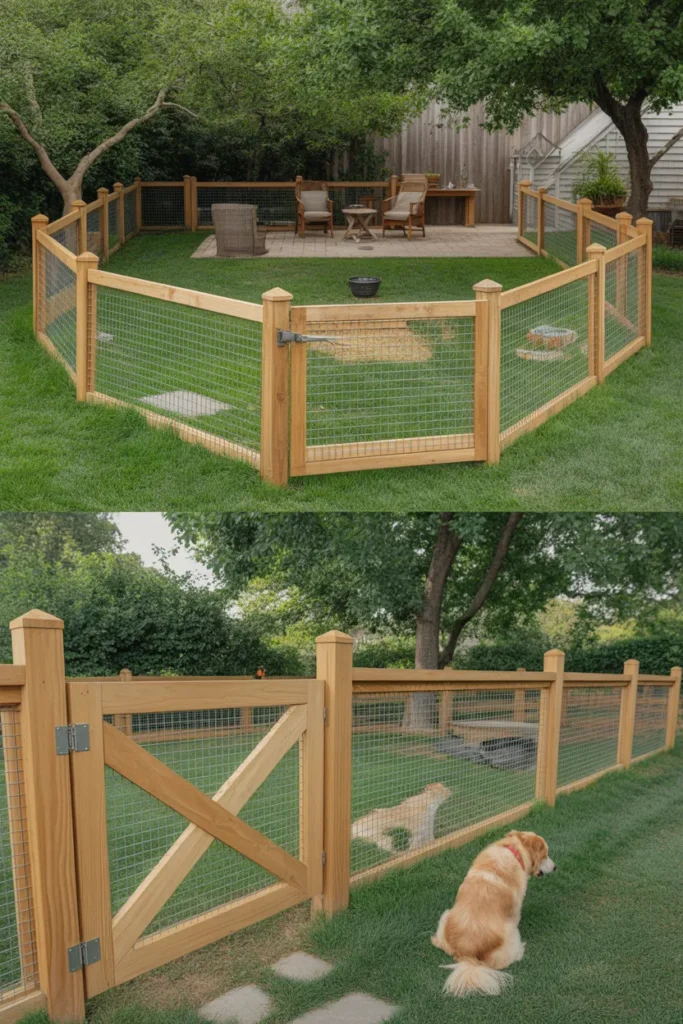
A hog wire fence can work well for a dog-friendly yard because it creates a secure boundary while keeping visibility open. This makes it easier to supervise pets and helps the yard feel larger than it would with a solid fence.
However, dog-friendly fencing needs careful planning. The wire spacing, bottom gap, gate latch, post strength, and fence height should all match the size and behavior of the dog.
Tip: Do not choose the fence based on appearance alone. Check whether your dog can squeeze through openings, dig under the bottom, jump over the height, or push against panels. Secure the bottom edge properly, use strong posts, and choose a reliable latch. A beautiful fence is only successful if it safely suits the pet using the yard.
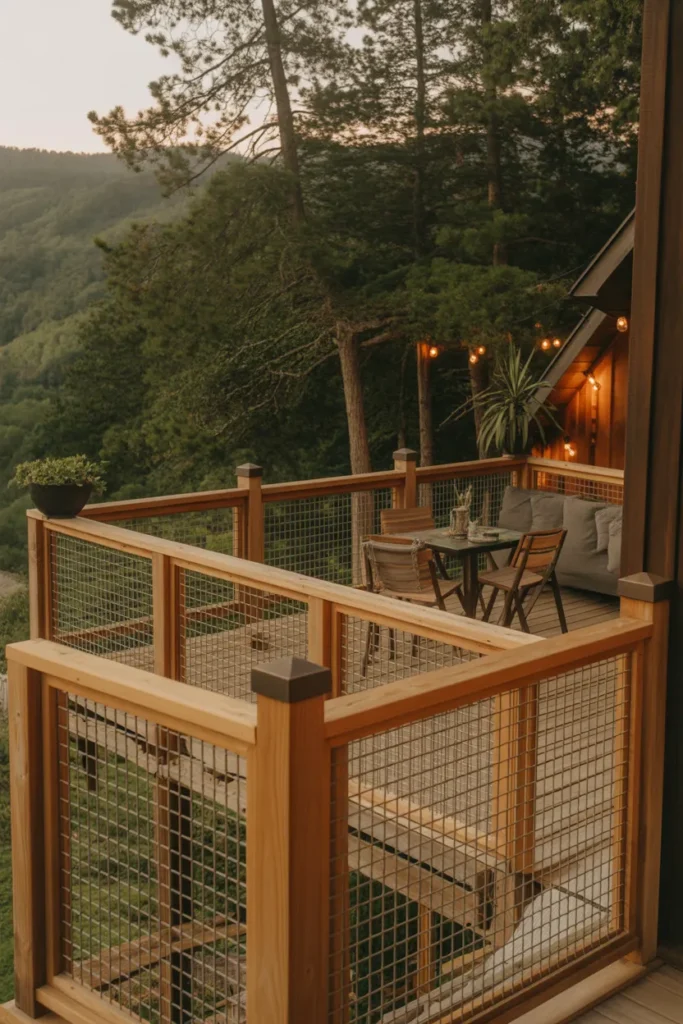
11. Hog Wire Deck Railing Fence
Hog wire deck railing is a great way to keep views open from a deck. It works especially well for cabins, farmhouse decks, mountain homes, wooded properties, and backyards with scenic views. The wire provides safety while allowing the landscape to remain visible.
Wood posts and top rails add warmth, while the wire panels keep the railing lighter than solid wood. This makes the deck feel more open and connected to the outdoors.
Tip: Always check local building codes before using hog wire as deck railing. Railing height, spacing, panel strength, and installation requirements can vary depending on location and deck height. The design should be attractive, but safety and code compliance must come first.
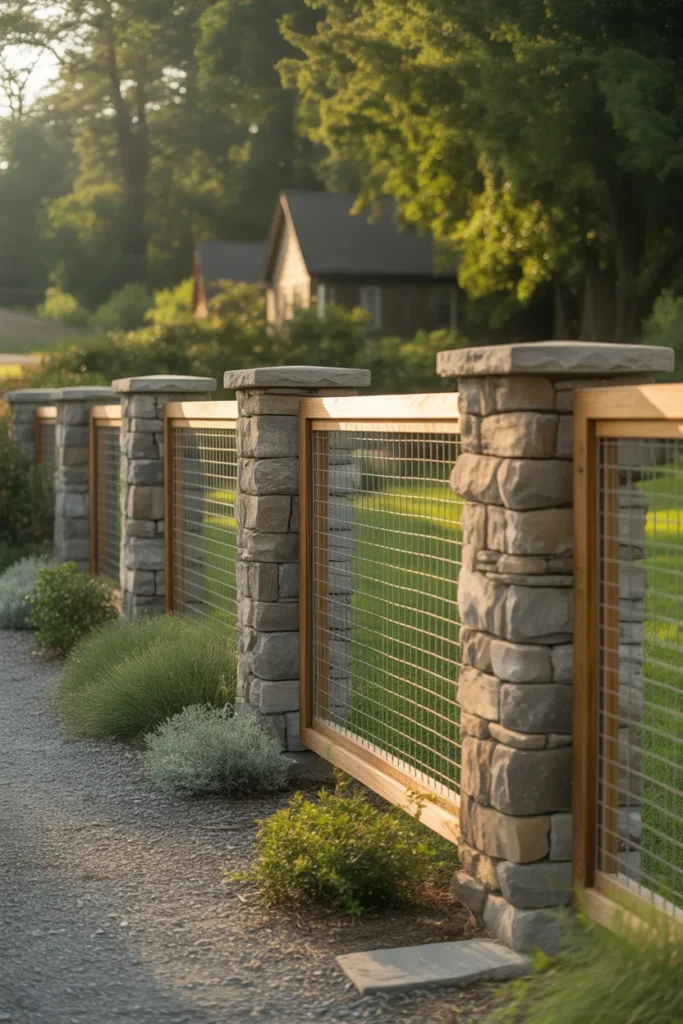
12. Hog Wire Fence with Stone Posts
A hog wire fence with stone posts feels stronger and more refined than a simple wood-and-wire fence. The stone adds permanence and weight, while the wire keeps the overall boundary open. This combination works well for front yards, garden entrances, driveways, cottage landscapes, and farmhouse properties.
Wood or metal frames can be used between stone posts depending on the style. Plants around the base can soften the stone and help the fence feel integrated into the landscape.
Tip: Choose stone that relates to your home or landscape. If the stone posts match nearby retaining walls, house stonework, pathways, or garden edging, the fence will look more intentional. Without that connection, stone posts can feel too heavy or disconnected from the rest of the yard.
Conclusion
Hog wire fencing is popular because it balances structure and openness. It can define a garden, protect a vegetable bed, create a dog-friendly boundary, frame a deck, or add rustic character to a farmhouse yard without blocking light and views. The same basic material can look rustic, modern, farmhouse, or refined depending on the posts, framing, finish, planting, and layout.
The most important thing is to choose the right version for your purpose. A garden fence needs access and plant protection. A privacy fence needs layered planting. A dog-friendly fence needs secure spacing and strong construction. A deck railing needs safety and code awareness. A decorative front yard fence needs materials that connect with the home’s architecture.
When planned carefully, a hog wire fence can be much more than a practical barrier. It can become a beautiful part of the yard, one that keeps the space open, organized, and naturally connected to the landscape.