The kitchen backsplash is one of those surfaces that most people spend far less time thinking about than it deserves. It covers more visual real estate than almost any other element in the kitchen, running the full length of the counter, sitting at the exact eye level of anyone working at the cooking surface, and framing the most-used area of the entire home. And yet it is often an afterthought, chosen quickly at the end of a kitchen renovation after the budget and the decision-making energy have both been nearly exhausted.
This post is here to change that. Because the right kitchen backsplash does not just protect the wall behind your counters from splashes and grease, it defines the entire personality of the kitchen, anchors the color story of the space, and often becomes the single most memorable design element in the room. Whether you are planning a full kitchen renovation, refreshing an existing kitchen with a new backsplash, or simply gathering inspiration for a future project, these 19 kitchen backsplash ideas cover every style, every material, and every budget from the most timeless to the most dramatically bold.
Let’s find the backsplash that makes your kitchen exactly what it should be.
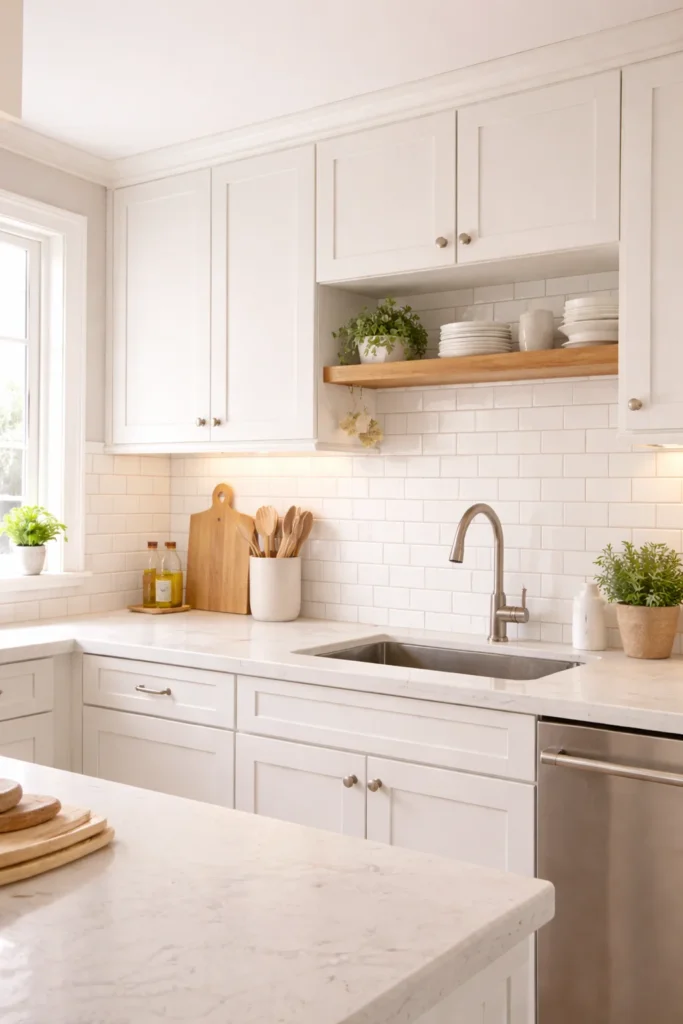
1. Classic White Subway Tile Backsplash
There is a reason the white subway tile backsplash has been the most popular kitchen choice for well over a century and shows absolutely no sign of leaving. It is clean, it is timeless, it works with every cabinet color, every countertop material, and every kitchen style from farmhouse to contemporary. It reflects light beautifully, it is practical and durable, and it costs a fraction of most other backsplash options. When something has been right for a hundred years, it does not need to justify itself.
Tip: The grout color you choose with white subway tile matters more than most people realize. Bright white grout creates a seamless clean look; light grey grout gives the classic brick pattern gentle definition; charcoal grey grout makes a bold graphic statement. Choose your grout before you choose your tile, it changes the entire character of the finished backsplash.
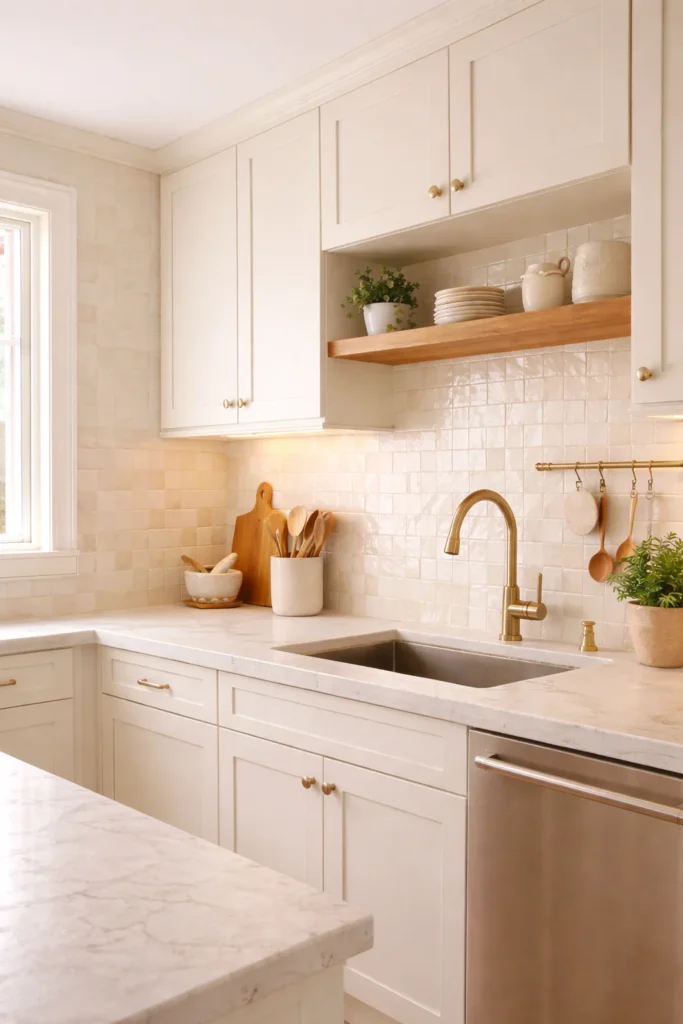
2. Zellige Moroccan Tile Backsplash
Zellige tiles have become one of the most coveted backsplash choices in contemporary interior design, and spending thirty seconds looking at them in person explains exactly why. The irregular handmade clay tiles with their imperfectly glazed surfaces catch light from every angle simultaneously, creating a shimmer and depth that is genuinely unlike any machine-made tile in existence. In warm white or soft cream, Zellige tiles bring artisanal warmth and subtle dimensional beauty to a kitchen that feels both authentically crafted and completely current.
Tip: Install under-cabinet lighting specifically to graze the Zellige surface at a sharp angle rather than straight down. Zellige tiles are at their most beautiful when the light hits them from the side, catching every irregular surface variation and creating a shimmer that changes throughout the day as the natural light quality shifts. Straight-down under-cabinet lighting flattens the Zellige surface completely and wastes the most interesting thing about it.
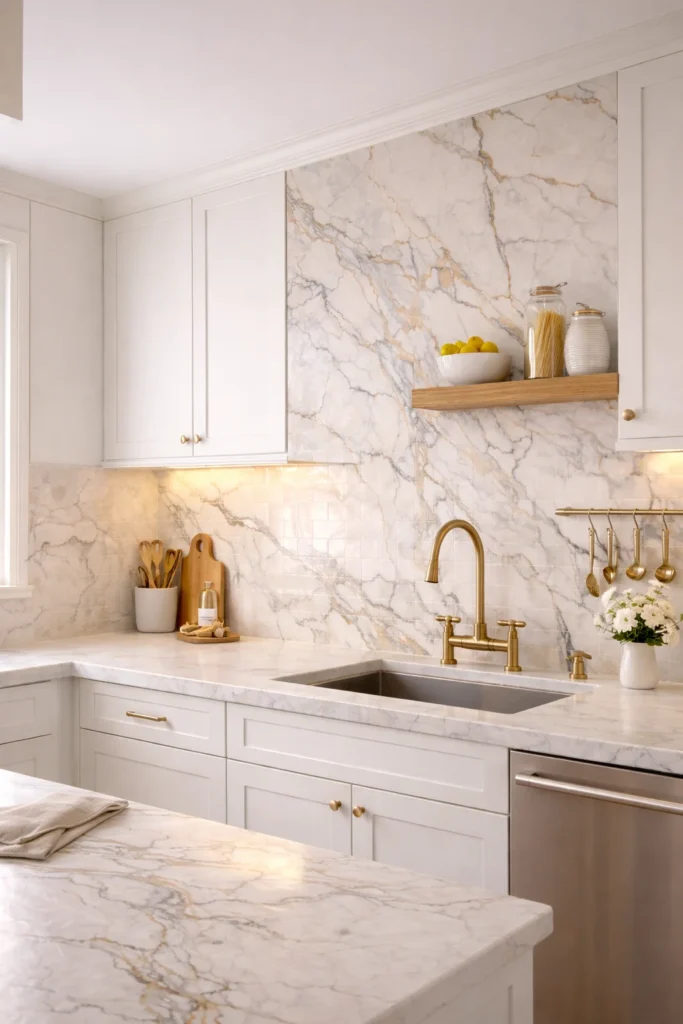
3. Marble Slab Full Backsplash
A single continuous marble slab running from the countertop to the ceiling, no tiles, no grout lines, just one uninterrupted piece of natural stone with its dramatic veining flowing upward across the complete surface, is the kitchen backsplash equivalent of having one extraordinary piece of art rather than a gallery of prints. It is more expensive, more demanding to install, and more breathtaking in person than any other backsplash option. It is also the one backsplash choice that genuinely never stops looking more beautiful the longer you live with it.
Tip: When choosing a marble slab for a full-height backsplash, go to the stone yard in person and select the specific slab you want rather than ordering from a sample. The veining in natural marble varies enormously from slab to slab, and the slab that photographs beautifully in the showroom might not be the one that looks extraordinary in your specific kitchen. Choose the one with the most dramatic veining in the direction and tone that works best for your space.
4. Black Hexagon Tile Backsplash
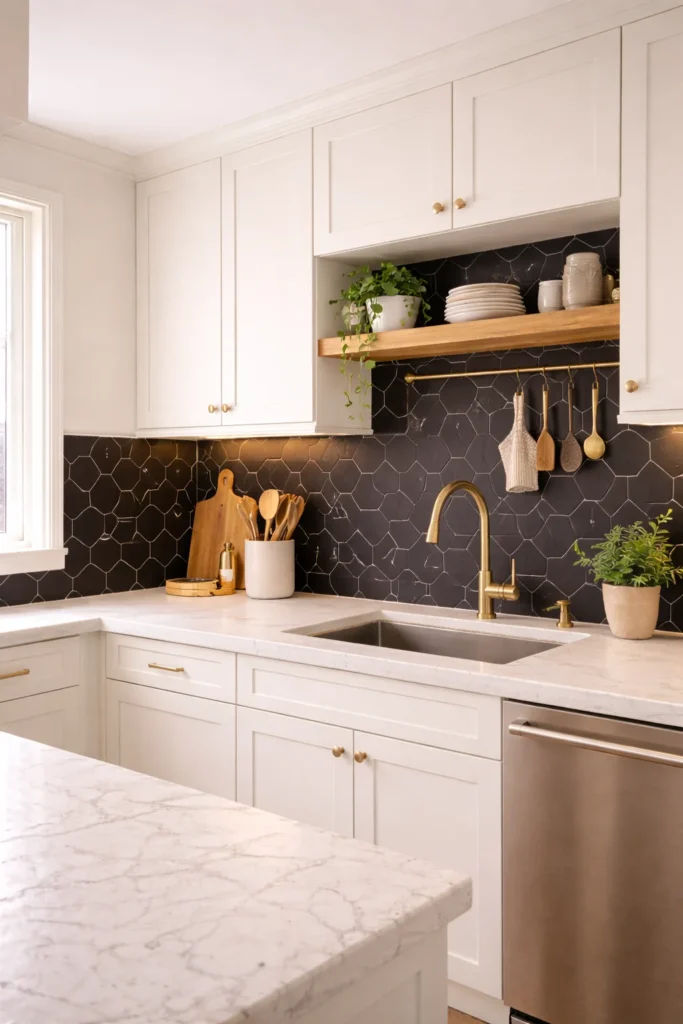
Matte black hexagon tiles are one of those backsplash choices that look bold in a tile shop, slightly intimidating in the planning stage, and completely extraordinary once they are on the kitchen wall with the brass fixtures in place and the natural wood accents around them. The geometric hexagon pattern creates visual interest without the busy quality of more complex patterns, and the matte black surface absorbs light rather than reflecting it, giving the backsplash a rich, velvety depth that is very different from a glossy tile.
Tip: Use white grout rather than black grout with black hexagon tiles. Counter-intuitively, black grout with black tiles makes the geometric pattern disappear into a dark mass, while white grout with black tiles makes the hexagon geometry crisp, graphic, and clearly legible. The white grout lines become part of the design in the best possible way.
5. Sage Green Tile Backsplash
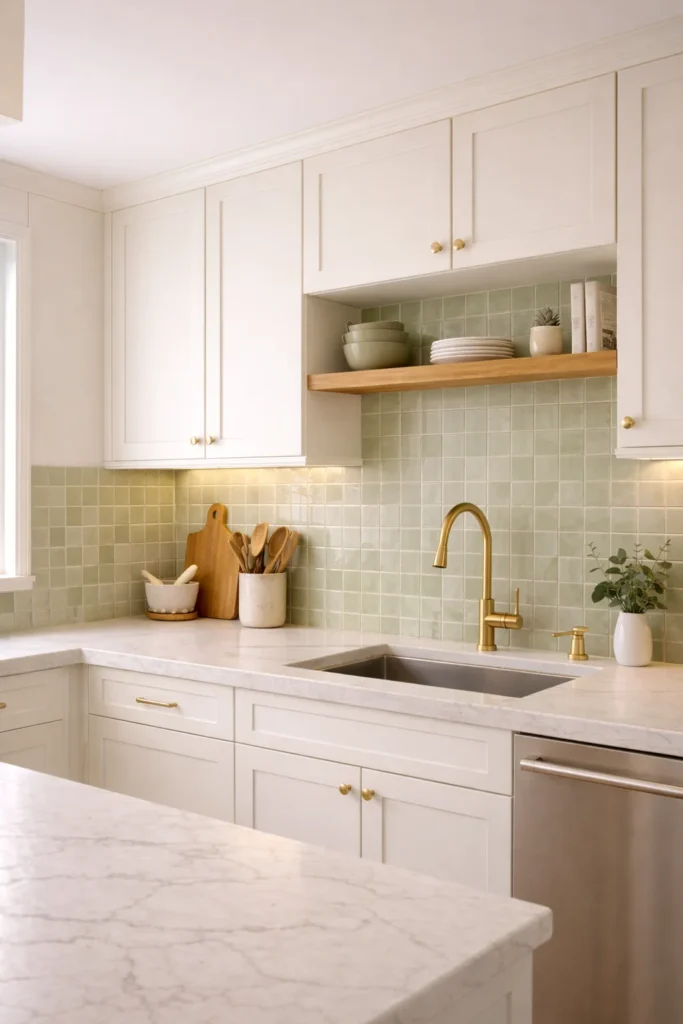
Sage green has been the interior design world’s most universally admired color for several years now, and nowhere does it look more effortlessly right than on a kitchen backsplash. Against cream cabinets and warm brass hardware, sage green tiles create a kitchen that feels simultaneously fresh and timeless, botanical and architectural, contemporary and enduringly classic. It is the backsplash color that the largest number of people walk into a kitchen and immediately say they love without being able to fully explain why.
Tip: The finish of your sage green tile matters significantly. A matte or satin finish sage green tile feels botanical, warm, and contemporary. A gloss finish sage green tile feels brighter, more colorful, and more retro-influenced. If you want the quiet sophisticated sage green that dominates contemporary kitchen design right now, choose the matte or satin finish, the gloss version is a different and louder aesthetic entirely.
6. Terracotta Tile Backsplash
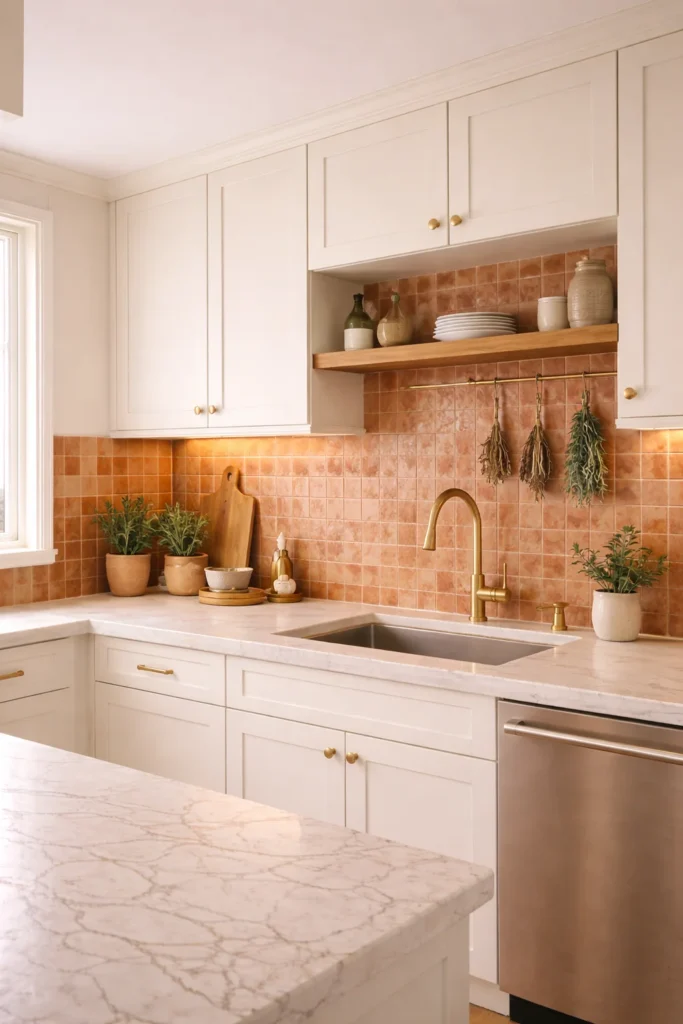
Terracotta is the kitchen backsplash choice for people who want their cooking space to feel genuinely alive with warmth, history, and an earthy Mediterranean energy that no other tile color can replicate. Whether in a traditional saltillo format, a contemporary square ceramic, or a handmade Moroccan shape, terracotta tile creates a backsplash that deepens in character and warmth with every passing season. Pair it with cream cabinets, warm brass hardware, and fresh herbs on the counter and the kitchen becomes a place where cooking feels like an ancient and genuinely pleasurable human ritual.
Tip: Pair your terracotta backsplash with a pot of fresh herbs on the counter, rosemary, thyme, or basil in a terracotta pot. It sounds like a small styling detail, but it creates a botanical and material echo between the backsplash tile and the counter that makes the whole kitchen feel like a cohesive, intentional, and deeply livable space. The fresh herb scent and the terracotta tile together create a sensory kitchen experience that is genuinely special.
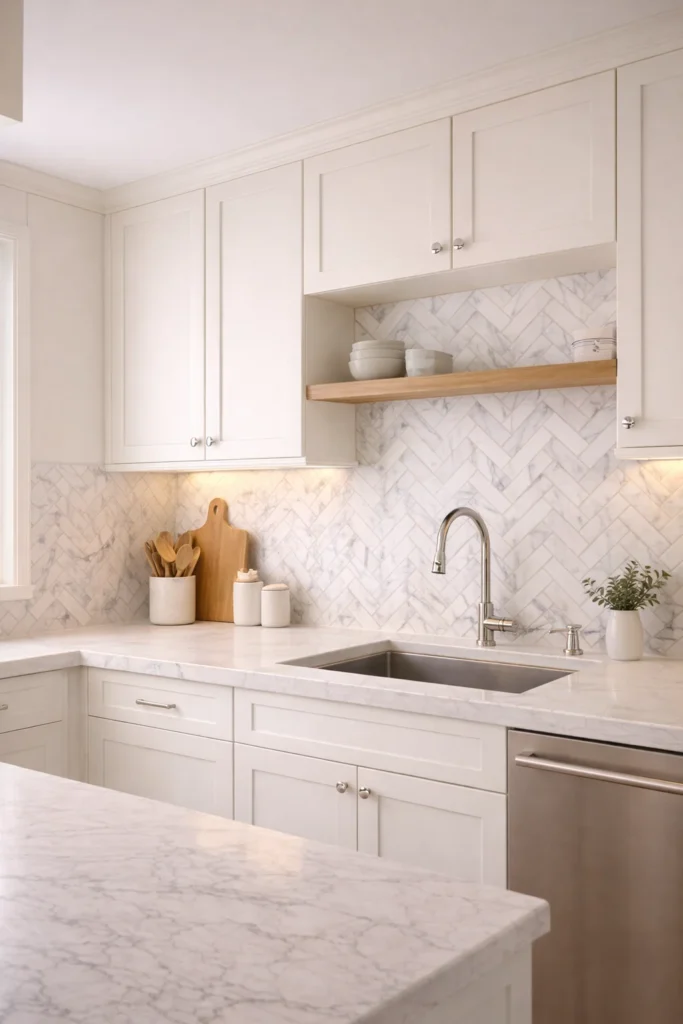
7. Herringbone White Marble Backsplash
The herringbone pattern is one of the most sophisticated and most enduring tile layouts in residential design, and in white marble it becomes something genuinely extraordinary. The V-shaped arrangement of slim marble rectangles creates a geometric movement across the backsplash surface while the natural veining in each individual tile creates an organic counterpoint to the precision of the pattern. The two elements, the strict geometry and the organic stone, in permanent and beautiful tension with each other.
Tip: Install under-cabinet lighting that runs parallel to the counter and shines upward and outward onto the herringbone tile surface at an angle. This raking light catches the different face angles of the herringbone-laid tiles and creates a subtle but beautiful multi-directional shimmer across the pattern that straight-down lighting completely misses. In marble herringbone, the way the light hits the angled tiles is half the visual experience.
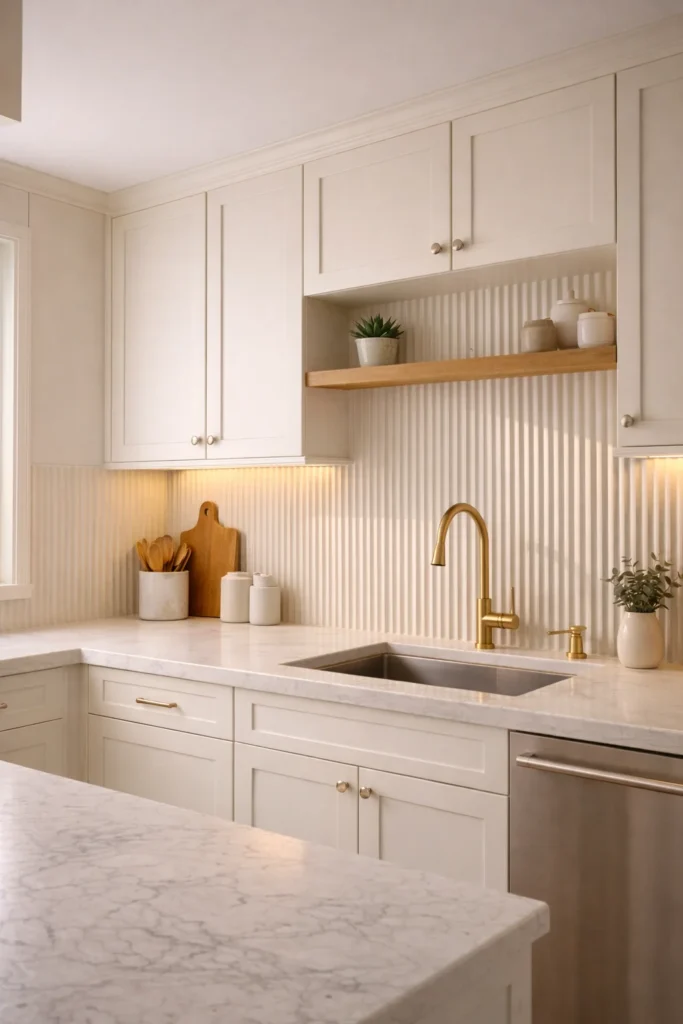
8. Fluted Plaster Backsplash
The fluted backsplash is the choice for people who want their kitchen to feel genuinely architectural and three-dimensionally sculptural rather than simply tiled. Vertical ridges in plaster or fluted ceramic tile create a surface that is not about color or pattern but about physical form and the way that form catches, holds, and shadows directional light. In the morning when the light comes from one angle, the shadows fall one way. In the afternoon when the light shifts, the shadow pattern changes completely. The backsplash becomes a surface that is never quite the same twice.
Tip: The quality and position of your under-cabinet lighting is more critical with a fluted backsplash than with any other backsplash type. The lighting must come from an angle, not straight down, to create the shadow play within the ridges that makes the fluted surface come alive. If your under-cabinet lights point straight at the backsplash surface, the fluting will flatten out and look like a mildly textured wall rather than a dramatically sculptural one. Angle matters everything.
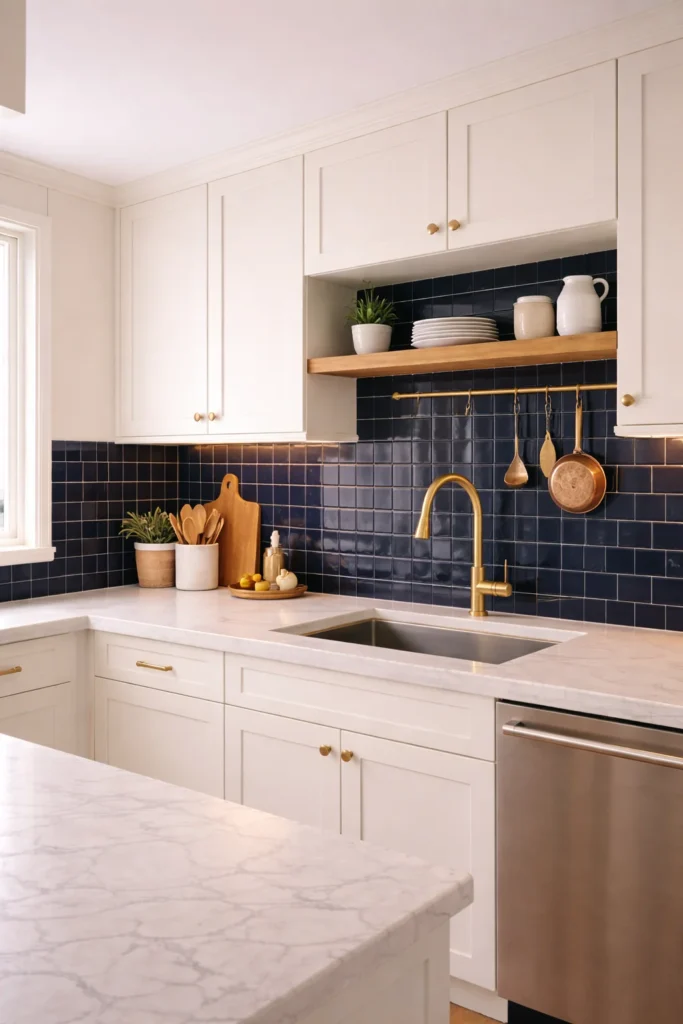
9. Navy Blue Glossy Tile Backsplash
Deep navy blue glossy tiles create a kitchen backsplash of nautical depth and contemporary visual confidence. The glossy surface means the tiles catch warm pendant light and reflect it back into the kitchen, creating a dynamic quality that matte tiles cannot provide. Against crisp white cabinets, warm brass hardware, and natural wood accents, navy blue tiles create a kitchen that looks designed rather than simply decorated, a kitchen where someone made a bold and considered decision and it paid off completely.
Tip: A brass pot rail mounted directly on the navy tile backsplash, with copper or brass pots and pans hanging from it, is one of the most visually extraordinary combinations in contemporary kitchen design. The warm golden brass against the deep navy tile is a color relationship of genuine beauty, and the practical function of the pot rail makes it a design decision that works as hard as it looks good.
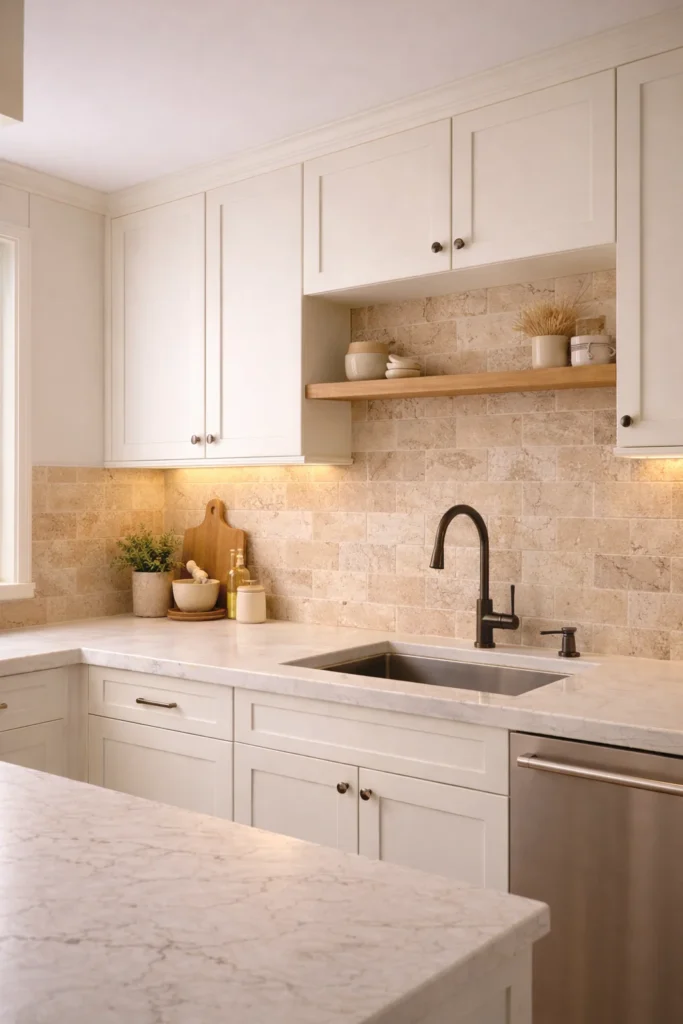
10. Warm Beige Travertine Backsplash
Travertine is not trying to be marble and it is not trying to be ceramic tile. It is one of the most ancient and most distinctively characterful natural stones available, with its natural fossil markings, cross-cut veining, and slightly porous surface creating a backsplash material that is unique among all the stone options. The warm beige and honey tones of travertine create a kitchen warmth that feels genuinely organic, as if the kitchen grew rather than was constructed.
Tip: Seal travertine before installation and reseal it once a year in a kitchen environment. The natural porosity of travertine is part of its beauty but also its practical vulnerability in a kitchen backsplash context. A properly sealed travertine backsplash is completely practical and durable, an improperly sealed one will absorb cooking oils and stains that become very difficult to remove. Sealing is the one non-negotiable maintenance requirement for a travertine kitchen backsplash.
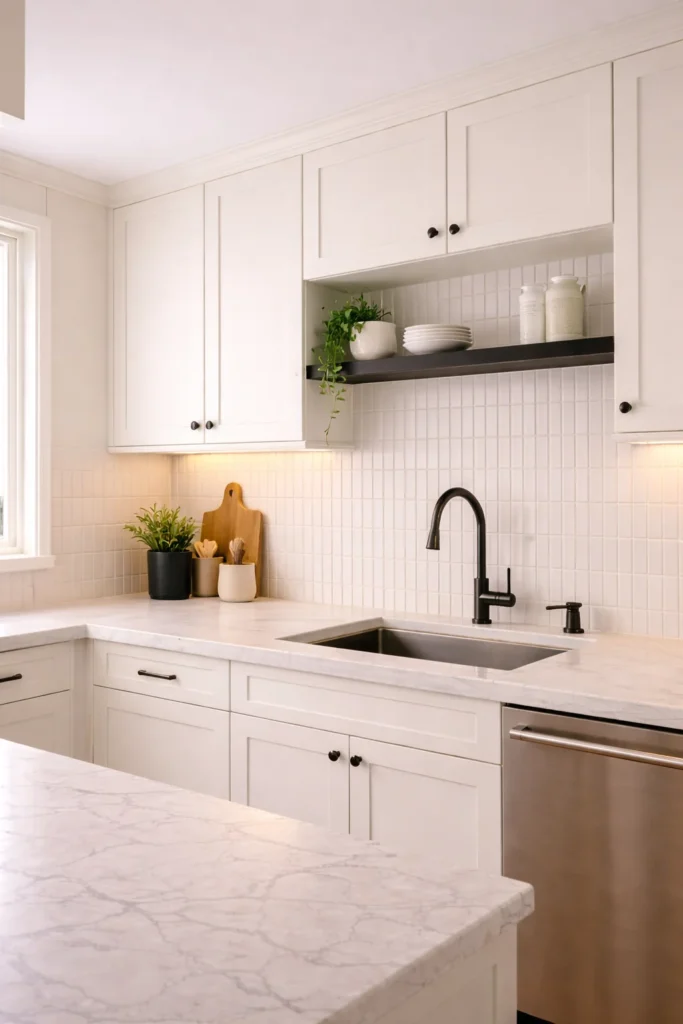
11. Stacked Vertical White Tile Backsplash
This is the backsplash idea that demonstrates most clearly how much a tile layout direction matters. The same white subway tile that looks classic and traditional in a horizontal brick pattern looks contemporary and graphic in a vertical stack pattern. The vertical grout lines draw the eye upward and make the kitchen feel taller. The perfectly aligned stacked grid creates a more modern and more intentional quality than the traditional offset. One material decision, one layout decision, and a completely different kitchen personality.
Tip: Go slightly darker with your grout than you might instinctively choose with the vertical stack pattern. The clean vertical grout lines are part of the visual appeal of this layout, and a very light grout that blends with the white tile makes those lines disappear. A medium grey grout with vertical white tile creates a graphic grid quality that is genuinely contemporary and considerably more interesting than the same layout with near-white grout.
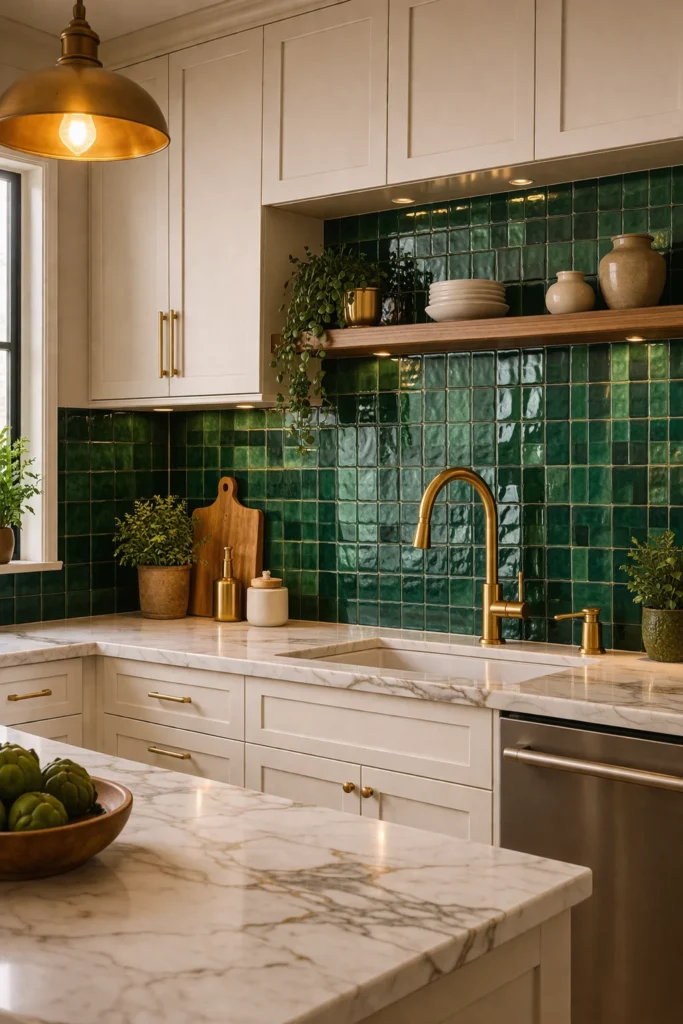
12. Emerald Green Zellige Backsplash
If warm white Zellige is the artisanal backsplash choice for people who love warmth and subtlety, emerald green Zellige is the choice for people who want their kitchen to stop everyone who walks in it. The combination of the jewel-tone emerald color and the irregular handmade Zellige surface creates a backsplash that shimmers like a living thing, catching every warm kitchen light source and throwing it back in a dozen different green tones simultaneously. Paired with warm brass fixtures, it is simply one of the most beautiful kitchen surfaces available at any price.
Tip: Do not be afraid to extend the emerald Zellige tile all the way to the upper cabinets and beyond if your kitchen has no upper cabinets, a full expanse of emerald Zellige from counter to ceiling is significantly more dramatic and more beautiful than a conservative partial installation. Zellige rewards commitment. The more wall it covers, the more the shimmer and depth becomes apparent, and the more the kitchen feels like the extraordinary space it is capable of being.
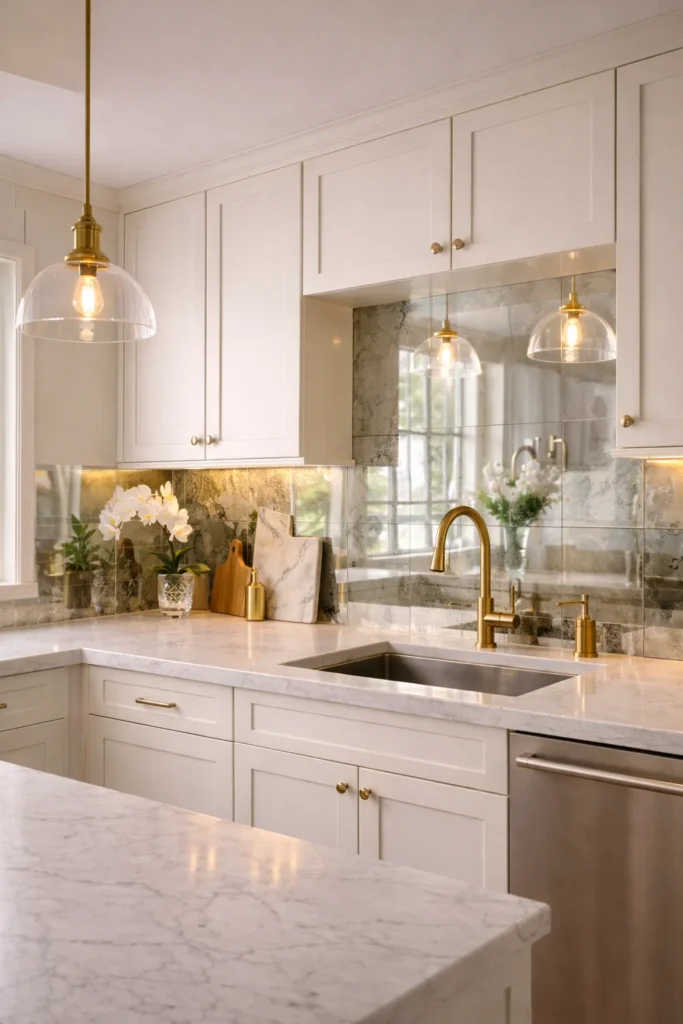
13. Mirrored Backsplash Glamour
A mirrored backsplash is the kitchen designer’s most powerful tool for simultaneously making a small kitchen feel larger and making any kitchen feel more glamorous. The mirror doubles the visual depth of the kitchen, multiplies every pendant light and window reflection, and creates an awareness of the kitchen as a whole space, including the parts behind you, that adds a dynamic and cinematic quality to everyday cooking. In an antique or smoked mirror finish, the glamour is sophisticated rather than garish.
Tip: Choose an antique mirror or smoked mirror finish rather than a clear mirror for a kitchen backsplash. A clear mirror behind a cooking surface reflects every splash, fingerprint, and cooking residue in high definition and requires constant cleaning to maintain its appearance. An antique or smoked mirror has a depth and warmth that makes minor surface marks much less visible, and it creates a more sophisticated and less clinical mirror quality that suits a residential kitchen far better than a perfectly clear reflective surface.
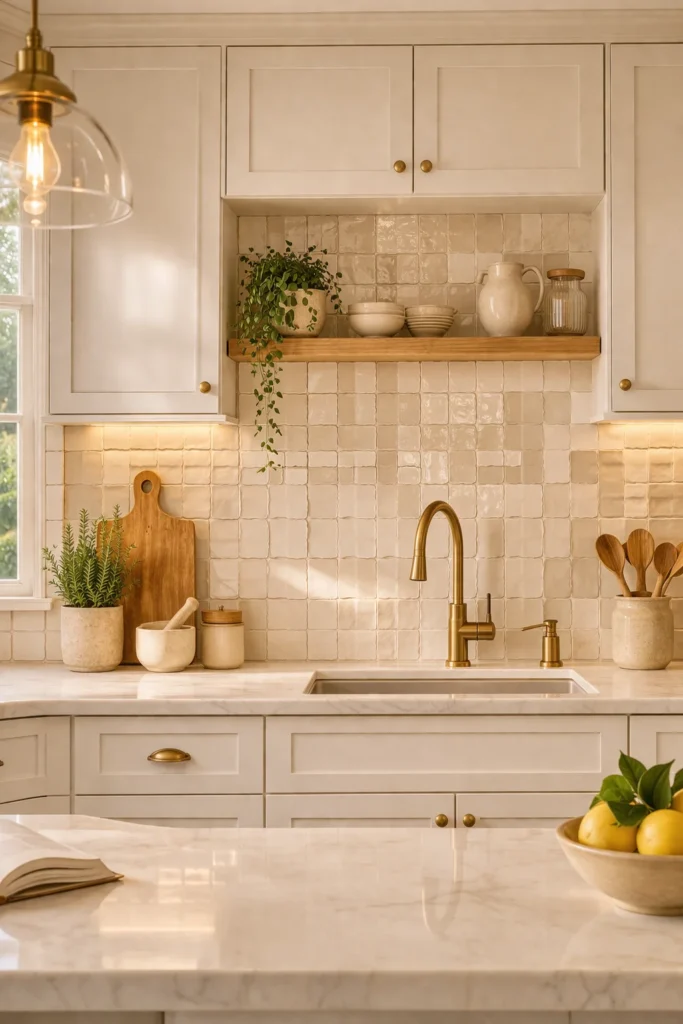
14. Cream Handmade Tile Backsplash
In a world of machine-perfect tiles with identical dimensions, perfectly uniform glazes, and completely consistent edges, a handmade tile backsplash is a quiet act of rebellion in favor of human warmth and craft quality. The slight variations in tone from tile to tile, the marginally irregular edges, the subtly uneven glaze, these small imperfections are not flaws. They are evidence of a human hand in the making process, and they create a backsplash with genuine warmth and genuine character that no machine-made tile can replicate regardless of its price point.
Tip: When installing handmade tiles, ask your tiler to mix tiles from multiple boxes before laying them rather than working through one box at a time. Handmade tiles can vary slightly in tone between production batches, and mixing tiles from different boxes randomly distributes any batch variation evenly across the backsplash. The result is a beautifully natural and organic variation across the whole surface rather than visible bands of slightly different tones.
15. Black Grout White Tile Backsplash
The most affordable and most dramatic backsplash transformation available might simply be changing the grout color in an existing white tile installation. Black grout with white tiles creates a bold graphic grid that looks completely intentional and completely contemporary, and costs only the price of new grout and a few hours of work. For new backsplash installations, the black grout decision costs the same as any other grout color and delivers a completely different design result. It is one of the smallest decisions with the largest visual impact in any kitchen.
Tip: Seal black grout very thoroughly before and after installation, and re-seal it annually. Black grout is more prone to fading to a washed-out dark grey over time than lighter grout colors, and once it fades the graphic quality of the black and white tile combination becomes significantly less impactful. Proper sealing and occasional cleaning with a grout-specific cleaner keeps the black grout genuinely black and the graphic quality sharp for many years.
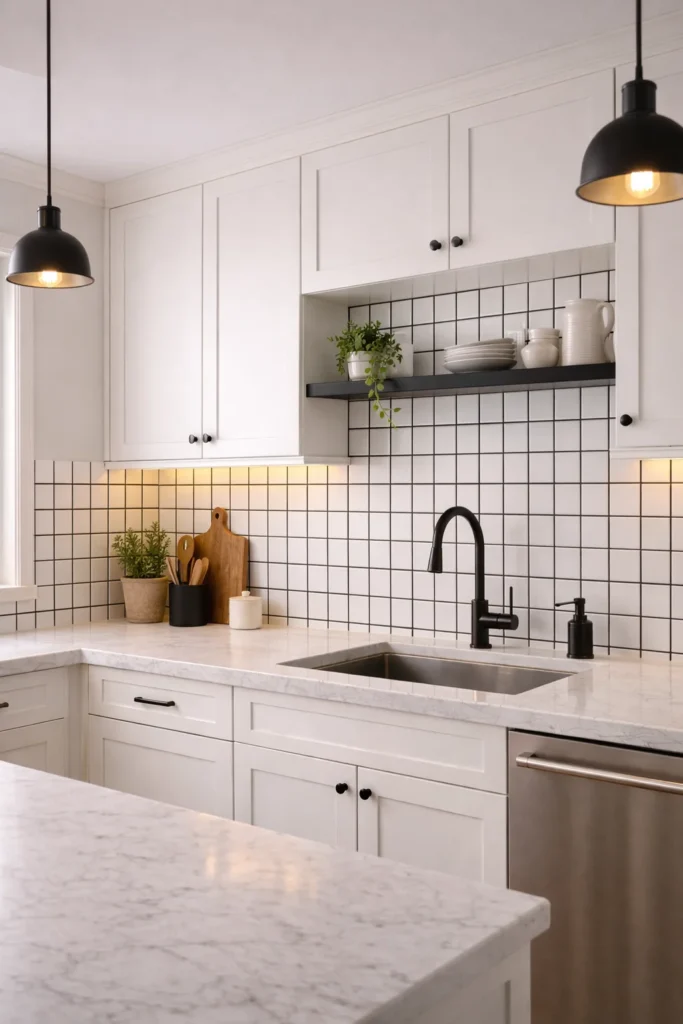
16. Warm Walnut and Tile Combination
The combination of warm walnut wood panels with a complementary ceramic or stone tile in the same kitchen backsplash is one of the most materially sophisticated approaches in contemporary kitchen design. Wood brings warmth, grain texture, and an organic richness that no tile can provide, while the tile provides the practical heat and splash protection that the area directly behind the cooking range requires. Together they create a backsplash that is both genuinely practical and genuinely beautiful in a way that a single material alone rarely achieves.
Tip: Use a food-safe hard wax oil finish on the walnut backsplash panel rather than a polyurethane varnish. Hard wax oil penetrates the wood grain and protects from the inside rather than sitting as a surface film, creating a more natural and more beautiful wood finish that is also easier to maintain and spot-repair if scratches or marks occur over time. Reapply the hard wax oil annually for a walnut backsplash that improves in warmth and character with every passing year.
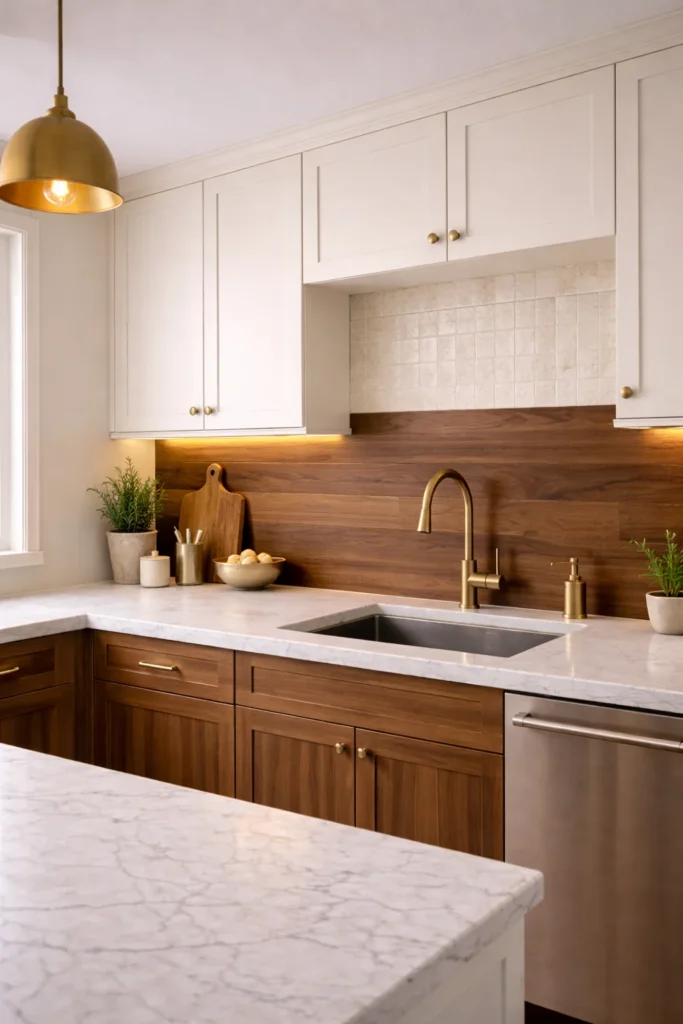
17. Full Height Statement Stone Backsplash
There is a point at which a kitchen backsplash stops being a backsplash and becomes architecture, and a full floor-to-ceiling natural stone wall is exactly that point. Whether leathered quartzite with its tactile geological surface, book-matched granite with its symmetrical geological drama, or honed dark slate with its elemental depth, a floor-to-ceiling stone wall transforms the kitchen from a room into a space of genuine architectural ambition. It is the backsplash choice of complete commitment, and it rewards that commitment completely.
Tip: If budget allows, book-match your stone panels so the veining creates a mirror-image geological symmetry across the full wall. Book-matching means cutting adjacent slabs from the same block of stone and flipping one like the pages of an open book, so the veining pattern mirrors itself across the centerline of the wall. The resulting symmetrical geological pattern is one of the most breathtaking effects in residential design, a wall that looks like a natural phenomenon rather than a material choice.
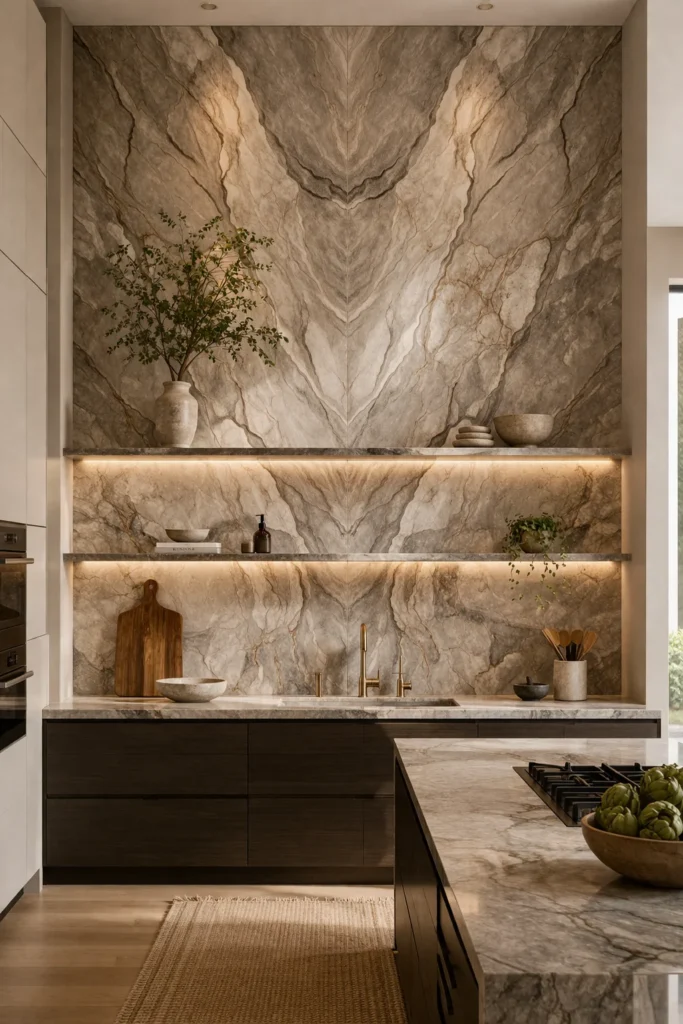
18. Pastel Pink Tile Backsplash
Pastel pink is the kitchen backsplash color that surprises everyone who chooses it, they expect it to feel cute or trendy and discover instead that it feels joyful, warm, and completely at home in the kitchen in a way that no other unexpected color quite manages. Against white cabinets, warm brass hardware, and white marble countertops, dusty rose or blush tile creates a kitchen of genuine charm and contemporary sophistication. It photographs beautifully, it ages gracefully, and it makes cooking feel like something to look forward to.
Tip: Choose a dusty rose or blush tone for a kitchen pink tile rather than a bright baby pink or hot pink. The dusty muted tones of dusty rose and blush are the pink shades that feel sophisticated, contemporary, and genuinely timeless in a kitchen environment. Bright or saturated pink tones can feel energetic and fun initially but are much more likely to feel dated over time. Dusty pink is the version that will still feel right in fifteen years.
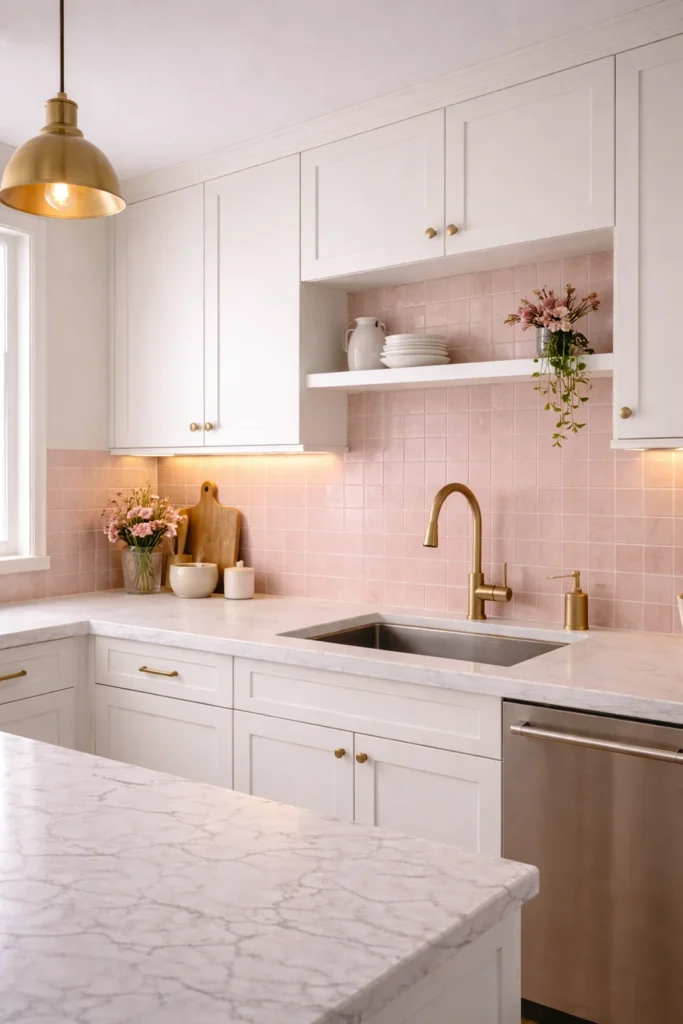
19. Rustic Brick Backsplash
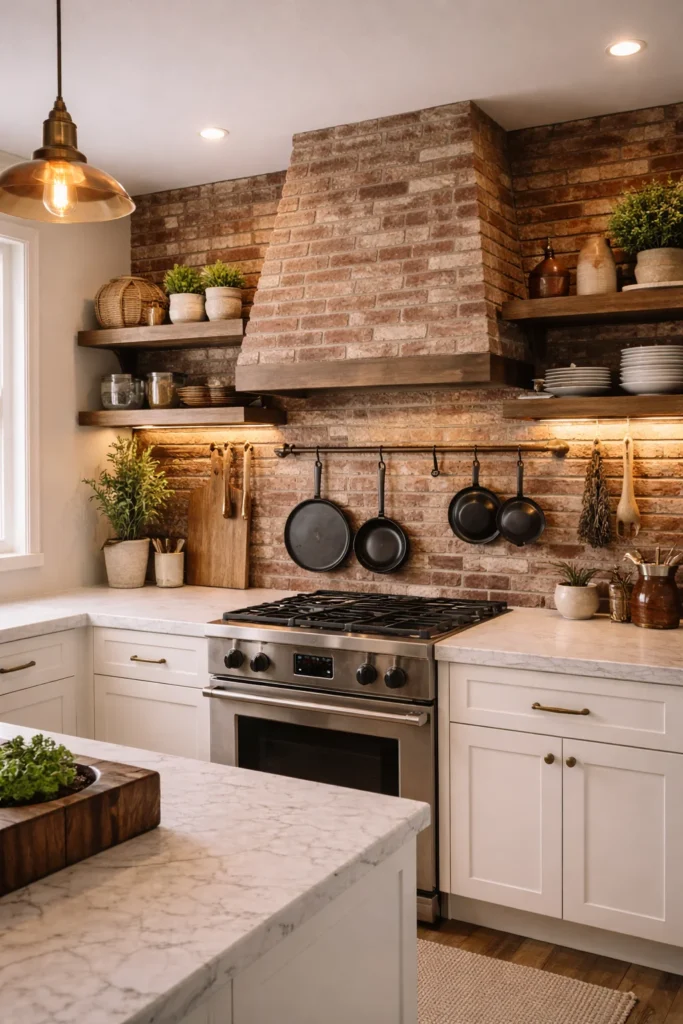
A brick kitchen backsplash connects the domestic cooking space to the longest and warmest tradition in residential architecture, the kitchen hearth, the bread oven, the open fire. Exposed brick or a high-quality brick-effect tile behind the cooking range creates a backsplash with a depth of character and warmth that feels genuinely old and genuinely earned. The rough texture, the earthy red-brown tones, the visible mortar lines, and the open wooden shelving loaded with ceramic jars and cast iron pots, together they create a kitchen that does not look designed. It looks lived in, deeply and lovingly, for a very long time.
Tip: If your kitchen does not have original exposed brick, use a high-quality authentic brick slip rather than a brick-effect ceramic tile. Brick slips are real brick cut to a thin profile and applied to the wall, they have the authentic texture, color variation, and weight of real brick and look completely indistinguishable from genuine exposed brick. A brick-effect ceramic tile, however well made, has a regularity and smoothness that reveals itself as artificial. In a rustic kitchen, the authenticity of the material is the entire point.
Conclusion
The kitchen backsplash is the most visible surface in the kitchen, and it deserves exactly the level of attention and investment that a surface that important warrants. Whether you choose the timeless reliability of white subway tile, the artisanal shimmer of Zellige, the geological drama of a full-height marble slab, the graphic boldness of black hexagon tile, or the ancient warmth of exposed brick, the right backsplash does not just protect the wall behind your counter, it gives the whole kitchen its identity.
The nineteen ideas in this post cover every style, every material family, and every color direction from the most classic to the most boldly contemporary. What they all share is the conviction that a backsplash is worth choosing with the same level of care, thought, and excitement as any other major kitchen design decision.
Choose the one that makes you want to spend more time in your kitchen. Because the best kitchen backsplash is ultimately not the most expensive one or the most fashionable one, it is the one that makes cooking feel like the most pleasurable and most beautiful daily ritual in your home.