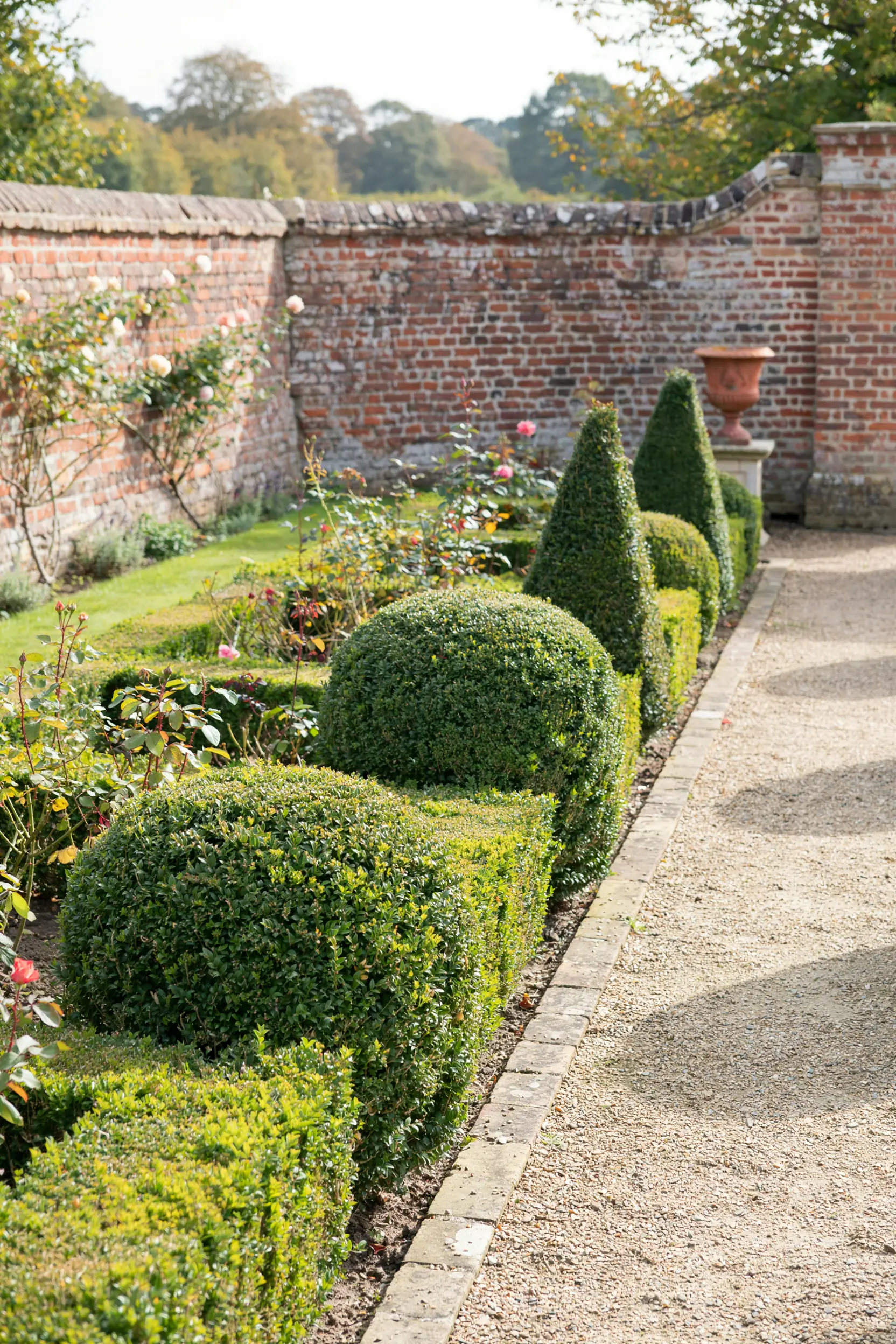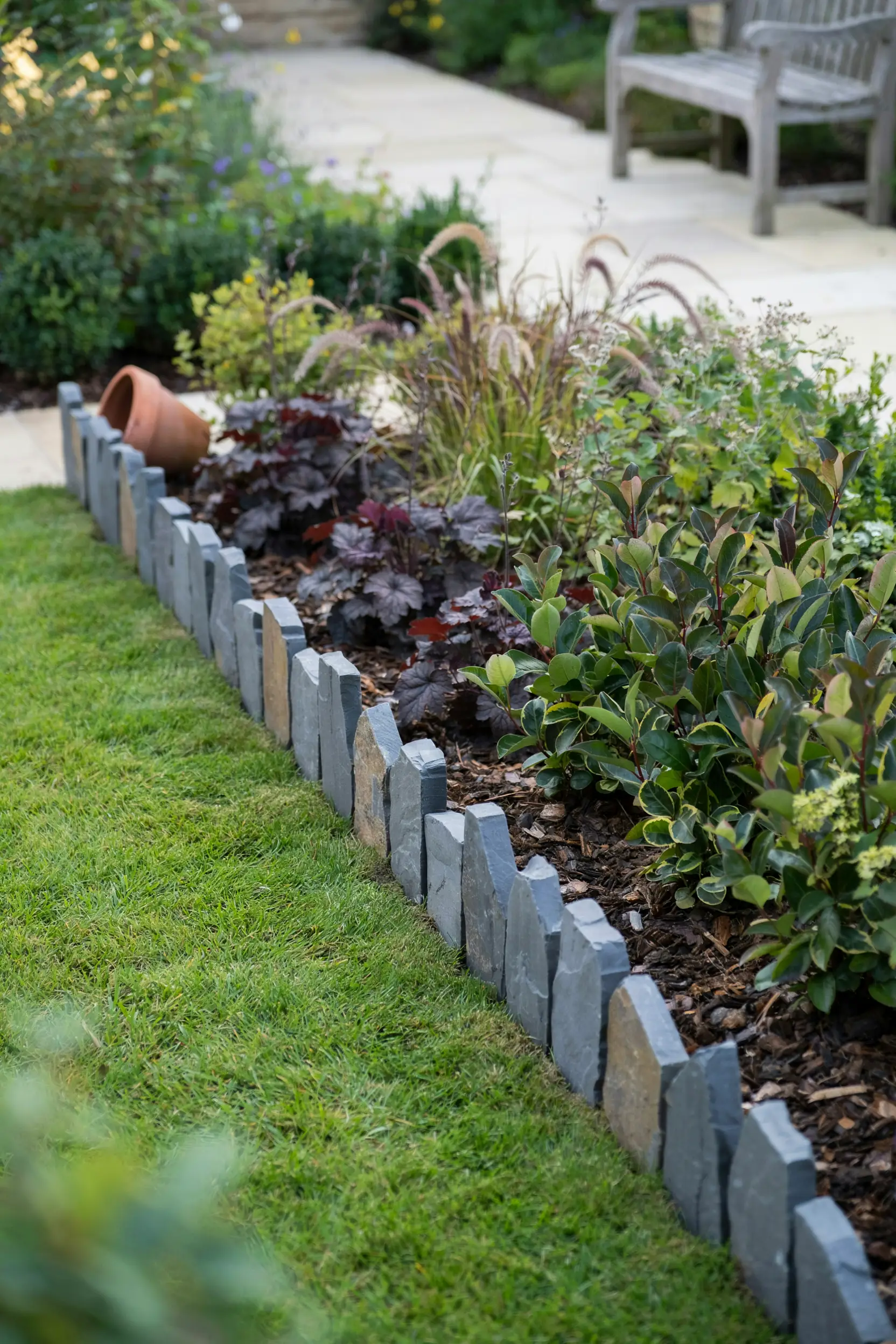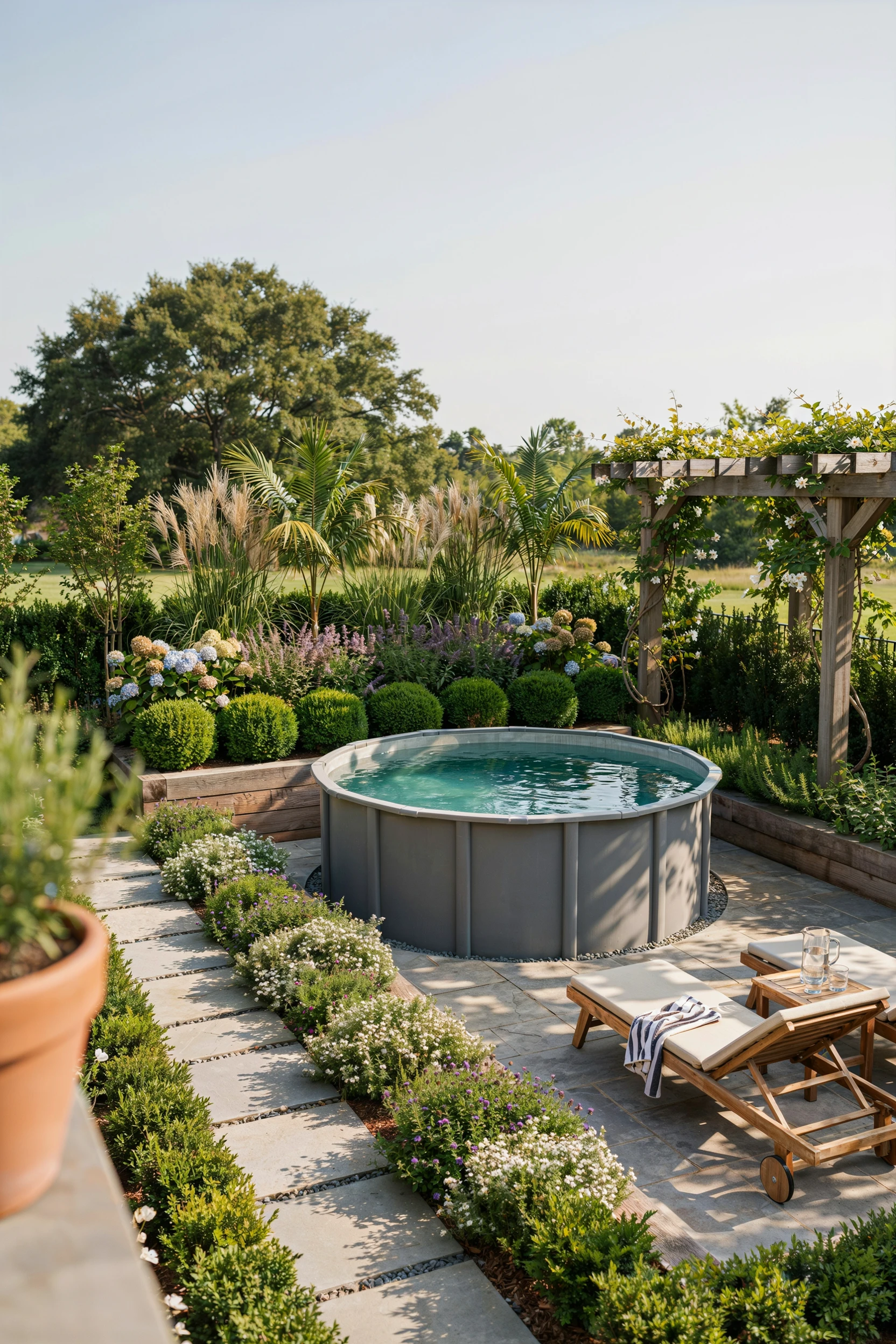
Pebble stone is one of the most versatile, most naturally beautiful, and most practically intelligent landscaping materials available for any garden, and it is consistently underestimated by gardeners who default to conventional grass, bark mulch, or paving without exploring what a thoughtfully chosen and thoughtfully placed pebble stone treatment can achieve.
The appeal of pebble stone in a landscape is both practical and deeply aesthetic. Practically, pebble stone suppresses weeds without chemicals, conserves soil moisture, improves drainage, requires virtually no ongoing maintenance beyond an occasional rake, and lasts indefinitely without replacement or replenishment. Aesthetically, smooth river pebbles bring the genuine warmth of natural geological material to the garden surface, their varied tones of grey, cream, buff, and warm brown creating ground planes of organic visual richness that organic mulches and manufactured paving surfaces rarely match.
Beyond the simple ground cover function, pebble stone in a landscape can be arranged with genuine artistic ambition. A dry river bed installation creates a garden feature of complete naturalistic drama. A pebble mosaic panel creates a surface of genuine handcraft beauty. A Zen garden raked into meditative patterns creates an outdoor space of philosophical calm and extraordinary visual precision. A coastal pebble garden with driftwood and sea grasses creates a domestic garden of genuine seaside authenticity. The material is humble and honest, but the range of what it can achieve when applied with genuine thought and genuine design intention is extraordinary.
These 13 pebble stone landscaping ideas cover every garden style, every outdoor space type, every practical application, and every design ambition from the most naturalistic to the most formally considered. Whether your garden is a generous rural property or a small urban courtyard, whether your aesthetic is wildly naturalistic or precisely Zen, whether your primary motivation is practical low maintenance or pure garden beauty, there is a pebble stone landscaping idea here that will make your garden more beautiful, more intelligent, and more genuinely worth spending time in.
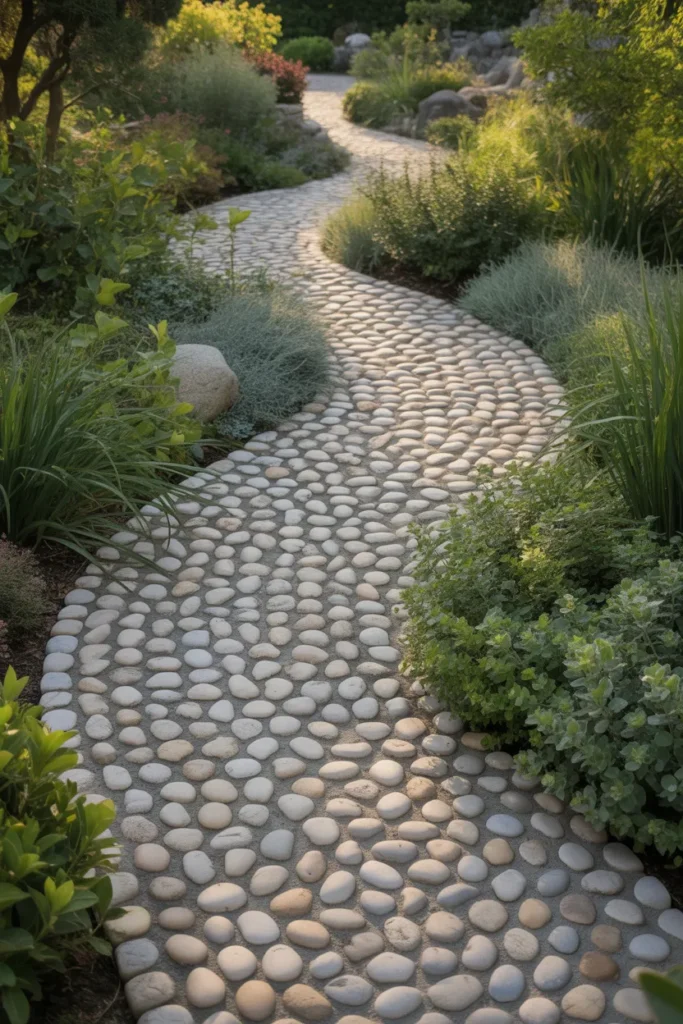
1. Pebble Stone Garden Path
A pebble stone garden path is the most naturally beautiful garden circulation feature available, because the material itself, smooth river pebbles in their varied warm grey and cream tones, carries the quality of the natural riverbed and the natural beach into the garden in a way that manufactured paving materials never quite replicate. A garden path made from smooth river pebbles does not look installed. It looks as if the garden placed it there through its own organic processes, and that quality of apparent natural origin is one of the most valuable qualities any garden feature can have.
Tip: Prepare the pebble garden path base with a three-layer system of compacted hardcore, sharp sand, and landscape fabric before laying the pebble surface for maximum long-term path stability and weed suppression. The compacted hardcore base prevents path subsidence in wet weather. The sharp sand layer provides a level and slightly flexible bedding surface. The landscape fabric prevents weed germination through the pebble surface without impeding drainage. This three-layer preparation takes an additional half-day of work before laying the pebbles, and it produces a path that remains stable, level, and weed-free for many years rather than one that sinks, shifts, and weeds within a single season.
2. Dry River Bed Pebble Landscape
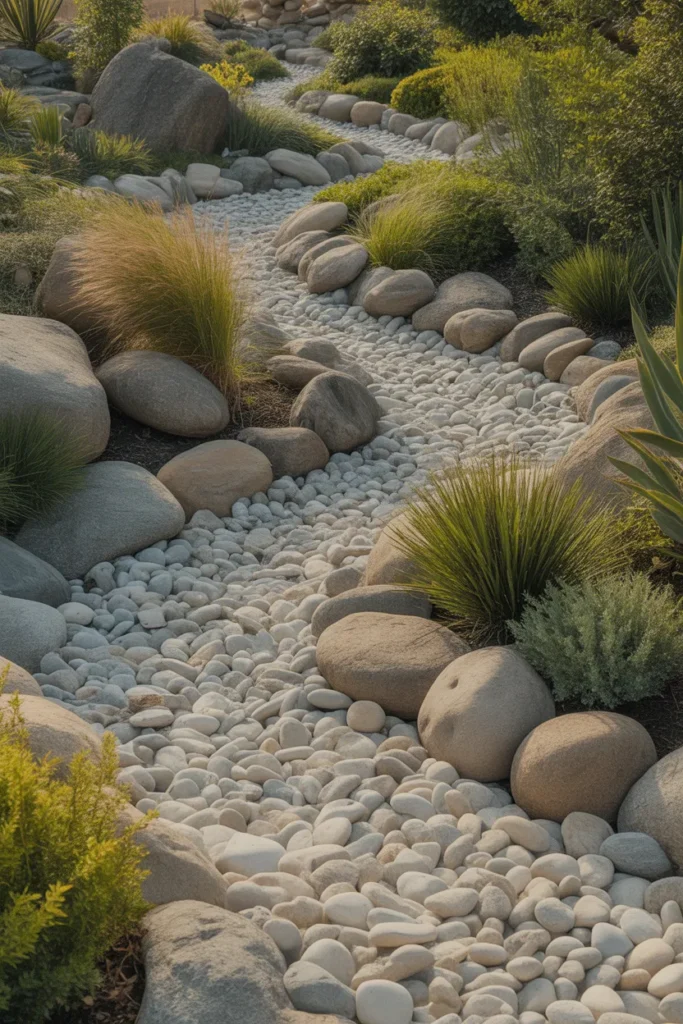
A dry river bed pebble landscape is the single most dramatically naturalistic garden feature available from a pebble stone application, because it references a genuine geological landscape form, the dried watercourse, with enough material authenticity and design intelligence to create a garden feature that appears to be a natural geological event rather than a constructed garden element. The dry river bed is also one of the most practically intelligent pebble landscape features because it can be designed to function as a genuine surface water drainage channel in heavy rain while appearing as a beautiful decorative feature in dry periods.
Tip: Size the dry river bed channel in proportion to the actual volume of water it may be required to direct during the heaviest rainfall events the garden experiences. A dry river bed that is too narrow or too shallow to handle the actual rainfall runoff from the surrounding garden area will overflow during heavy rain, depositing pebbles across the surrounding garden. A correctly sized dry river bed channel calculated for the garden’s actual drainage catchment area functions perfectly as both a practical drainage solution and a beautiful naturalistic garden feature simultaneously, which is the combination that makes the dry river bed the most practically intelligent pebble landscape investment available.
Also Read
15 Cucumber Trellis Ideas That Maximize Your Garden Space
14 Flower Bed Ideas That Turn Every Garden Into Something Beautiful
16 Fire Pit Ideas That Make Your Backyard the Best Seat in the House
18 4th of July Outdoor Decoration Ideas That Wow Every Guest
16 Patio Decor Ideas That Turn Any Outdoor Space Into a Retreat
3. Zen Pebble Garden Design
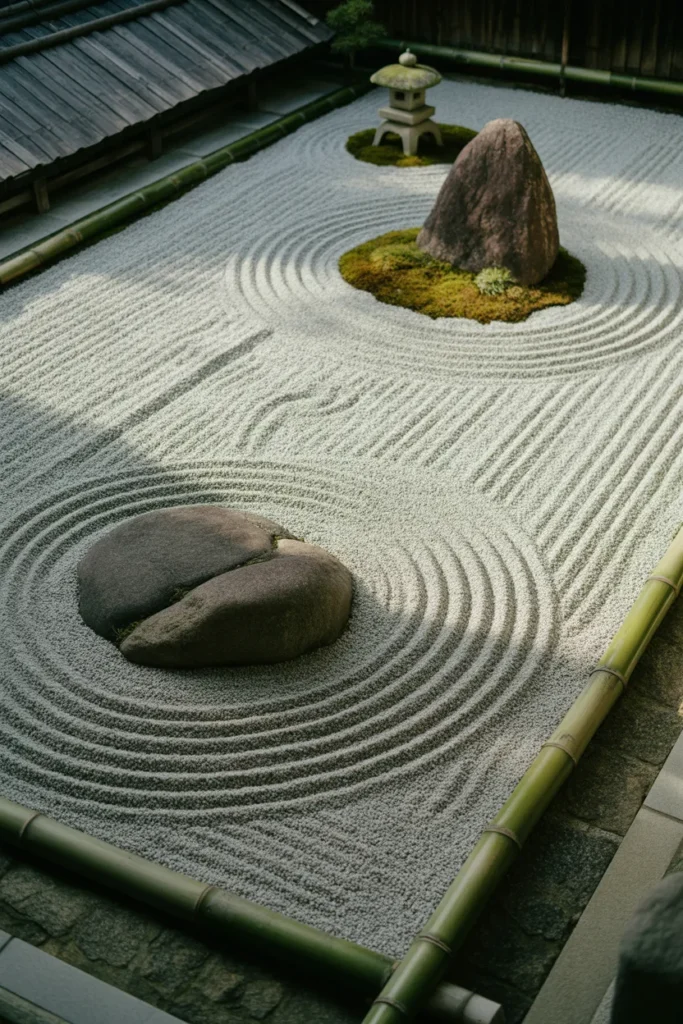
A Zen pebble garden is the garden feature for people who understand that stillness is one of the most genuinely valuable qualities a garden can provide and who are willing to create and maintain the specific material and organizational discipline that genuine stillness in a garden requires. The Zen garden’s beauty comes entirely from the precision and consistency of its maintenance, and a well-maintained Zen pebble garden of raked patterns, considered boulder placement, and complete visual restraint provides a quality of outdoor calm that no other garden feature, however beautifully planted or however expansively designed, quite replicates.
Tip: Invest in a traditional Zen garden rake with long, straight, evenly-spaced tines as the primary maintenance tool for a pebble Zen garden. The rake tine spacing determines the width and the character of the raked lines, and a rake with appropriately spaced tines for the pebble size creates the clean, parallel, precisely consistent lines that give the Zen garden its meditative visual quality. A garden fork, a standard garden rake, or a leaf rake produces irregular, inconsistent lines that undermine the meditative precision that the Zen garden design philosophy requires. The specialized rake is the tool investment that determines whether a Zen garden achieves genuine meditative quality or simply appears raked.
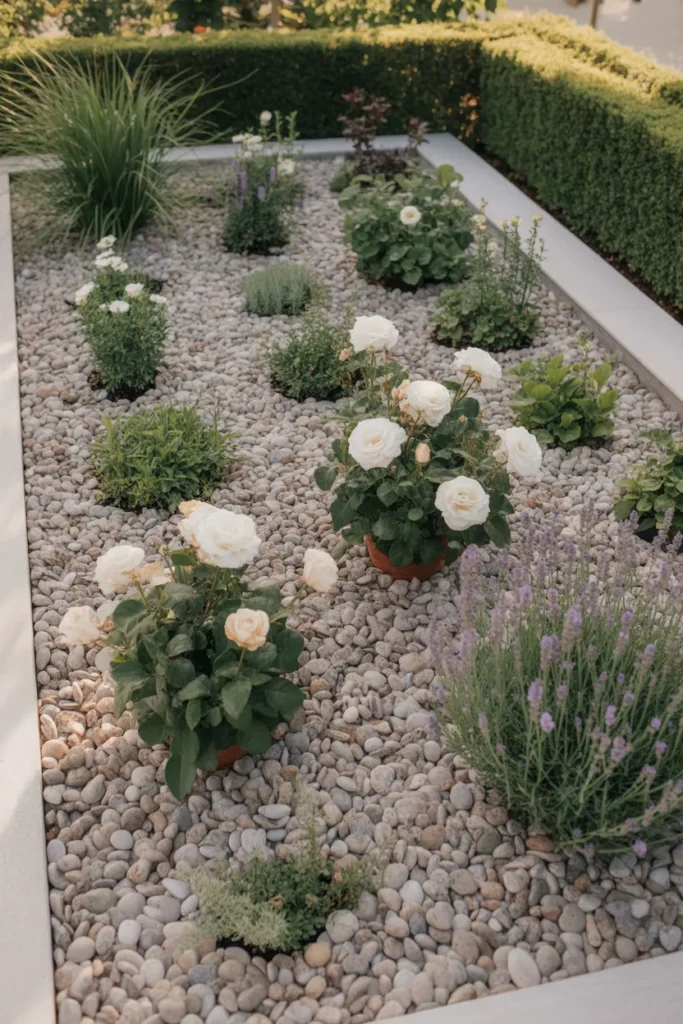
4. Pebble Stone Mulch Flower Bed
A pebble stone mulch flower bed is the most practically intelligent and the most permanently beautiful alternative to conventional organic mulch available for any ornamental garden bed, because pebble stone provides the weed suppression and moisture retention benefits of organic mulch without the annual replenishment requirement, the decomposition, the color fading, or the tendency to wash away in heavy rain that organic alternatives consistently exhibit. A pebble mulch bed laid correctly on good landscape fabric is genuinely maintenance-free at the ground level for years at a time, which redirects all available gardening time and attention to the plants themselves rather than to the repetitive task of mulch renewal.
Tip: Choose a pebble size and tone for the flower bed mulch that complements rather than competes with the plant foliage colors above it. Warm buff and cream pebbles complement the green and grey-green foliage tones of most garden plants by providing a warm tonal contrast. Cool grey pebbles complement silver and blue-green foliage by providing a harmonious cool tonal continuation. Dark charcoal pebbles provide the maximum contrast with light-toned or variegated plant foliage and create the most dramatic garden bed presentation. The pebble tone is the aesthetic decision in a pebble mulch bed that most determines the quality of the complete plant and ground cover composition.
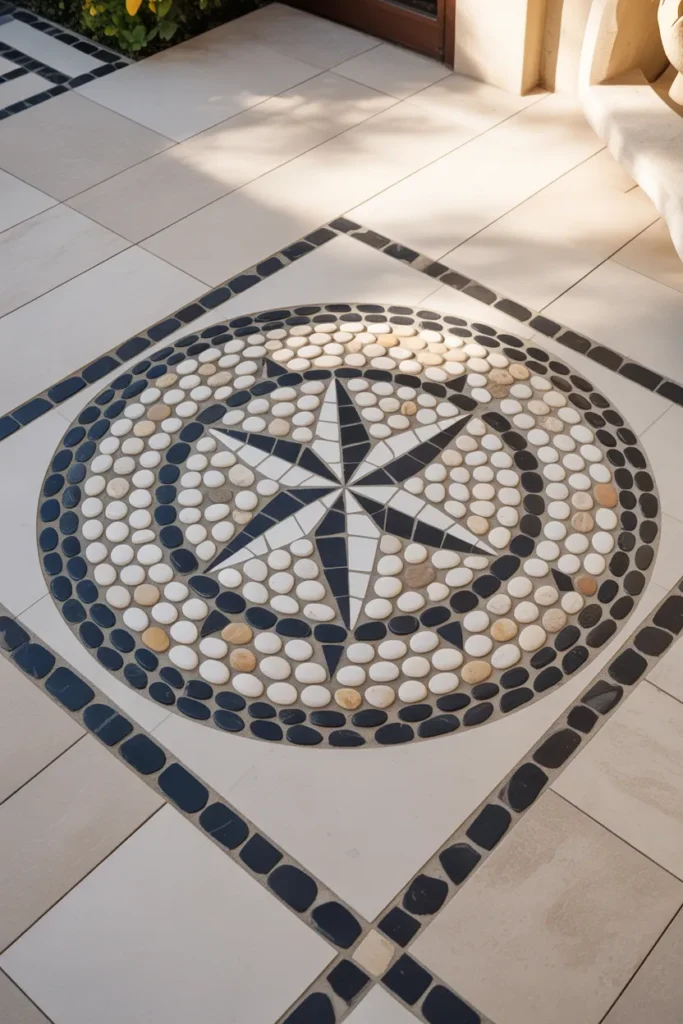
5. Pebble Mosaic Patio Feature
A pebble mosaic patio feature is the garden investment that most completely demonstrates genuine personal care and genuine artistic ambition in an outdoor space, because the process of selecting individual pebbles in specific colors, arranging them in a considered pattern, and setting them permanently in mortar to create a decorative floor panel is an act of genuine craftsmanship that communicates more about the gardener’s relationship with their outdoor space than any amount of purchased garden decoration. A pebble mosaic cannot be bought ready-made. It has to be made, and every step of the making is visible in the finished work.
Tip: Complete a small practice pebble mosaic panel of approximately twenty by twenty centimeters before beginning the full patio feature to develop the correct technique for setting pebble depth, mortar consistency, and grouting process. Pebble mosaic technique, particularly the consistent depth of pebble setting and the timing of grout application and removal, requires a small amount of practice to execute confidently. A practice panel that can be discarded allows the necessary technique development before committing the full design and material investment of the actual patio feature, and the practice piece consistently improves the quality of the finished work significantly.
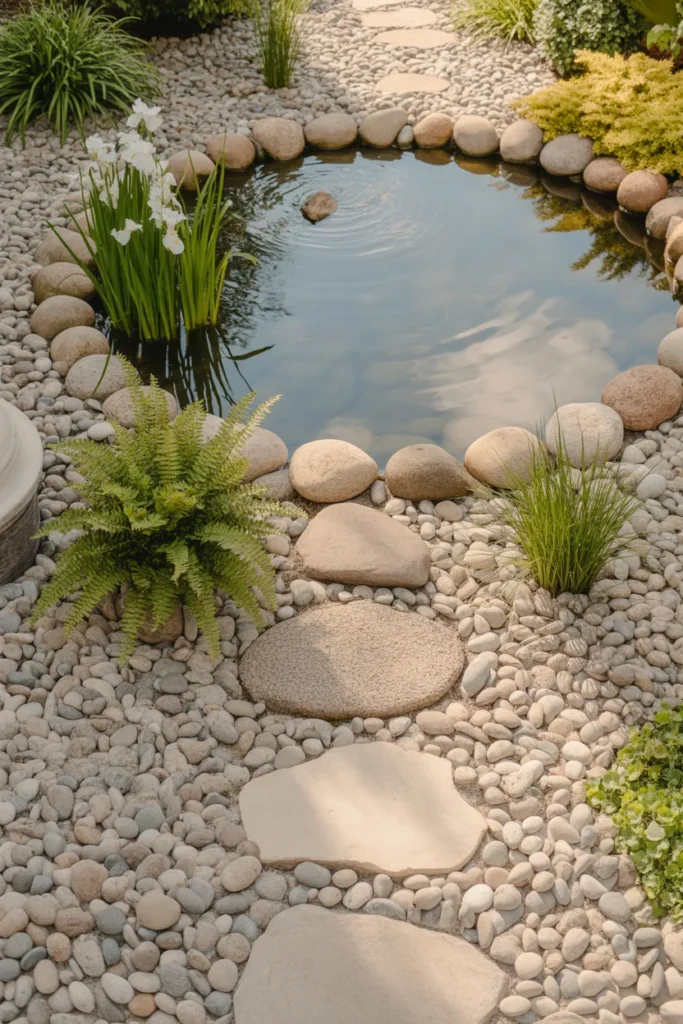
6. Pebble Stone Water Feature Surround
A pebble stone water feature surround creates the most naturally convincing and the most materially authentic water feature setting available in a domestic garden, because the combination of smooth water-worn pebbles and an actual water feature is the closest possible domestic replication of the genuine natural landscape of a stream or pool edge, where water and water-worn stone have always existed together as natural companions. The pebble surround does not look like it was placed around the water feature. It looks like it was always there, as if the water chose the pebbles first.
Tip: Extend the pebble stone water feature surround a minimum of one meter beyond the water feature edge in all directions for the most convincingly naturalistic result. A pebble surround that extends only to the immediate edge of the water feature creates a visual impression of the water feature sitting on a pebble mat rather than being embedded in a pebble landscape. A generous pebble surround that extends well beyond the water feature in all directions creates the visual impression that the pebble landscape was established first and the water found its way naturally through it, which is the naturalistic quality that makes a pebble water feature surround most beautiful.
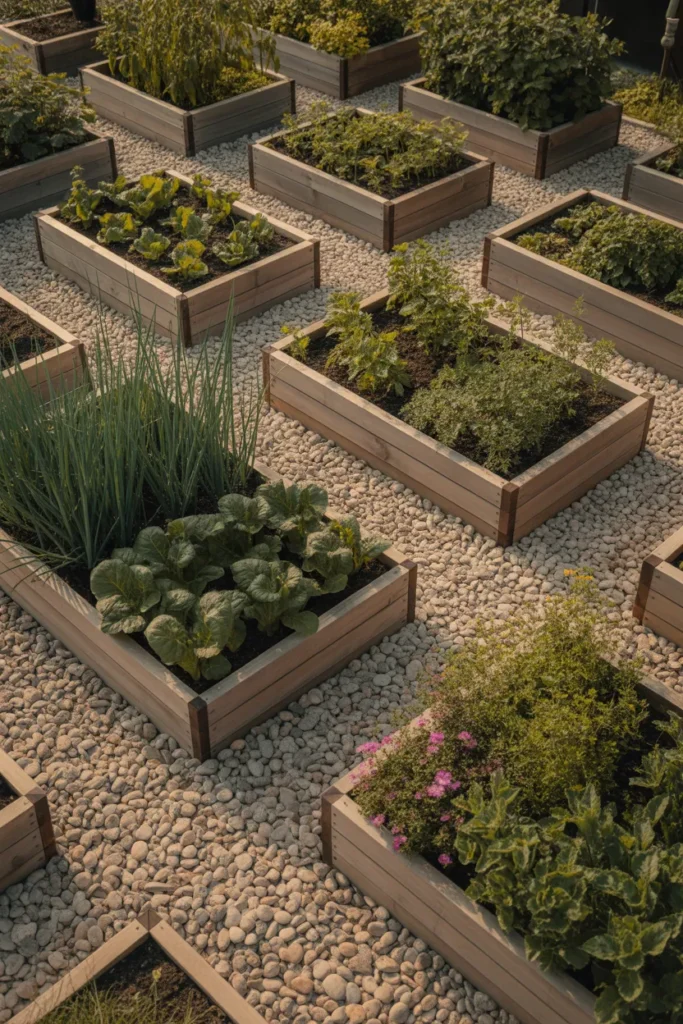
7. Raised Bed Pebble Border
A raised bed garden with pebble stone paths and borders is the most visually organized and the most practically efficient productive or ornamental garden format available, combining the growing advantages of raised beds, their improved drainage, warmer soil temperatures, and better root development, with the practical benefits of pebble stone paths, their permanent weed suppression, their clean access surface in all weather conditions, and their beautifully consistent visual ground plane that makes every raised bed and every plant within it appear more clearly organized and more individually beautiful.
Tip: Install the pebble paths between raised beds at a minimum width of sixty centimeters, and ideally seventy-five centimeters, to ensure comfortable kneeling access to both sides of each path from the path center for planting, weeding, and harvesting. A path width below sixty centimeters requires the gardener to lean uncomfortably across the path to reach the outer bed edges, creating awkward working positions that make garden maintenance more physically demanding and less pleasurable. Correct path width is one of the most practically important and most frequently underestimated garden design decisions, and its correction after installation requires removing and relaying the entire pebble path system.
8. Pebble Stone Front Yard Landscaping
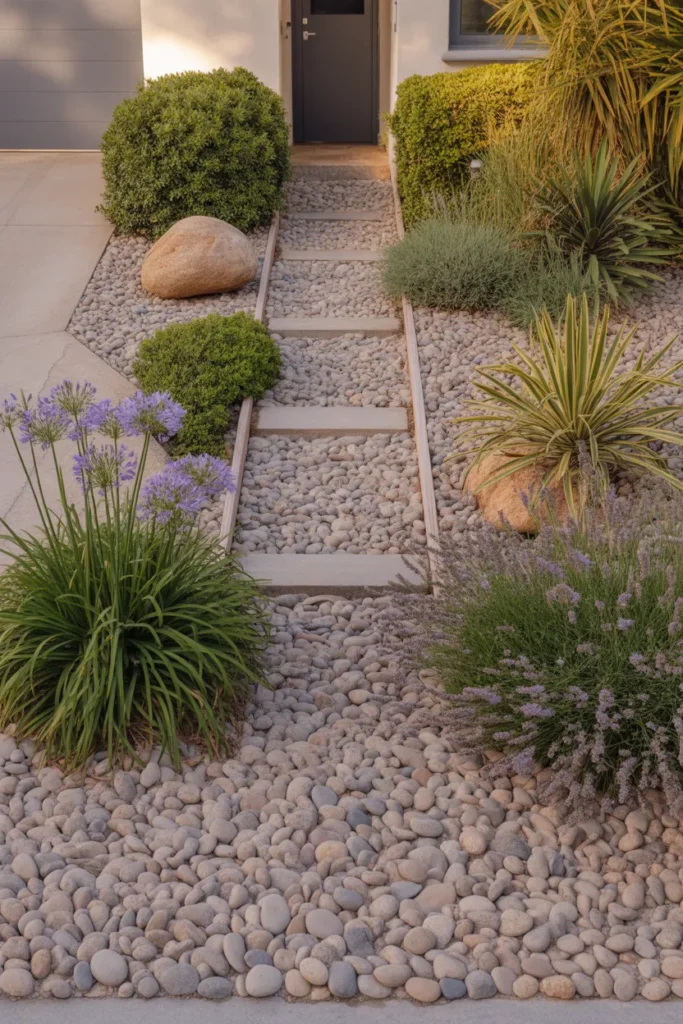
A pebble stone front yard landscape that replaces conventional lawn with drought-tolerant planting and a smooth pebble ground cover is one of the most ecologically responsible and one of the most curb-appeal-enhancing residential landscaping decisions available. The lawn is both the most water-demanding and the most maintenance-intensive element in most residential front gardens, and its replacement with a well-designed pebble landscape of architectural planting and smooth stone ground cover simultaneously reduces water consumption, eliminates weekly mowing, and creates a front garden of considerably more visual interest and genuine landscape quality than the conventional lawn it replaces.
Tip: Plant drought-tolerant specimens in the pebble front yard landscape at least four to six weeks before the pebble ground cover is laid, and water them well during this establishment period to develop strong root systems before the pebble surface reduces their access to rainfall. Plants established before the pebble ground cover is laid have the most direct access to rainfall during their critical establishment phase and develop the strongest root systems for long-term drought tolerance. Plants installed simultaneously with the pebble ground cover have reduced access to rainfall from the moment of planting and establish more slowly, producing a pebble landscape that looks sparsely planted for a longer initial period.
9. Coastal Pebble Garden
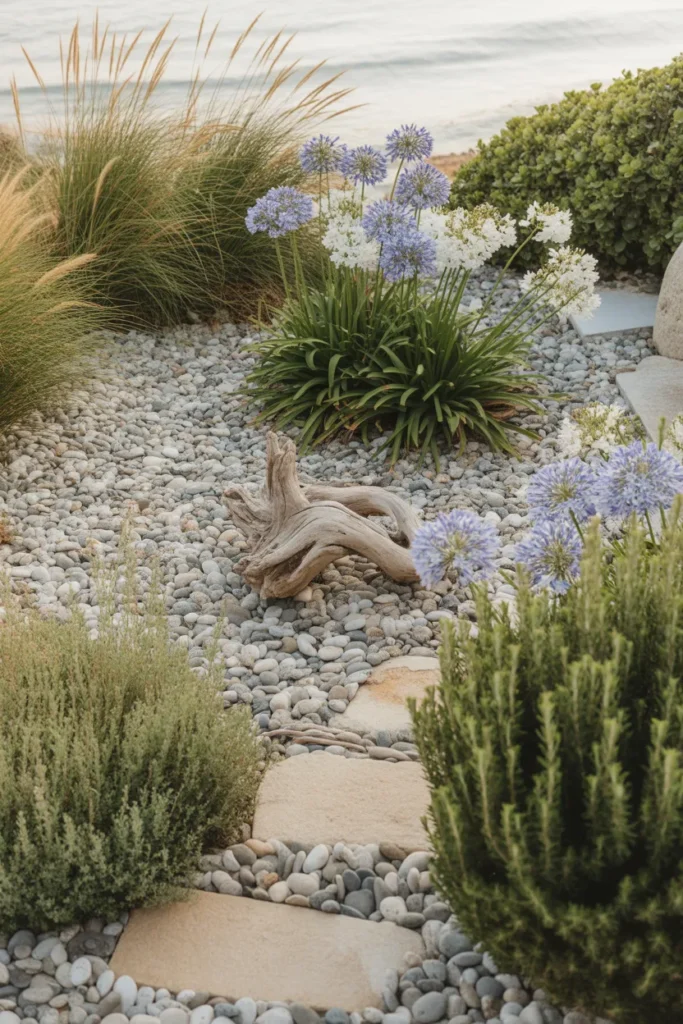
A coastal pebble garden is the garden aesthetic that achieves its most beautiful quality through genuine material authenticity, the use of real smooth beach-type pebbles, genuine driftwood, and genuinely coastal plant species to create a garden that is not simply styled to suggest the coast but is made from the same honest materials that the coast itself is made from. The coastal pebble garden that uses genuine materials achieves an atmosphere of complete coastal authenticity that a coastal garden made from manufactured or non-coastal materials, however cleverly styled, never quite replicates.
Tip: Mix at least three different pebble sizes within the coastal pebble garden ground cover, large pebbles of five to eight centimeters, medium pebbles of three to five centimeters, and small pebbles of one to three centimeters, to create a ground surface that has the natural gradation and variety of a genuine beach rather than the uniform consistency of a single-size pebble installation. Real beaches contain pebbles of dramatically varied sizes arranged by wave action into natural gradations, and replicating this size variety in a coastal garden ground cover creates a surface of genuine beach-like authenticity that single-size pebble installations cannot achieve.
10. Pebble and Ornamental Grass Border
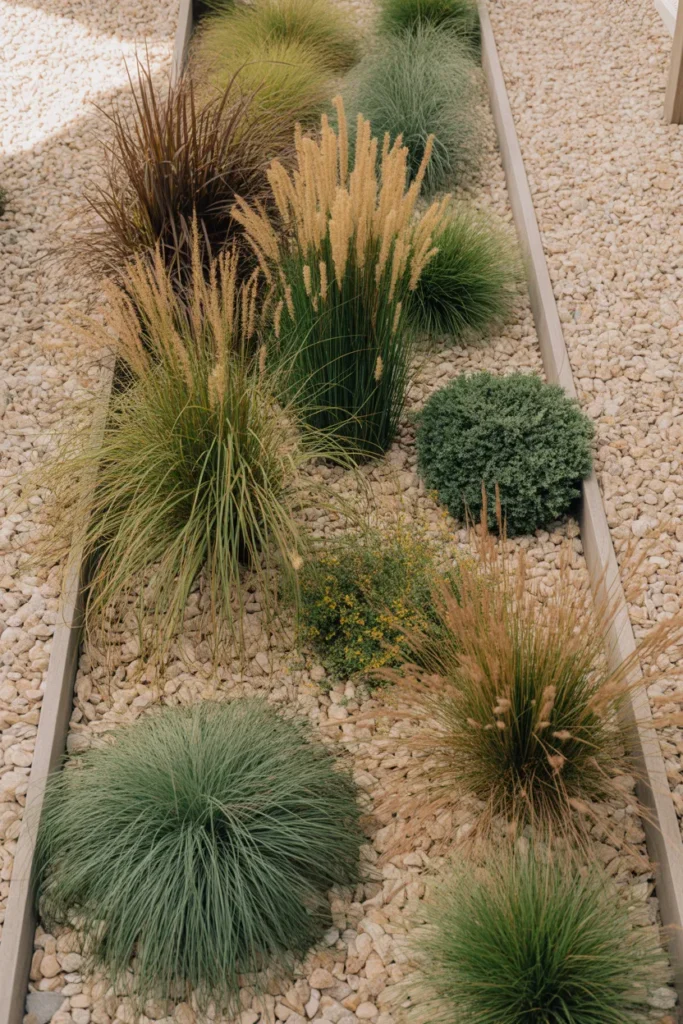
A pebble and ornamental grass border is the contemporary naturalistic garden combination that best demonstrates how a mineral material and a botanical material can achieve genuine mutual enhancement through thoughtful combination. The smooth horizontal pebble ground plane makes every upright grass form more legible and more individually beautiful as a botanical sculpture. The varied grass forms, their movement, their seasonal change, and their organic unpredictability, make the smooth horizontal pebble plane beneath them more interesting and more alive as a garden surface. Each material improves the other, and the border that combines them consistently produces a garden composition of greater beauty than either material achieves in isolation.
Tip: Cut ornamental grasses to approximately ten centimeters from the pebble mulch surface in late winter or early spring, and use this annual cutting as the occasion to rake and redistribute the pebble mulch surface beneath and between the grass clumps for a fresh and consistent mulch presentation at the beginning of each growing season. The annual grass cut and pebble rake, performed together as a single early spring maintenance task, ensures the pebble and grass border looks its absolute freshest and most beautifully organized at the beginning of the growing season when the new grass growth begins to emerge from the clean raked pebble surface with maximum visual clarity and seasonal energy.
11. Desert Pebble Xeriscape Garden
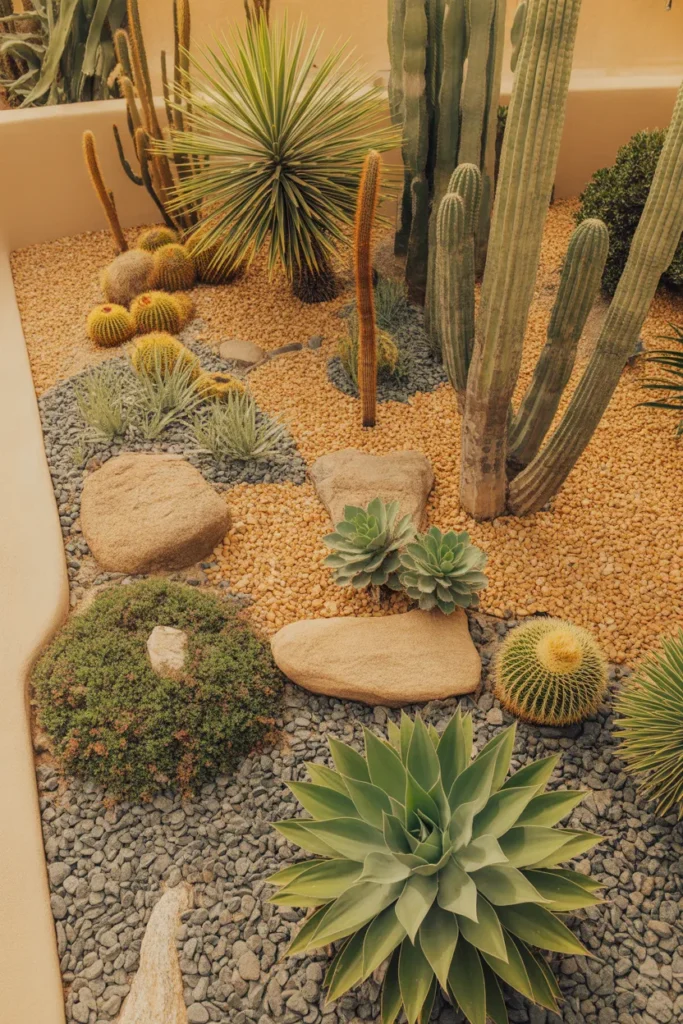
A desert pebble xeriscape garden is the landscaping approach that most honestly and most intelligently responds to the specific challenges of gardening in hot, dry climates by creating a garden that celebrates its climate rather than fighting it. The dramatic architectural forms of cacti, agave, and yucca rising from a warm pebble and decomposed granite ground cover create a garden of genuine desert beauty and genuine ecological intelligence that conventional water-intensive gardens in the same climate cannot approach for long-term sustainability or for the specific and extraordinary visual drama of the desert landscape at its most naturally magnificent.
Tip: Apply a two-centimeter layer of fine decomposed granite over the complete xeriscape pebble ground after installation and rake it into the surface to fill the gaps between pebbles with a fine mineral material that further suppresses weeds, creates a more natural desert floor texture, and provides a consistent mineral color that unifies the varied pebble tones into a coherent desert ground surface. The decomposed granite topdressing is the finishing detail that transforms a pebble xeriscape from a well-laid but visually loose pebble surface into a genuine desert floor of complete mineral authenticity and beautiful natural consistency.
12. Pebble Stone Stepping Stone Path
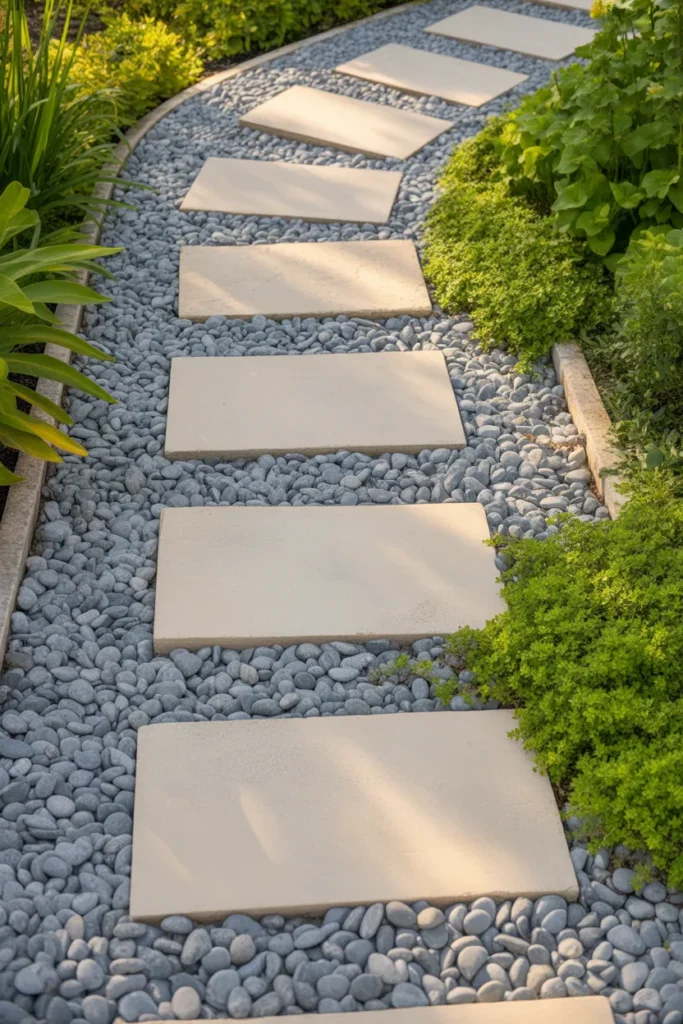
A stepping stone path within a smooth pebble ground cover is the garden path treatment that achieves the most elegant balance between functional directional guidance and genuine garden material beauty. The large flat stepping stones provide the practical navigational clarity and the comfortable walking surface that the garden path requires, while the smooth surrounding pebble ground provides the organic material warmth and the garden integration quality that the stepping stones alone cannot achieve. The combination produces a path of greater beauty and greater naturalistic quality than either stepping stones on bare soil or a continuous pebble path provides independently.
Tip: Test the stepping stone spacing by walking through the proposed path line at a natural, relaxed pace and marking the actual foot landing positions before setting any stones permanently. Every person walks with a slightly different natural stride length, and a stepping stone spacing that feels comfortable for the primary garden user may feel awkward for guests or other household members. A spacing of approximately fifty-five to sixty centimeters center to center suits most adult natural walking paces, but walking the actual path line and marking actual landing positions before permanent installation ensures the finished stepping stone path feels naturally comfortable for the specific people who will use it most frequently.
13. Pebble Stone Courtyard Design
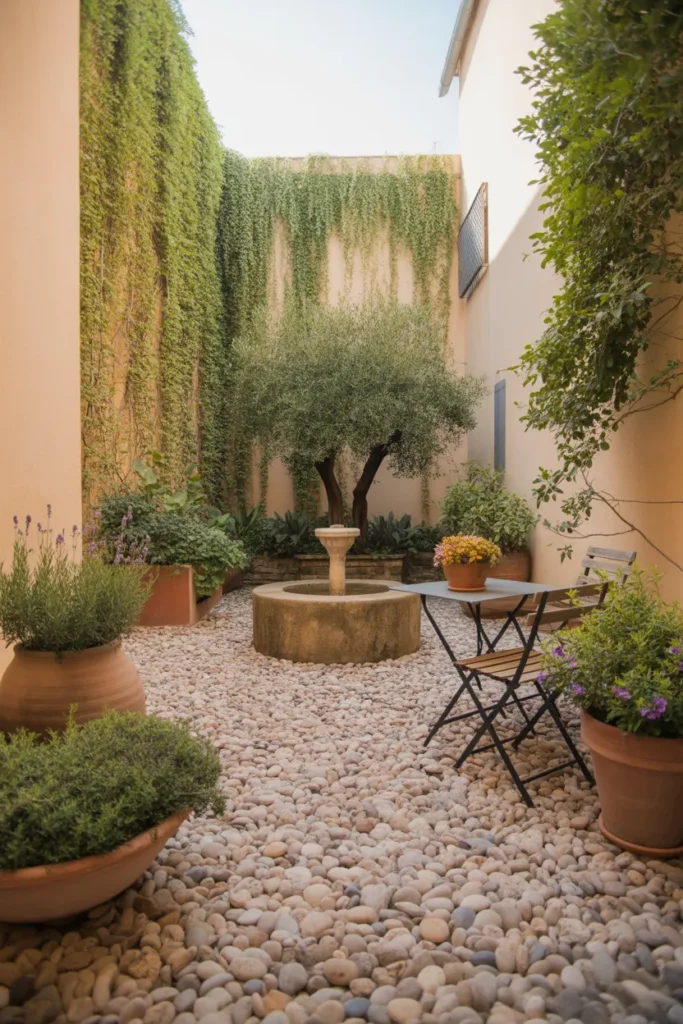
A pebble stone courtyard is the most intimate and the most completely enclosed pebble landscape space available, and it achieves its extraordinary quality through the specific atmosphere that complete enclosure combined with a consistent natural material ground plane creates. The courtyard whose floor is entirely pebble stone from wall to wall has a quality of complete material commitment and genuine outdoor room definition that a courtyard paved in manufactured materials or partially covered in grass simply does not have. The pebble stone courtyard feels like a room that was made with genuine care for its floor material, and that care communicates itself in every moment spent within it.
Tip: Install a perimeter drainage channel within the pebble stone courtyard floor before laying the pebble surface, running along the base of the enclosing walls on at least two sides, to manage the considerable volume of rainfall that an enclosed courtyard space can accumulate during heavy rain. A pebble floor that drains freely through its surface is the most natural drainage solution for a courtyard, but enclosed courtyard walls can concentrate rainfall runoff in ways that exceed the natural drainage capacity of even a well-laid pebble floor. A perimeter drainage channel provides the additional drainage capacity that ensures the courtyard floor drains quickly and completely after the heaviest summer rainfalls without flooding the pebble surface.
Conclusion
Pebble stone is not simply a practical landscaping material, although it is one of the most practically intelligent ground cover materials available for any garden. It is a genuine natural material of enduring beauty and extraordinary versatility that can be used to create garden features as varied as the meditative calm of a raked Zen garden and the dramatic naturalism of a dry river bed, as intimate as a small enclosed courtyard floor and as publicly impactful as a complete front yard landscape transformation.
The thirteen ideas in this post cover every scale of pebble stone application, from the simple practicality of a pebble mulch flower bed to the genuine artisanal ambition of a pebble mosaic patio feature, from the naturalistic drama of a dry river bed to the architectural precision of a raised bed garden with pebble paths. What they all share is the conviction that pebble stone, chosen with genuine care for the appropriate material quality and applied with genuine thought for the design opportunities it creates, consistently produces garden landscapes of greater natural beauty, greater practical intelligence, and greater long-term landscape satisfaction than the more conventional alternatives it replaces.
Choose the pebble stone landscaping idea that best suits your garden’s conditions, your personal aesthetic, and the specific problem or opportunity your garden presents. Install it with good preparation, the right base, the correct depth, and the appropriate landscape fabric beneath. And then experience what every garden that has been given a thoughtful pebble stone treatment eventually demonstrates: that the most beautiful gardens are often the ones that start from the ground up and get the ground right first.