A flower bed is the garden’s most direct and most personal expression of what its maker finds beautiful. It is the space where every choice, every color, every plant combination, and every seasonal decision reflects something genuine about the person who planted it and tends it. And unlike almost any other element of garden design, a flower bed has the extraordinary quality of being different every single year, evolving with the seasons, with the plants, with the soil, and with the gardener’s own developing taste and knowledge.
But a flower bed is also, for many gardeners, a source of uncertainty. Where to start? Which plants to choose? How to arrange them? How to achieve the abundant, beautiful, apparently effortless results that the best flower beds display? The answer, consistently, is to start with a clear idea of what kind of flower bed suits both the conditions of the garden and the aesthetic vision of the person planting it.
These 14 flower bed ideas cover every garden style, every growing condition, every level of gardening experience, and every planting philosophy from the disciplined formality of the symmetrical bed to the joyful ecological generosity of the wildflower meadow. Whether your garden is sun-drenched or shaded, small or generous, formal or completely wild in spirit, there is a flower bed idea in this list that will help you make something genuinely beautiful with the space you have.
1. Cottage Garden Flower Bed
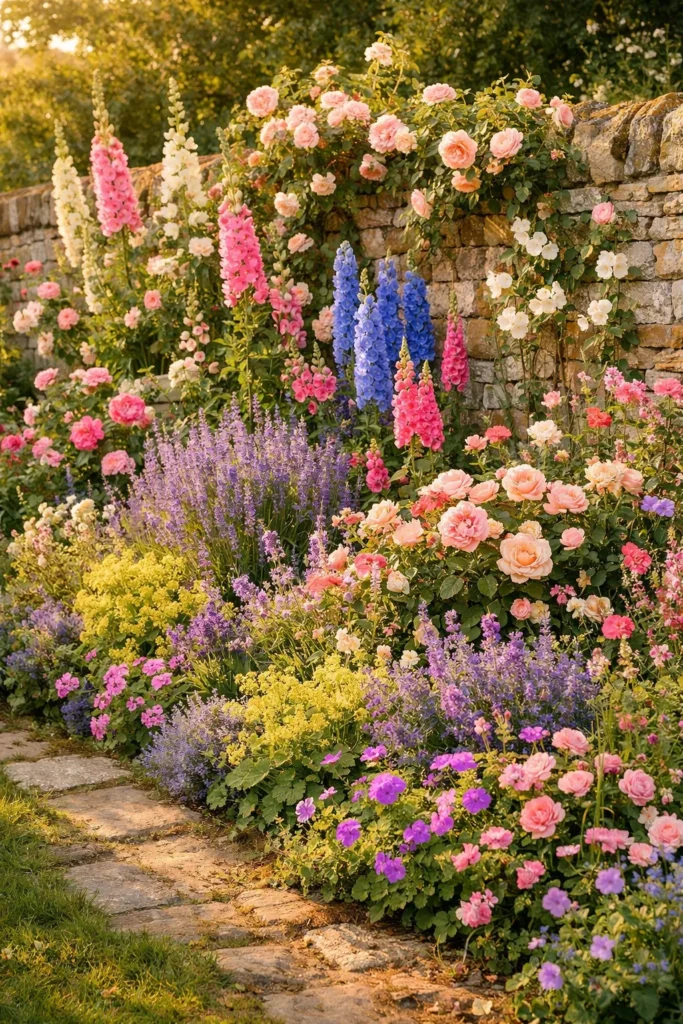
The cottage garden flower bed is the most romantic and the most enduringly beloved garden aesthetic in existence, and it works because it is organized around the principle of apparent spontaneity within genuine consideration. The plants in a cottage border are not randomly arranged. The tall foxgloves and hollyhocks at the back, the medium roses and salvias in the middle, and the low catmint and geraniums at the front follow a clear structure. But within that structure, the plants are allowed to intermingle, self-seed, and develop their own relationships in ways that create a freshness and a natural quality that no rigidly organized border can replicate.
Tip: Grow foxgloves from seed sown directly in the cottage border in early summer and allow them to self-seed freely after flowering. Self-seeded foxgloves establish more vigorously and flower more prolifically than transplanted ones, and they naturally distribute themselves throughout the border in the gaps and combinations that the border itself seems to offer them. After two or three seasons of self-seeding, the foxglove population of a cottage border reaches a quality of natural abundance that planted specimens alone never quite achieve.
2. Raised Wooden Flower Bed Border
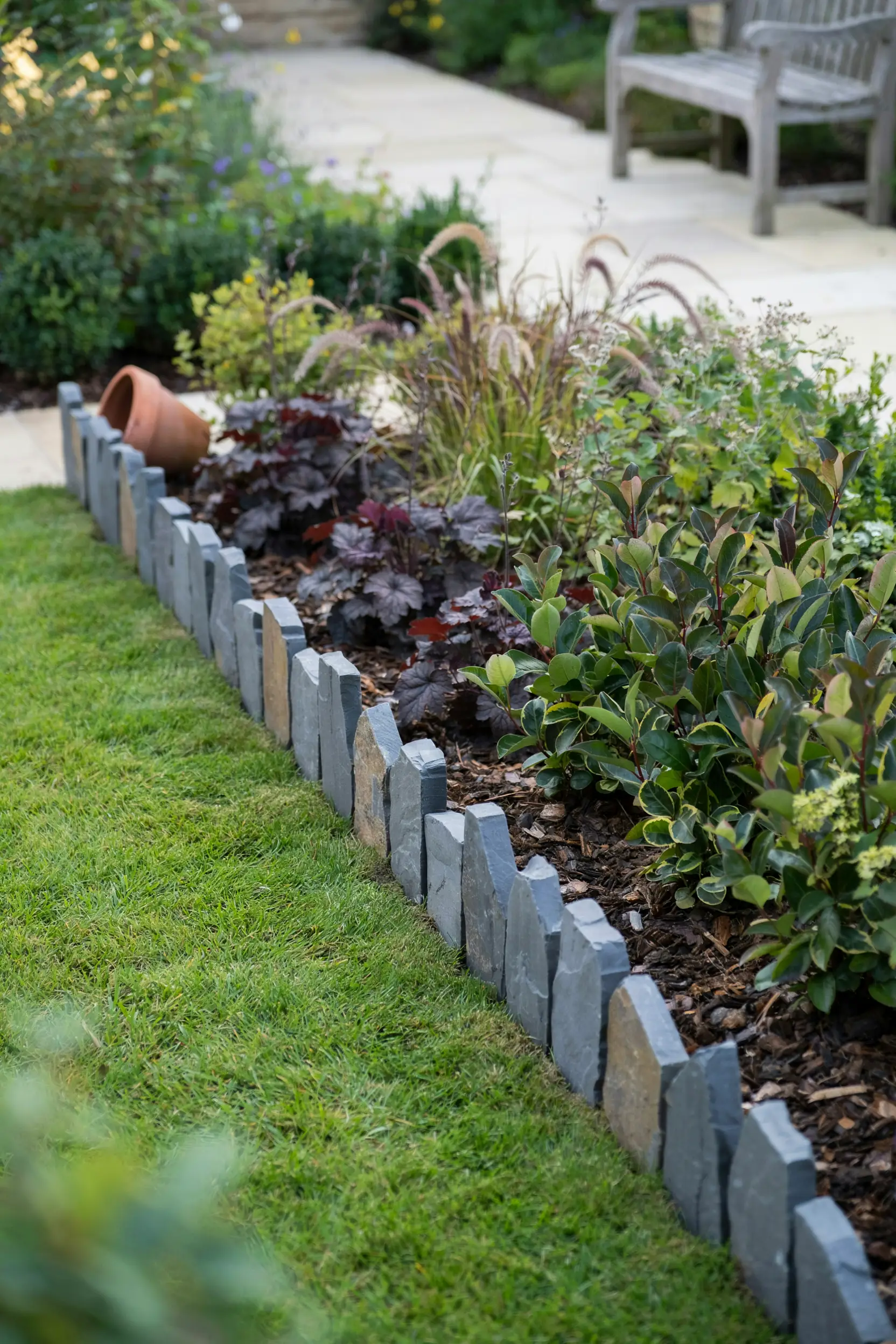
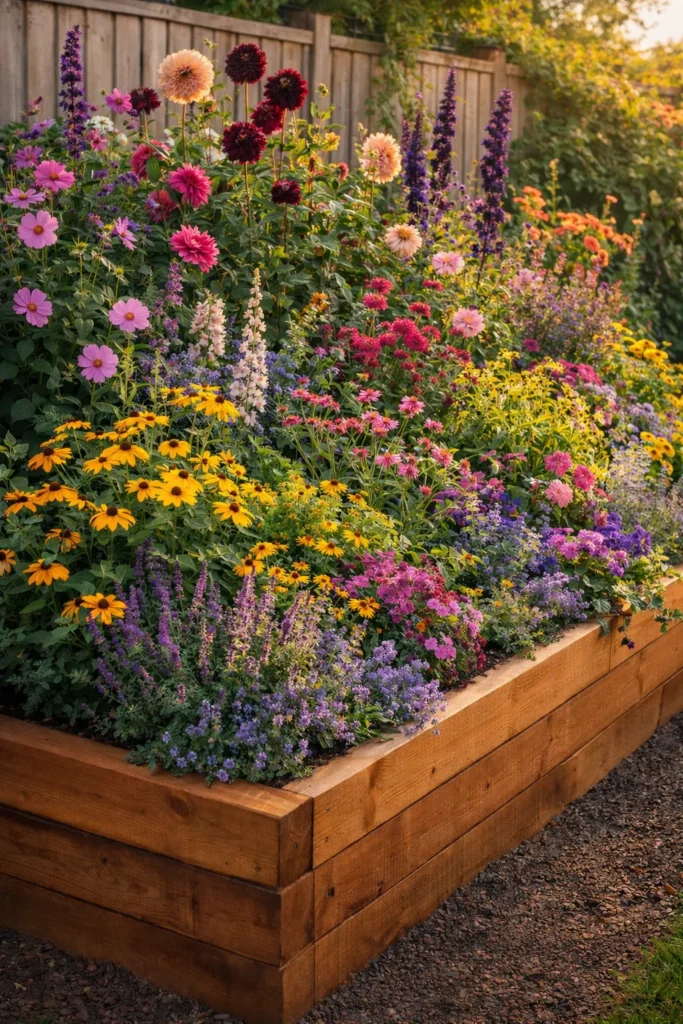
A raised wooden flower bed is the single most accessible and most immediately effective improvement available for a garden with poor soil, difficult drainage, or simply the need for a clearly defined and beautifully organized planting space. The raised frame solves the soil problem, improves the drainage, warms the growing medium earlier in spring, and creates a clean architectural boundary that gives the whole garden a quality of deliberate and considered design. It is the flower bed format that rewards the initial construction investment with better growing results from the very first season.
Tip: Fill a raised wooden flower bed with a mix of fifty percent good quality topsoil, thirty percent well-rotted garden compost, and twenty percent horticultural grit. This growing medium provides the fertility, the moisture retention, and the drainage that most flowering plants need to thrive. The initial cost of filling a raised bed with quality growing medium is genuinely worth paying because the plants established in it will outperform those in poor in-ground soil within a single season and continue to do so for years afterward.
Read More:
15 Cucumber Trellis Ideas That Maximize Your Garden Space
17 Bathroom Closet Ideas That Make Every Morning Run Smoother
13 Small Bedroom Decor Ideas That Make Every Inch Feel Intentional
3. Front Yard Curb Appeal Flower Bed
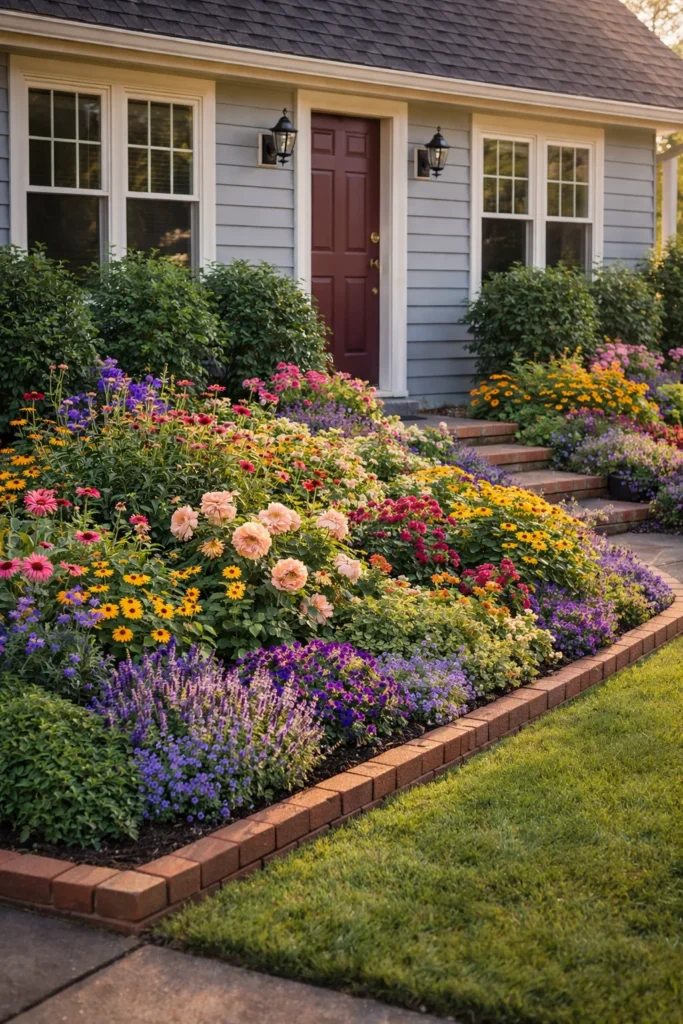
A front yard flower bed has a unique responsibility in the garden because it is the only part of the garden that is seen by everyone rather than only by those invited in. It represents the home to the street, to passing neighbors, to visiting tradespeople, and to every person the household knows. A well-planted, well-maintained front yard flower bed communicates more warmth, more pride, and more genuine welcome than almost any other domestic investment of comparable cost and effort.
Tip: Choose a front yard flower bed color palette that complements the color of the house exterior rather than contrasting with it. A house with warm brick tones is most beautifully served by warm flower tones in orange, yellow, and deep red. A house with cool grey render looks most striking with cool purple, blue, and white planting. A house with a white or cream exterior suits almost any flower color. The relationship between the flower bed color and the house color is the single design decision that determines whether a front yard border looks considered or simply planted.
4. Shaded Woodland Flower Bed
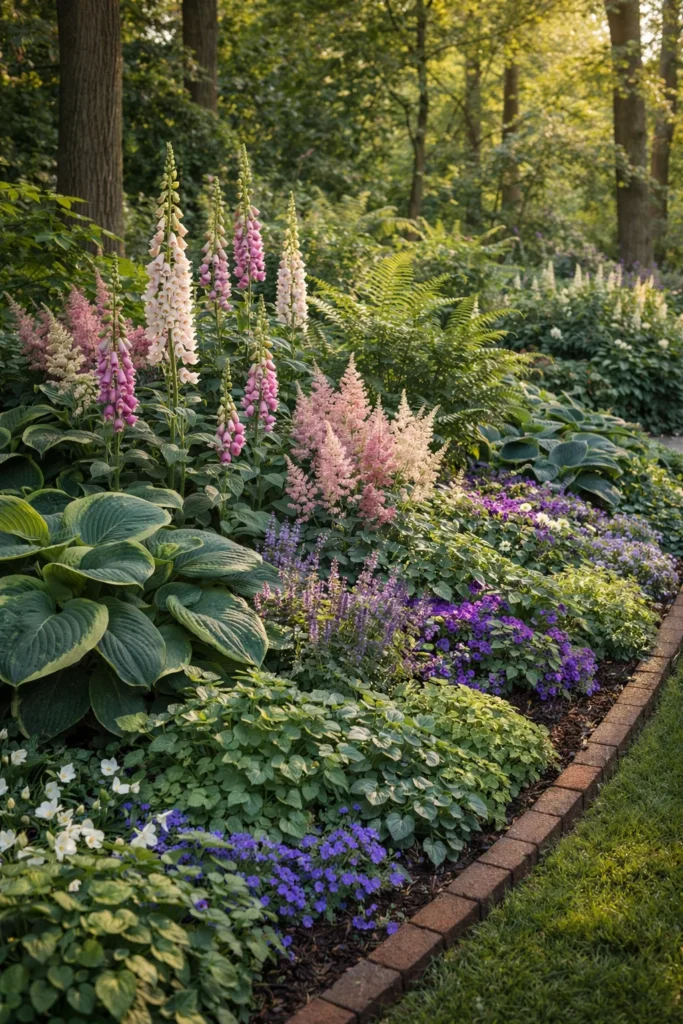
The shaded corner of the garden is not the garden’s problem area. It is its opportunity area, and the gardener who approaches it with that perspective will discover a range of shade-tolerant flowering plants that are some of the most beautiful, the most texturally rich, and the most atmospherically interesting available in the entire plant world. Hostas, ferns, astilbes, foxgloves, and woodland bulbs create a shaded bed of cool, botanical beauty that is entirely unlike anything possible in full sun, and entirely worth the slightly different approach that shaded growing conditions require.
Tip: Enrich the soil in a shaded woodland flower bed with a generous annual application of leaf mold, either bought or homemade from the previous autumn’s fallen leaves. Shaded beds are frequently drier than they appear because tree canopies intercept rainfall before it reaches the soil, and they are often nutrient-poor because tree roots compete vigorously for available nutrients. Leaf mold improves both the moisture-retention and the nutrient content of shaded bed soil simultaneously, and it is free to make from the leaves that the trees themselves provide every autumn.
5. Wildflower Meadow Bed
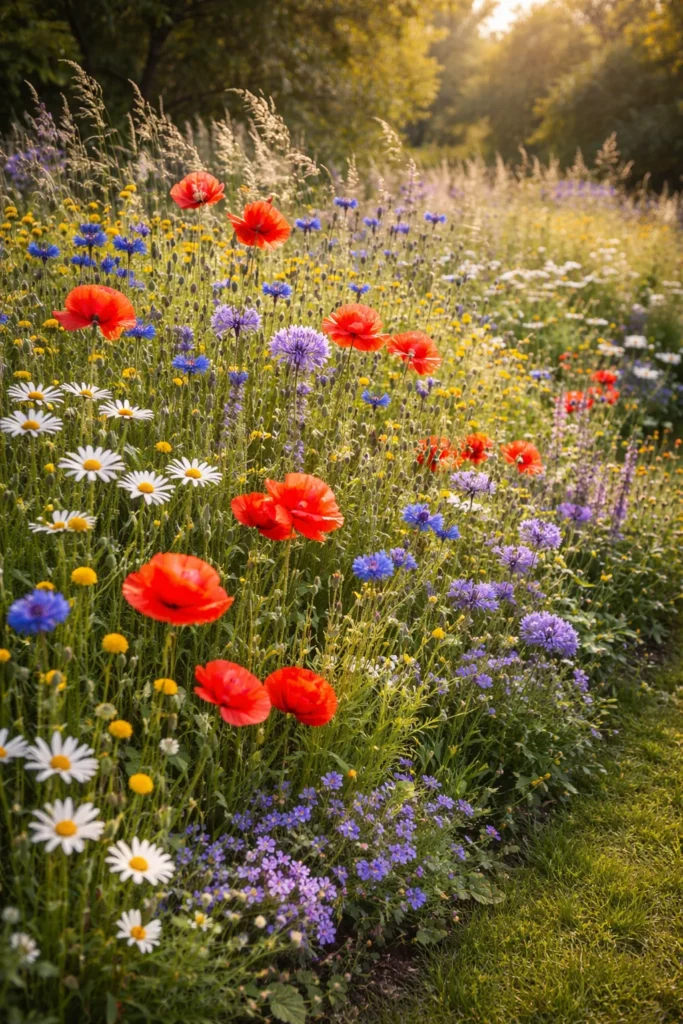
A wildflower meadow bed is the garden’s most ecologically generous and most honestly beautiful planting choice, and it requires less work after the initial establishment than any other flower bed style. Once a species-rich wildflower sowing has established and is managed with a single annual late-summer cut, the meadow bed develops its own seasonal rhythm, self-seeds freely, and produces a different but always beautiful display each year as different species establish and the community evolves. It is the flower bed that improves most reliably without continuous intervention.
Tip: Prepare the wildflower meadow seed bed by removing every trace of existing vegetation, including the roots, before sowing. Wildflower seeds require a clear and open seed bed with no competition from established grass or weed species. Sowing even the best quality wildflower seed mix into an inadequately prepared seed bed will produce a display dominated by weeds and grass rather than wildflowers. The preparation is the most important single step in wildflower meadow establishment, and it is worth taking the time to do it thoroughly.
6. Perennial Flower Bed Design
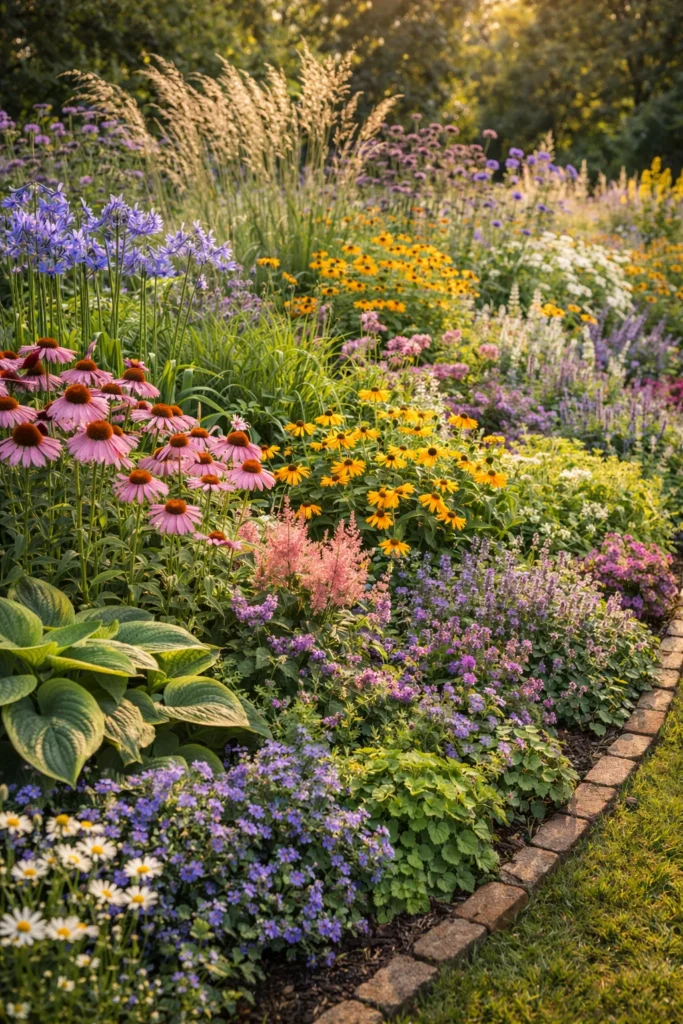
A well-designed perennial flower bed is the garden’s most rewarding long-term investment because it gets better, richer, and more abundant with every passing year without requiring the replanting that annual borders demand each season. The key to a great perennial bed is designing for succession, ensuring that something is always approaching its peak while something else is finishing, so that the border maintains its visual interest from the first warm days of spring to the last frost of autumn. A perennial bed designed for succession is never without beauty.
Tip: Include at least two or three ornamental grass varieties in a perennial flower bed for their outstanding structural and textural contribution in autumn and winter when most flowering perennials have finished. Miscanthus, pennisetum, and stipa grasses develop beautiful seedheads in late summer that remain attractive through the winter months, providing structural interest in the perennial bed during the months when flowering plants offer nothing. A perennial border without grasses loses more than half its visual appeal between October and March.
7. Layered Color Flower Bed
A layered color flower bed is the approach that requires the most pre-planting thought and delivers the most visually sophisticated result. The discipline of choosing a consistent color palette and then distributing it through five distinct height layers from front edging to back structural plants creates a border of extraordinary visual depth and coherence that immediately reads as genuinely designed rather than simply planted. The investment in planning a layered color bed is repaid with interest from the first season.
Tip: Repeat the key colors of a layered color bed at multiple height levels within the design rather than keeping each color exclusive to one layer. Purple, for example, expressed as low catmint at the front edge, medium salvia in the middle, and tall verbena bonariensis at the back creates a visual thread of the color that runs through the complete border depth and unifies the whole planting in a way that a single level of purple expression never achieves. Color repetition through the layers is the technique that distinguishes a truly layered border from a simply tiered one.
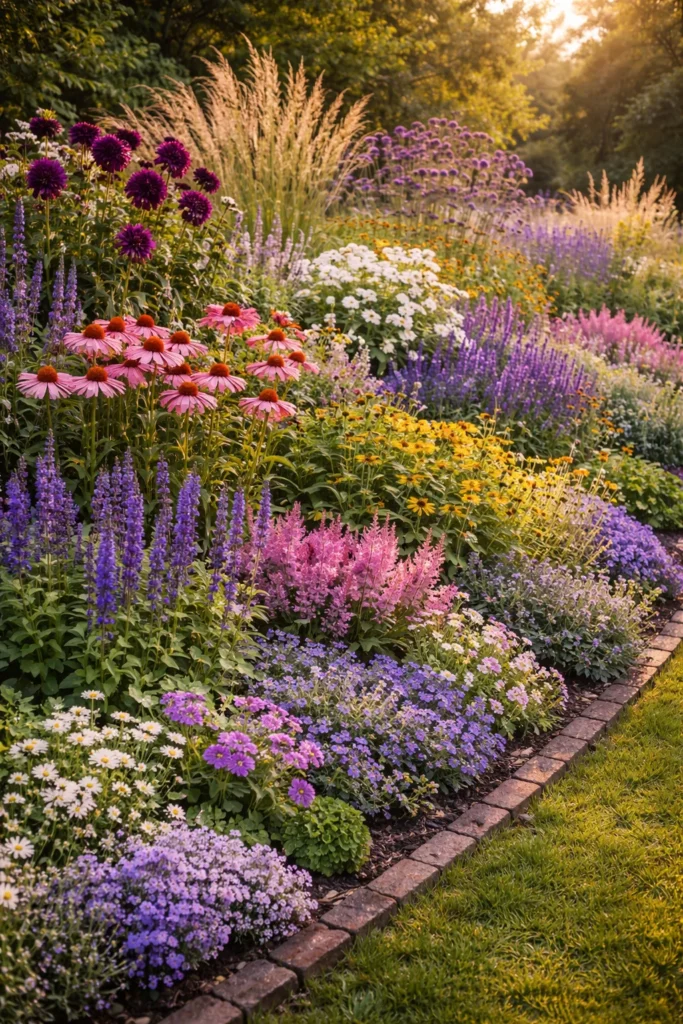
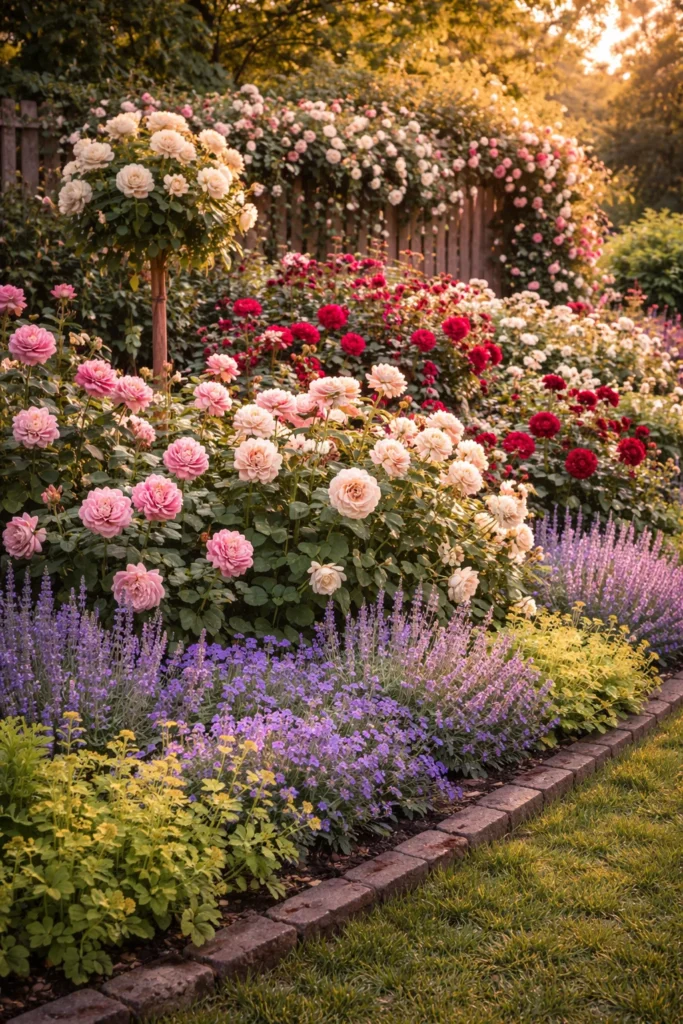
8. Rose Garden Flower Bed
A rose garden flower bed is the most classically beautiful and the most emotionally resonant flower bed choice available to any gardener, and the scent of warm roses in afternoon sunlight is one of the most genuinely extraordinary sensory experiences the garden offers. Modern disease-resistant rose varieties have addressed many of the practical challenges that made rose growing historically demanding, and the contemporary rose garden bed is a far more achievable and far more sustainably manageable planting than its reputation as a high-maintenance specialist choice suggests.
Tip: Plant lavender or catmint between rose plants in a rose garden flower bed. The lavender and catmint serve three simultaneous purposes: they suppress weeds between the rose stems, they attract beneficial pollinating insects, and their purple and blue tones are the most universally beautiful companion color available for the blush, cream, and deep red tones of most rose varieties. This classic rose and lavender combination is one of the most consistently beautiful plant partnerships in the entire garden.
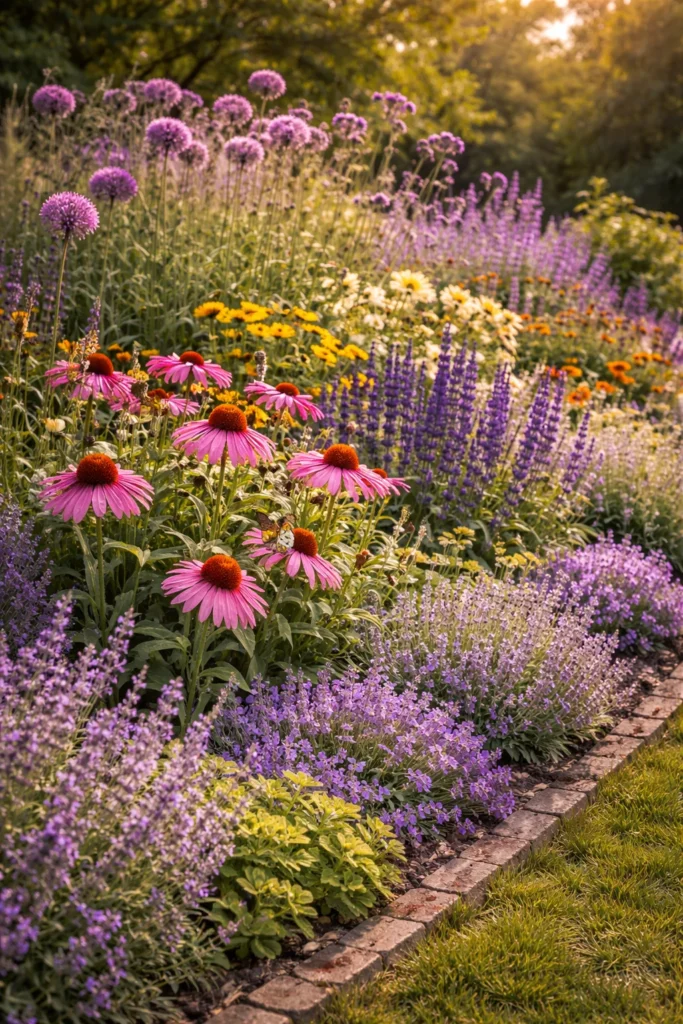
9. Pollinator Flower Bed
A pollinator flower bed is the most ecologically important planting decision a garden maker can take, and it is also one of the most visually beautiful because the plants that pollinators need most, lavender, echinacea, salvia, verbena, and single-flowered dahlias, are among the most beautiful flowering plants available for any garden style. The pollinator bed requires no compromise between ecological value and aesthetic pleasure. Those two qualities, in this case, come from exactly the same plant choices.
Tip: Choose single-flowered varieties over double-flowered forms throughout a pollinator flower bed without exception. Double flowers, however beautiful to human eyes, have been bred in ways that make their pollen and nectar largely inaccessible to bees and other pollinators. Single flowers provide open, accessible pollen and nectar sources that support the widest range of pollinator species. In a pollinator bed, the single flower is always the ecologically correct and the practically more beautiful choice.
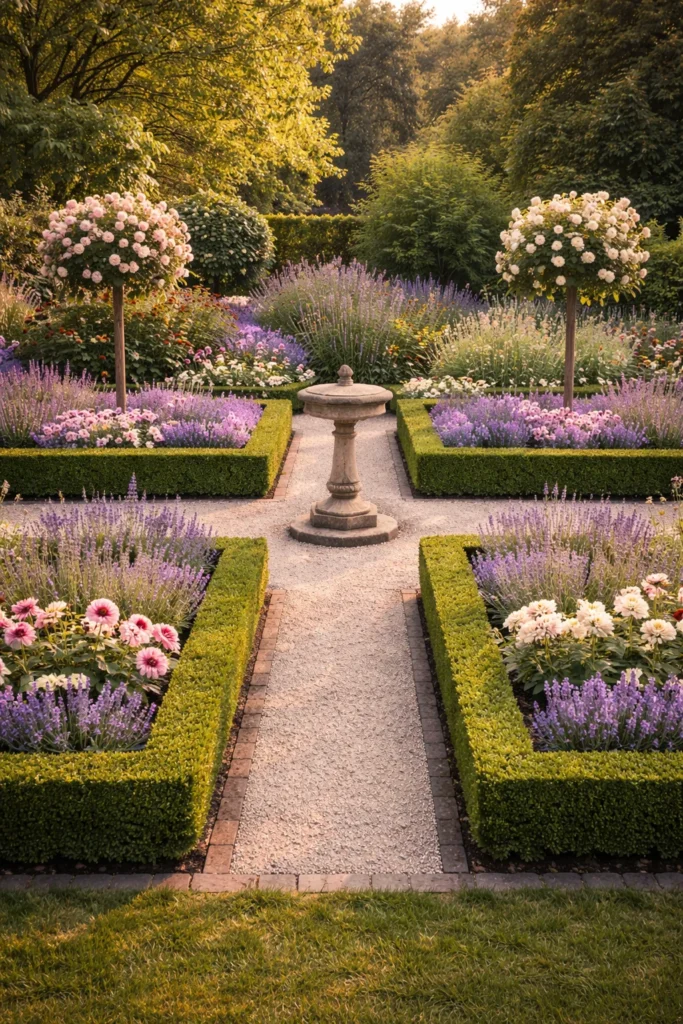
10. Formal Symmetrical Flower Bed
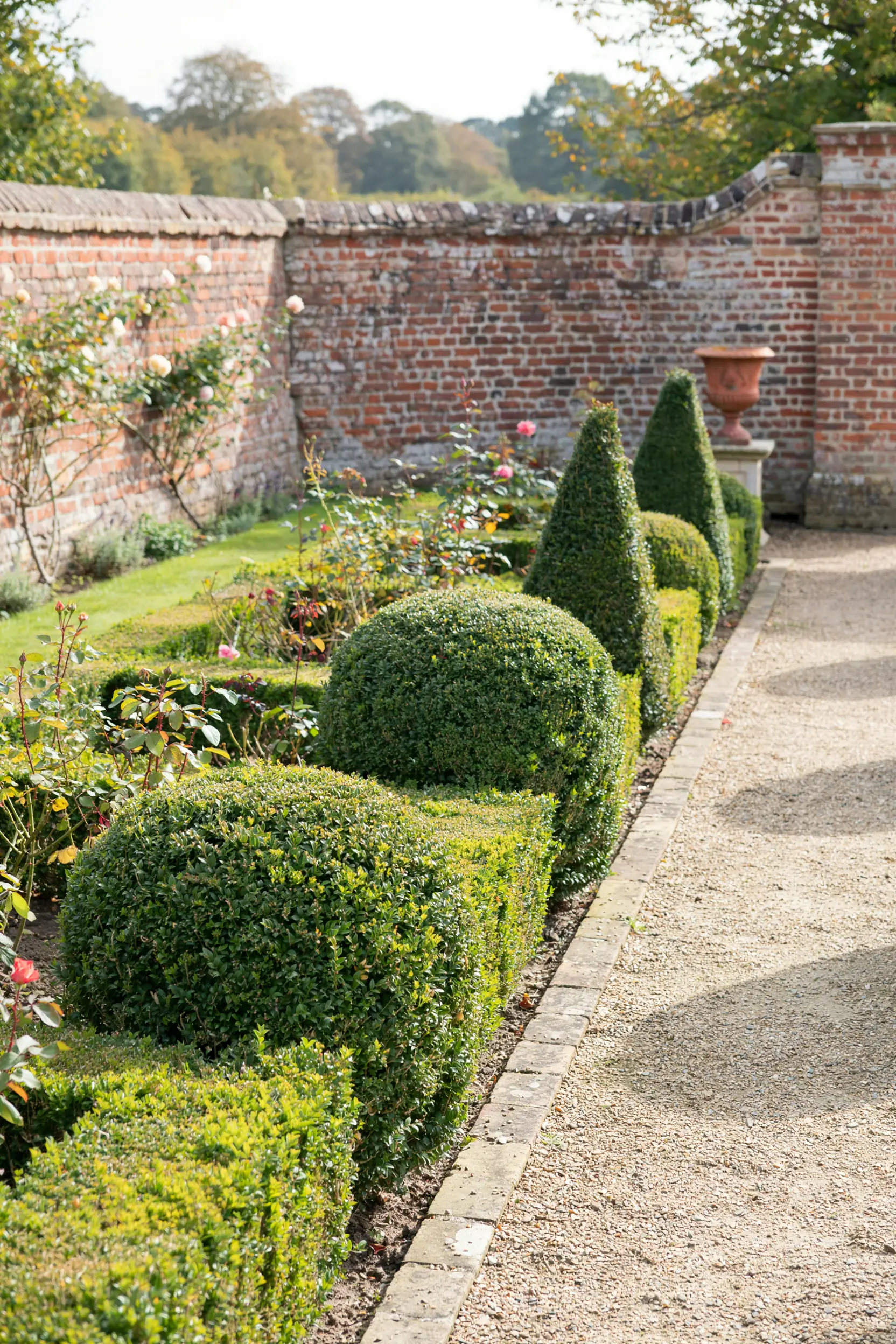
A formal symmetrical flower bed is the garden’s clearest expression of design intention, and the visual satisfaction it produces comes from the fundamental human response to bilateral symmetry and geometric order that appears in every great formal garden tradition across cultures and centuries. The formal bed does not need to be large or elaborate to achieve its effect. Even a simple pair of matching beds divided by a central path with box edging, standard roses at the corners, and seasonal bedding filling the interiors creates a formal garden moment of genuine visual authority and satisfaction.
Tip: Invest in good quality box hedging plants and give them two to three seasons to establish before expecting them to form a tight and precise boundary. Box grows slowly, and the temptation to clip immature box hedging too aggressively too early in its development produces a thin and uneven hedge that takes years to recover. Allowing the hedge to develop its full volume in the first two seasons before beginning regular shaping produces a denser, more robust, and more beautifully formed box hedge that will maintain its formal geometry reliably for many years.
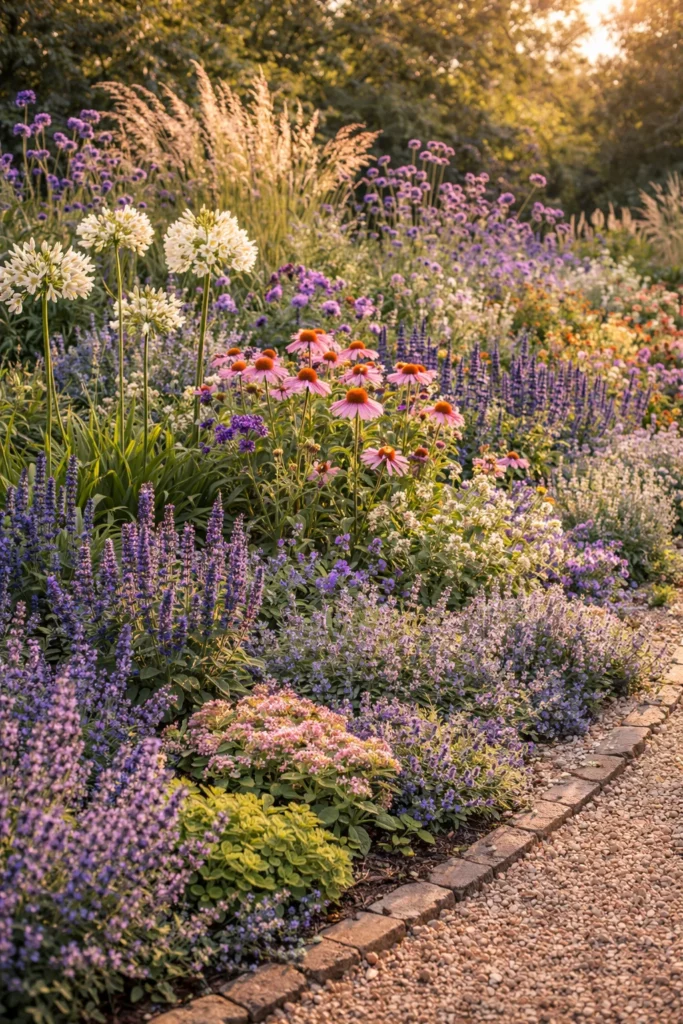
11. Drought Tolerant Flower Bed
A drought tolerant flower bed is the planting choice that becomes more relevant, more practical, and more aesthetically rewarding with every passing year as garden climates become warmer and drier. The extraordinary range of beautiful flowering plants that thrive in exactly the conditions that challenge conventional borders, full sun, free-draining soil, and low rainfall, includes some of the most visually beautiful and most fragrant flowering plants available. A drought tolerant bed is not a compromise with difficult conditions. It is a celebration of them.
Tip: Apply a generous five to seven centimeter layer of gravel mulch across the surface of a drought tolerant flower bed immediately after planting. Gravel mulch suppresses weeds, retains soil moisture more effectively than bare soil, prevents soil splash onto plant foliage, and creates the visually clean Mediterranean garden aesthetic that suits drought-tolerant planting so beautifully. It is the single most important finishing detail of a drought tolerant bed and the one that has the greatest combined practical and aesthetic impact.
12. Spring Bulb Flower Bed
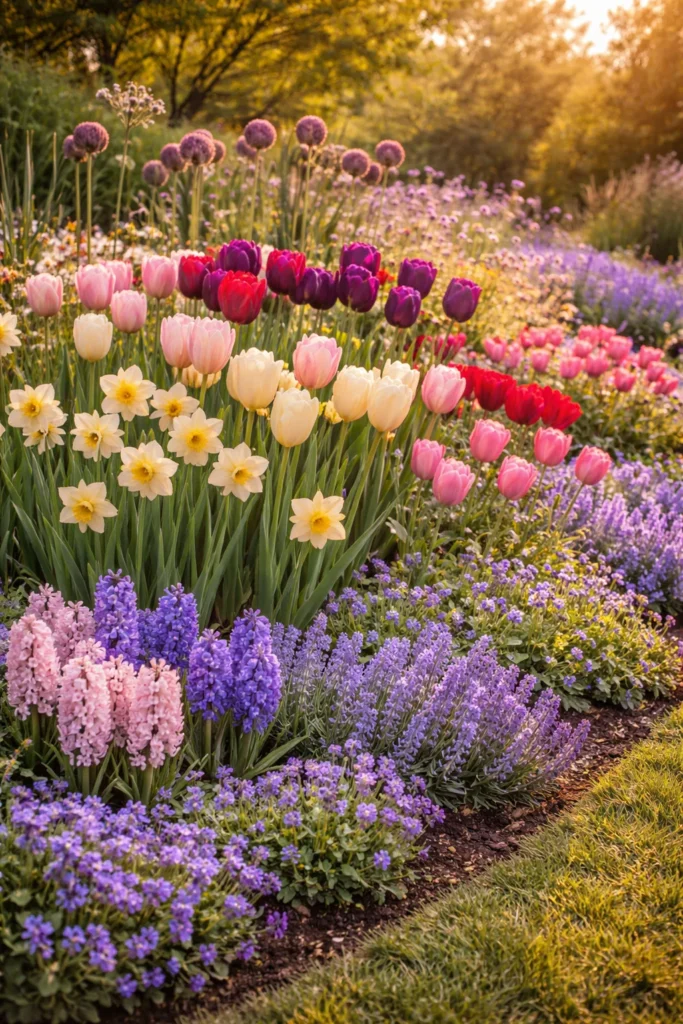
A spring bulb flower bed is the garden’s annual miracle, the garden bed that delivers the most concentrated and most emotionally resonant seasonal display from the least demanding growing year. Plant the bulbs in autumn, water them in, and step back. The spring display that follows, sometimes six months later, requires nothing more of the gardener beyond the patience of waiting. And after the long months of winter, the reward of the first crocus, the first daffodil, the first tulip, is one of the most genuine and most reliably moving pleasures the garden provides.
Tip: Plant spring bulbs in layers within the same bed area, a technique called lasagne planting, to achieve the most dense and the most extended spring display from a limited space. Plant the largest and latest-flowering bulbs, tulips and alliums, at the deepest level. Plant medium-sized bulbs, narcissus and hyacinths, at a middle depth above them. Plant the smallest and earliest-flowering bulbs, muscari and chionodoxa, at the shallowest level. Each layer flowers in succession, and the combined display is far more abundant and far more sustained than any single-species bulb planting of equivalent ground area.
13. Fence Line Flower Bed Border
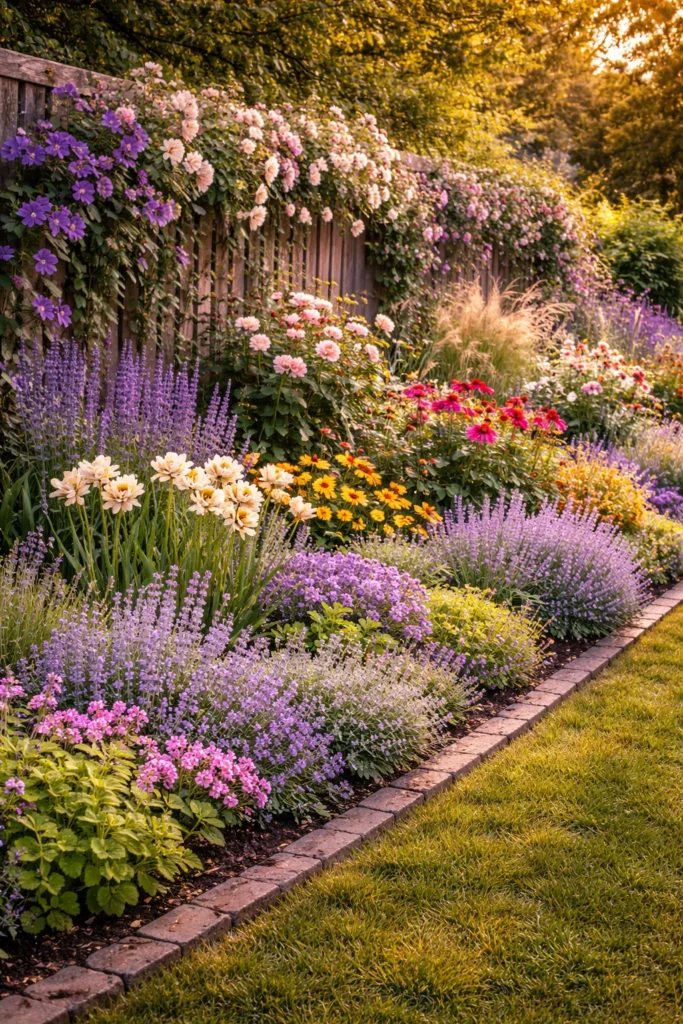
A fence line flower bed is the garden’s most space-efficient planting opportunity because it uses the fence itself as both a physical backdrop and a vertical growing surface simultaneously. A fence that supports climbing roses, clematis, or jasmine behind a full-depth mixed border provides twice the growing surface of an equivalent area of open garden, and the flower bed that uses both the vertical fence space and the horizontal ground space before it achieves an abundance and a visual impact that no open border of the same width can match.
Tip: Water the fence line flower bed more frequently and more generously than open garden borders, particularly during dry periods. Garden fences and walls create a rain shadow effect in the soil immediately in front of them, intercepting rainfall before it reaches the bed and creating a drier growing environment than the surrounding garden. Plants growing in fence line beds can be significantly drier than they appear from above, and consistent watering, particularly for the back-row plants growing closest to the fence, is the maintenance habit that keeps a fence line border flourishing.
14. Tropical Statement Flower Bed
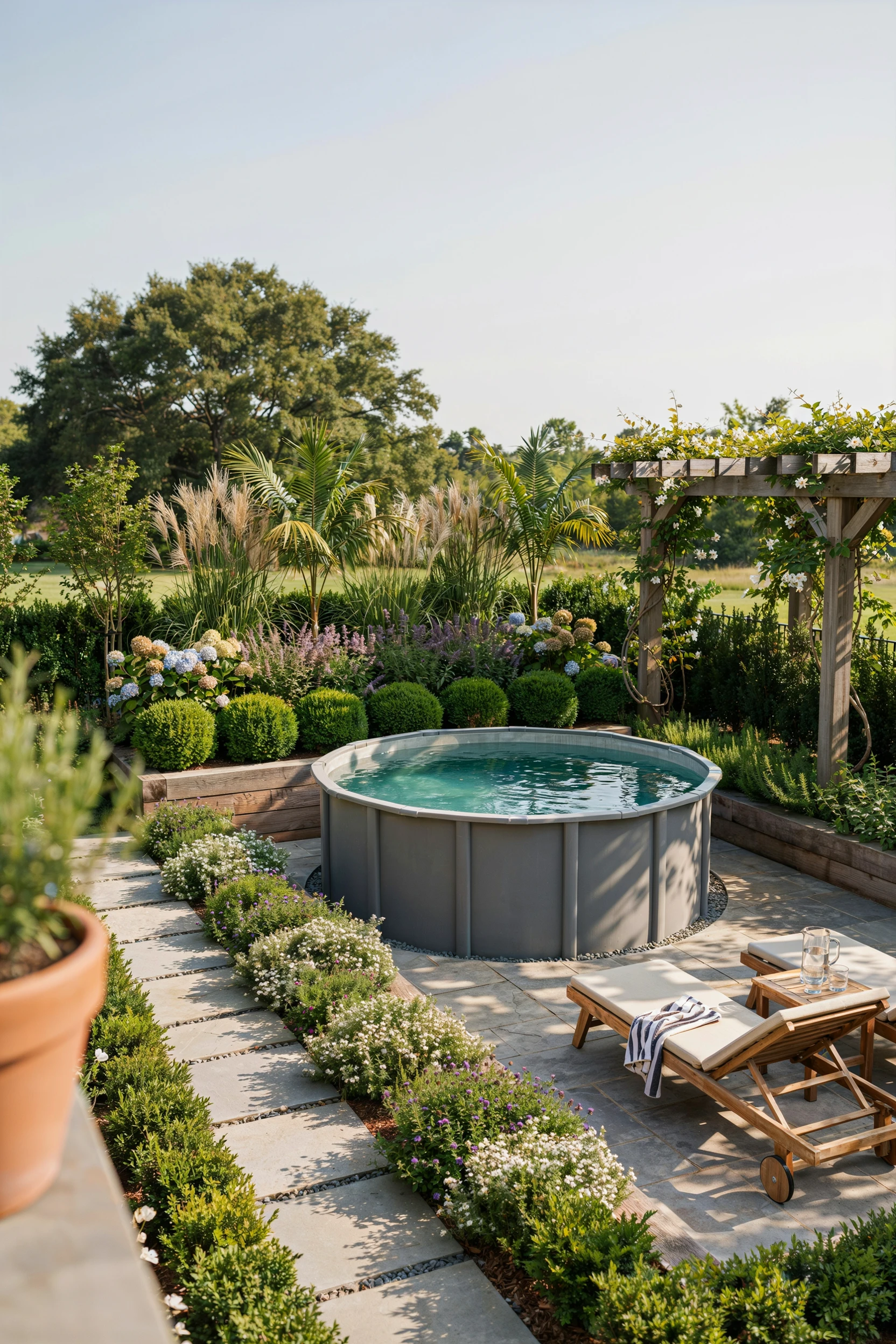
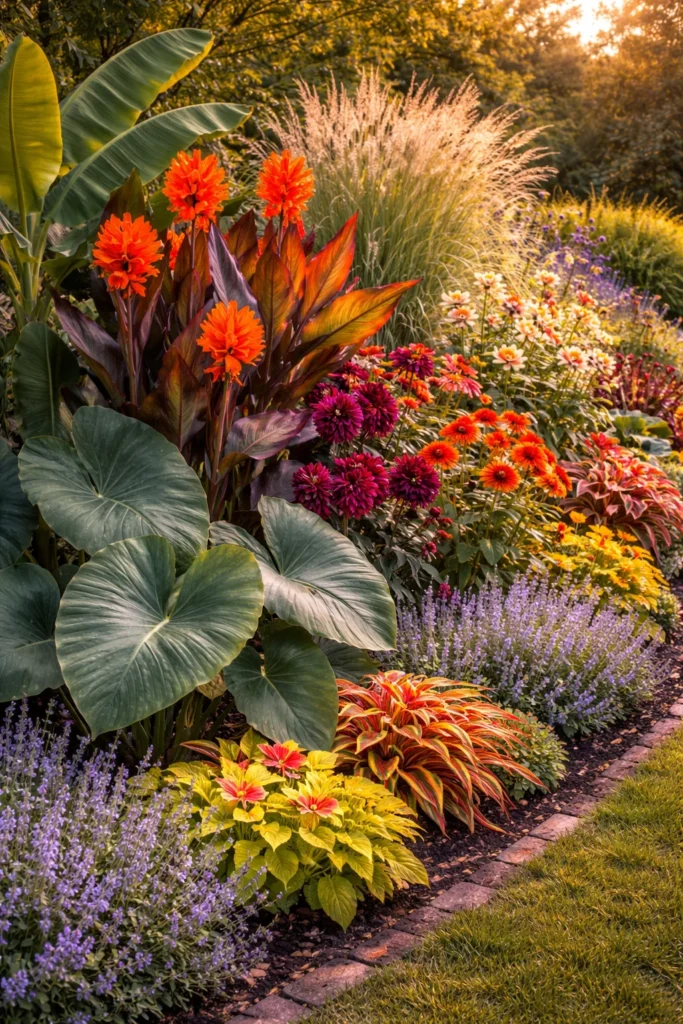
A tropical statement flower bed is the garden’s most ambitious and most visually dramatic planting choice, and it rewards that ambition with a display of extraordinary exotic beauty that no other planting style can match for sheer visual impact. The large-leaved cannas, elephant ears, and ginger lilies of a tropical bed create a garden presence that immediately transforms the experience of the whole garden space, making a familiar and domestic outdoor environment feel briefly and excitingly like somewhere more adventurous and more extraordinary.
Tip: In cold winter climates, lift the tubers and rhizomes of tender tropical plants such as cannas and dahlias after the first frost in autumn and store them in dry compost or paper bags in a frost-free shed or garage until spring. The lifting and storage process takes two to three hours per bed and keeps the entire investment of tropical plants safe through the winter months. Cannas and dahlias stored correctly over winter will produce larger, more vigorous, and more floriferous growth in their second and subsequent seasons than newly planted tubers, making the annual storage effort genuinely worthwhile.
Conclusion
A flower bed is one of the most generous things a garden can contain. It gives color to a space that would otherwise be green and structural. It gives scent to the air around it. It gives food to every pollinator that visits it. It gives genuine pleasure to every person who sees it. And it does all of these things simultaneously, throughout its season, without asking for anything more than attention, water, and the occasional application of compost.
The fourteen ideas in this post cover every planting philosophy and every garden condition from the romantic abundance of the cottage border to the precise order of the formal symmetrical bed, from the ecological generosity of the wildflower meadow to the dramatic exotic ambition of the tropical statement border. What they all share is the conviction that a flower bed is always worth making and always worth making as beautifully as possible.
Choose the idea that fits your garden’s conditions, your personal aesthetic, and the level of involvement you want with the planting over time. Plant it with genuine intention. And then do the most important thing any gardener ever does: step back, wait, and let the plants do what they were always going to do given the right opportunity and the right care.
Also Read:-
17 Small Kitchen Ideas That Maximize Every Inch with Style
13 Bathroom Wall Decor Ideas That Transform Every Empty Wall
17 Spring Bedroom Decor Ideas That Make Waking Up Feel Like a Gift
27 Small Living Room Decorating Ideas That Make Every Inch Count