Small kitchens get a bad reputation, but the truth is, they are one of the most exciting spaces to design. With limited square footage, every decision matters, which means the result is always intentional, edited, and surprisingly impactful. The ideas for small kitchens that stop people mid-scroll on Pinterest? Many of them are small. They just use the right strategies.
Whether you are working with a narrow galley, a studio apartment kitchen, or a compact layout that feels more like a corridor than a cooking space, this guide gives you 17 real, actionable ideas that do not just look good, they solve problems. From storage hacks and optical illusions to bold color choices and lighting upgrades, these ideas will help you rethink every inch of your kitchen and turn it into a space that works harder and looks better than you thought possible.
1. The Two-Tone Cabinet Trick
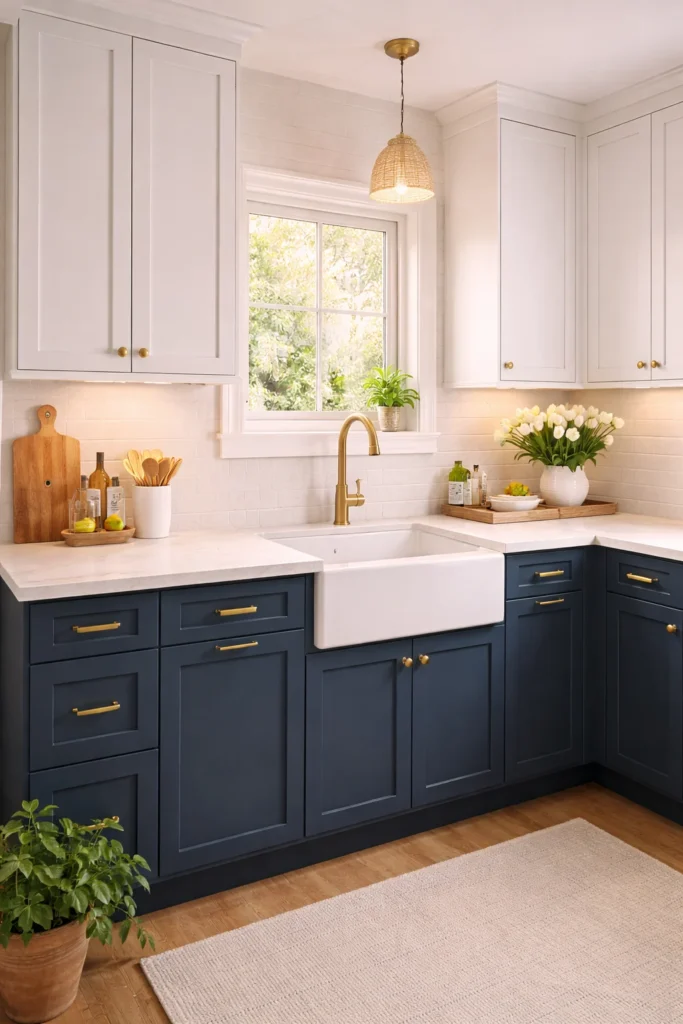
One of the most effective design moves in a small kitchen is the two-tone cabinet strategy, and it works for a simple reason: it creates vertical contrast that draws the eye upward, making the ceiling feel higher and the room feel larger. Dark lower cabinets ground the space visually while light upper cabinets lift it. The result is a kitchen that feels anchored and airy at the same time.
Tip: Extend your upper cabinets all the way to the ceiling. That single move eliminates the awkward gap above the cabinets where dust collects and adds meaningful storage. Match your hardware across both tones, brushed brass or matte black work beautifully, and choose a countertop that bridges the two colors rather than matching either one perfectly.
2. Open Shelf Magic
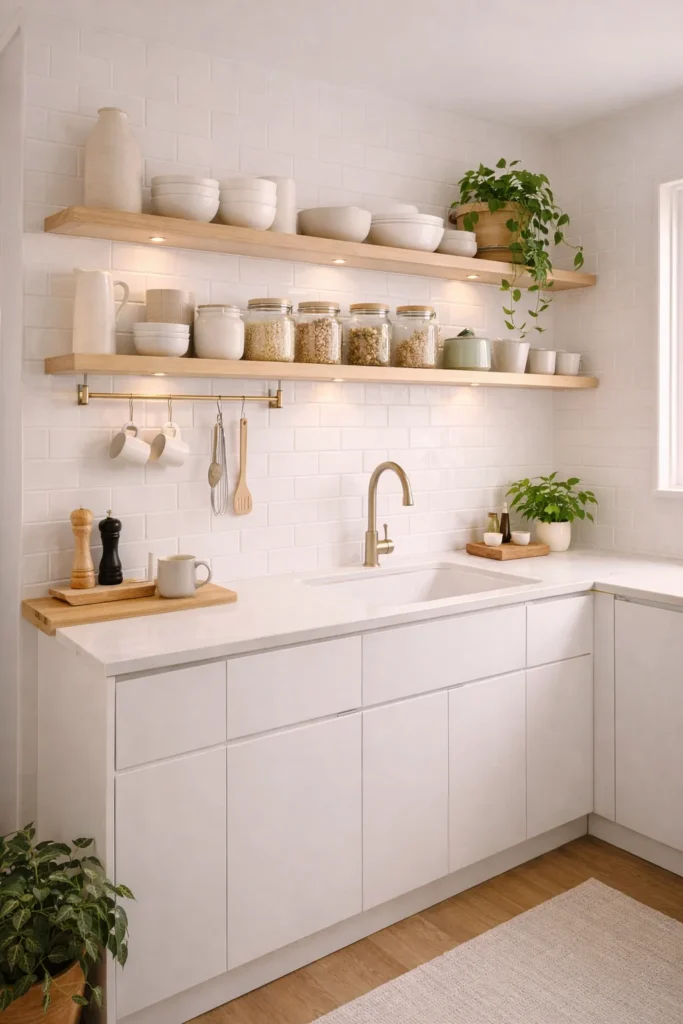
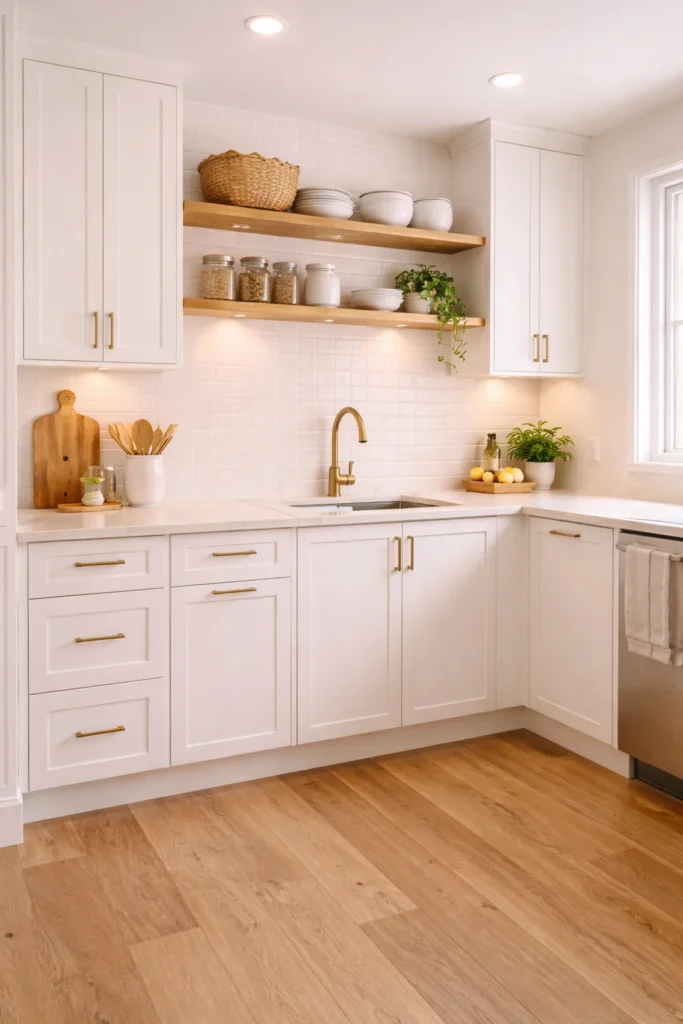
Removing upper cabinet doors, or replacing full upper cabinets with floating open shelves, is one of the fastest ways to make a small kitchen breathe. Closed cabinetry creates visual walls. Open shelves create visual space. The room suddenly feels connected, airy, and intentionally styled rather than closed-off and cramped.
Tip: The key is curation. Open shelves reward organization and punish clutter. Stick to a tight color palette, all-white dishes, matching glass jars for pantry staples, one or two potted herbs, and you will have a shelf that looks more like a lifestyle photoshoot than a storage solution. Use shelf brackets as a design moment too: brass, black powder-coat, or natural wood brackets all add character that cabinet hinges never could.
Also Read:-
19 Kitchen Backsplash Ideas That Instantly Elevate Every Cook’s Space
17 Bathroom Closet Ideas That Make Every Morning Run Smoother
31 Guest Bedroom Decor Ideas Every Visitor Will Absolutely Love
3. Mirror Backsplash Illusion
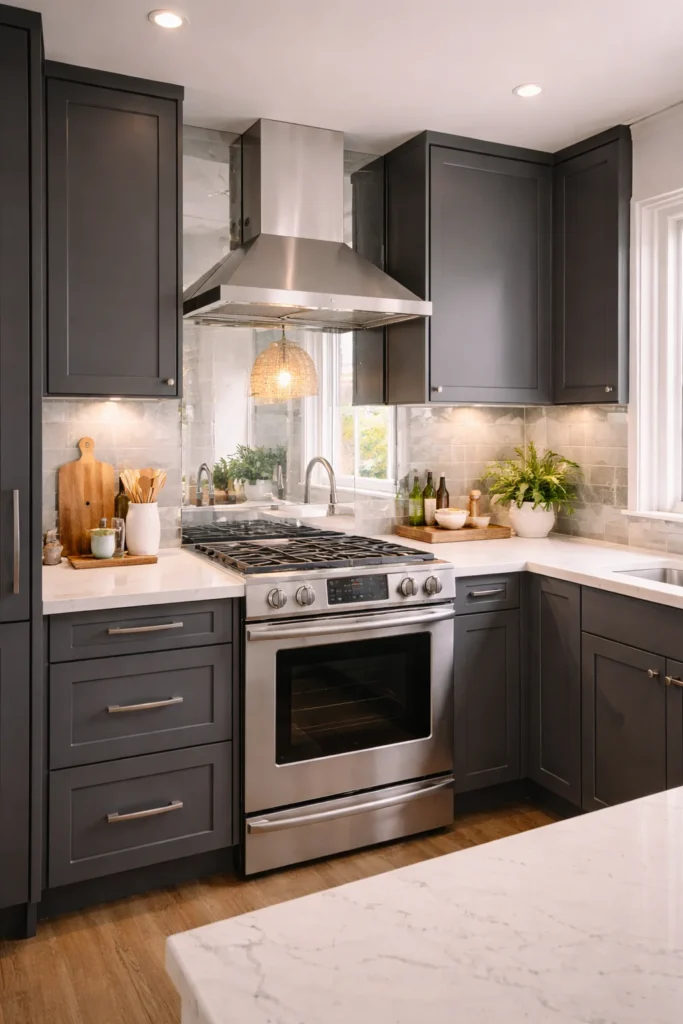
Light is space, and nothing multiplies light in a kitchen like a reflective backsplash. A mirrored or antiqued mirror tile backsplash behind your stove and counter zone bounces every ray of sunlight and lamplight back across the room, giving the impression of depth and volume that no paint color can match.
Tip: Choose antiqued mirror tiles rather than clear mirrors for a warmer, less stark result. They add warmth and a vintage quality that feels intentional rather than clinical. Pair with matte cabinets to balance the reflective surface, and keep the backsplash area clean and uncluttered so the reflection can work its full visual magic.
4. The Galley Kitchen Glow-Up
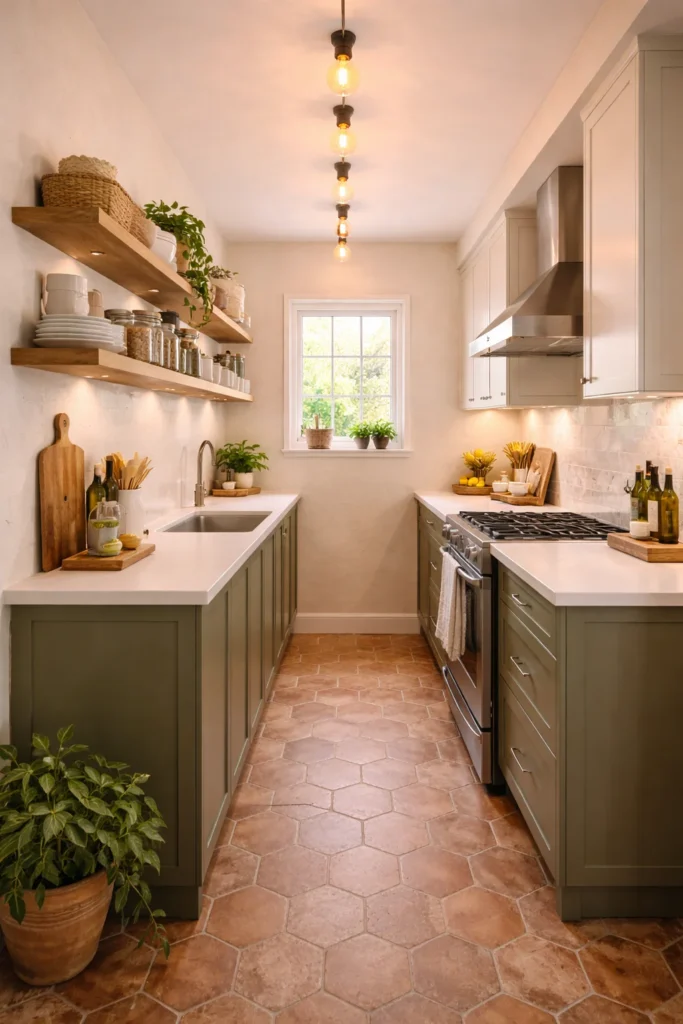
The galley kitchen, two parallel counters along a narrow corridor, is often considered a design compromise. It should not be. The galley is one of the most efficient kitchen layouts ever conceived. The trick is to lean into its strengths: the linear flow, the visual corridor, and the opportunity to create a dramatic and intentional space.
Tip: Run pendant lights down the center of the ceiling to draw the eye through the space. Put a window or bright light source at the far end to create depth. Use horizontal tiles or a horizontal material pattern on the floor to visually widen the corridor. And commit to color, an olive green galley with terracotta floors and filament pendant bulbs is a thousand times more exciting than a white galley trying to disappear.
5. Floating Island on Wheels
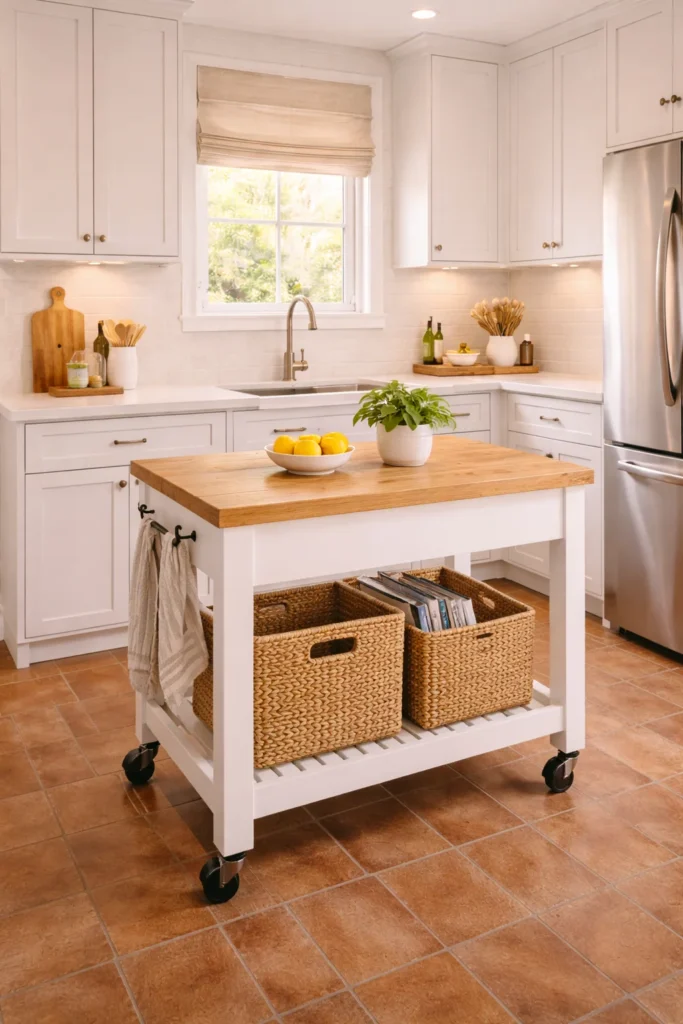
If your kitchen does not have room for a built-in island, a rolling butcher block cart gives you the prep surface, storage, and visual anchor of an island, with the flexibility to move it wherever you need it. Roll it to the center for cooking, slide it against the wall for entertaining, or wheel it out of the kitchen entirely when you need the floor space.
Tip: Choose a cart with locking casters so it stays put during active cooking. Look for one with an open lower shelf where you can store baskets, cookbooks, or wine. Style the top with just one or two things, a small plant, a fruit bowl, and treat it like a design piece. A butcher block top with a navy or black base and brass hardware works in almost any kitchen.
6. Vertical Storage Wall
The most underused dimension in a small kitchen is height. Going floor-to-ceiling on one dedicated storage wall is the single most impactful organizational upgrade you can make. Design it as a mix of closed lower cabinets for pots and appliances, open middle shelving for daily items and display, and closed upper cabinets for less-used storage.
Tip: Integrate your refrigerator into this wall with a matching panel front so it disappears into the design. Add warm LED lighting inside the open shelf section, and use uniform containers throughout to make the open section look curated rather than crammed. The seamless wall reads as architecture, not furniture, and that distinction changes the entire feel of the kitchen.
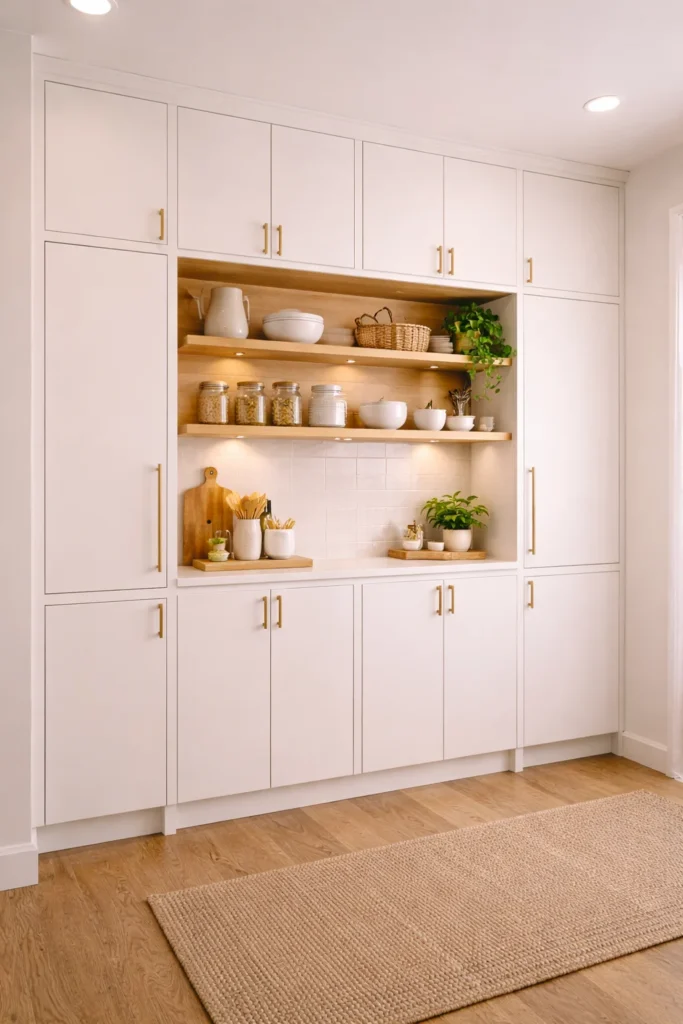
7. Pegboard Kitchen Command Center
The pegboard is the most versatile storage tool in any small kitchen, and it is dramatically underused. A painted pegboard panel mounted above the counter puts every tool, utensil, and spice jar within immediate reach, removes them from the counter entirely, and creates a feature wall that is genuinely beautiful when styled well.
Tip: Paint the pegboard to match or complement your wall color so it feels intentional rather than industrial. Mix hooks, wooden pegs, small shelves, and magnetic strips across the surface to accommodate everything from cast iron pans to measuring spoons to herb pots. The secret to a beautiful pegboard is editing, including only what you use daily and storing everything else inside cabinets.
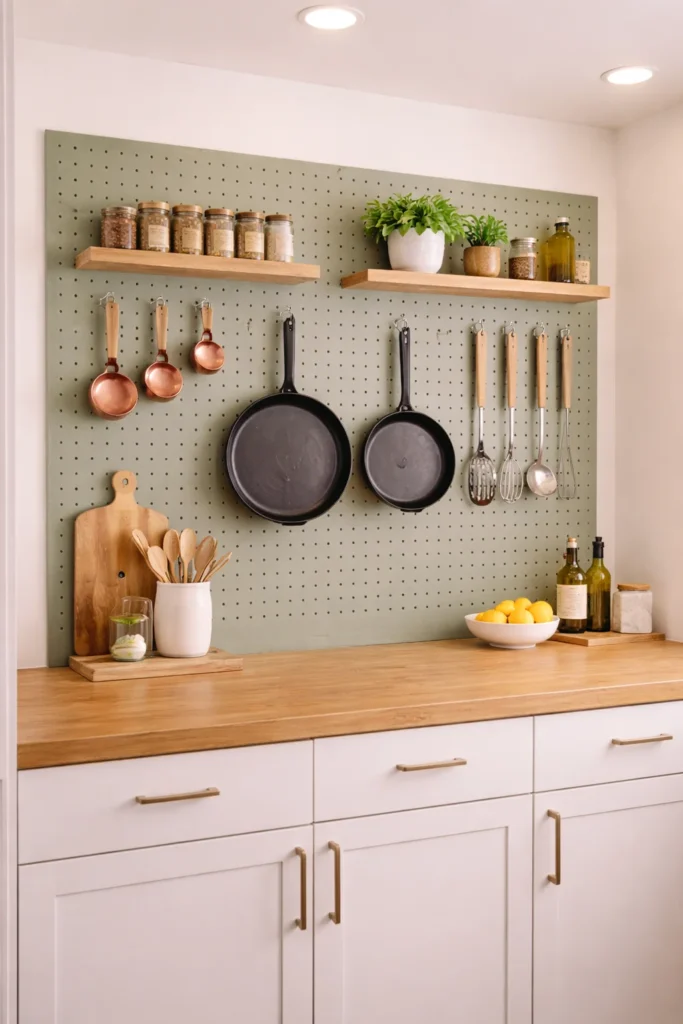
8. Under-Cabinet Lighting Strip
Of all the small kitchen upgrades on this list, under-cabinet lighting offers the highest impact per dollar spent. A warm LED strip mounted under every upper cabinet transforms how the kitchen feels, especially in the evening. It adds task lighting exactly where you need it, creates a warm ambient glow, and makes even the most modest kitchen feel designed and intentional.
Tip: Choose LEDs in the 2700 to 3000K warm white range for the coziest and most flattering effect. Conceal the strip behind a small wooden ledge or the existing cabinet lip so the light is visible but the fixture is not. Connect to a dimmer switch so you can shift from bright task lighting during prep to soft ambient warmth during dinner.
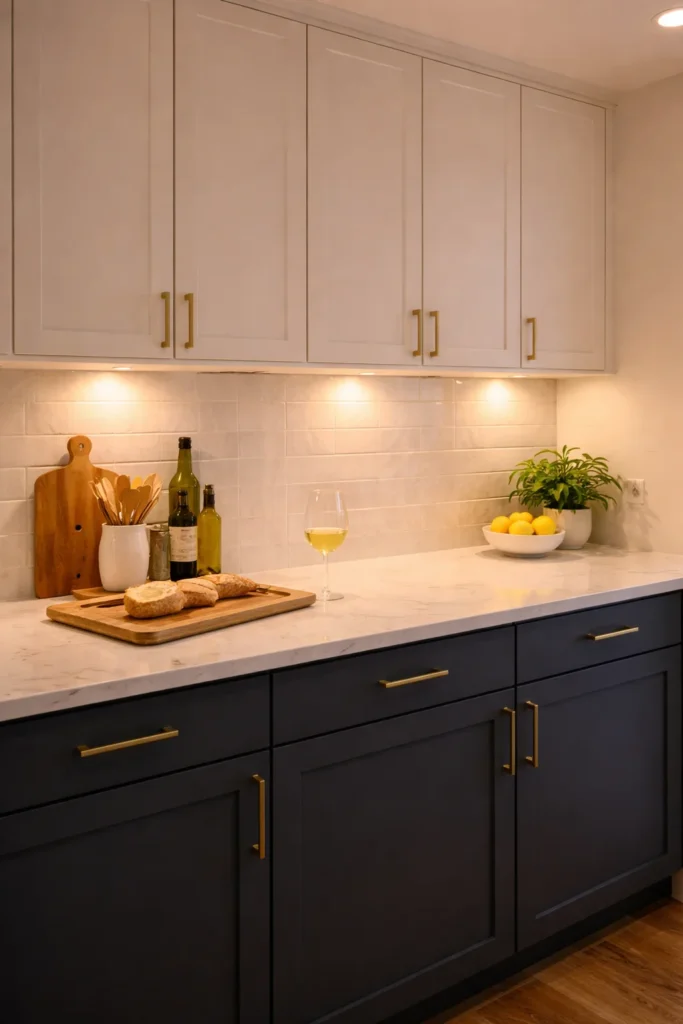
9. Nook Breakfast Bar
A wall-mounted slim bar ledge with a couple of stools tucked beneath solves one of the most common small kitchen problems: where to eat. Instead of a full dining table that consumes floor space, a twelve to fifteen inch deep wall-mounted ledge at counter height gives you a functional dining surface that takes up virtually no room and adds enormous charm.
Tip: Style the wall behind the nook with limewash plaster, a bold paint color, or peel-and-stick wallpaper to make it feel like an intentional moment in the kitchen. Add a small pendant above it. Choose stools that tuck completely under the ledge when not in use. Keep the surface minimal, one small vase, one candle, and you have a breakfast spot that feels like a café corner.
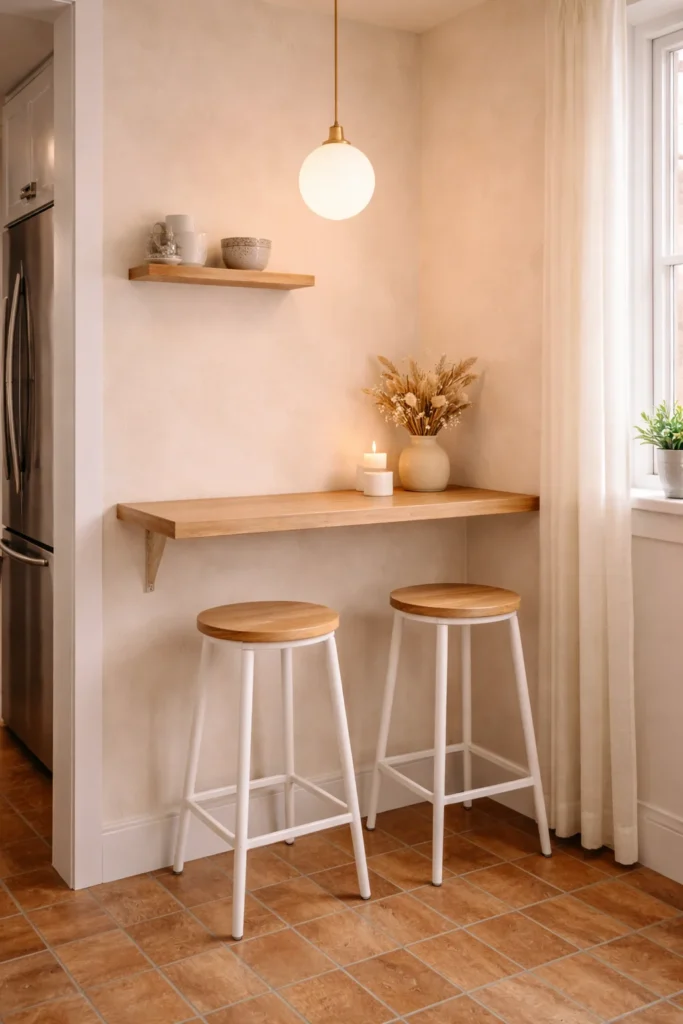
10. The White & Wood Formula
If you are not sure which direction to take your small kitchen, start here: white cabinets, warm wood accents, and brass hardware. It is the most timeless formula in kitchen design and for good reason, it combines the brightness of white with the warmth and organic texture of wood in a way that is always inviting, always editorial, and always works.
Tip: The key is choosing the right wood tone. Light oak, bleached maple, or pale bamboo keeps the space bright and Scandinavian. Darker walnut creates a warmer, moodier contrast. Add brushed brass hardware to tie the two together, and replace some upper cabinets with open oak shelves to bring the natural material into the upper half of the kitchen.
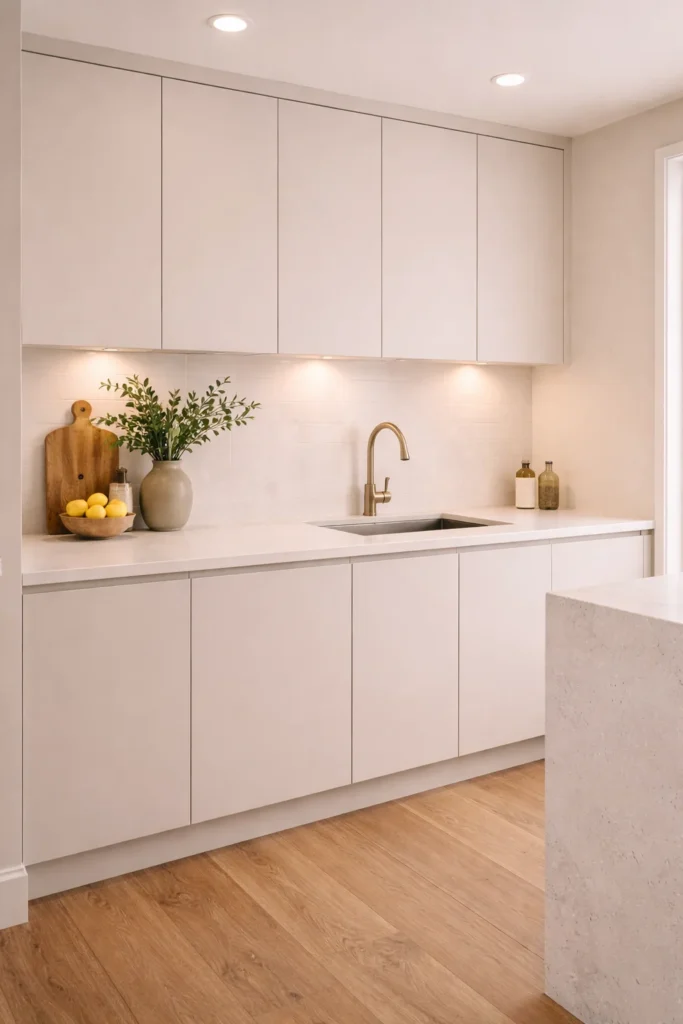
11. Handleless Cabinet Minimalism
In a small kitchen, visual noise is the enemy. Every handle, every knob, every protruding detail adds visual clutter that makes the space feel smaller and busier. Handle less flat-front cabinets with integrated J-pull grooves or push-to-open mechanisms eliminate all of that visual noise and give the kitchen a seamless, architectural quality that feels dramatically more spacious.
Tip: Pair handleless cabinets with an integrated sink, a continuous countertop, and appliances hidden behind matching cabinet panels. Choose the same paint color for both the cabinets and the walls to make the boundaries between them disappear. The result is a kitchen that feels closer to a luxury hotel suite than a compact apartment layout.
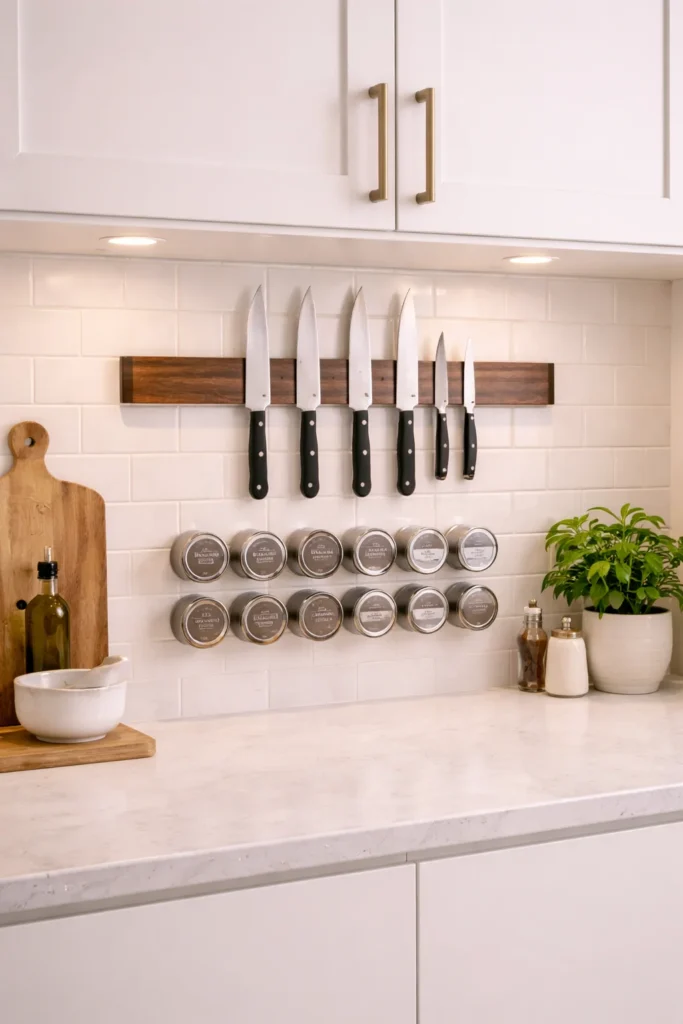
12. Magnetic Knife + Spice Wall
Counter space is the most precious commodity in a small kitchen, and knives, spice jars, and utensils are among the biggest consumers of it. Moving all three to a magnetic wall display frees the counter entirely while creating a functional art installation that becomes the most interesting visual in the kitchen.
Tip: A wooden magnetic knife strip at eye level, with a row of matching magnetic stainless steel spice tins arranged in a neat grid below, is both beautiful and brutally efficient. Label every tin uniformly. Mount the knife strip with a spirit level so every element is perfectly aligned. Keep the wall surrounding the display in clean white tile or plaster so the display has the visual breathing room it deserves.
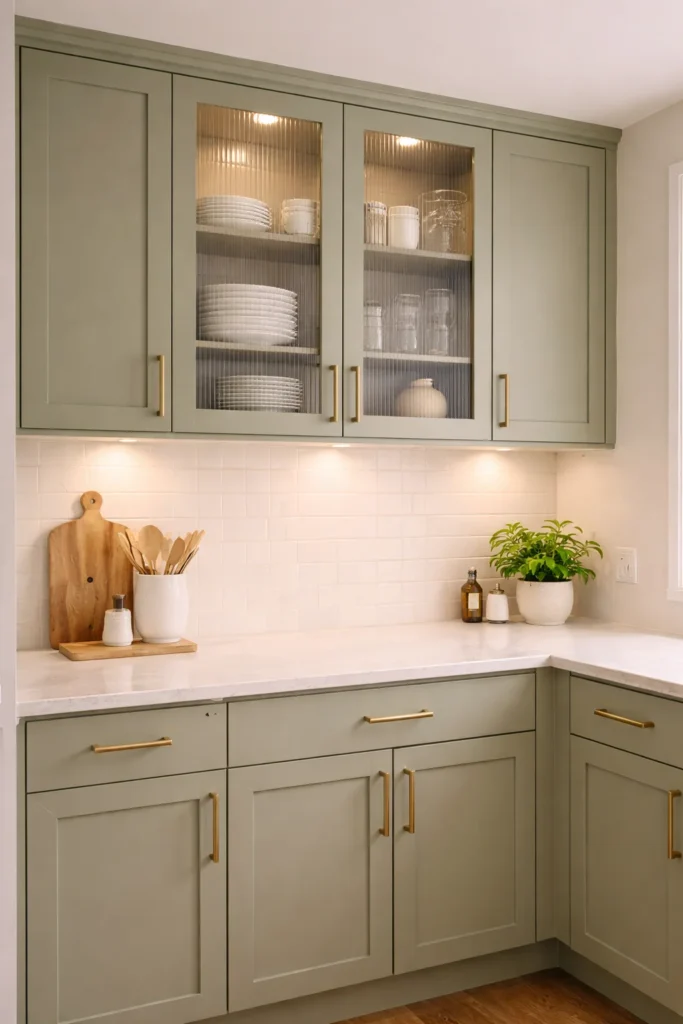
13. Glass Cabinet Door Trick
You do not need to replace all your cabinets to make a big visual impact, sometimes two glass doors in the right place change everything. Replacing the center two or three upper cabinet doors with glass-fronted panels breaks up the monotony of a solid cabinet wall, adds perceived depth, and creates a display moment that forces you to style what is inside.
Tip: Ribbed or reeded glass is the most popular choice right now, it adds texture and a softly obscured view that is more forgiving than clear glass while still allowing light and color to show through. Style the interior in a tight palette: all white ceramics, all matching glasses, one small decorative vase. Add a small LED strip inside the cabinet to make the display glow at night.
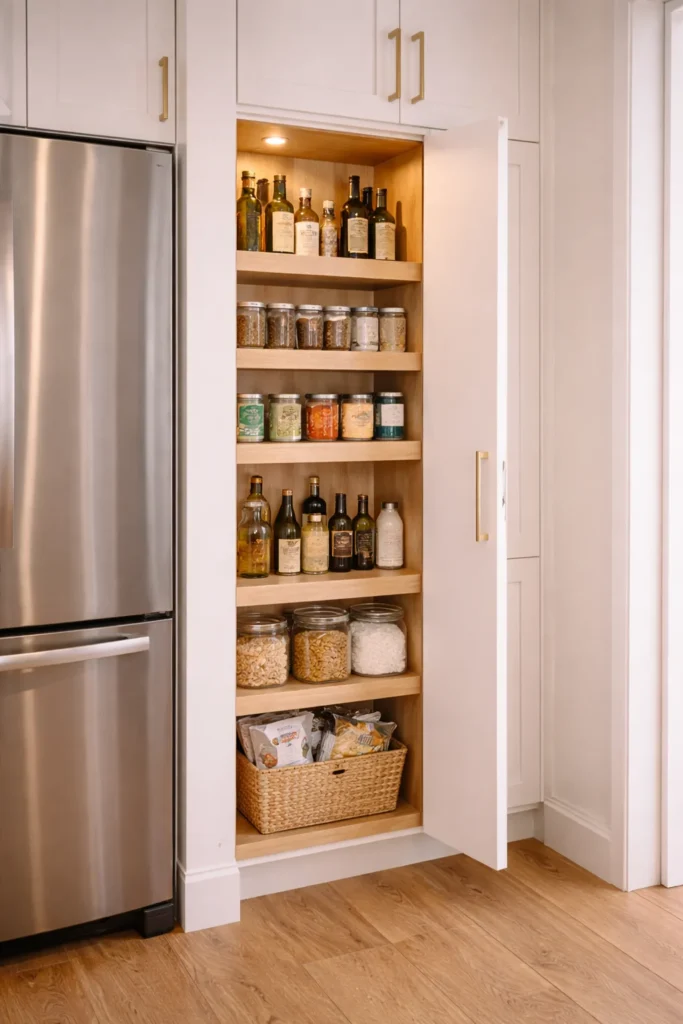
14. The Skinny Pantry Pull-Out
Somewhere in almost every small kitchen there is a slim gap, beside the refrigerator, between two cabinets, next to the stove, that is being completely wasted. A custom or off-the-shelf pull-out pantry cabinet, just six to nine inches wide, transforms that forgotten gap into one of the most satisfying storage solutions in the kitchen.
Tip: Organize by zone: oils and vinegars at eye level, cans in the middle, dry goods and snacks below. The exterior of the pull-out should match the surrounding cabinetry exactly so that when closed it disappears completely into the kitchen design. Install full-extension soft-close slides so every tier is fully accessible from the front of the opening.
Also Read:-
23 Tan Bedroom Decor Ideas That Feel Warm, Cozy & Effortlessly Chic
11 Bathroom Mirror Ideas That Instantly Upgrade Your Whole Bathroom
15 Cucumber Trellis Ideas That Maximize Your Garden Space
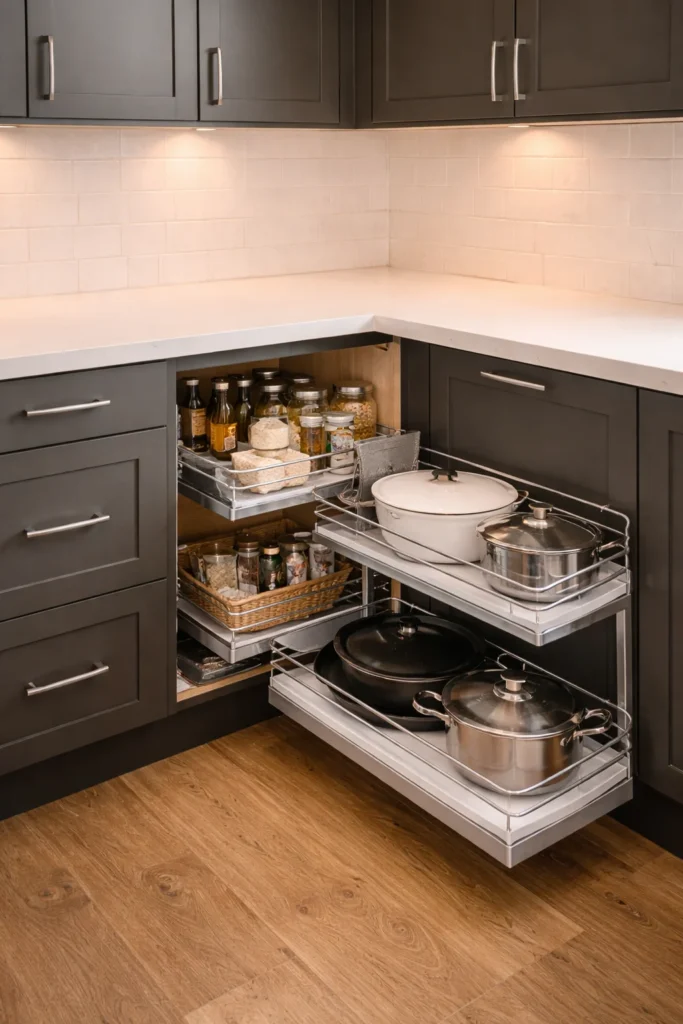
15. Corner Drawer Maximizer
The corner cabinet is traditionally the most frustrating storage problem in any kitchen, too deep to reach into, too awkward to organize. A magic corner pull-out system solves this completely: two tiers of shelving on a hinged, sliding mechanism extend out of the corner cabinet and bring every stored item directly to you.
Tip: Choose a magic corner system over a traditional lazy Susan, it delivers significantly more usable capacity and allows for considerably more organized storage. Use the lower tier for heavy items like pots and Dutch ovens, and the upper tier for lighter pantry items and lids. Keep the countertop above the corner cabinet completely clear to use as an additional prep zone.
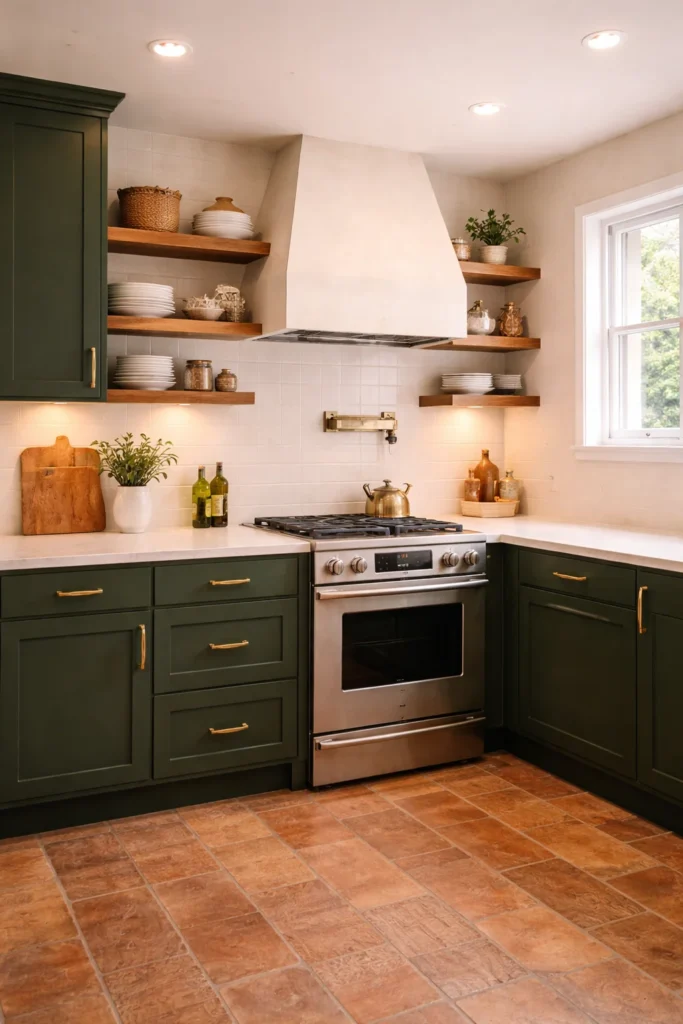
16. Bold Tiny Kitchen Statement
Here is the counterintuitive truth about small kitchens: playing it safe with white and beige often makes them look smaller and more forgettable, while committing to a bold color, deep forest green, rich navy, warm terracotta, moody charcoal, makes them look confident, designed, and dramatically more interesting.
Tip: Dark colors in a small kitchen work because they remove the visual boundaries of the space. Instead of seeing four distinct walls closing in, you see one rich, enveloping environment. Balance the bold cabinet color with at least one lighter element, an open wood shelf, a plaster hood, a white countertop, and use warm lighting to prevent the space from feeling cave-like.
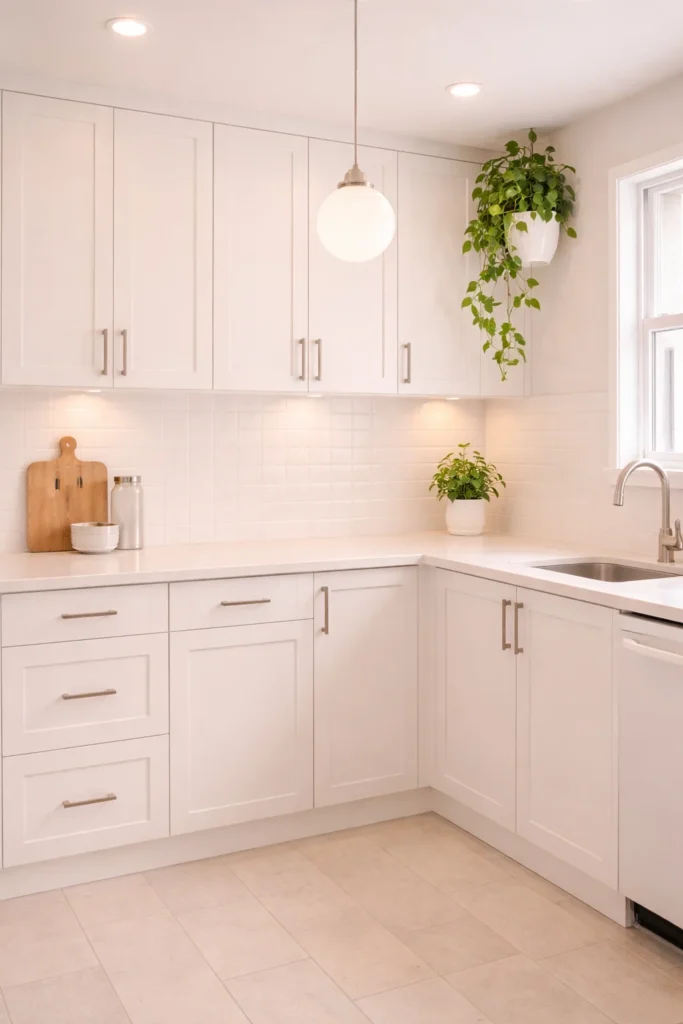
17. The All-White Stretch
When in doubt, go all white. And when we say all white, we mean every surface: cabinets, backsplash, countertop, walls, ceiling. Every element in the same family of white tones, with minimal contrast and maximum visual continuity. The effect is extraordinary in a small kitchen, the boundaries of the room seem to dissolve, the ceiling appears to lift, and the space feels two or three times larger than its actual footprint.
Tip: The secret to making all-white work without feeling sterile is tonal layering, varying the finish across surfaces. Matte white on the cabinets, semi-gloss on the walls, glossy subway tile on the backsplash. Each surface reflects light slightly differently, creating depth without introducing color. Add one trailing plant and one black accent, a faucet, a pendant cord, and the white kitchen transforms from clinical to effortlessly chic.
Conclusion
A small kitchen is not a limitation, it is an invitation to design more intentionally than you ever would in a larger space. Every one of these 17 ideas proves that square footage is the least important factor in how a kitchen looks and feels. What matters is how you use the vertical space, how you manage the light, how deliberately you approach the storage, and how confidently you commit to a design direction.
Pick one idea from this list and start there. Add under-cabinet lighting this weekend. Swap two cabinet doors for glass. Mount a pegboard above the counter. Clear the counter and install a magnetic spice wall. Each single change will shift how the entire kitchen feels, and once you see it, you will not stop.
The best small kitchens are not the ones with the most space. They are the ones where every inch was thought about. Make yours one of them.