Creative walkway ideas can completely change the way a yard feels. A walkway is not only a route from one place to another; it guides movement, creates structure, improves curb appeal, protects lawns and garden beds, and helps outdoor spaces feel more intentional. Whether it leads to a front door, backyard patio, garden gate, shed, seating area, or side yard, the walkway often becomes one of the first landscape features people notice.
The best walkway design depends on how the path will be used. A main front walkway should be stable, wide, and easy to walk on in all weather. A garden path can be softer, more curved, and more decorative. A side-yard walkway may need drainage-friendly materials like gravel or river rock. A modern home may suit concrete slabs and clean edging, while a cottage garden may look better with brick, flagstone, flowers, and ground cover. A creative walkway should look beautiful, but it should also be comfortable, safe, and easy to maintain.
Materials make a big difference. Stepping stones feel relaxed and natural. Gravel feels textured and flexible. Brick adds warmth and traditional charm. Flagstone blends beautifully with plants. Wood creates a boardwalk-style path that feels unique and organic. Mosaic tile adds color and artistry. Concrete slabs create a clean modern route. River rock adds texture, but often needs larger stepping stones for comfortable walking.
Lighting, edging, planting, drainage, and destination also matter. A walkway feels stronger when it leads somewhere clear and is framed with plants, borders, or lights. These 12 creative walkway ideas will help you design a path that is not only useful, but also beautiful, memorable, and connected to the style of your outdoor space.
1. Stepping Stone Garden Walkway
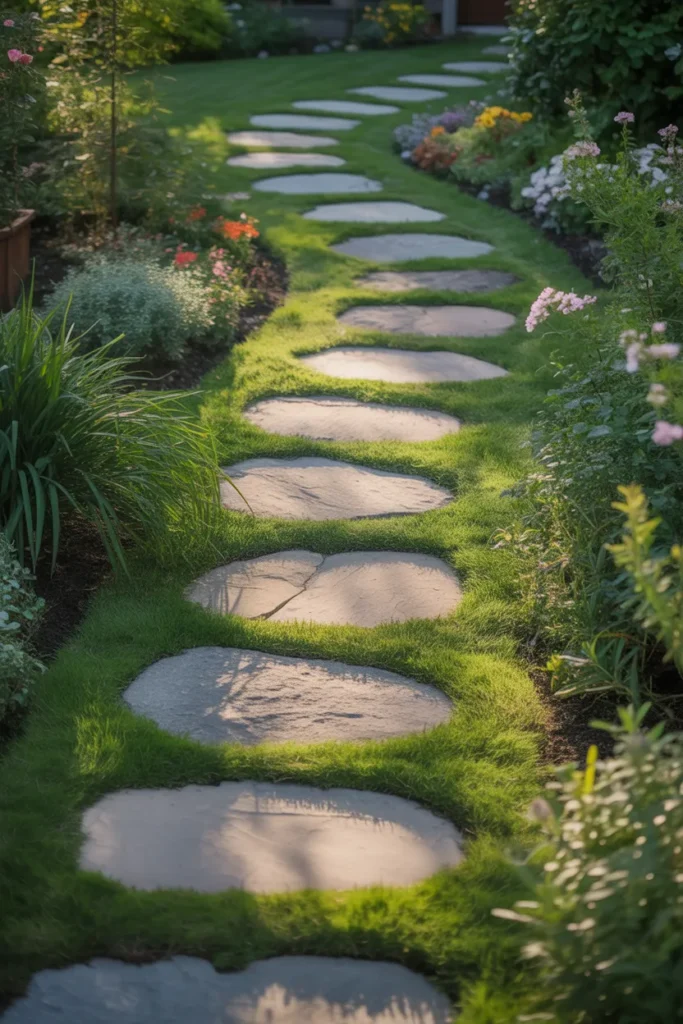
A stepping stone garden walkway is perfect when you want a soft and natural path through the yard. It works well in gardens, side yards, cottage landscapes, and informal backyard spaces. The stones can be placed in grass, mulch, moss, or low ground cover to create a relaxed look.
This style is especially useful when you want the walkway to feel like part of the garden rather than a hard paved surface. A gentle curve can make the path feel more inviting and natural.
Tip: Before setting the stones permanently, place them on the ground and walk the path several times. Adjust the spacing until each step feels comfortable. Stones that are too far apart can feel awkward, while stones that are too small may feel unstable.
2. Gravel Walkway with Border Edging
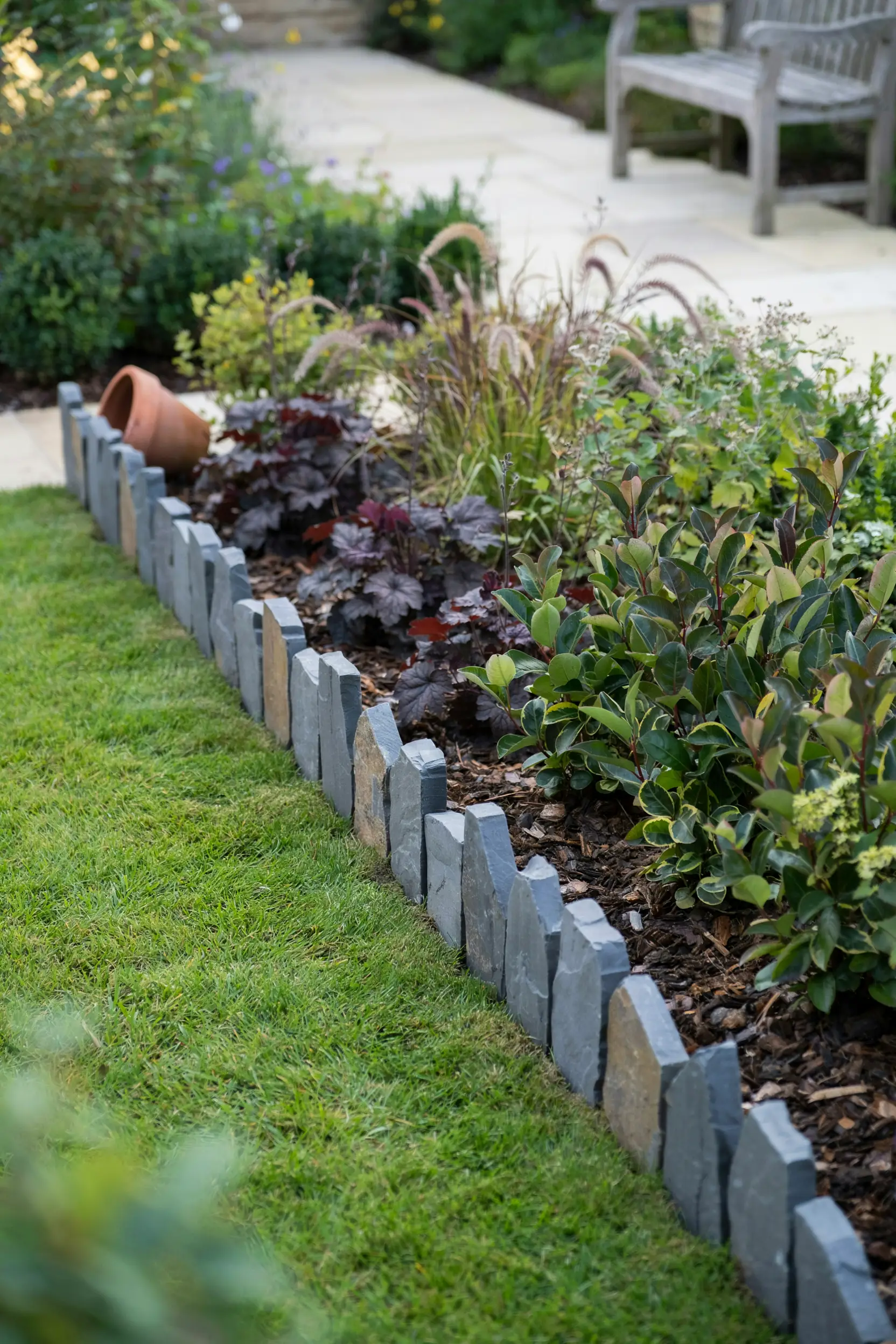
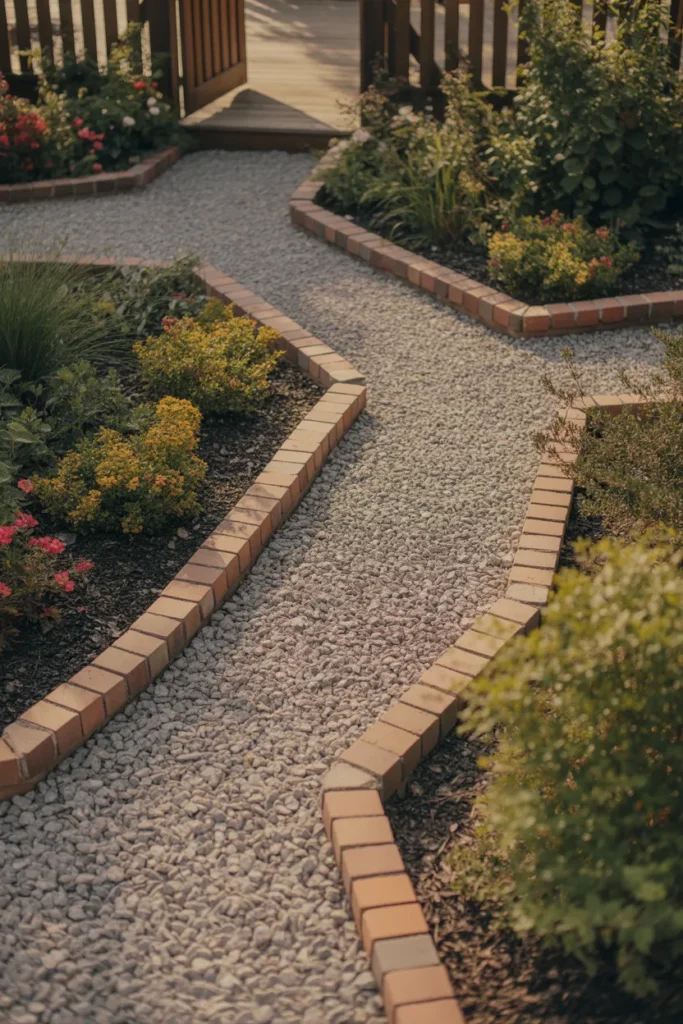
A gravel walkway with border edging is practical, attractive, and flexible. Gravel is usually easier to install than full paving and works well for gardens, side yards, backyard paths, and informal front walkways. The edging is important because it keeps the gravel contained and gives the path a finished shape.
Brick, metal, wood, stone, or concrete edging can all change the style of the walkway. Metal feels modern, brick feels classic, and wood feels rustic.
Tip: Do not skip the base preparation. A good weed barrier, compacted base, and strong edging will keep the walkway cleaner and easier to maintain. Without edging, gravel can spread into lawns and flower beds quickly.
3. Curved Paver Walkway
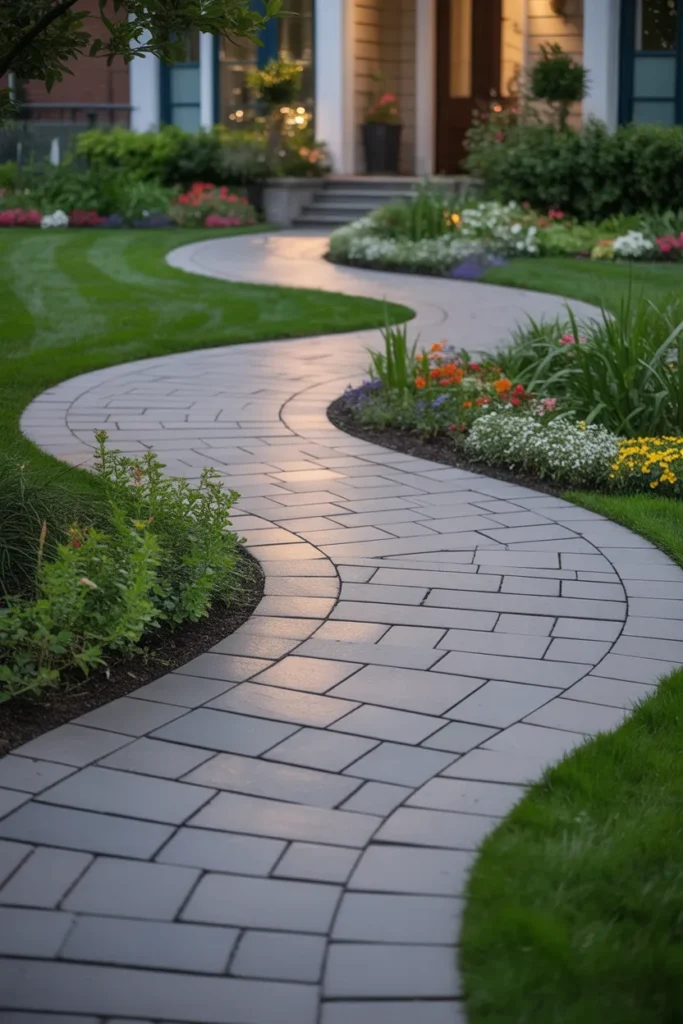
A curved paver walkway adds movement and softness to the landscape. It works especially well in front yards and gardens where a straight path would feel too rigid. The curve naturally guides the eye toward a door, patio, gate, or seating area.
Pavers also provide a stable walking surface, making this idea practical for frequently used paths. The surrounding planting should follow the curve so the walkway feels integrated.
Tip: Make sure the curve has a clear purpose. A random curve can feel awkward, but a curve that moves around a garden bed, tree, or planting area feels intentional and beautiful.
Also Explore
14 Vinyl Fence Decor Ideas That Transform Every White Fence Into Something Beautiful
16 Cattle Panel Fence Ideas That Make Yards, Gardens, and Farms Look Beautiful
14 Chain Link Fence Ideas That Make Any Yard Look Practical, Private, and Stylish
12 Fence Gate Ideas That Make Every Garden Entrance Beautifully Unforgettable
14 Fireplace Mantel Decor Ideas That Make Every Living Room Dramatically Beautiful
4. Brick Walkway with Cottage Charm
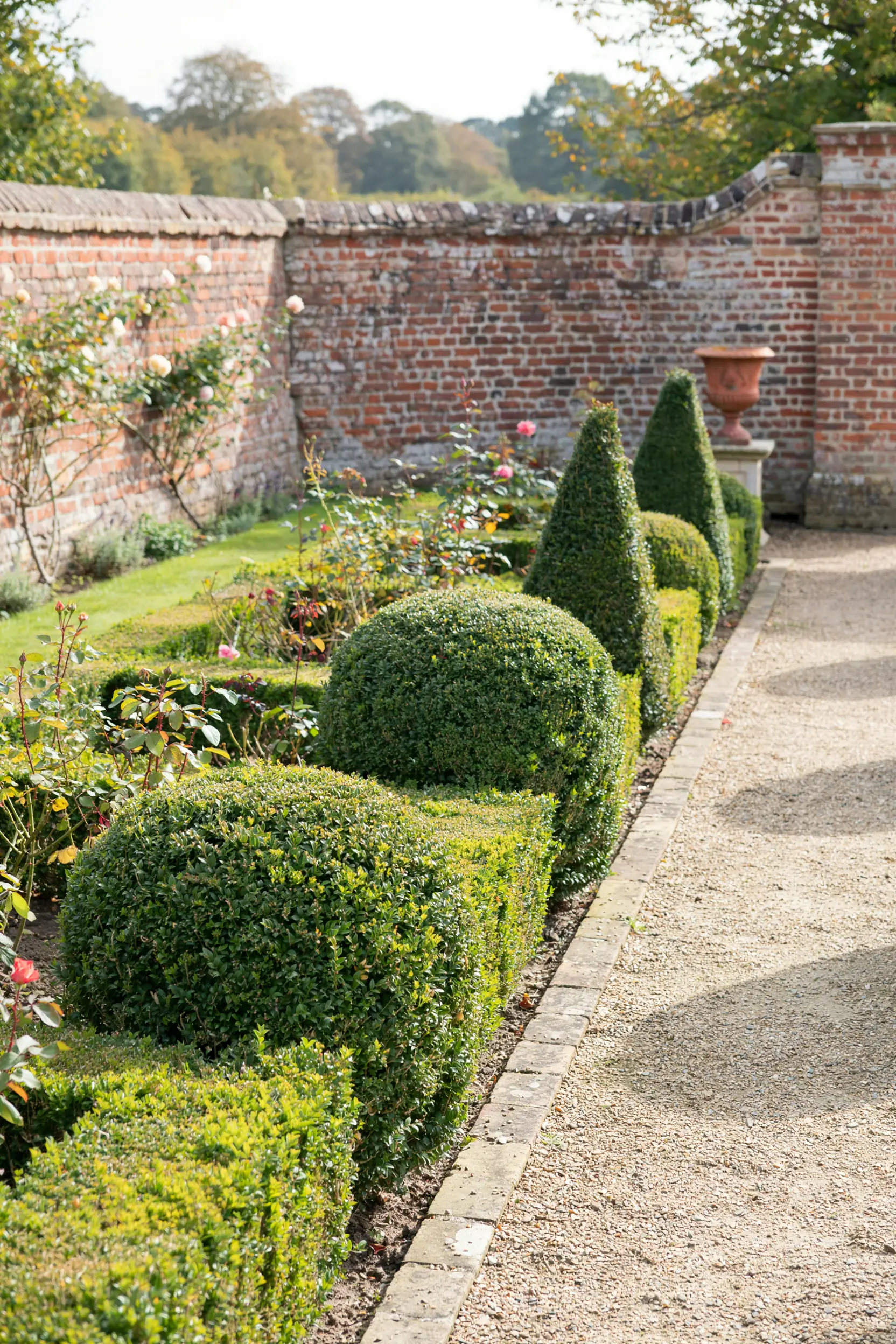
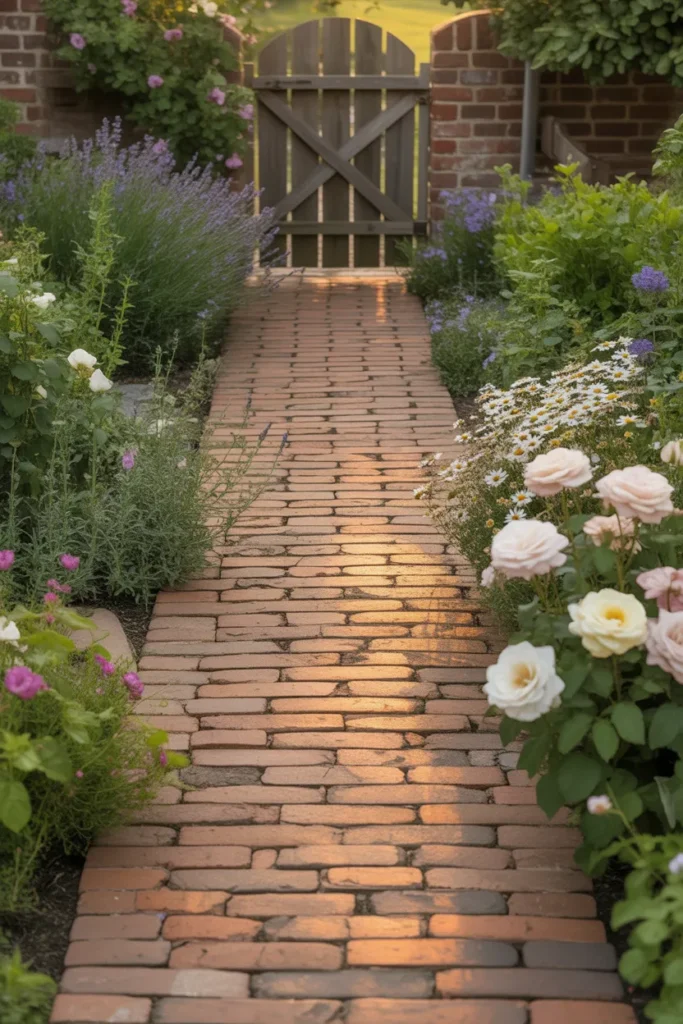
A brick walkway is a timeless choice that adds warmth and character. It works especially well for cottage gardens, farmhouse homes, traditional front yards, and charming side paths. Brick patterns like herringbone, basketweave, or running bond can make the walkway feel more detailed.
Aged or reclaimed brick can create even more charm, especially when paired with flowers and greenery along the edges.
Tip: Choose the brick pattern based on the mood you want. Herringbone feels more structured and formal, basketweave feels decorative and traditional, and running bond feels simple and classic.
5. Wooden Boardwalk Garden Path
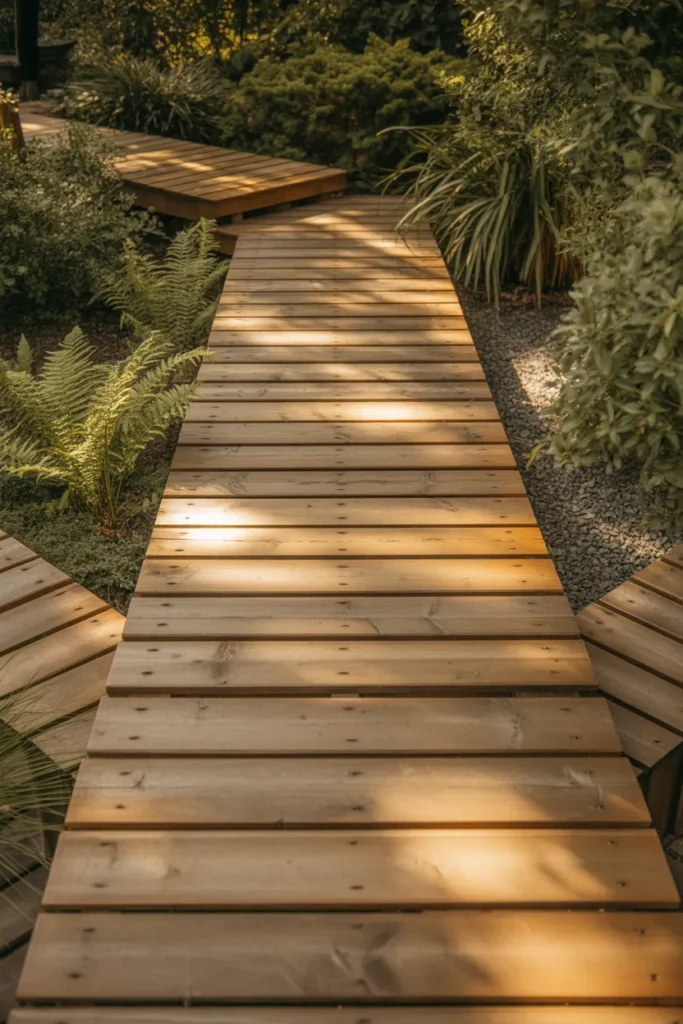
A wooden boardwalk garden path is a creative option for gardens, damp areas, woodland edges, and side yards. It can feel rustic, coastal, modern, or natural depending on the wood finish and surrounding plants. This walkway is especially useful when the ground is uneven or when drainage is a concern.
The wood adds warmth and makes the path feel different from standard stone or gravel walkways. It can lead to a seating area, shed, patio, or garden corner.
Tip: Use outdoor-rated wood and make sure the boards have a stable base. In shaded or wet areas, choose a finish or texture that reduces slipping. Safety is especially important if the path will be used after rain.
6. Flagstone Walkway with Ground Cover
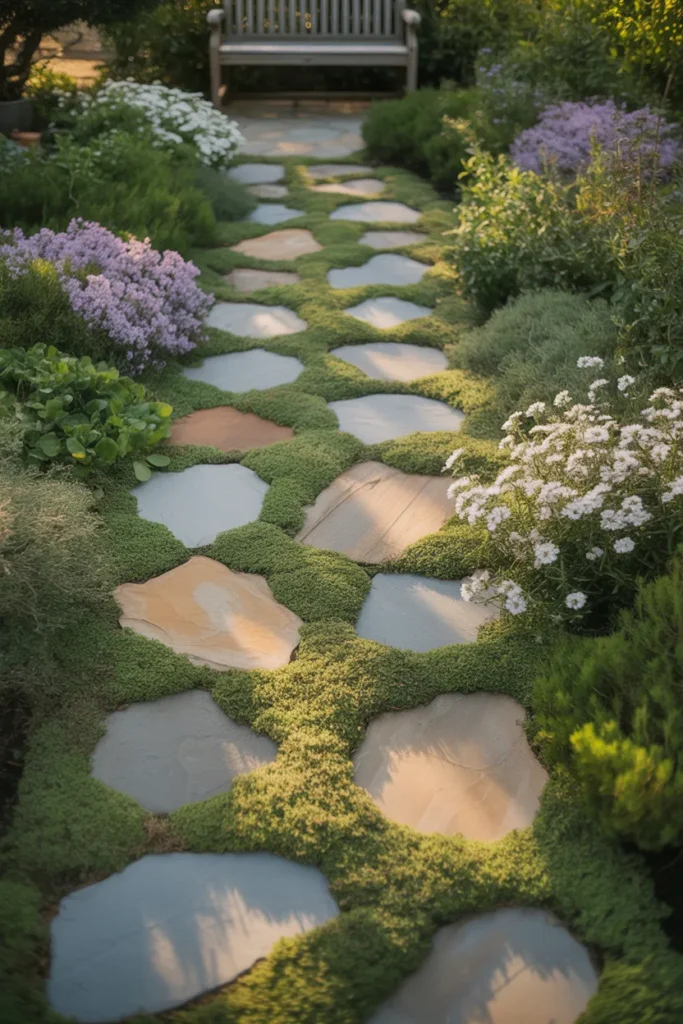
A flagstone walkway with ground cover feels natural, soft, and established. The irregular stone shapes create a relaxed path, while plants between the stones soften the hard edges. Creeping thyme, moss, grass, or other low ground covers can make the walkway feel lush.
This idea is beautiful in cottage gardens, backyard paths, front yards, and side gardens. It works best when the stones are stable and the ground cover is chosen carefully.
Tip: Choose ground cover based on foot traffic and sunlight. Some plants tolerate walking better than others, and some need more moisture or shade. Also make sure the stones are level before planting between them.
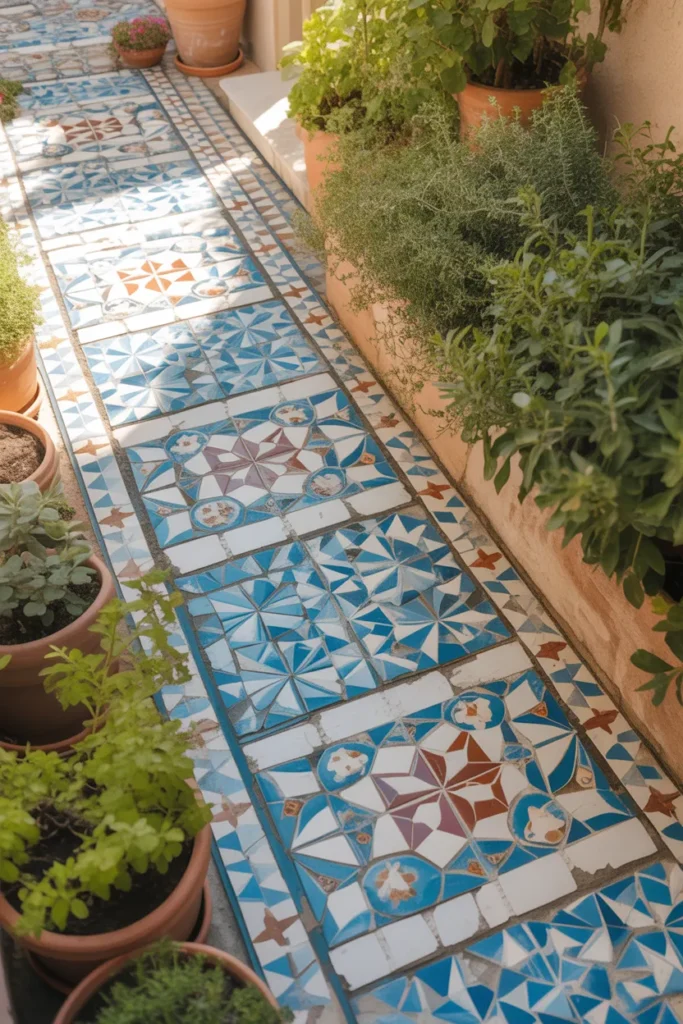
7. Mosaic Tile Walkway
A mosaic tile walkway is one of the most creative ways to add personality to an outdoor space. It can include colorful patterns, geometric designs, floral shapes, Mediterranean-inspired details, or handmade tile pieces. This idea works best in courtyards, small gardens, patio entrances, or feature paths.
Because mosaic tile is visually strong, it should be balanced with simpler surrounding materials and plants.
Tip: Use mosaic tile in areas where it can be appreciated up close. Also choose outdoor-safe tile and grout that can handle weather and foot traffic. A beautiful mosaic path will not last if the materials are not suited for outdoor use.
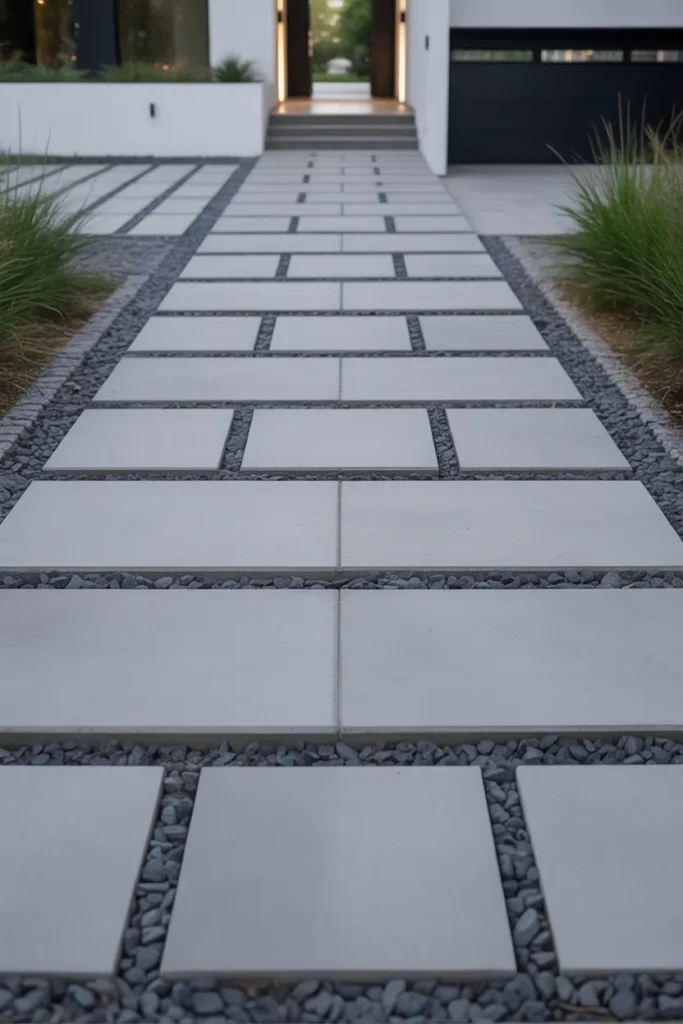
8. Modern Concrete Slab Walkway
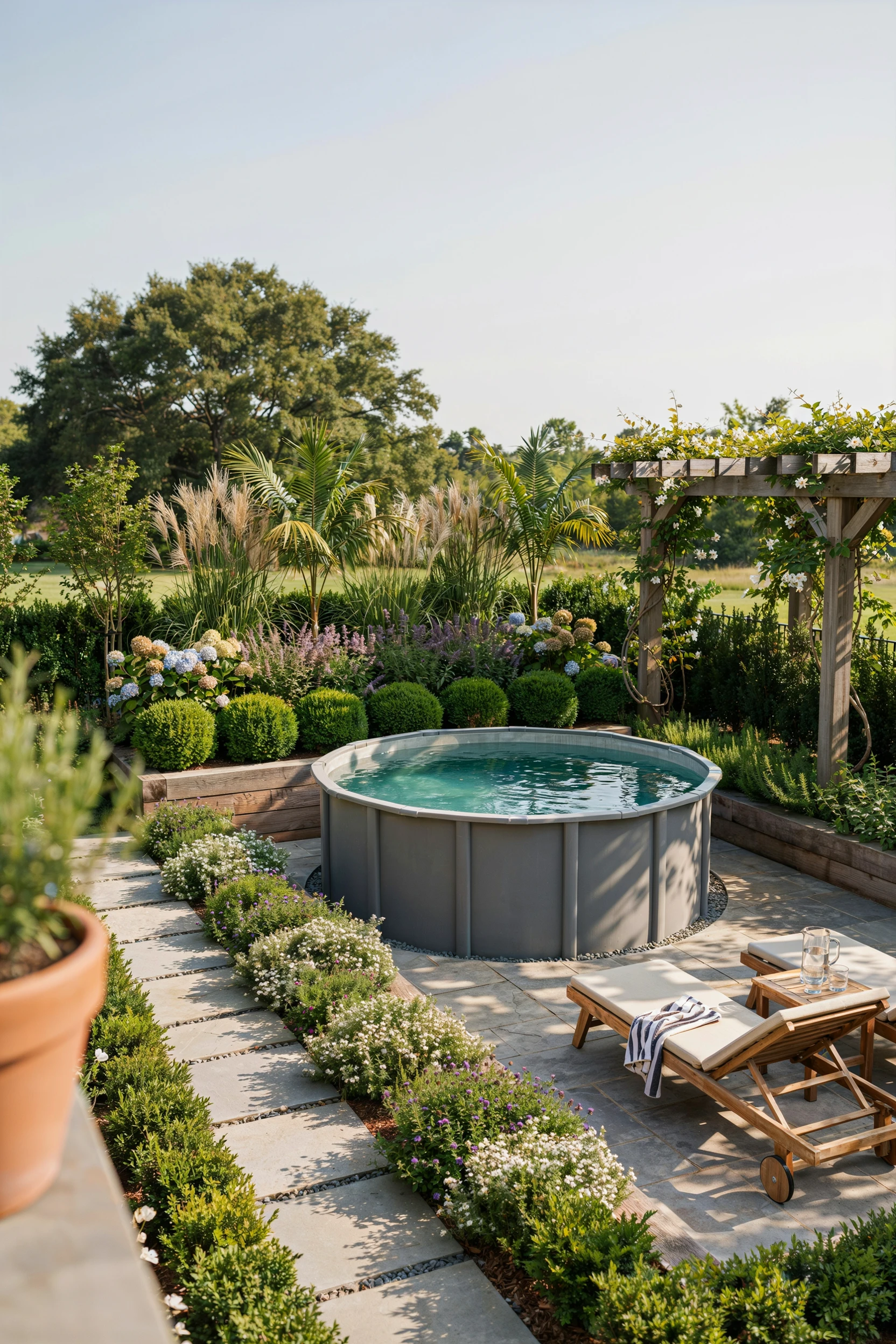
A modern concrete slab walkway creates a clean and structured path. Large rectangular slabs with gravel, grass, or ground cover between them work especially well with modern homes and minimalist landscaping. The design feels simple but very intentional.
This walkway is good for front entries, patios, side yards, and spaces where clean lines are important. The spacing between slabs should be comfortable and consistent.
Tip: Align the slabs with the architecture whenever possible. If the walkway lines relate to the front door, house wall, driveway, or patio edge, the whole design will feel more polished and planned.
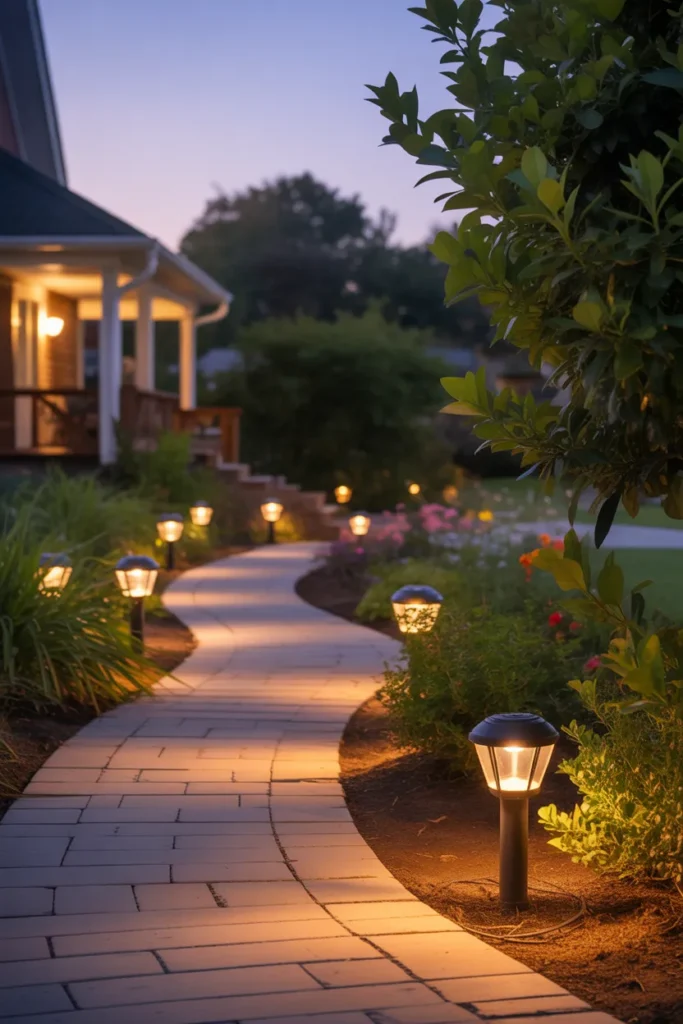
9. Walkway with Solar Path Lights
A walkway with solar path lights is useful and beautiful because it improves safety while adding evening atmosphere. Lights can guide guests toward a front door, patio, garden gate, or backyard seating area. They work with gravel, brick, stone, pavers, and stepping stones.
The key is spacing. Too many lights can make the path look crowded, while too few may not provide enough guidance.
Tip: Place solar lights where they will receive enough direct sun during the day. If the path is shaded, solar lights may not perform well, and low-voltage lighting may be a better option for reliable brightness.
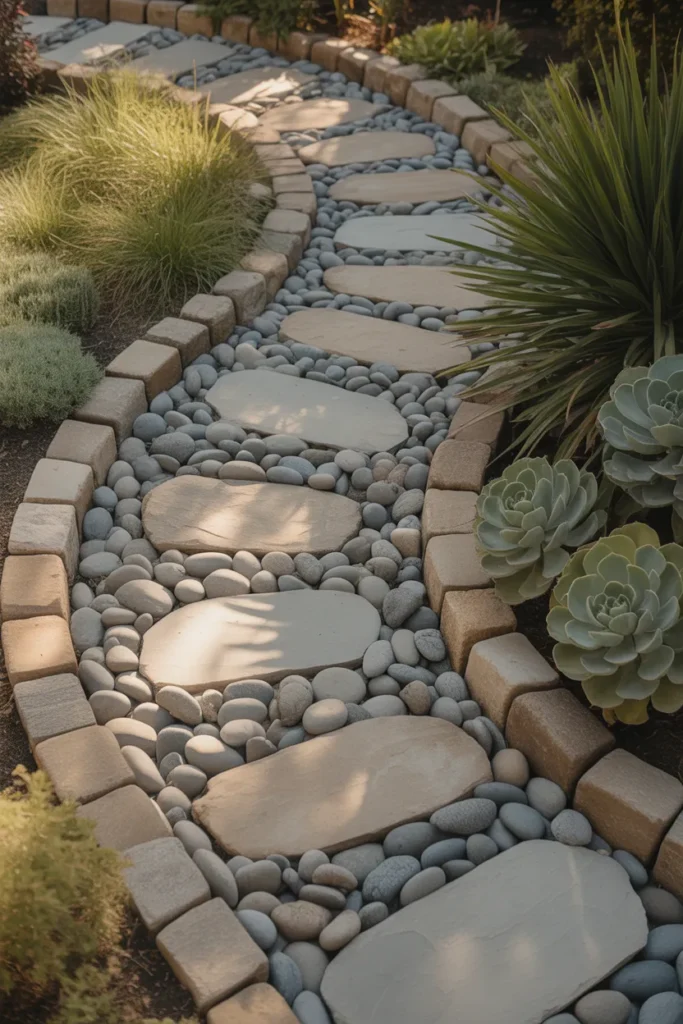
10. River Rock Walkway
A river rock walkway adds natural texture and works well in side yards, dry gardens, drainage areas, and relaxed landscapes. Smooth stones create a soft organic look, especially when paired with grasses, shrubs, succulents, or native plants.
However, loose river rock can be uncomfortable for frequent walking, so it often works best with larger stepping stones placed within it.
Tip: Use flat stepping stones if the walkway will be used daily. River rock is beautiful as a filler material, but a stable walking surface makes the path safer and more comfortable.
11. Walkway Through Flower Beds
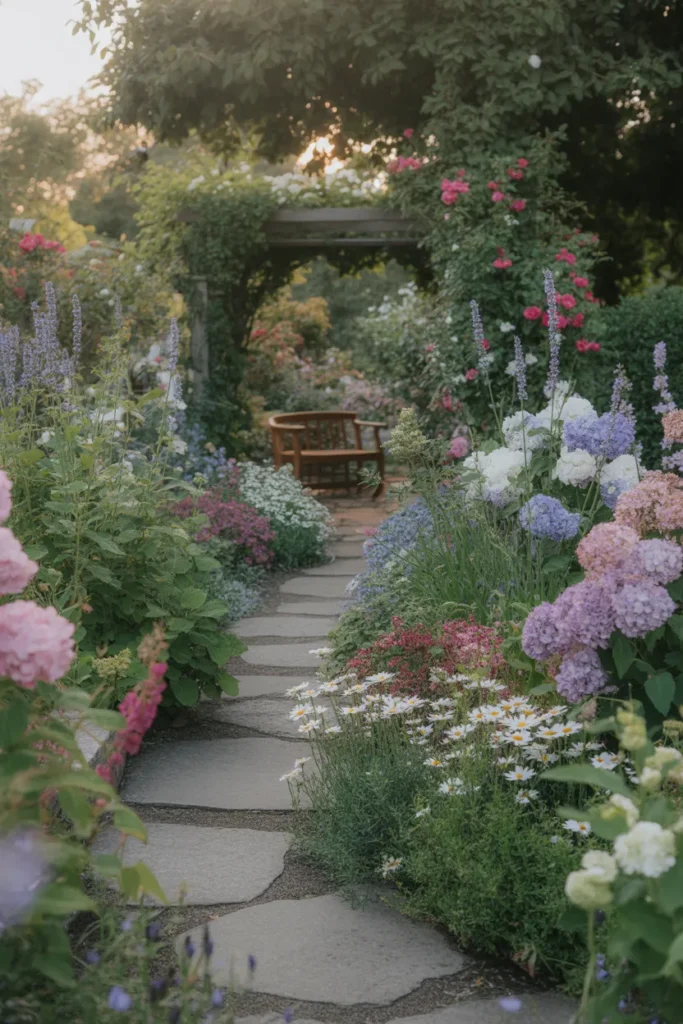
A walkway through flower beds creates an immersive garden experience. Instead of simply passing beside the garden, the path moves through it. Flowers, herbs, shrubs, and foliage on both sides make the walkway feel lush and welcoming.
This idea works beautifully for cottage gardens, front yards, backyard paths, and romantic garden entrances. The path can be made from gravel, brick, flagstone, mulch, or stepping stones.
Tip: Plan for mature plant size. Flowers may look small when first planted, but they can spread into the walkway over time. Keep enough path width so the route remains comfortable after the garden fills in.
12. Mixed Material Creative Walkway
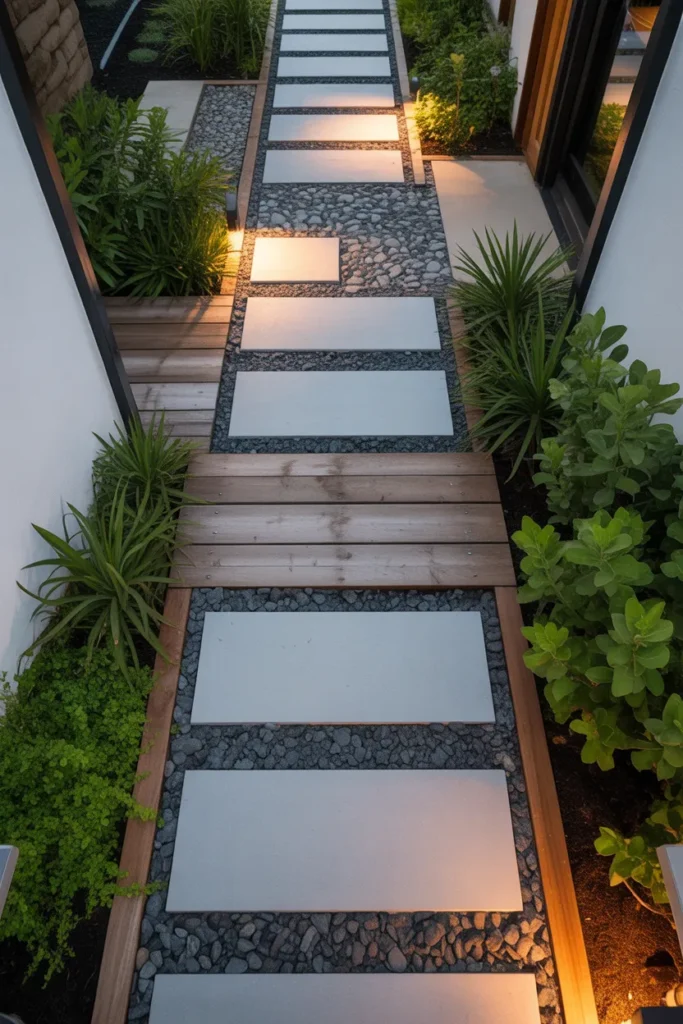
A mixed material creative walkway is ideal if you want a custom look. Concrete slabs, gravel, brick, wood, river rock, flagstone, and ground cover can be combined to create texture and contrast. This approach works well in modern, rustic, eclectic, or highly designed landscapes.
The challenge is balance. Too many materials can look chaotic, while two or three well-chosen materials can feel creative and polished.
Tip: Choose one main walking surface and use other materials as borders, fillers, or accents. This keeps the walkway practical while still allowing the design to feel unique and personal.
Conclusion
Creative walkway ideas can make a yard feel more organized, beautiful, and welcoming. A path does more than connect spaces; it shapes how people move through the landscape and how the outdoor area is experienced. The right walkway can soften a garden, improve curb appeal, make a side yard more useful, or turn a backyard route into a design feature.
Before choosing a walkway style, think about how often the path will be used, where it leads, how much maintenance you want, and what materials suit your home. Main walkways need stability and comfort. Garden paths can be softer and more decorative. Side-yard paths may need drainage-friendly materials. Artistic paths can use mosaic or mixed materials, but they still need to be safe and durable.
With the right combination of materials, edging, planting, lighting, and layout, a walkway can become one of the most memorable parts of the landscape. It can guide guests, protect the garden, and add character to the entire outdoor space.