Horizontal fence ideas are popular because they can instantly make a yard feel more modern, more organized, and more visually spacious. Unlike traditional vertical fencing, horizontal boards naturally draw the eye across the yard, which can make a small backyard feel wider and a large yard feel cleaner and more structured. This simple change in board direction can completely shift the look of an outdoor space, giving it a more contemporary and intentional feel.
A horizontal fence can also be adapted to many different styles. Warm cedar boards can make the yard feel natural and inviting. Matte black boards can create a dramatic modern backdrop. Closely spaced boards can provide strong privacy, while open slats can allow light and air to pass through. Metal posts can add structure, concrete walls can make the design feel architectural, and planter boxes or climbing plants can soften the fence so it feels connected to the garden.
The best horizontal fence designs are not only about appearance. Board spacing, material choice, post strength, stain color, lighting, planting, and gate design all affect how well the fence works over time. A privacy fence needs different spacing than a decorative front yard fence. A small backyard fence should avoid feeling too dark or crowded. A fence with plants needs room for growth and maintenance. A gate needs stronger hardware and posts than regular panels.
These 15 horizontal fence ideas cover modern wood fences, cedar fencing, black fences, privacy screens, front yard designs, small backyard layouts, planter fences, lighting ideas, climbing plant fences, and luxury backyard designs. Each idea can help you choose a fence that looks beautiful while also serving the real needs of your yard.
1. Modern Horizontal Wood Fence
A modern horizontal wood fence is one of the most versatile ways to update a backyard. The long lines create a clean architectural look, while the wood keeps the space warm and natural. It works well with patios, lawns, gravel areas, concrete pavers, and modern outdoor furniture.
This type of fence is especially useful when you want the yard to feel more designed without making it feel too formal. The fence can act as a simple backdrop for plants, seating, or an outdoor dining area.
Tip: The most important detail is consistency. Keep the board spacing, board width, and top alignment even throughout the fence. If the lines are uneven, the modern effect quickly disappears. Also consider how the fence will look from inside the house, especially if it is visible from a living room, kitchen, or bedroom window.
2. Horizontal Cedar Fence
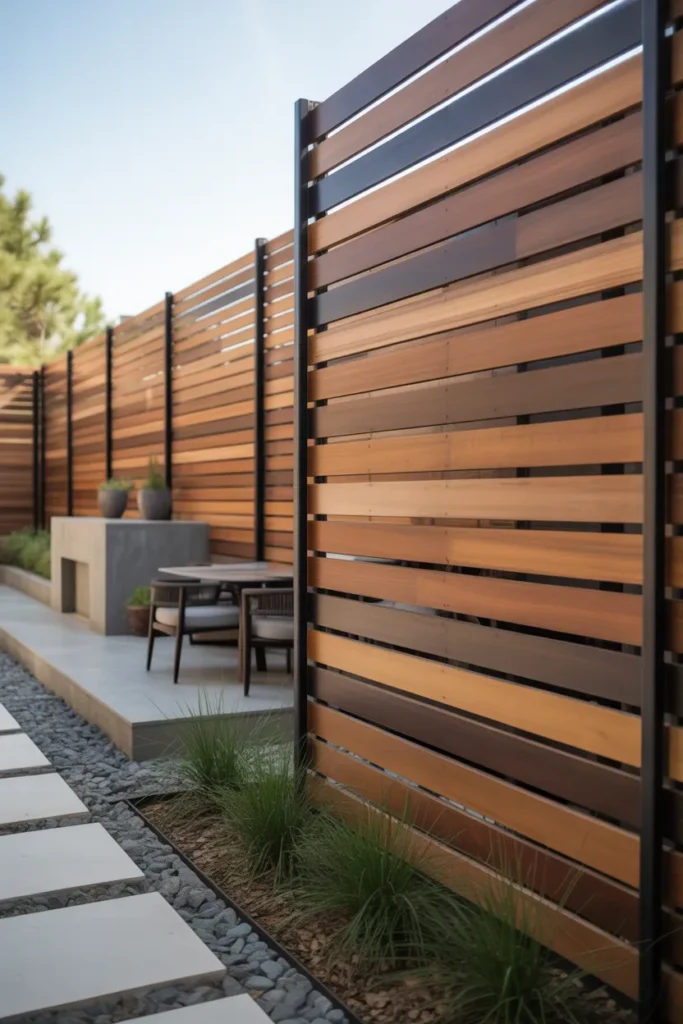
A horizontal cedar fence brings natural warmth to the yard. Cedar has a beautiful color range, often with honey, amber, and reddish tones that look especially good in outdoor spaces. It also pairs well with greenery, stone, gravel, and neutral patio furniture.
This fence is a strong choice if you want a design that feels modern but not cold. It suits both contemporary and rustic-modern yards.
Tip: Cedar changes color as it ages, often turning silver-gray if left untreated. That can be beautiful, but if you want to keep the warmer cedar tone, use a protective finish and plan for maintenance. Think about whether you prefer the fresh cedar look or the naturally weathered look before choosing the finish.
3. Black Horizontal Fence
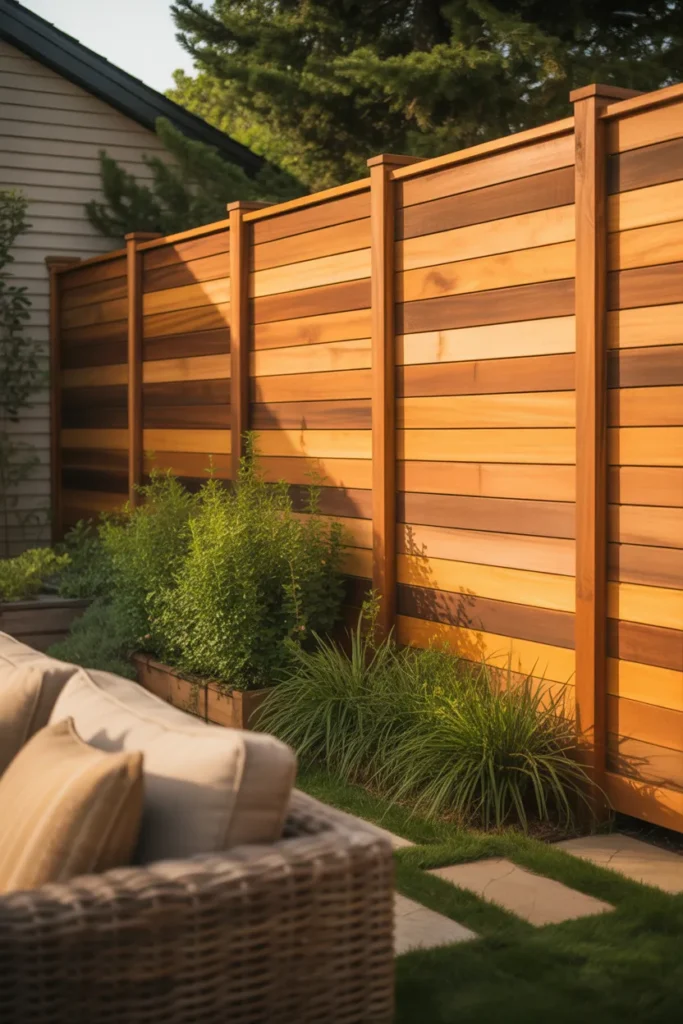
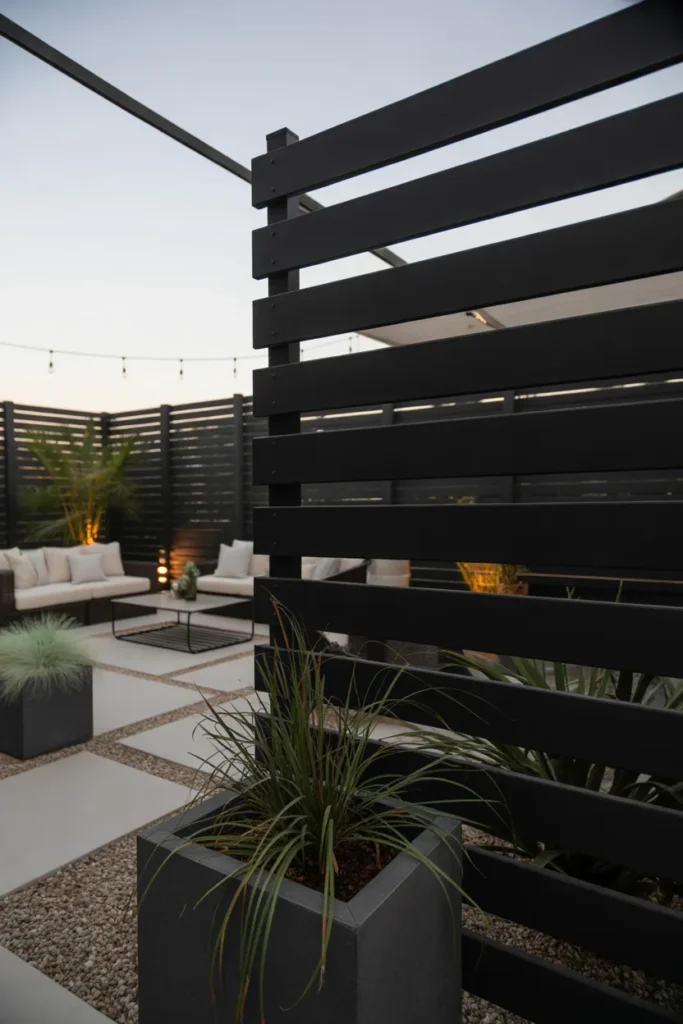
A black horizontal fence creates a bold and polished backyard look. It works especially well in modern yards because it gives the landscape a clean backdrop. Green plants look brighter against black, and pale gravel or concrete feels sharper beside it.
This idea is useful for patios, small urban yards, pool areas, and homes with black windows, dark trim, or modern exterior details.
Tip: Black fencing can absorb heat and feel visually strong, so balance it with plants, warm lighting, and lighter patio materials. If the yard is small, consider using black on one main fence line rather than every boundary to avoid making the space feel too enclosed.
4. Horizontal Privacy Fence
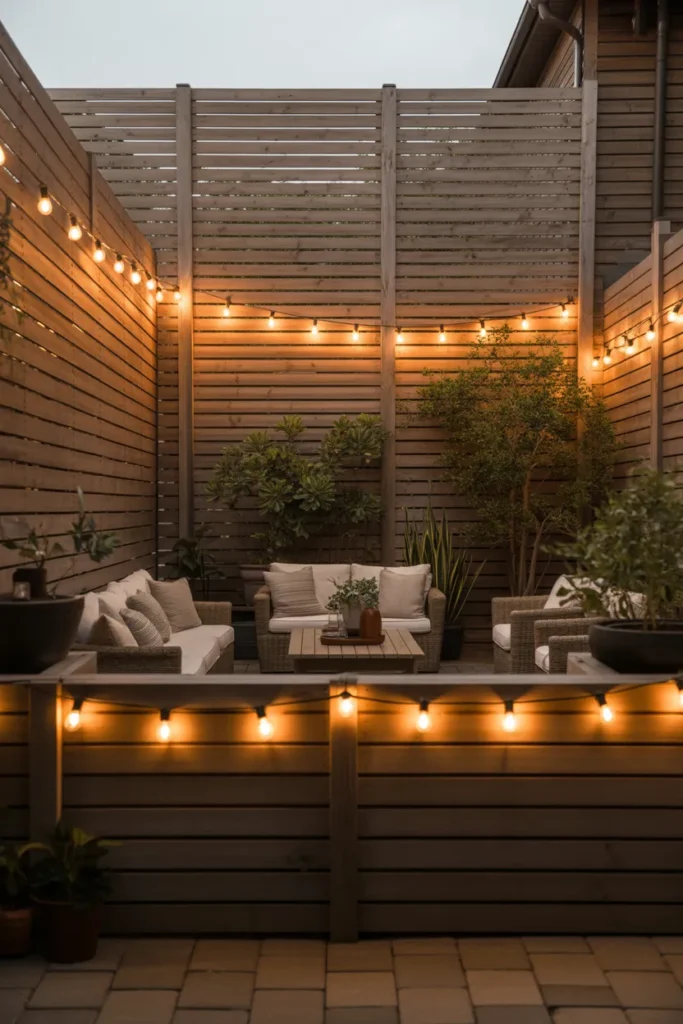
A horizontal privacy fence is ideal when you want to block neighbor views while keeping the yard stylish. Closely spaced horizontal boards create a strong screen, and the clean lines make the fence feel more modern than many traditional privacy fences.
This type of fence works well around patios, hot tubs, dining areas, and small backyards where privacy matters most.
Tip: Decide the board spacing based on your actual privacy needs. Even narrow gaps can reduce privacy when viewed from an angle. If complete screening is important, use overlapping boards or very tight spacing. Also check local fence height rules before building, especially near property lines.
Also Explore
12 Hidden Privacy Fence Ideas That Make Every Garden Feel Completely Secluded
13 Privacy Fence Ideas That Make Every Backyard Feel Like a Beautiful Sanctuary
16 Wood Fence with Wire Mesh Ideas That Give Every Yard Beautiful Boundaries and Open Views
12 Rustic Fence Ideas That Make Every Yard Feel Warm, Natural, and Charming
12 Hog Wire Fence Ideas That Make Any Yard Feel Open, Rustic, and Beautiful
5. Horizontal Fence with Metal Posts
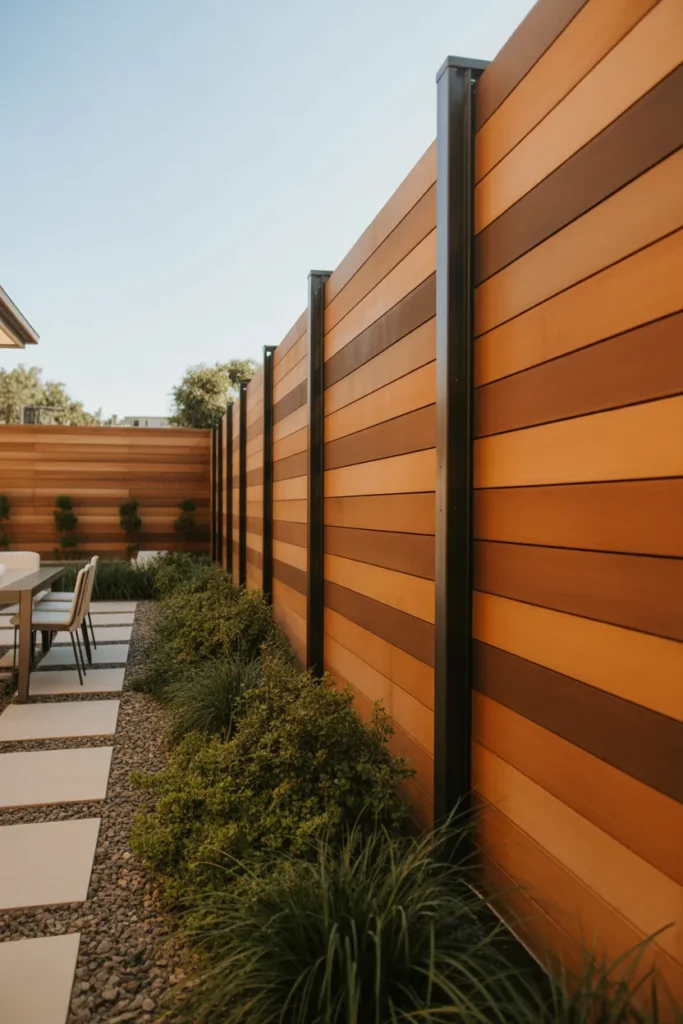
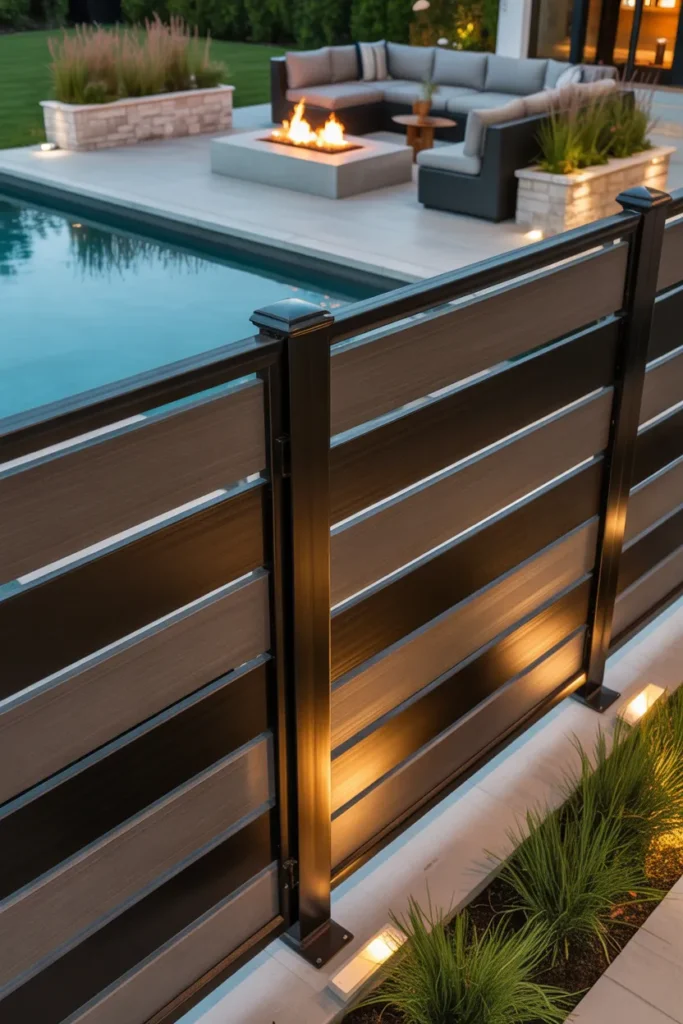
A horizontal fence with metal posts combines the warmth of wood with the strength and crispness of metal. Black metal posts are especially popular because they create contrast and help the fence feel more modern.
This design can also be practical because metal posts may resist rot better than wood posts in some conditions. The look works well with contemporary homes, modern farmhouse exteriors, and patios with black accents.
Tip: Match the metal post finish with other exterior details, such as railings, light fixtures, window frames, or door hardware. This makes the fence feel connected to the home rather than standing alone as a separate feature.
6. Horizontal Slat Fence
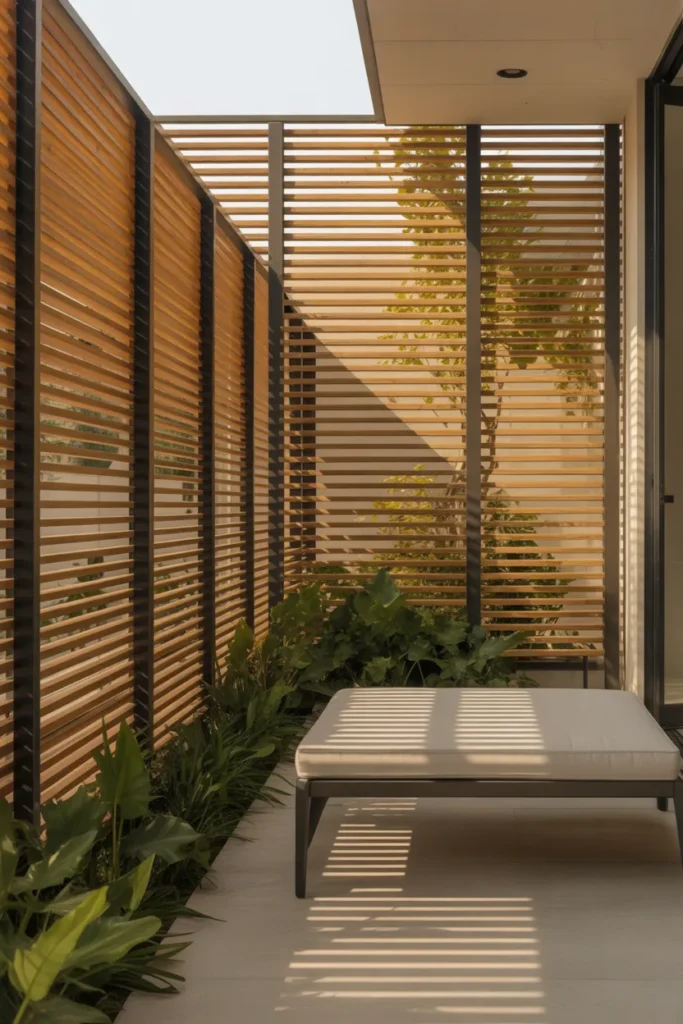
A horizontal slat fence is a good option when you want partial privacy but still want light, airflow, and openness. The gaps between slats create shadow patterns and make the fence feel lighter than a solid screen.
This style is especially useful for courtyards, side yards, patios, balconies, and pool areas. It gives definition without making the space feel completely closed.
Tip: Test the spacing before final installation if privacy matters. Slats may look private from straight ahead but reveal more from an angle. Wider gaps create a more open, airy effect, while tighter gaps feel more private and architectural.
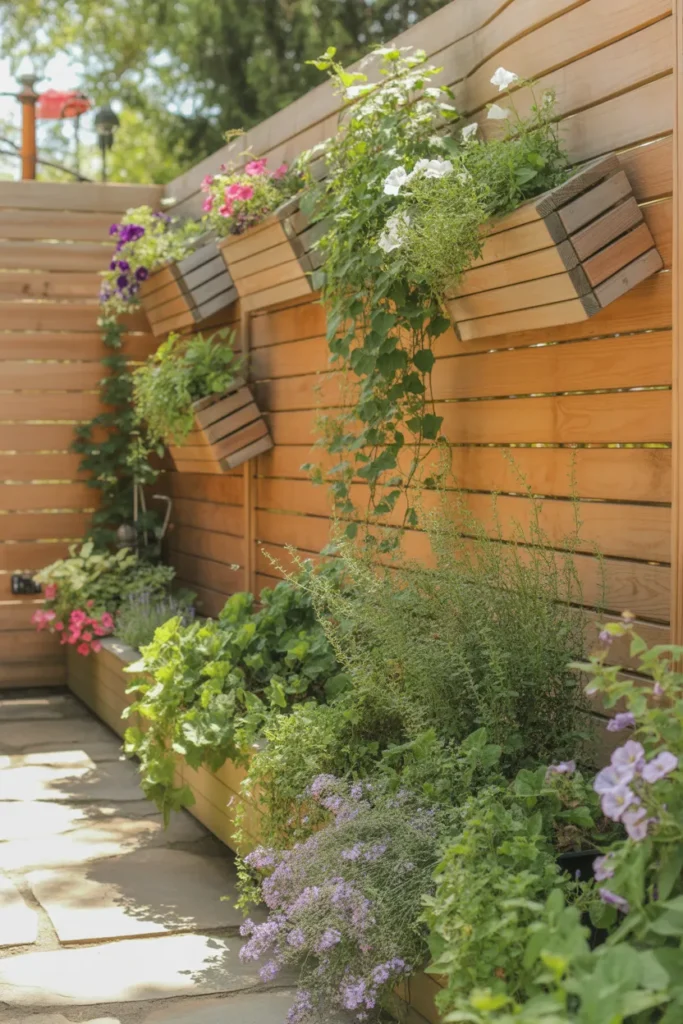
7. Horizontal Fence with Planters
A horizontal fence with planters turns a plain boundary into a living feature. Planters can be mounted on the fence, built into the base, or placed in front. They are useful for adding flowers, herbs, trailing plants, or small shrubs, especially in yards with limited garden beds.
This idea is great for patios, renters, small backyards, and side yards where the fence is very visible.
Tip: Think about water management before adding planters to a fence. Planters need drainage, and constant moisture against wood can shorten the fence’s life. Use liners, air gaps, or freestanding planters if needed, and choose plants that suit the amount of sun the fence receives.
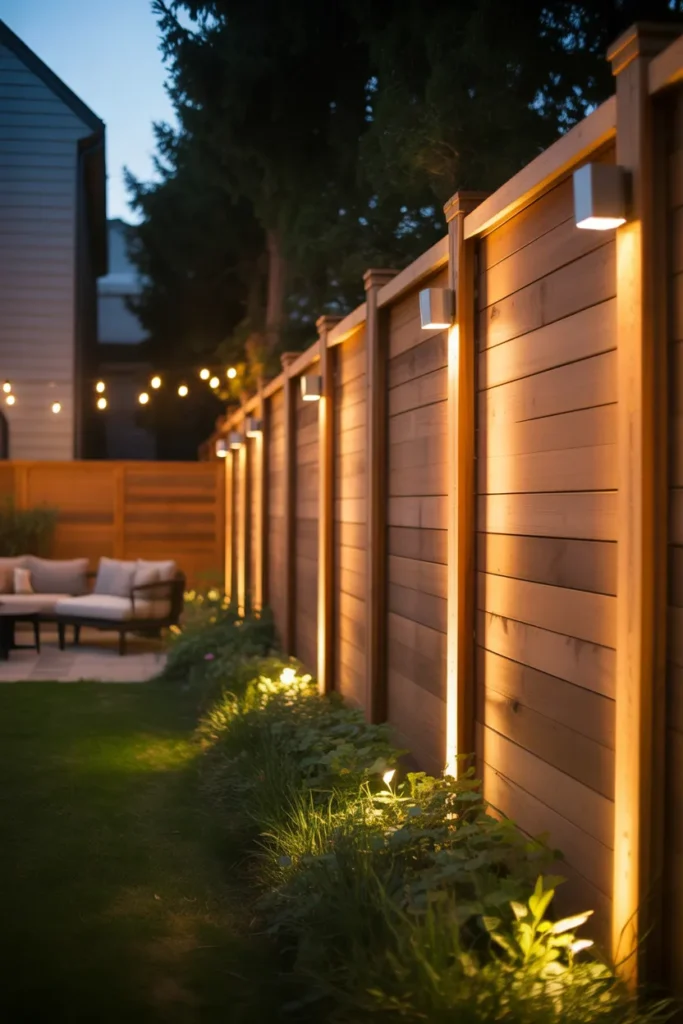
8. Horizontal Fence with Lighting
A horizontal fence with lighting can make a backyard much more useful and attractive at night. Lighting highlights the wood grain, creates depth, and turns the fence into a warm backdrop for patios, fire pits, dining areas, and seating zones.
Post lights, uplights, string lights, and low garden lights can all work depending on the mood you want.
Tip: Use warm, soft lighting instead of harsh bright fixtures. Even spacing usually looks best on long fence lines, but you can also highlight key areas such as seating zones, gates, planters, or feature plants. Always place fixtures where they will not shine directly into people’s eyes while seated.
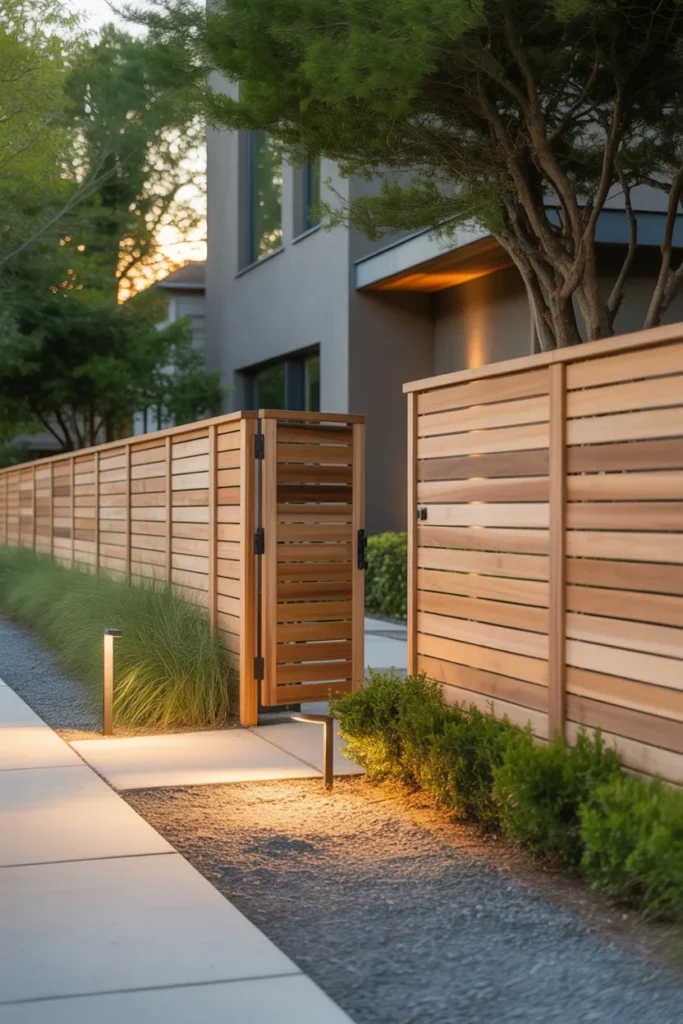
9. Horizontal Fence for Front Yard
A horizontal fence for the front yard can improve curb appeal by adding structure without hiding the home. A lower or medium-height fence works best because it defines the property while still allowing the house and landscaping to remain visible.
This idea works well with modern homes, updated ranch houses, bungalows, and front gardens. A matching gate can make the entry feel more complete.
Tip: Keep the front yard fence welcoming. Avoid making it too tall or too dark unless privacy is truly needed. Coordinate the fence color with the front door, trim, roof, or exterior accents so it feels like part of the home’s overall design.
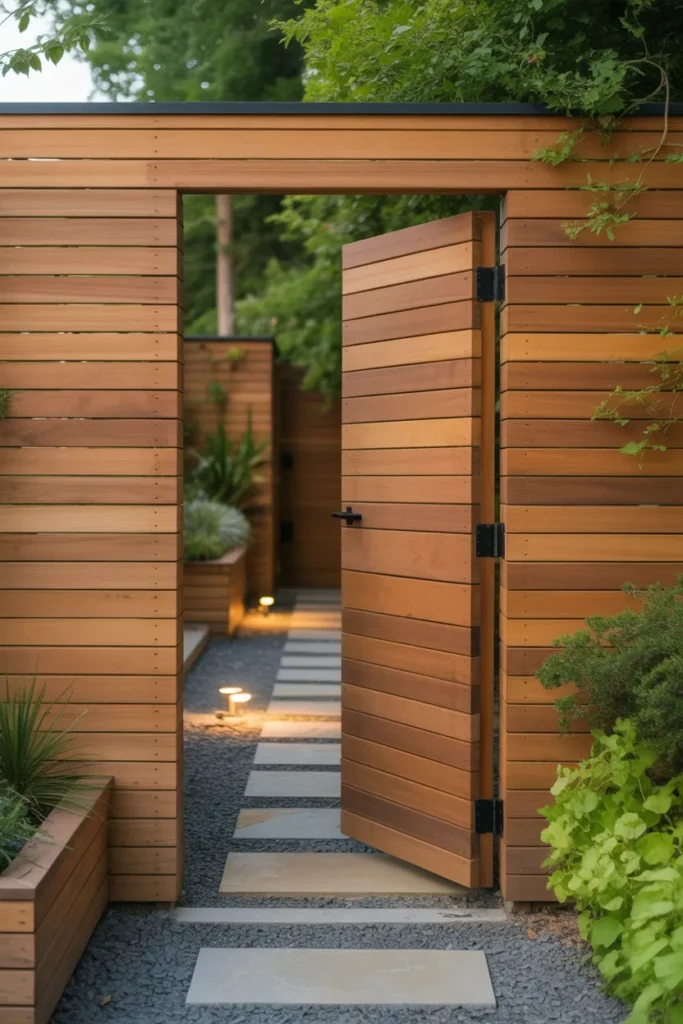
10. Horizontal Fence with Gate
A horizontal fence with a matching gate creates a cleaner and more polished entrance. When the gate boards align with the fence boards, the whole fence line feels custom and intentional.
This idea works for backyard entrances, side yards, garden paths, front walkways, and pool areas. Hardware and post strength matter because gates receive more movement than regular fence panels.
Tip: Build the gate with extra stability in mind. Horizontal boards can sag over time if the gate is not properly braced. Use strong hinges, a reliable latch, and a solid internal frame. If the gate is wide, consider diagonal or hidden bracing to preserve the clean horizontal look.
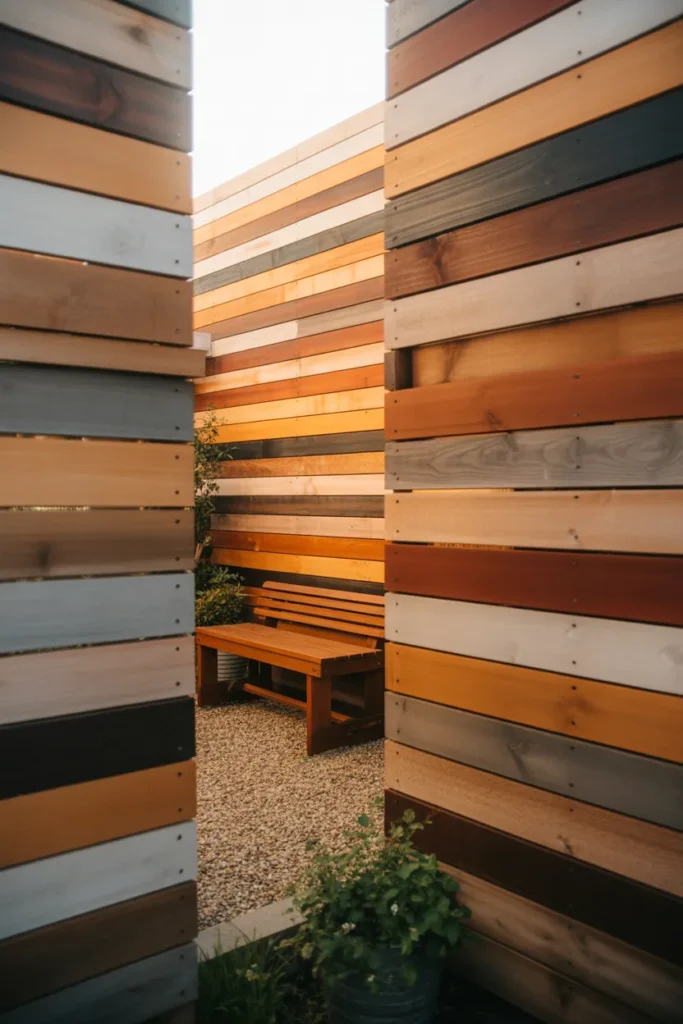
11. Mixed Wood Tone Horizontal Fence
A mixed wood tone horizontal fence adds character while keeping the clean structure of a horizontal layout. Different board tones can create a subtle striped effect, especially when using reclaimed wood or boards with natural variation.
This idea works well for creative backyards, rustic-modern spaces, patios, and gardens that need a fence with more warmth and personality.
Tip: The key is control. Use varied tones, but keep the board width and spacing consistent. Too much random variation can look messy, while related wood tones create depth and interest. Limit the palette to natural browns, honey tones, grays, and warm weathered shades for a more refined result.
12. Horizontal Fence with Concrete Wall
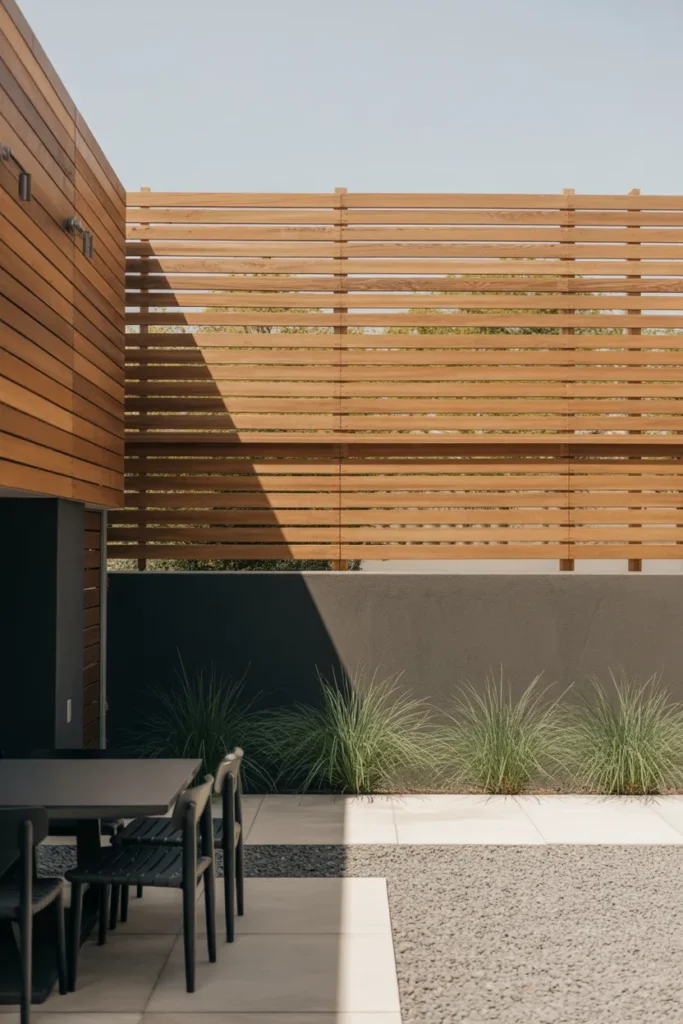
A horizontal fence with a concrete wall creates a strong architectural look. The concrete adds structure and durability, while the wood brings warmth. This combination works well for modern homes, sloped yards, retaining walls, and urban patios.
The concrete can be a base wall, a retaining wall, or a vertical element beside the wood slats. Plants are useful for softening the hard materials.
Tip: Use this style when concrete already appears somewhere else in the yard or home exterior. Repeating materials makes the design feel intentional. Add greenery, warm wood tones, or soft lighting so the concrete does not make the space feel too cold.
13. Horizontal Fence for Small Backyard
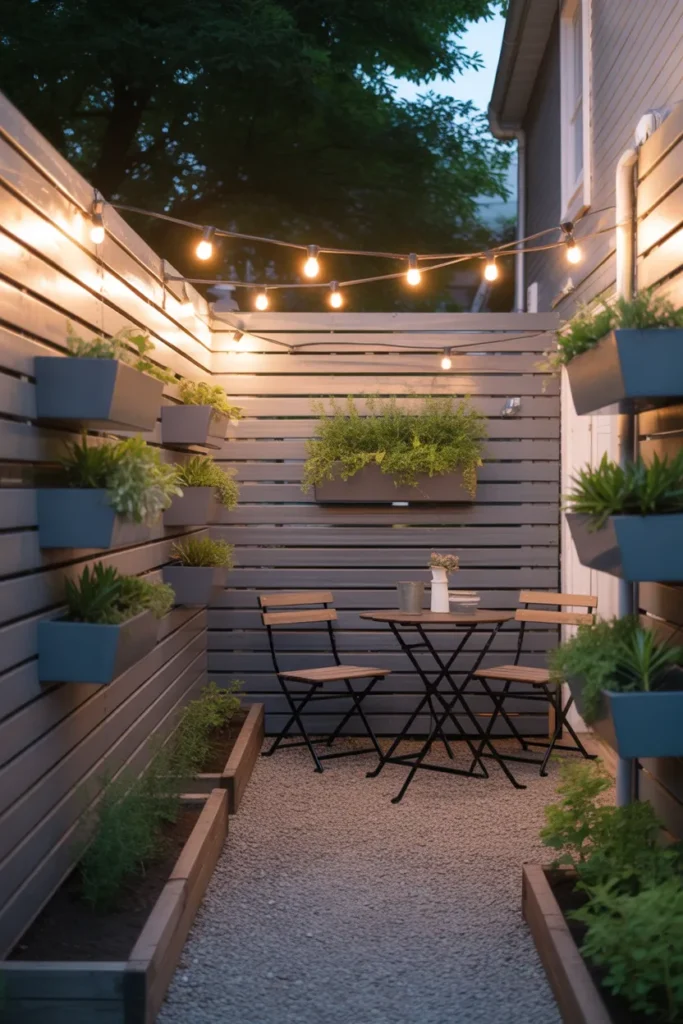
A horizontal fence can be a smart choice for a small backyard because the long lines can make the space feel wider. It also creates a clean backdrop for compact furniture, vertical planters, and simple lighting.
Small yards need careful editing. Too many decor items, colors, or bulky plants can make the space feel crowded. A clean horizontal fence helps organize the view.
Tip: Choose a lighter wood tone if you want the small yard to feel more open. If you prefer a dark fence, balance it with warm lighting, pale flooring, and simple furniture. Keep plants close to the edges so the center remains usable.
14. Horizontal Fence with Climbing Plants
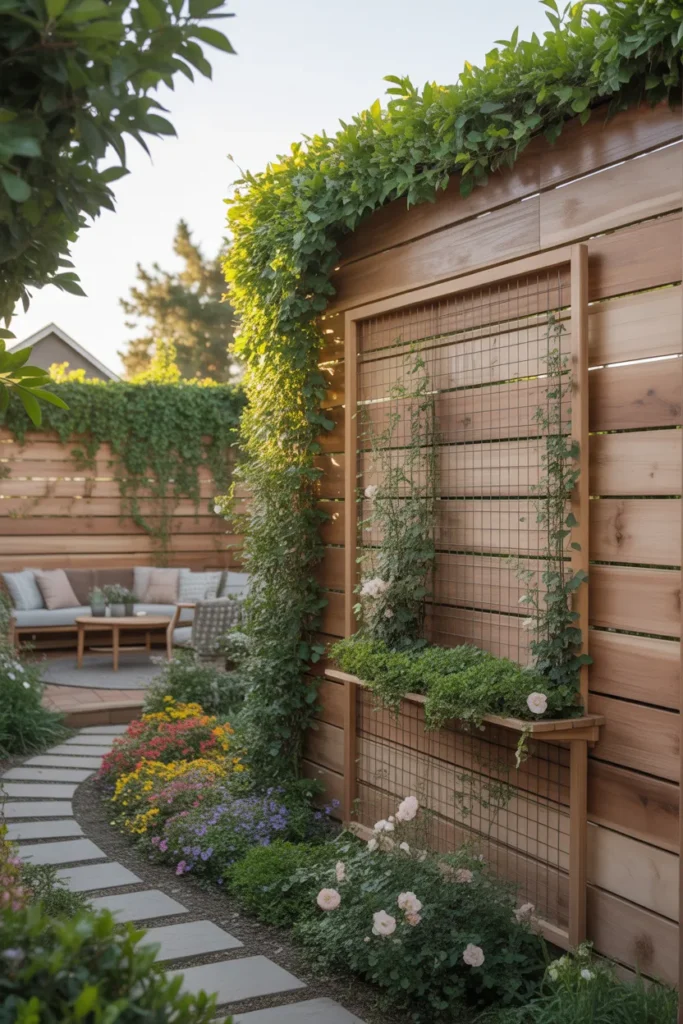
A horizontal fence with climbing plants balances modern structure with natural softness. Vines, roses, jasmine, clematis, or ivy can bring color and movement to the fence while helping it feel more connected to the garden.
This idea works best when the plants have a proper support system. The fence itself may not always be the best surface for heavy vines, especially if moisture becomes trapped against the boards.
Tip: Install a separate trellis, wire support, or plant grid slightly in front of the fence. This protects the wood, makes pruning easier, and prevents vines from overwhelming the horizontal lines. Choose plants based on sunlight, growth speed, and maintenance needs.
15. Luxury Horizontal Fence Design
A luxury horizontal fence design depends on precision, materials, lighting, and integration with the rest of the yard. Smooth boards, premium finishes, integrated lighting, large planters, stone surfaces, and high-quality outdoor furniture can make the fence feel like part of the outdoor architecture.
This style works best when the fence is planned with the patio, pool, seating, and planting rather than added after everything else.
Tip: Pay attention to finishing details. Luxury fencing depends on clean corners, hidden fasteners where possible, consistent spacing, strong posts, and smooth transitions around gates and walls. The more precise the installation, the more expensive and complete the backyard will feel.
Conclusion
Horizontal fences are a strong choice for homeowners who want a yard that feels modern, private, and more visually organized. The direction of the boards alone can make a big difference, helping a small yard feel wider and a large yard feel more structured. With the right materials and details, a horizontal fence can suit many styles, from warm cedar and rustic mixed wood to sleek black fencing and luxury architectural designs.
The best horizontal fence idea depends on what your yard needs most. If privacy is the priority, choose close board spacing and strong height. If openness matters, consider slats or lower front yard fencing. If the fence feels too plain, add planters, lighting, climbing plants, or mixed wood tones. If you want a more modern result, metal posts, black finishes, concrete walls, and precise spacing can make the design feel sharper.
A horizontal fence is not just a boundary. It can become the backdrop for outdoor living, the frame for garden planting, and one of the main design features in the yard. When the spacing, color, material, lighting, and landscaping all work together, the fence can make the entire outdoor space feel more complete.