A garden pathway is simultaneously the most practical and the most emotionally powerful element in any outdoor space because it does two completely different and completely essential things at the same time. Practically it organizes the garden’s movement, creates dry footing in wet weather, protects the lawn and soil from compaction, and connects every garden area to every other in the most functionally clear and the most practically reliable way. Emotionally it creates the garden’s narrative, determines the quality of the garden journey, communicates the garden’s character and personality at every step, and creates the specific daily experience of moving through the outdoor space that makes the garden feel most completely designed, most personally considered, and most genuinely welcoming to every person who walks along it.
The most important pathway decision is the relationship between the path material and the planting that surrounds it. The most beautiful garden pathways in the world are almost never the ones where the path surface alone creates the complete visual experience. They are consistently the ones where the path material and the surrounding planting work together as a complete composition, where the flagstone and the creeping thyme between the joints are understood as a single organic element, where the gravel surface and the lavender drifts spilling over the edging are considered as one complete sensory experience, where the brick herringbone and the cottage rose borders are designed together as a unified classical domestic garden statement. The path’s relationship with its planting is the defining quality of every truly beautiful garden pathway.
From the most naturally geological flagstone with creeping thyme joints to the most atmospherically mysterious secret garden pathway, from the most formally classical box hedge axis to the most tropically lush botanical immersion, from the most fragrantly sensory lavender corridor to the most artistically hand-crafted pebble mosaic, from the most organically ancient woodland bark path to the most contemporarily precise concrete slab with architectural planting, these 16 garden pathway ideas cover every garden style, every material preference, every sensory experience, and every personal garden vision to help you create the most beautifully complete and the most genuinely welcoming garden path your outdoor space deserves.
1. Flagstone Garden Pathway
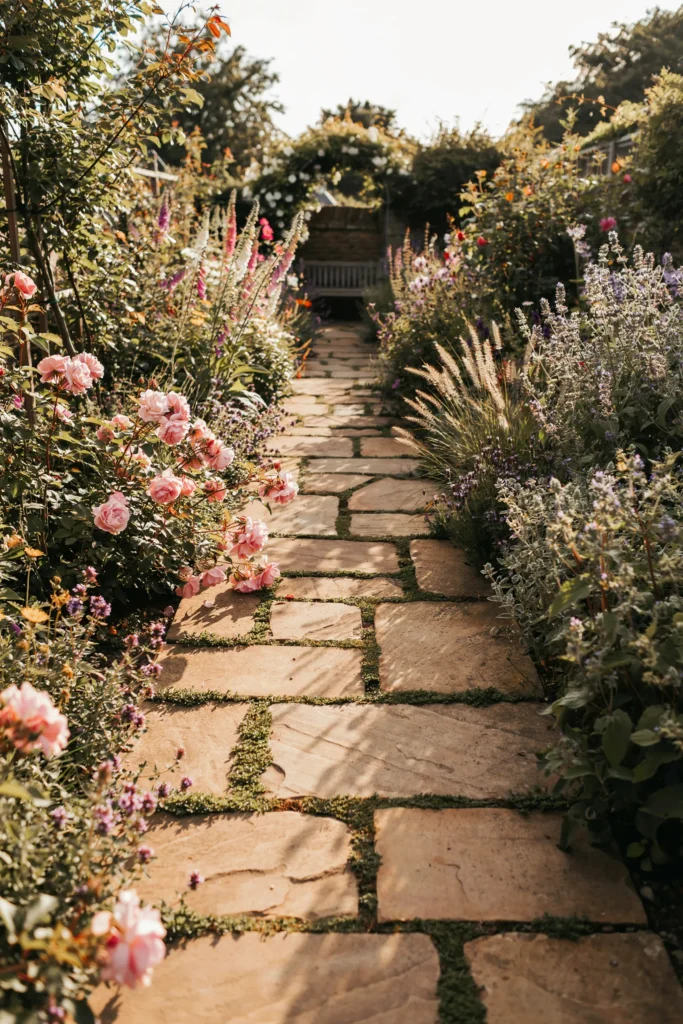
Large irregular natural sandstone or limestone flagstones in a naturalistic random pattern with creeping aromatic thyme in the joints and cottage planting spilling generously from each side creates the most naturally geological and the most genuinely permanent garden pathway available because natural flagstones create a path that becomes more beautifully integrated with the garden with every season, as the thyme establishes more completely in the joints, the stone develops a more beautiful natural patina, and the cottage planting settles more generously over the path edges in the most organically complete garden pathway composition available.
Tip: Plant creeping woolly thyme or aromatic creeping thyme in the flagstone joints immediately after laying the path rather than waiting for seeds to self-establish, as actively planted thyme establishes most quickly and most completely in the joints, creates the most consistent joint coverage within one to two growing seasons, and releases its characteristic aromatic fragrance immediately when walked upon, delivering the most complete sensory flagstone pathway experience available from the first complete growing season after installation.
2. Brick Herringbone Garden Pathway
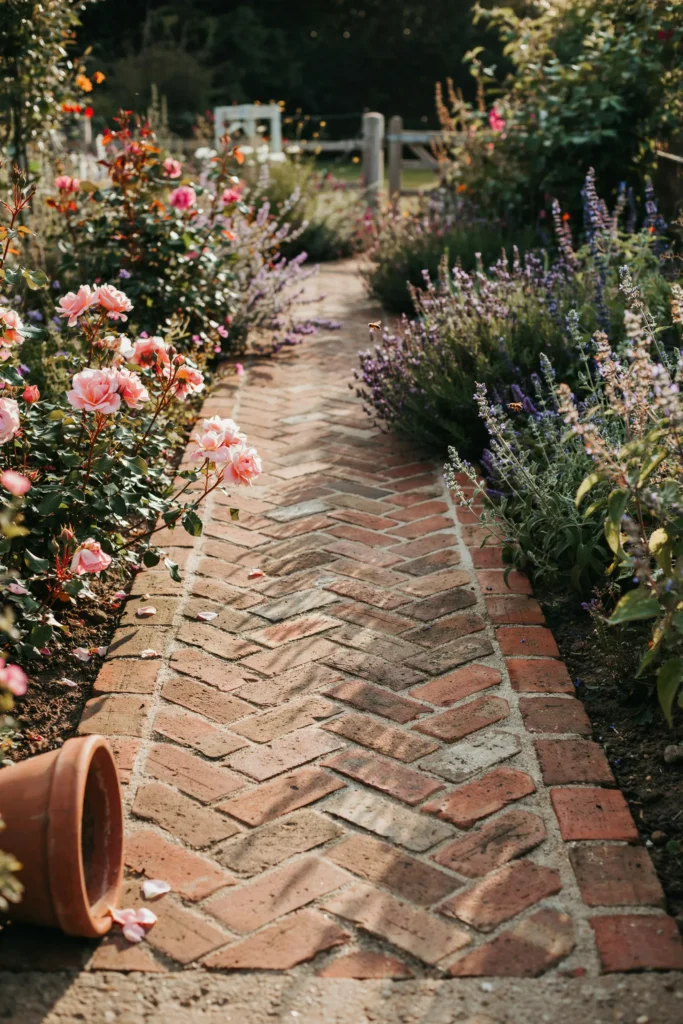
Red or buff clay bricks in a forty-five degree herringbone pattern on a compacted sand base with sand joints and a brick soldier course edge with cottage roses and lavender on each side creates the most classically beautiful and the most traditionally genuine hard garden pathway available because the herringbone pattern transforms the simplest rectangular clay brick into a pathway surface of complete geometric dynamism and genuine historic domestic character that straight-laid or random brick patterns of identical material and identical installation quality consistently fail to provide.
Tip: Use a chalk line and a large square to establish the forty-five degree starting angle before laying the first herringbone brick, as establishing the correct geometric starting angle before beginning ensures the herringbone pattern aligns consistently across the complete path width and length, while starting without a properly established angle creates accumulating misalignment that becomes progressively more visible and more visually disturbing as the pattern extends across the complete path surface.
3. Gravel and Stepping Stone Pathway
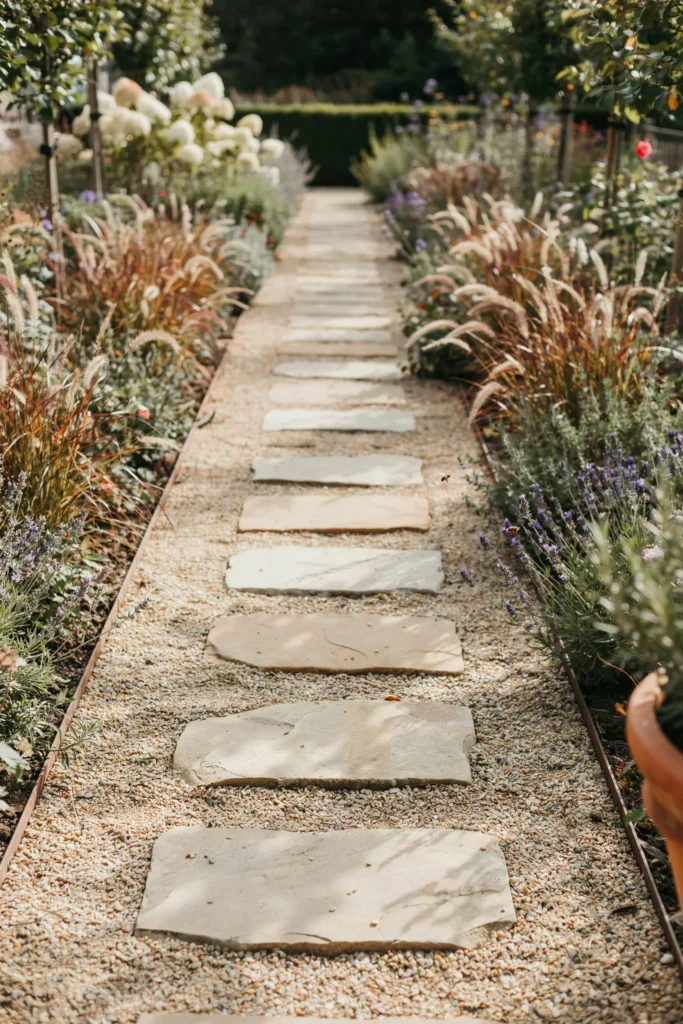
Large flat stepping stones as a walking line within a pea gravel path on landscape fabric with flexible metal edging and ornamental grasses on each side creates the most naturally combined and the most practically complete garden pathway available because the gravel and stepping stone combination delivers every quality a garden path most needs simultaneously, the dry stable footing of flat stones, the natural sound and visual warmth of pea gravel, and the weed suppression of landscape fabric, in a combined material composition that neither material could provide as effectively when used alone.
Tip: Choose stepping stones at a minimum of fifty centimeters in the largest dimension for a gravel pathway, as larger stones provide significantly more stable footing when stepped on at the edge than smaller alternatives, and the visual proportionality of generously sized stepping stones within a gravel path creates the most balanced and the most genuinely considered pathway composition available, while undersized stones within gravel look visually inadequate and provide practically insufficient footing stability for comfortable confident garden walking.
Also Explore
12 Creative Walkway Ideas That Make Any Yard Feel Beautiful, Welcoming, and Unique
14 Cheap DIY Walkway Ideas That Make Every Garden Path Beautifully Complete
12 Hog Wire Fence Ideas That Make Any Yard Feel Open, Rustic, and Beautiful
13 Boho Fence Ideas That Give Every Garden the Most Beautifully Organic Boundaries
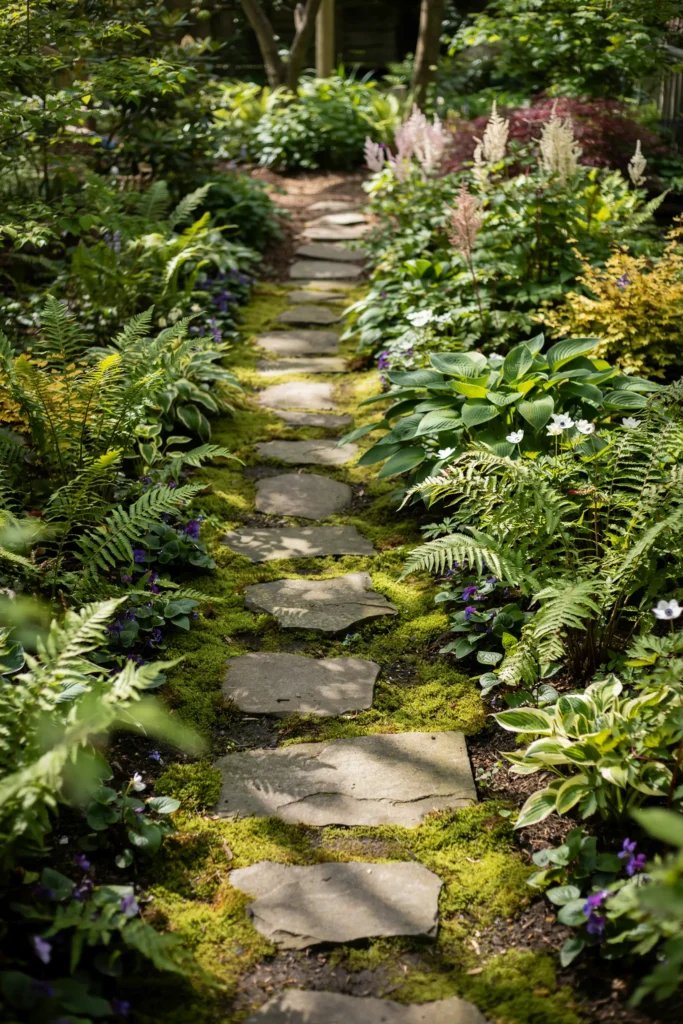
4. Mossy Stone Garden Pathway
Aged or weathered flat stones with lush cushion moss growing across their surfaces and in the joints, ferns arching over the path edges, and hostas beside the path in a shaded woodland garden creates the most organically ancient and the most genuinely woodland-beautiful pathway available because moss-covered stones create a quality of genuine botanical time and complete organic garden integration that newly laid stones of any quality, any expense, or any size cannot replicate for the same deeply beautiful quality of honest natural permanence and genuinely aged organic garden character.
Tip: Encourage moss establishment on shaded stone pathway surfaces by painting the stones with a mixture of equal parts buttermilk and water using a paintbrush in early autumn, as buttermilk provides the specific pH and organic nutrients that moss spores need for initial establishment, and stones treated with this mixture in consistently shaded and moist conditions will show visible moss growth within one to two growing seasons without any further intervention.
5. Curved Grass Pathway
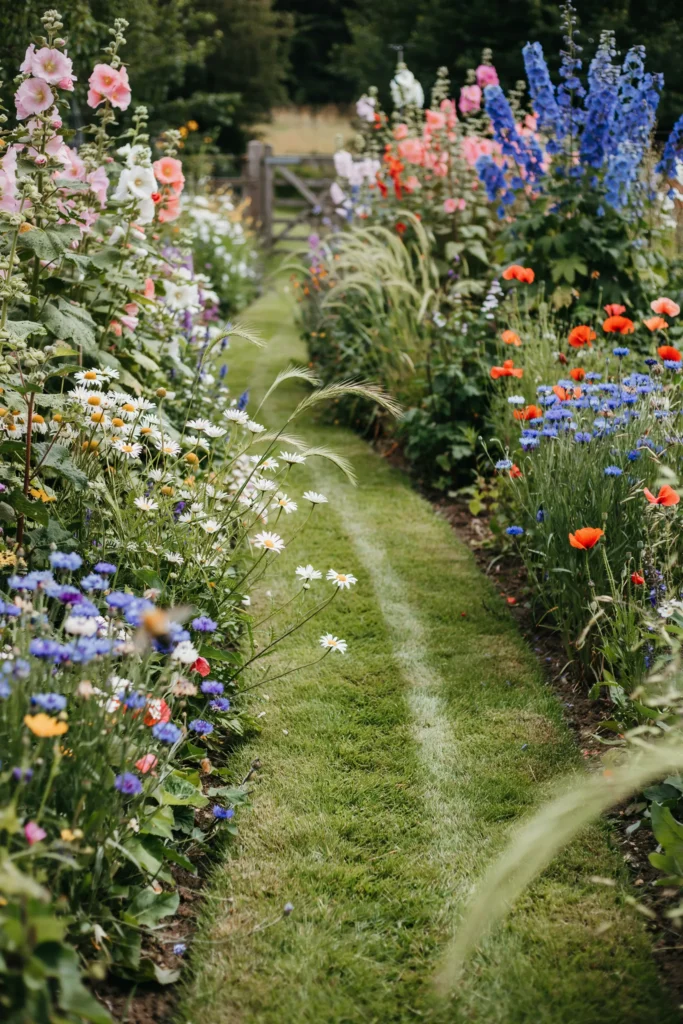
A gently curving mown grass pathway through wildflower meadow or generous cottage borders with planting growing well above path level on each side creates the most naturalistically beautiful and the most organically free garden pathway available because a curving mown path through lush botanical abundance creates the specific quality of garden discovery and genuine botanical journey that makes the garden feel most completely alive, most personally explored, and most genuinely designed as a continuous organic landscape rather than a series of separated garden rooms connected by straight corridors.
Tip: Curve the mown grass path enough that the pathway destination is not immediately and completely visible from the entrance, as partial obscuring of the destination creates the most important psychological quality of garden discovery and botanical anticipation that straight and fully visible paths permanently eliminate, and even a gentle curve that obscures only the final third of the path destination creates a significantly more engaging and more garden-satisfying pathway experience than the same planting composition along a completely straight and fully visible path.
6. Formal Box Hedge Lined Pathway
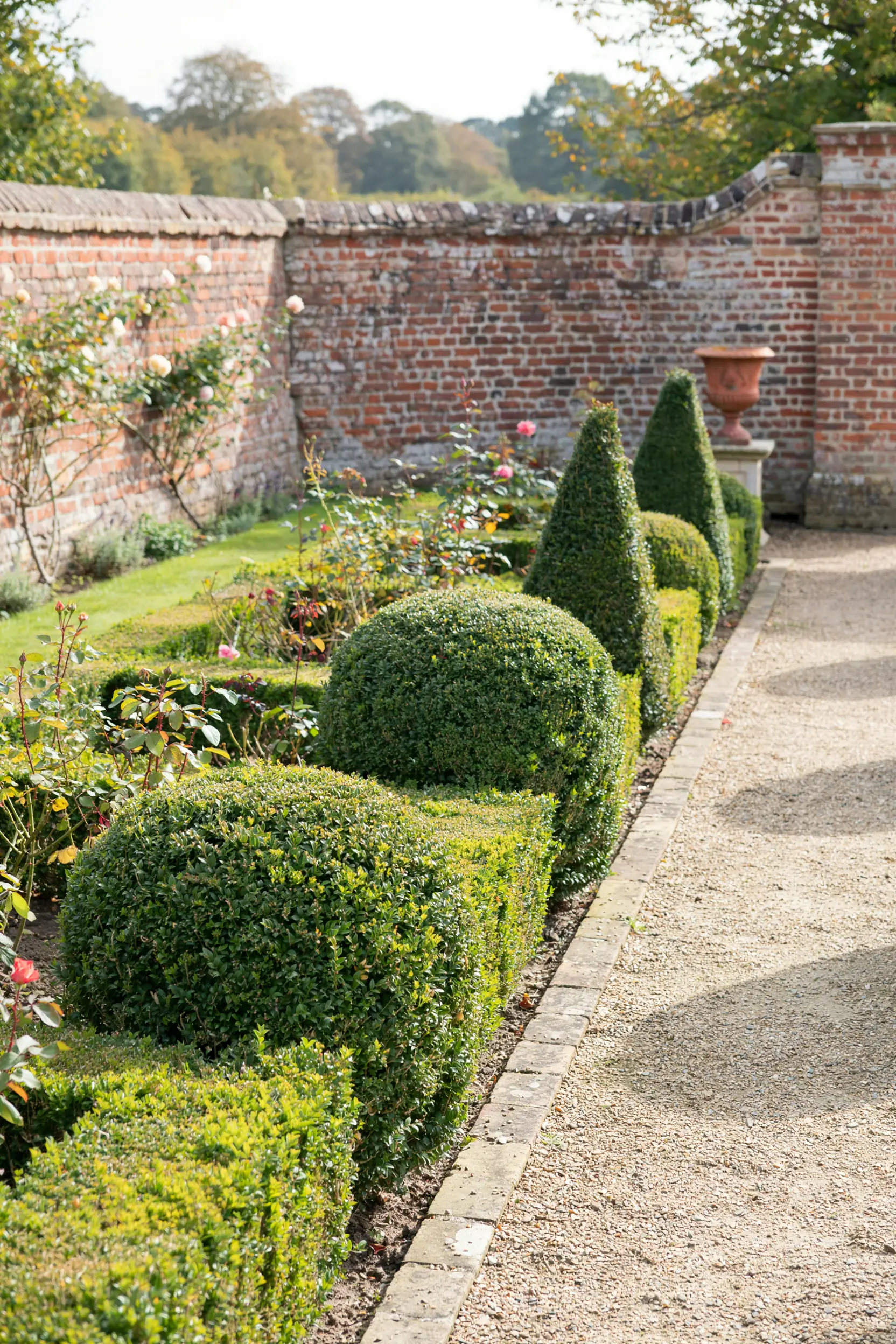
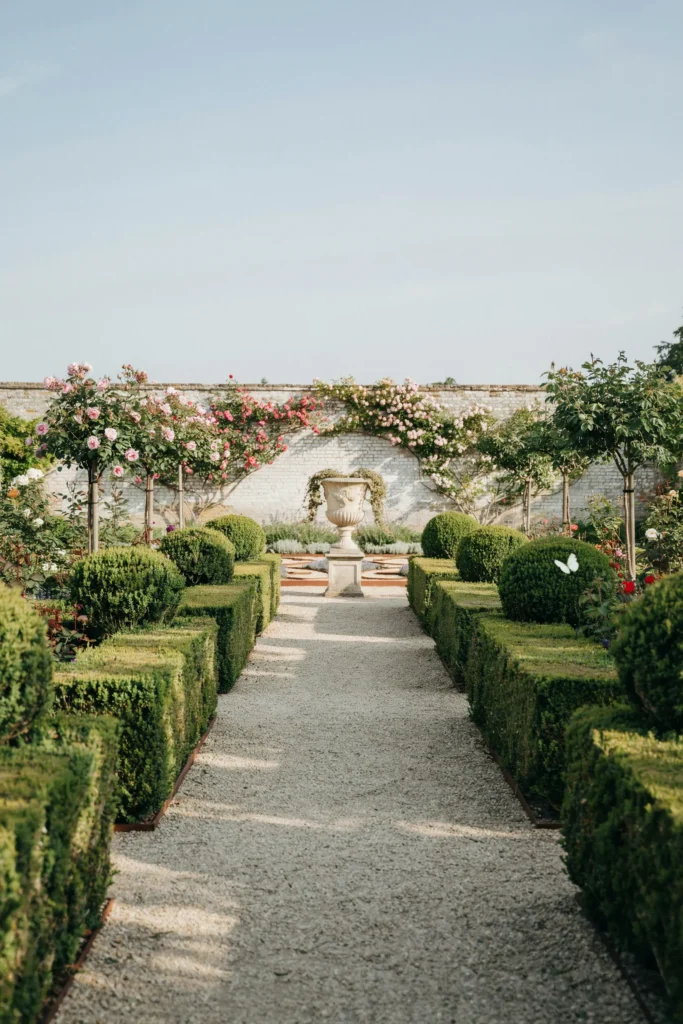
Precisely clipped low box hedges at consistent height lining each side of a formal stone or gravel pathway with a clear formal axis and a garden focal point at the pathway end creates the most classically authoritative and the most architecturally complete formal garden pathway available because the combination of precisely maintained box hedge geometry and a clearly established formal garden axis creates a pathway experience of complete classical garden design authority that communicates the most deliberately and the most genuinely considered garden design philosophy from the most honest and the most completely formal living architectural material.
Tip: Clip the box hedges alongside the formal pathway to a consistent and level height using a long straightedge board held parallel to the hedge top as a clipping guide, as perfectly level box hedge tops are the single most defining quality of a genuinely formal garden pathway and even minor height variations that are individually invisible at each clipping position accumulate into clearly visible undulations across the complete hedge line that undermine the formal pathway’s most essential quality of perfect geometric precision.
7. Cottage Garden Flower Pathway
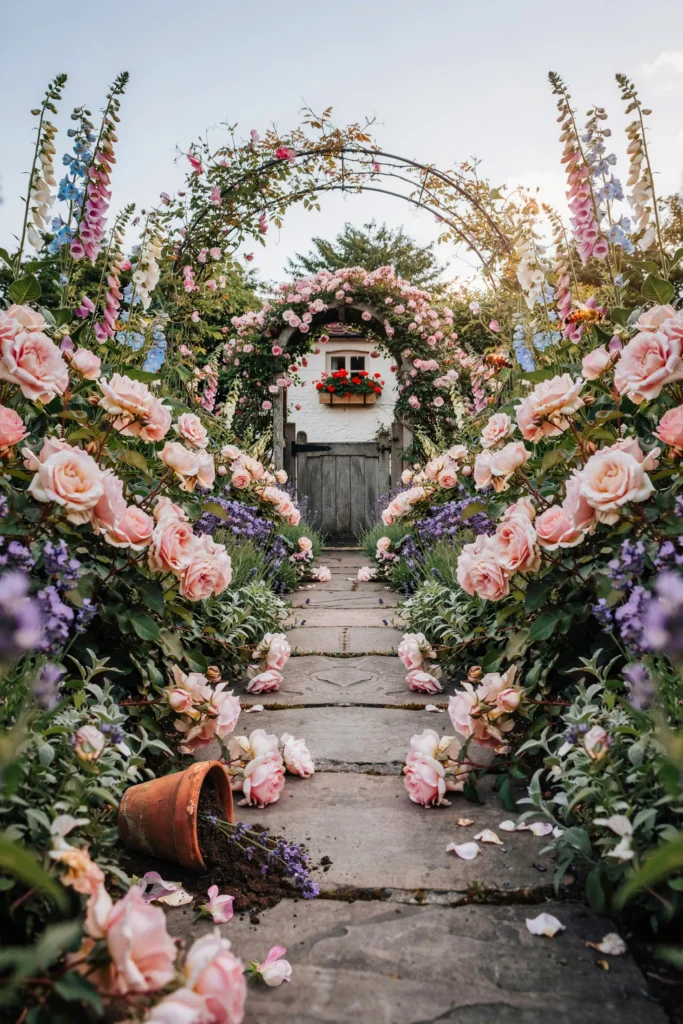
A simple stone or brick pathway almost entirely enclosed by abundantly billowing cottage garden flowers, blush roses, lavender, foxgloves, and sweet peas arching over the path, with a cottage gate visible at the end creates the most romantically immersive and the most completely flower-enclosed pathway available because the specific experience of walking through a genuine corridor of generously billowing cottage blooms, with flowers brushing both sides and occasionally meeting above, creates the most completely romantic and the most genuinely garden-magnificent daily botanical walking experience available in any residential garden.
Tip: Plant repeat-flowering David Austin roses as the primary structural framework plant for a cottage flower pathway because their combination of generous bloom production from early summer through autumn, substantial but not overwhelming height of one to one and a half meters, and characteristic blowsy blush flower form creates the most complete and the most continuously beautiful cottage pathway plant available, providing the most consistently generous flower-enclosed path experience throughout the longest possible portion of the growing season.
8. Japanese Garden Stepping Stone Pathway
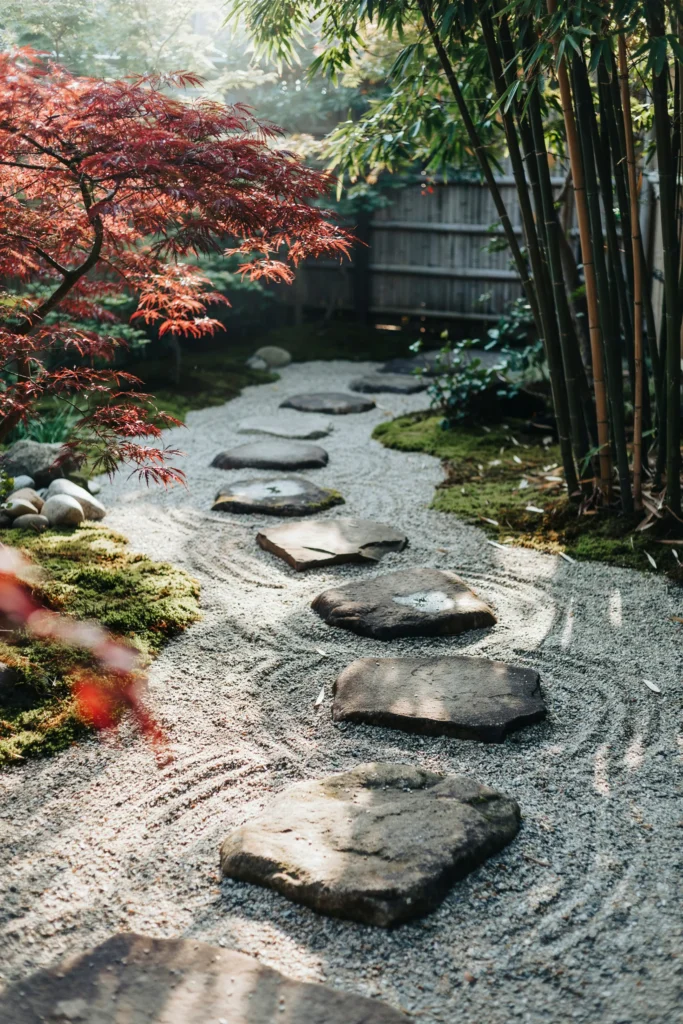
Large flat stepping stones in a deliberately asymmetric pattern through raked fine gravel with Japanese maple and black bamboo beside the path creates the most meditatively Zen and the most genuinely considered garden pathway available because the deliberate irregularity of Japanese stepping stone placement creates a quality of meditative walking rhythm and genuine garden mindfulness that encourages the most slowed, the most present, and the most completely attentive garden experience available from any pathway format in any garden style worldwide.
Tip: Rake the fine gravel beside the Japanese stepping stone pathway in continuous parallel lines running perpendicular to the path direction immediately after installation and maintain these raking lines with each garden visit, as the parallel raking marks in fine gravel are the single most defining and the most authentically Zen quality of the Japanese garden pathway aesthetic, creating a quality of meditative garden order and complete Zen visual discipline that unraked gravel, however finely graded, consistently fails to provide.
9. Woodland Bark Mulch Pathway
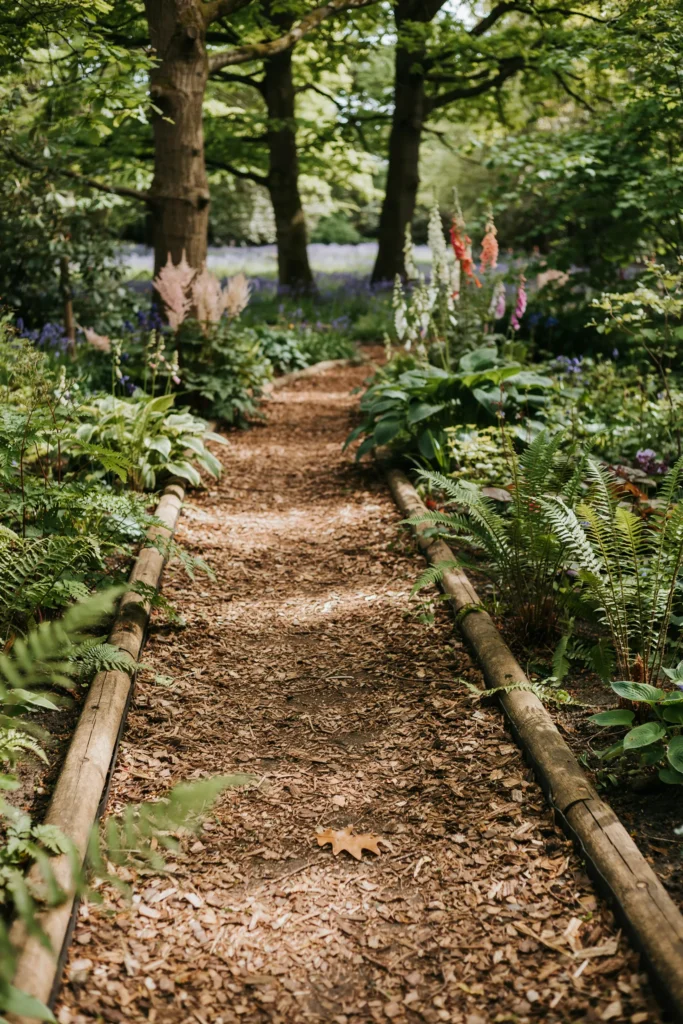
A gently winding woodland bark mulch path with log roll edging, generous ferns arching over the path edges, hostas beside the ferns, and dappled light through the overhead tree canopy creates the most organically naturalistic and the most genuinely woodland-immersive garden pathway available because a woodland bark mulch path creates a garden journey that feels most completely embedded within the woodland ecology itself, becoming progressively more beautifully integrated with the woodland floor environment as the bark gradually decomposes and the woodland planting establishes most completely over the path edges.
Tip: Wind the woodland bark mulch pathway gently through the tree canopy rather than cutting a straight direct line through the woodland garden, as a winding woodland path creates the most authentic and the most genuinely explorative woodland garden experience available, allowing the path to follow the natural spaces between established trees, revealing different views and botanical moments at each turn, and creating a quality of genuine woodland discovery that a straight woodland path, however beautifully planted on each side, permanently and completely eliminates.
10. Modern Concrete Slab Pathway
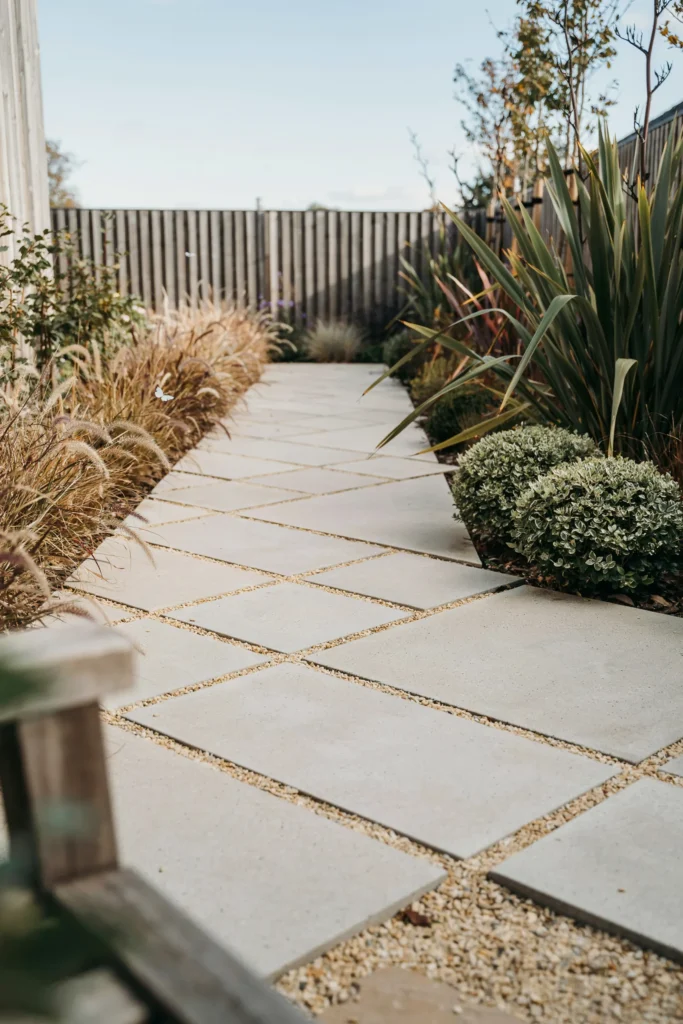
Large format concrete or grey porcelain slabs in a clean contemporary grid with wide pea gravel joints and architectural ornamental grass and structural shrub planting creates the most cleanly contemporary and the most genuinely architecturally considered garden pathway available because large format slabs with deliberately wide gravel joints create a pathway composition of complete contemporary design authority that treats the garden path as an architectural outdoor surface rather than simply as a functional connection between two garden destinations.
Tip: Install recessed LED pathway lights between selected slab sections during the initial pathway construction rather than as a subsequent addition, as path lights installed during construction can be wired cleanly beneath the path surface with completely invisible cabling, while lights added after construction consistently require surface-level wiring that compromises the clean contemporary aesthetic that makes modern concrete slab pathways most genuinely and most completely beautiful.
11. Reclaimed Brick Garden Pathway
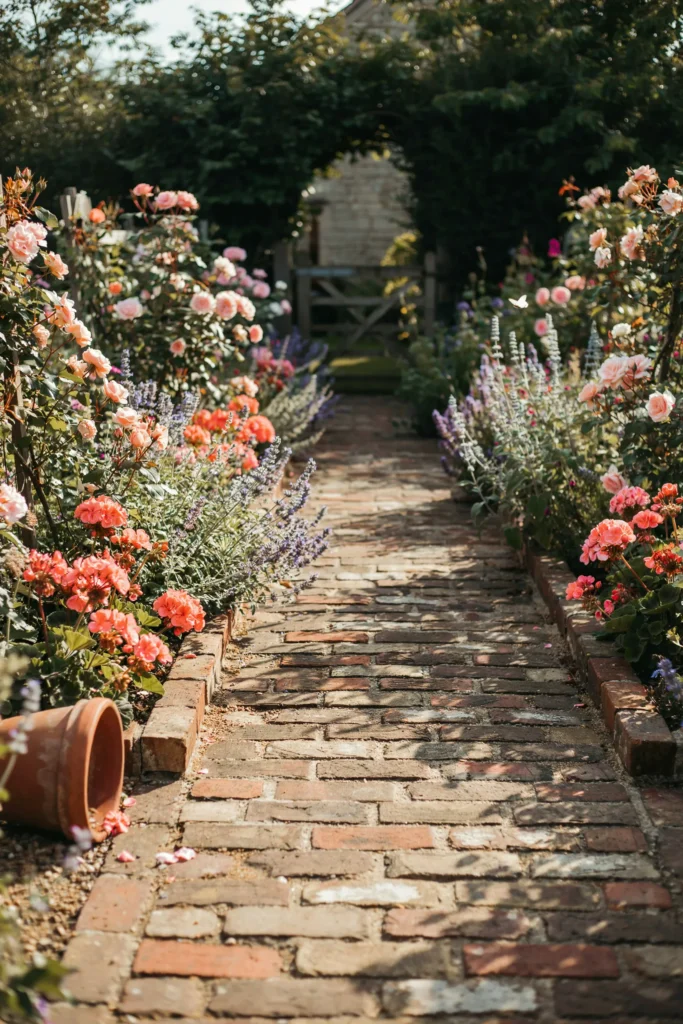
Reclaimed weathered bricks with aged patina in varied warm tones in a running bond or basket weave pattern with sand joints, a soldier course edge, and cottage planting spilling over the edges creates the most authentically characterful and the most materially beautiful warm-toned garden pathway available because genuinely reclaimed bricks carry a quality of real domestic history and authentic aged character that makes the garden path feel most genuinely connected to the long and most warmly domestic tradition of brick garden paths at their most honestly and their most completely beautiful.
Tip: Source reclaimed bricks from multiple different demolition or salvage sources rather than purchasing a single homogeneous batch, as bricks from different historic buildings bring slightly different tones, slightly different weathering patterns, and slightly different surface characters that together create the most beautifully organically varied reclaimed brick pathway surface available, while a single-source reclaimed brick path, however genuinely aged, consistently looks more uniform and less organically varied than a thoughtfully mixed multi-source installation.
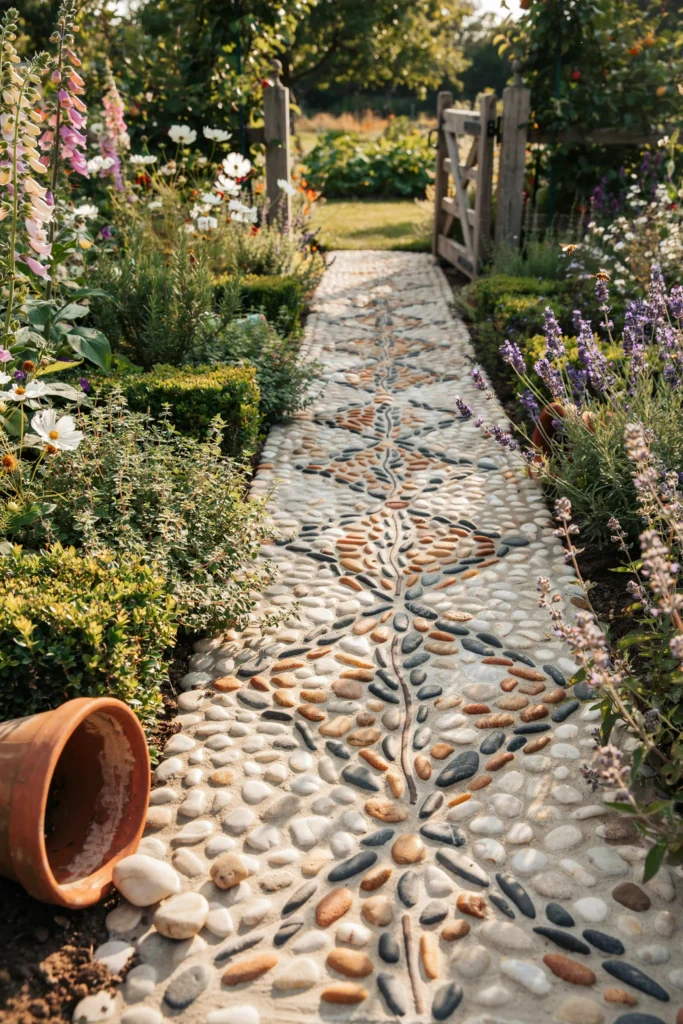
12. Pebble Mosaic Garden Pathway
Hand-laid river pebbles in contrasting tones set vertically on end in a mortar bed creating geometric or botanical mosaic patterns across the complete pathway surface creates the most artistically magnificent and the most completely hand-crafted garden pathway available because a genuinely hand-laid pebble mosaic pathway transforms every square centimeter of the garden walking surface into a completely personal outdoor artwork of extraordinary daily beauty that rewards close observation with the most genuinely hand-crafted and the most artistically personal outdoor surface available in any residential garden.
Tip: Set all pebbles vertically on end standing upright in the mortar bed rather than laying them flat, as vertically set pebbles create a significantly more textural and more durable mosaic surface that presents the most visually interesting cross-section of each pebble’s color and shape, catches afternoon light on the pebble tops to create beautiful shadow patterns, and provides a more grip-friendly walking surface than flat-laid pebbles while simultaneously creating a more completely and more authentically pebble-mosaic aesthetic result.
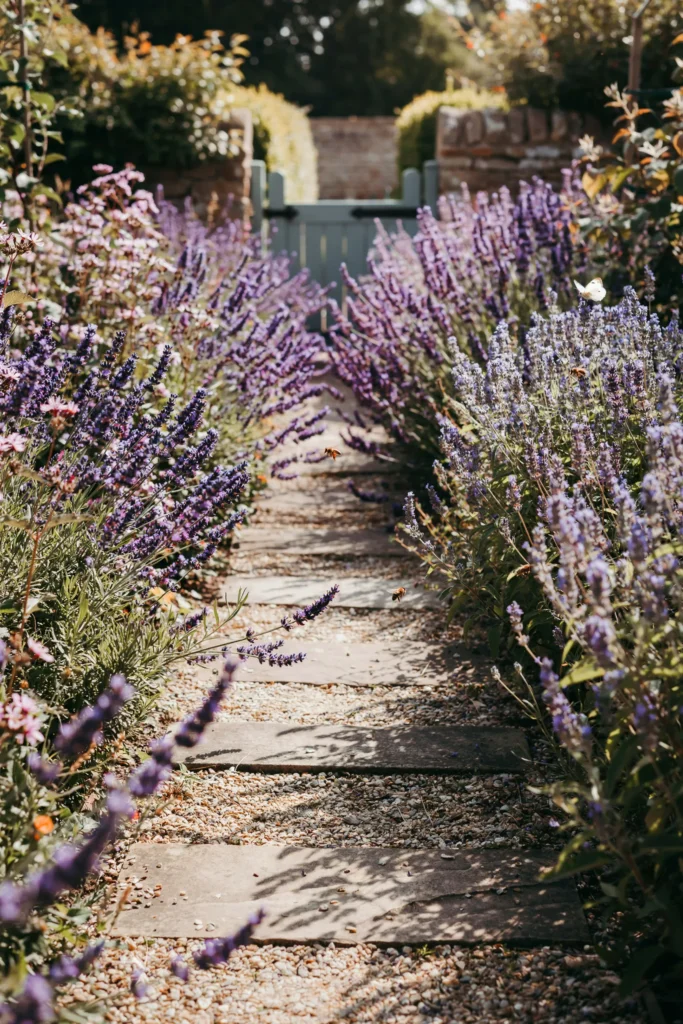
13. Lavender Lined Garden Pathway
Abundant lavender in generous masses planted immediately beside a simple pathway with lavender reaching generously over the path edges and almost meeting above the center at full summer bloom creates the most fragrantly sensory and the most botanically immersive garden pathway available because the lavender-lined path delivers a quality of complete sensory botanical experience, simultaneous visual purple abundance, living bee and butterfly presence, and released aromatic fragrance from brushed stems, that no visually beautiful but sensorially quiet alternative planting can provide for the same completely sensory garden walking experience.
Tip: Plant lavender in genuinely generous masses of at least five to seven plants per side group immediately beside the pathway rather than in individual specimen plants spaced apart, as massed lavender planting creates the most abundant and the most visually and fragrantly immersive corridor effect available, while individually spaced lavender plants along the same path length create a scattered rather than immersive botanical quality that never achieves the same complete sensory enclosure that generous massed planting most completely and most beautifully provides.
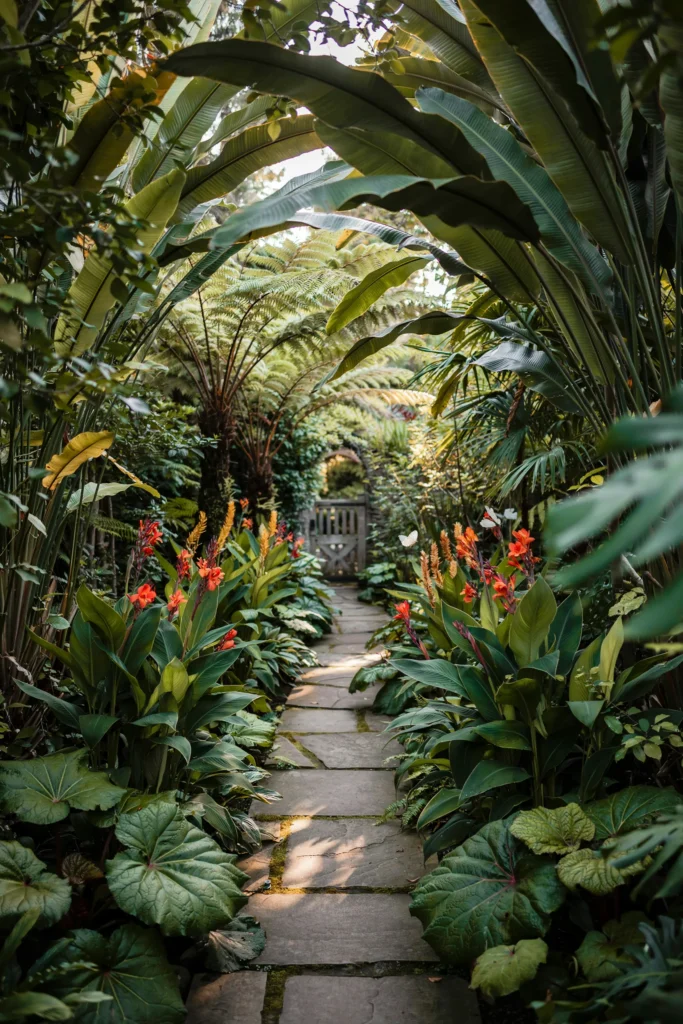
14. Tropical Lush Garden Pathway
A simple stepping stone pathway almost entirely enclosed by abundant tropical planting of banana palms, large-leaved cannas, tree ferns, and gunnera creates the most botanically immersive and the most genuinely exotic residential garden pathway available because the specific experience of walking through a complete tropical botanical canopy of enormous leaves and dramatic architectural plant forms creates the most completely transported and the most genuinely magnificent garden journey available in any residential outdoor space regardless of geographic location or garden size.
Tip: Plant the tropical pathway border plants in a layered structure of progressively smaller plants toward the path edge, with the tallest banana palms and tree ferns at the back, large cannas and gingers in the middle, and lower but still generous ground-level tropical plants at the path edge, as this layered height structure creates the most complete quality of botanical immersion available, surrounding the pathway at every height from ground level to well above head height with continuous tropical botanical abundance.
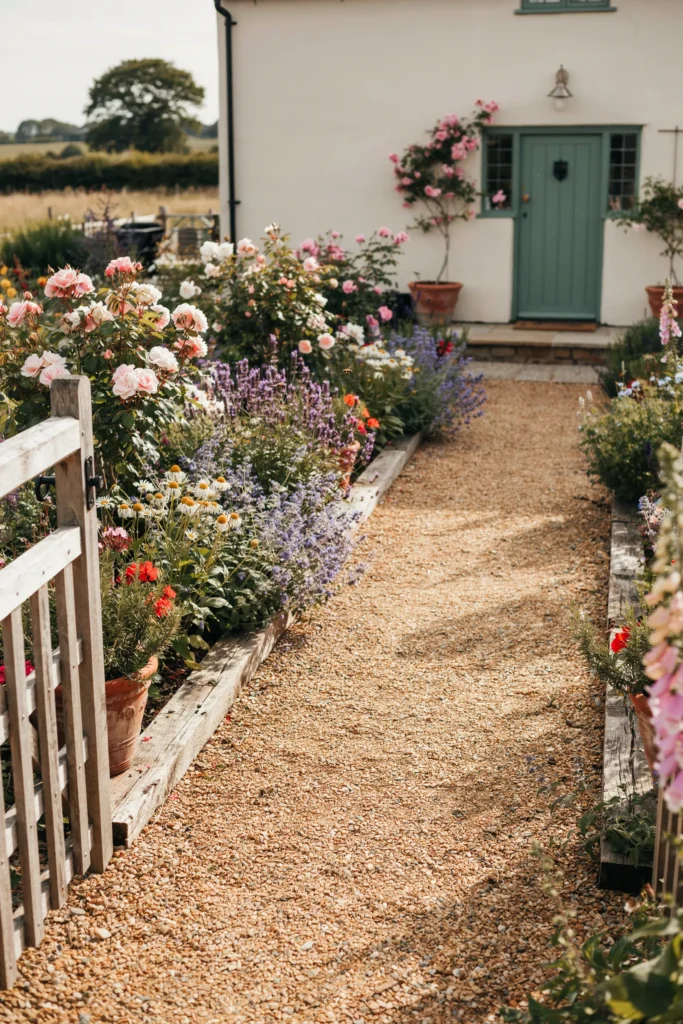
15. Farmhouse Gravel Pathway
Warm buff or honey-tone gravel with rustic timber edging, cottage roses and lavender drifts on each side, and terracotta pots at the gate and front door creates the most warmly domestic and the most genuinely welcoming farmhouse garden pathway available because warm buff gravel’s specific quality of honey-golden tone creates the most warmly welcoming arrival experience available, communicating the specific quality of genuine farmhouse domestic warmth and honest organic welcome that makes every approach along it feel most completely and most warmly like the most beautifully considered arrival home.
Tip: Choose warm buff or honey-tone gravel rather than white, grey, or silver-toned alternatives for a farmhouse garden pathway, as warm-toned gravel creates a quality of organic golden farmhouse warmth that complements the characteristic warm tones of cottage planting, aged timber, and terracotta most naturally and most completely, while cool-toned gravel alternatives create a less organically connected and less genuinely warm farmhouse pathway composition regardless of the warmth and authenticity of the surrounding planting and edging.
16. Secret Garden Pathway
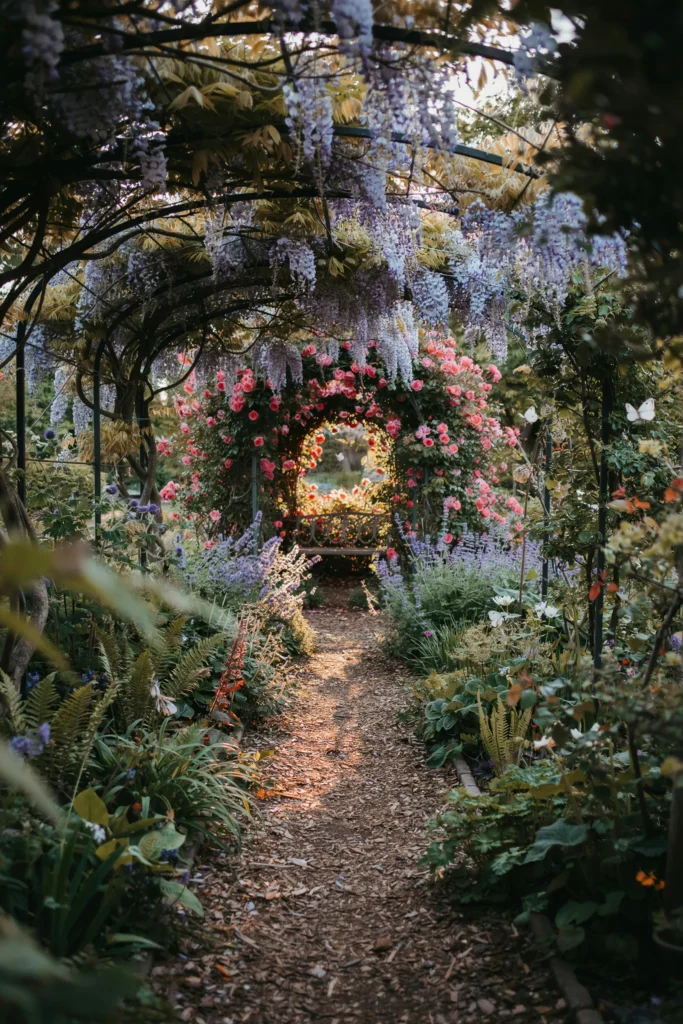
A narrow winding stone or bark path through densely planted borders with plants arching overhead and partially obscuring the destination, with a rose-covered arbor or hidden garden seat glimpsed at the pathway end, creates the most atmospherically enchanting and the most genuinely mysterious garden pathway available because the specific combination of a winding path that partially conceals its destination, botanical overhead enclosure, and dappled filtered light creates the most completely magical and the most genuinely garden-magnificent daily outdoor experience available in any residential garden regardless of its overall size or its total planting budget.
Tip: Install a simple metal or wooden arbor structure at the secret pathway destination and train climbing roses, wisteria, or clematis over it from the installation year, as a plant-covered arbor creates the most compelling and the most atmospherically beautiful secret garden destination available, communicating the specific quality of hidden botanical discovery and genuine garden arrival reward that an unplanted or unstructured destination consistently fails to provide for the same complete quality of authentic secret garden pathway enchantment.
Conclusion
A garden pathway is the outdoor space’s most continuously experienced and the most emotionally consequential design decision because every garden visit begins and ends with a walk along the path, every garden moment is accessed by the path, and the specific quality of every daily garden journey is determined most directly and most completely by the path’s material character, its planting relationship, and its capacity to make every person who walks along it feel most genuinely welcomed, most completely at home, and most warmly and most honestly part of the specific beautiful garden environment the pathway most organically and most completely connects.
The sixteen garden pathway ideas in this post have demonstrated that genuinely beautiful garden pathways are available in every material, every style, every garden scale, and every personal aesthetic preference available in any residential outdoor space. From the most naturally geological flagstone with fragrant thyme joints to the most atmospherically mysterious secret garden path. From the most formally classical box hedge axis to the most tropically immersive botanical canopy. From the most fragrantly sensory lavender corridor to the most artistically personal hand-laid pebble mosaic. From the most organically ancient mossy woodland stones to the most cleanly contemporary large format concrete slabs. Each pathway creates a completely different daily garden journey experience while sharing the same fundamental quality: a path that makes the outdoor space feel most genuinely considered, most warmly welcoming, and most completely alive with the specific daily beauty that only a genuinely and most thoughtfully designed garden pathway most honestly and most completely provides.
Choose the garden pathway idea that most genuinely fits your garden’s character, your outdoor space’s aesthetic, your planting preferences, and your personal vision of the most beautifully welcoming outdoor journey available in your specific garden. Install it with genuine care for the material quality, the planting relationship, the edging precision, and the destination that together make the pathway most completely and most warmly beautiful. And discover what every genuinely beautiful garden pathway ultimately and most consistently delivers: the specific and extraordinary quality of a daily garden experience so completely and so warmly considered that every walk along it feels most genuinely and most completely like the most beautifully natural and the most honestly welcoming garden journey available anywhere in the outdoor world.