The Japanese garden is not simply a style of garden design. It is a philosophy of how an outdoor space can be used to restore the human mind, deepen the human connection to the natural world, and create an environment of genuine beauty that improves with every season, every year, and every decade of patient cultivation and care.
Japanese garden design has been refined over more than a thousand years of horticultural, philosophical, and aesthetic development, drawing from Zen Buddhist principles of simplicity and mindfulness, Shinto beliefs about the sacred presence of natural forms, and the Japanese aesthetic concepts of wabi, the beauty of imperfection and transience, mono no aware, the bittersweet awareness of the passage of time, and ma, the meaningful beauty of empty space. Together these philosophical foundations produce an approach to outdoor space design that is simultaneously the most demanding in its precision and the most calming in its results.
A Japanese garden does not compete with the senses. It does not overwhelm with color, crowd with planting, or entertain with complexity. Instead it offers a carefully considered reduction of the outdoor space to its most essential and most genuinely beautiful elements, raked gravel and natural stone, bamboo and moss, still water and koi, stone lanterns and stepping paths, Japanese maple and fern, wisteria and the sound of water, and through that reduction creates an outdoor environment of extraordinary sensory calm that the rest of the garden world, in all its colorful seasonal abundance, frequently fails to provide.
These 14 Japanese garden ideas cover every element of the Japanese garden tradition from the most minimalist and most meditative to the most botanically lush and most seasonally spectacular. Every idea draws from genuine Japanese garden principles and every idea is achievable in gardens of every size, every climate, and every budget level. What they all share is the same fundamental Japanese garden quality: the quality of making the person who spends time within them feel genuinely, completely, and lastingly calm.
1. Zen Rock and Gravel Garden
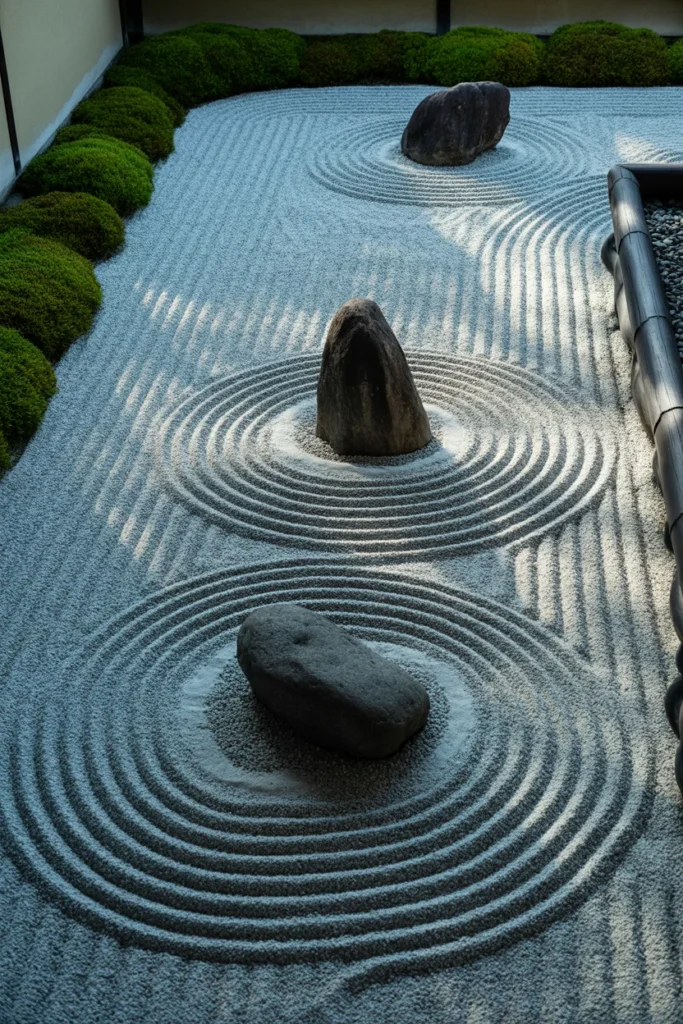
A Zen rock and gravel garden is the most distilled and most philosophically pure expression of the Japanese garden aesthetic available because it achieves its most complete beauty through the most radical reduction of garden elements to their absolute essentials. Gravel, stone, moss, and the human act of raking. No water, no flowers, no trees. Only the fundamental Japanese garden materials and the contemplative practice of arranging them with deliberate and mindful intention.
Tip: Rerate the complete Zen garden pattern after every rainfall and every windstorm rather than attempting to repair damaged sections of the existing pattern. A partially damaged raked pattern that has been locally repaired always shows the repair boundary as a subtle discontinuity in the raking rhythm. A completely fresh pattern raked after each disturbance is always more beautiful, more consistent, and more genuinely meditative in its completeness than the most carefully repaired original pattern. The impermanence of the raked pattern, its continuous creation and destruction and recreation, is one of its most genuinely Zen qualities.
2. Japanese Maple Garden Focal Point
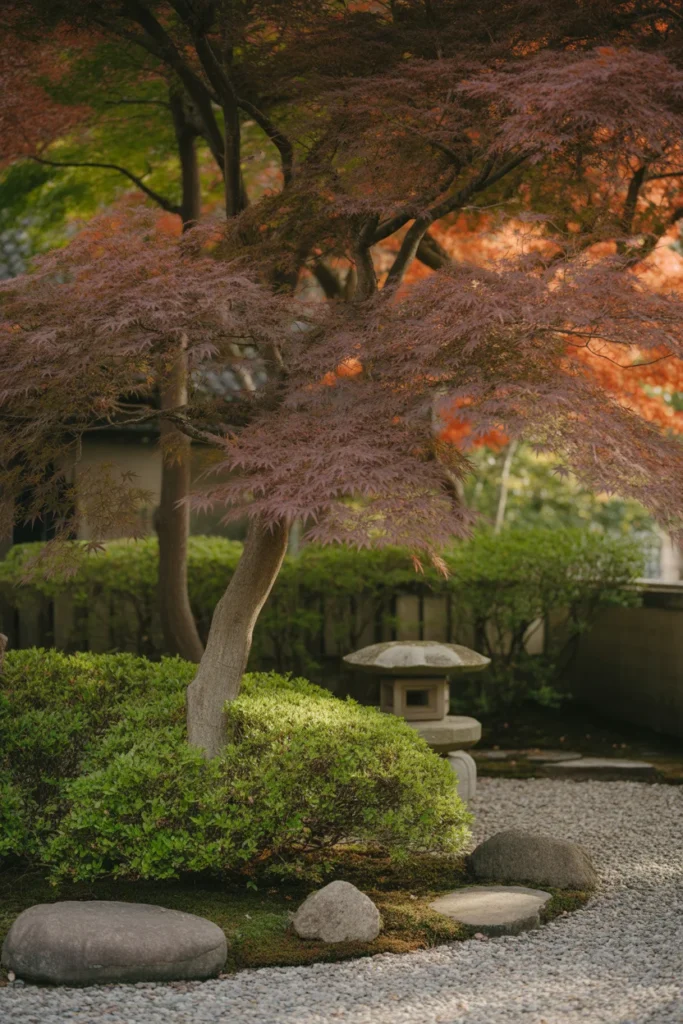
A Japanese maple positioned as a Japanese garden focal point is the garden design decision with the longest seasonal return on investment available in any temperate climate garden. The maple offers four completely distinct seasonal displays: delicate spring leaf unfurling, full summer canopy shade, breathtaking autumn color, and elegant bare winter branching structure. No other single garden focal tree delivers such continuous and continuously varied garden beauty across every season of the year.
Tip: Position the Japanese maple focal point where it can be viewed from inside the home through a window as well as from within the garden itself for the maximum daily return on the maple’s extraordinary seasonal beauty. A Japanese maple that is only visible from within the garden is available as a garden experience only when the garden is actively visited. A Japanese maple visible from an interior window is available as a contemplative garden experience every moment of every day, including autumn mornings when the bedroom window view of the maple in full color makes every morning more beautiful than it would otherwise be.
3. Bamboo Screen Garden Wall
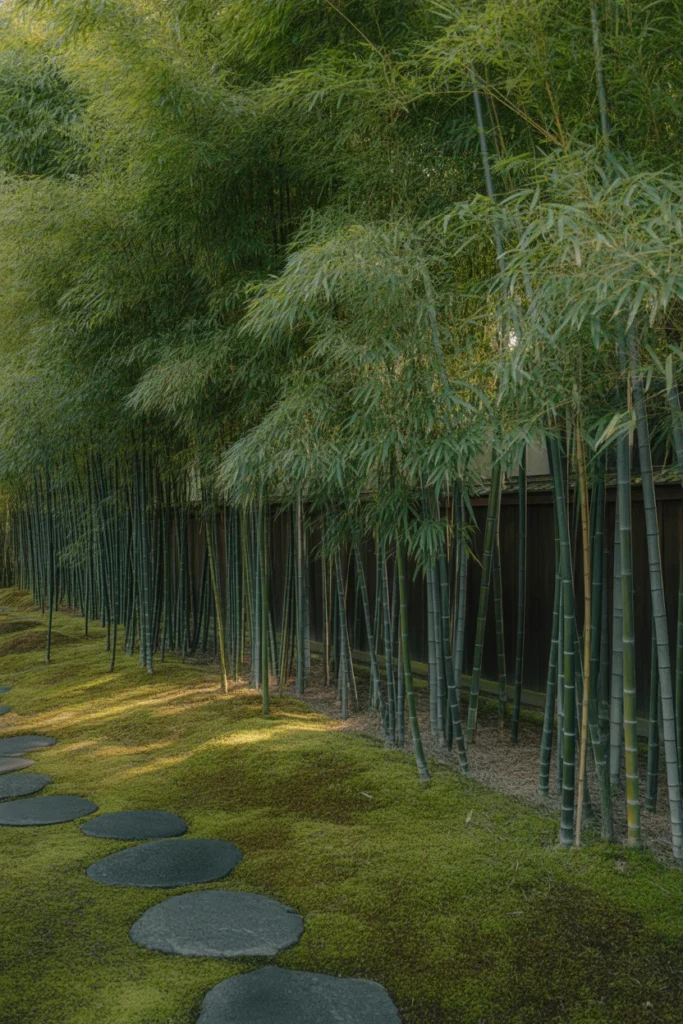
A bamboo screen creates the most beautifully alive garden boundary available because it moves, whispers, breathes, and grows in ways that fences, walls, and static garden screens can never replicate. The rhythmic whisper of bamboo leaves in a gentle breeze is one of the most immediately calming natural sounds available in any garden, and a bamboo screen garden wall delivers that sound along with complete visual privacy in a living material boundary of genuine natural beauty.
Tip: Plant clumping bamboo species rather than running bamboo for all residential garden screen applications without exception. Running bamboo spreads via underground rhizomes that can travel three to five meters annually in favorable conditions and will invade neighboring gardens, garden beds, and structures if not contained by a buried root barrier of at least sixty centimeters depth. Clumping bamboo spreads very slowly from the original planting clump and requires no root barrier, making it the safe, manageable, and neighbor considerate choice for any residential bamboo garden screen.
Read More:-
16 Fire Pit Ideas That Make Your Backyard the Best Seat in the House
13 Pebble Stone Landscaping Ideas That Turn Every Garden Into Something Special
20 Coastal Kitchen Decor Ideas That Bring the Beach Into Your Home
4. Koi Pond Garden Design
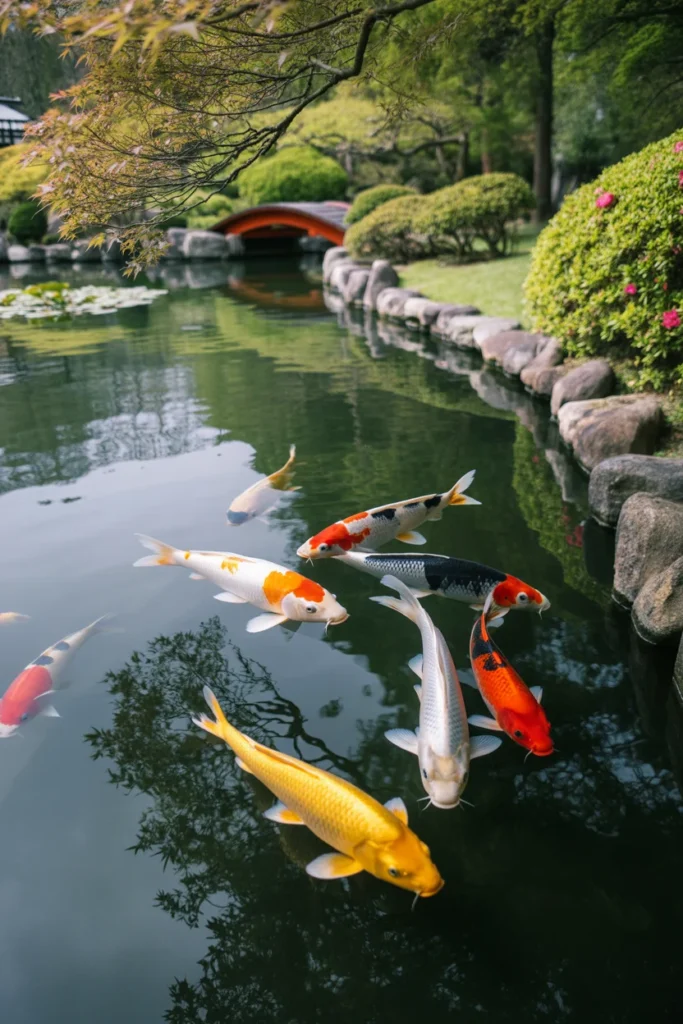
A koi pond is the Japanese garden element that is most continuously alive and most genuinely interactive because the koi fish within it respond to the garden visitor’s presence, gathering at the pond edge at feeding time and creating a direct living connection between the garden and the person in it that no static garden element can replicate. A koi pond watched for ten minutes is never the same ten minutes twice.
Tip: Install a pond filtration system sized for twice the actual pond volume rather than the exact pond volume for consistently clear water quality that allows the koi to be genuinely visible from above. Koi produce significant biological waste and a filtration system sized precisely for the pond volume will struggle to maintain clear water as the fish grow and as the pond matures. A filtration system with double the required capacity maintains clear and healthy water easily regardless of fish growth and seasonal biological load variations, making the koi pond genuinely beautiful and genuinely healthy throughout the complete year.
5. Stone Lantern Garden Path
A stone lantern lined garden path is the Japanese garden element that is most beautiful at the precise moment of transition between day and evening, when the natural daylight fades and the warm amber glow of the lanterns emerges as the garden’s primary light source, transforming a daytime path through a garden into an evening procession through a sequence of warm pools of amber light separated by gentle darkness. That transitional moment, when the garden becomes most lantern beautiful, is the stone lantern path’s most genuinely Japanese quality.
Tip: Encourage moss and lichen growth on stone garden lanterns by applying a diluted solution of plain yogurt or buttermilk to all stone lantern surfaces with a paintbrush and then keeping the surfaces consistently moist for several weeks. The live cultures in the yogurt or buttermilk colonize the stone surface and establish a moss and lichen growth that accumulates over subsequent seasons into the beautiful weathered green coverage that gives traditional Japanese stone lanterns their most authentic and most aesthetically valued aged character.
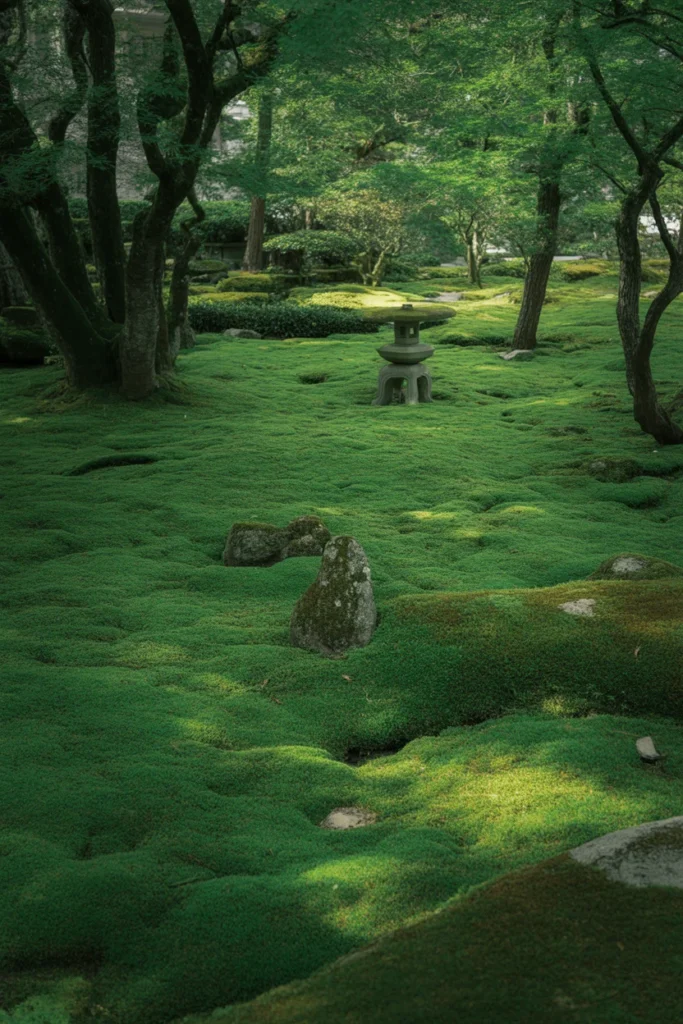
6. Moss Garden Carpet Design
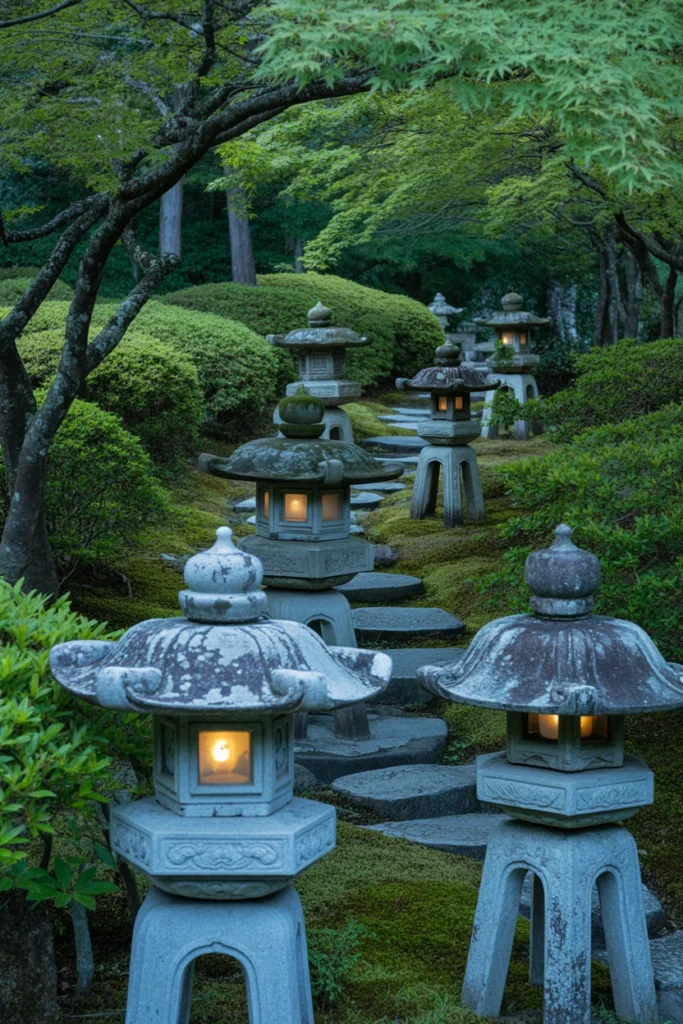
A Japanese moss garden carpet is the outdoor ground surface that makes the color green feel like the most profound and most beautiful color in the natural world because moss green at its most luminous, backlit by morning light filtering through tree canopy above, has a quality of living warmth and organic beauty that no manufactured ground cover and no other living plant can replicate at the same visual scale and completeness.
Tip: Remove all fallen leaves from the moss garden surface promptly after they fall using a soft bamboo or natural bristle brush rather than a leaf blower. A leaf blower set to any power level will displace the moss carpet sections it contacts, creating bare patches that require months to reestablish. A soft brush removes fallen leaves gently without disturbing the moss surface attachment, and the daily or twice weekly brushing practice during autumn leaf fall is itself one of the most genuinely meditative garden maintenance activities available in any Japanese garden setting.
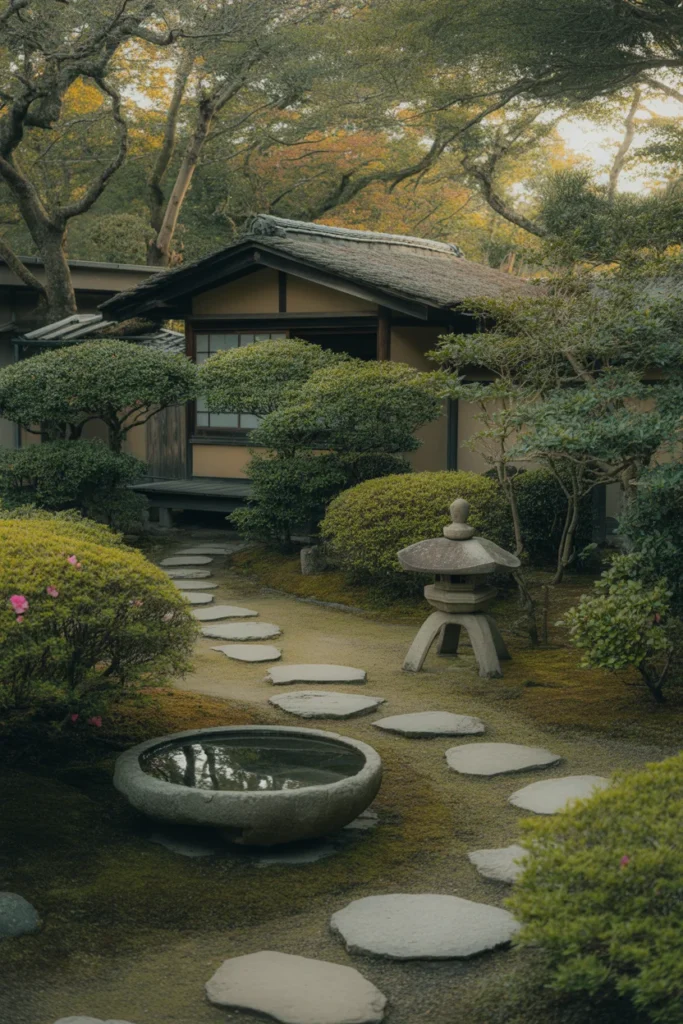
7. Japanese Tea Garden Setup
A Japanese tea garden is the garden that does not simply look beautiful but actively prepares the mind for a quality of experience that beauty alone cannot provide. Every element of the roji garden path, the tsukubai water basin, the stone lantern, and the rustic tea house pavilion is designed to encourage a specific mental transition from the ordinary world to the world of heightened sensory awareness and genuine present moment attention that the tea ceremony most completely requires and most completely rewards.
Tip: Design the roji garden path to the tea house so that the tea house itself is completely invisible from the garden entrance and is revealed only gradually as the path winds toward it through the surrounding planting. The concealed approach is not merely a design device but a philosophical one: it extends the mental preparation journey, prevents the mind from arriving at the destination before the body does, and ensures that the first complete view of the tea house is experienced as a genuine arrival rather than a prolonged approach to something already fully visible and therefore already mentally processed.
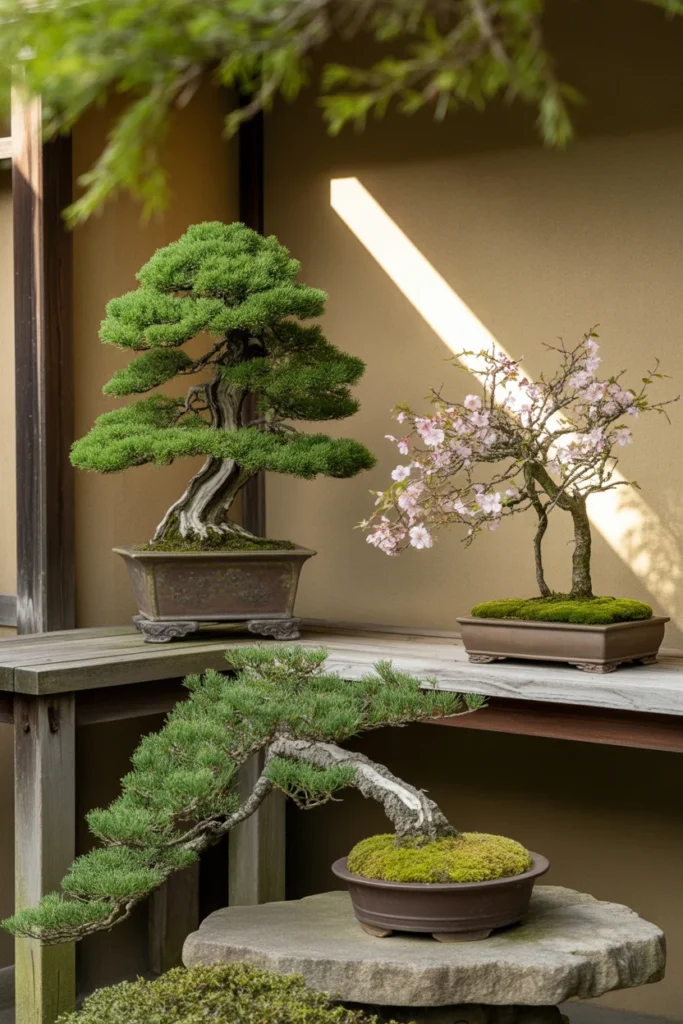
8. Bonsai Display Garden Corner
A bonsai garden corner is the place in the Japanese garden where the largest ideas about the relationship between human intention and natural form are expressed through the smallest and most carefully cultivated living things. Each bonsai in the collection represents years or decades of patient human attention applied to a living tree, and that accumulated patient attention is the bonsai’s most genuinely valuable and most philosophically interesting quality.
Tip: Display bonsai trees at eye level or slightly below rather than above eye level for the most respectful, most beautiful, and most horticulturally correct bonsai viewing experience. Bonsai displayed above eye level are viewed from below, which obscures the branching structure, hides the nebari surface root spread, and prevents the viewer from appreciating the complete composition of the bonsai from the perspective for which it was designed. Bonsai at or slightly below eye level reveal their complete design from the viewer’s natural eye position and create the most genuine and most complete bonsai aesthetic experience.
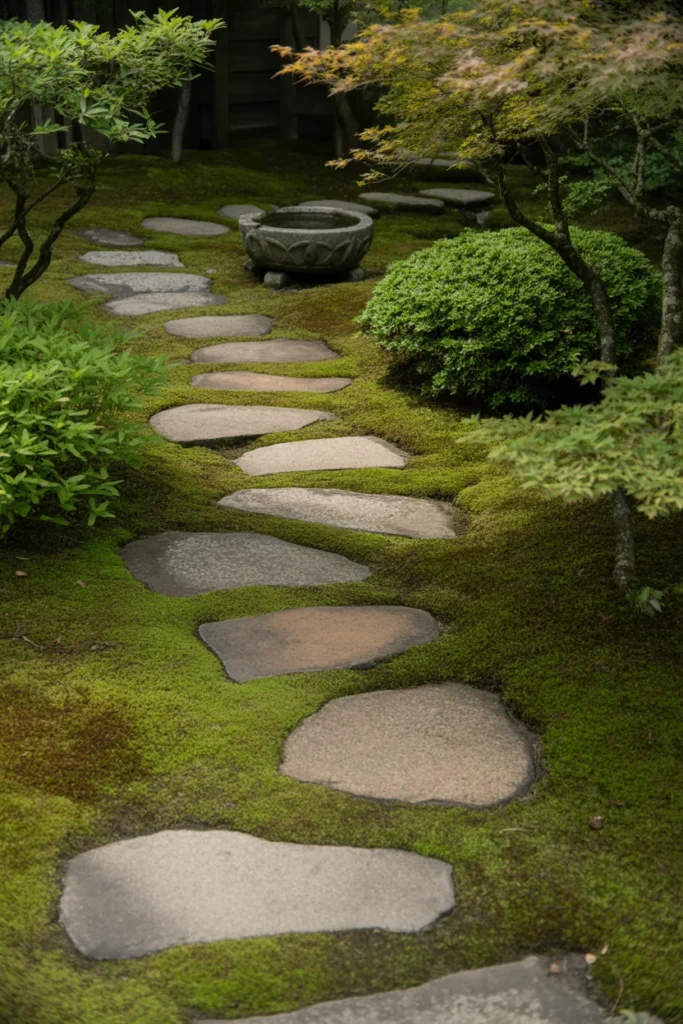
9. Stepping Stone Garden Path
A Japanese stepping stone path is the garden walkway that is most genuinely contemplative because the deliberate irregular stone spacings require a quality of physical attention and present moment awareness from the person walking it that a uniformly paved path completely eliminates. The stepping stone path makes the act of walking through the garden a form of moving meditation, and moving meditation is one of the most genuinely Japanese contributions to the art of living well in the natural world.
Tip: Vary stepping stone sizes throughout the path rather than using uniformly sized stones for a more organic and more genuinely Japanese stepping stone path character. A path of uniformly sized stepping stones reads as installed. A path of stepping stones in naturally varied sizes and shapes reads as found and assembled from the garden’s natural landscape, which is precisely the quality of organic collected authenticity that the Japanese stepping stone path tradition most values and most beautifully achieves.
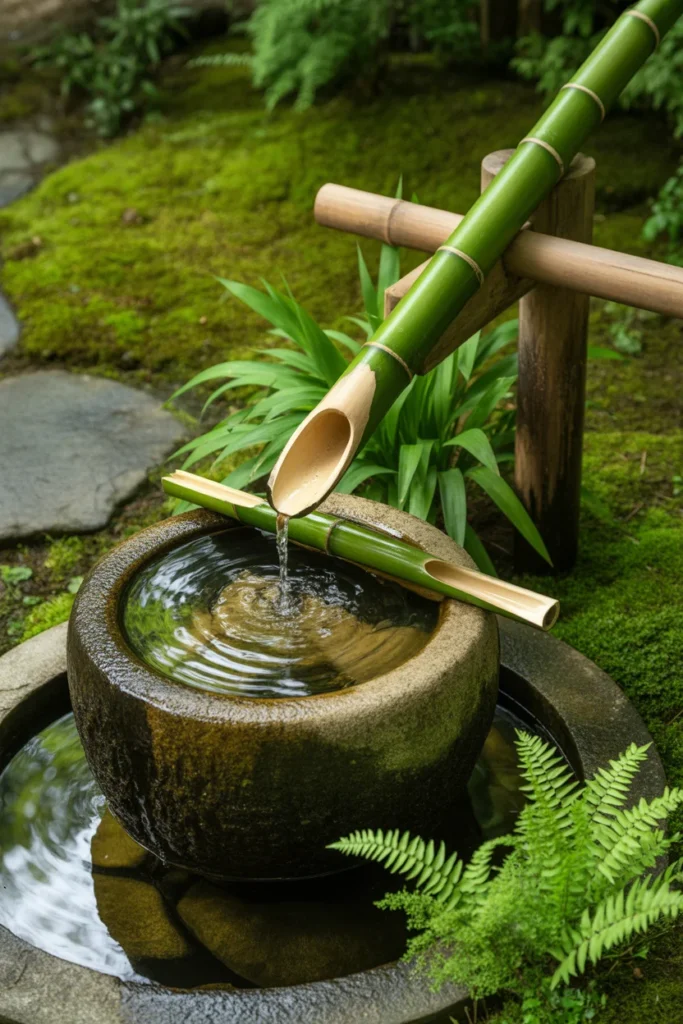
10. Bamboo Water Feature Garden
A shishi odoshi bamboo water feature gives the Japanese garden its most distinctive and most sensorially complete sound element, the rhythmic clacking of bamboo on stone that has been the signature sound of Japanese gardens for centuries. That sound is not simply pleasant to hear. It is specifically designed to punctuate silence, to make the silence between sounds more noticeable and more valued, and in doing so to make the garden visitor more genuinely present in the moment of listening than they were before the sound occurred.
Tip: Adjust the bamboo water feature flow rate so the bamboo fill and tip cycle completes every thirty to sixty seconds for the most meditative and most beautiful rhythm. A cycle shorter than thirty seconds produces a rapid repetitive clacking that loses its meditative quality and becomes background noise. A cycle longer than sixty seconds creates an anticipatory tension in the listener that is more anxious than calming. The thirty to sixty second cycle produces the rhythm that the Japanese garden tradition discovered over centuries is most genuinely calming and most beautifully meditative.
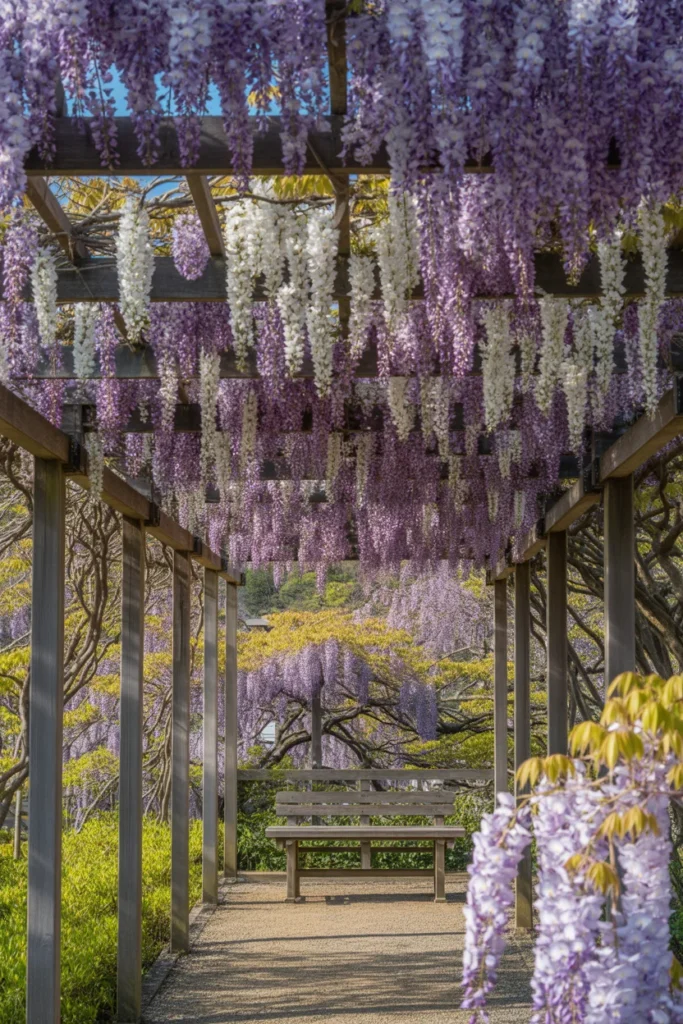
11. Wisteria Pergola Japanese Garden
A wisteria covered pergola in a Japanese garden is the garden structure that delivers the most spectacular and most universally breathtaking seasonal display available to any temperate climate garden in the two weeks of its spring bloom peak, and the most patient gardener is always the one who eventually stands beneath the most extraordinary wisteria canopy because wisteria’s full flowering glory requires years of patient training and pruning before it reaches its most spectacular expression.
Tip: Prune wisteria twice annually for maximum flower production, immediately after the spring bloom to remove the spent flower racemes and reduce the current year’s long shoots to five or six leaves, and again in late winter to reduce the same shoots further to two or three buds. This twice annual pruning regime encourages wisteria to produce the maximum number of flowering spurs on the shortest and most accessible woody shoots, resulting in the densest and most spectacular flower display available from the vine’s full genetic potential.
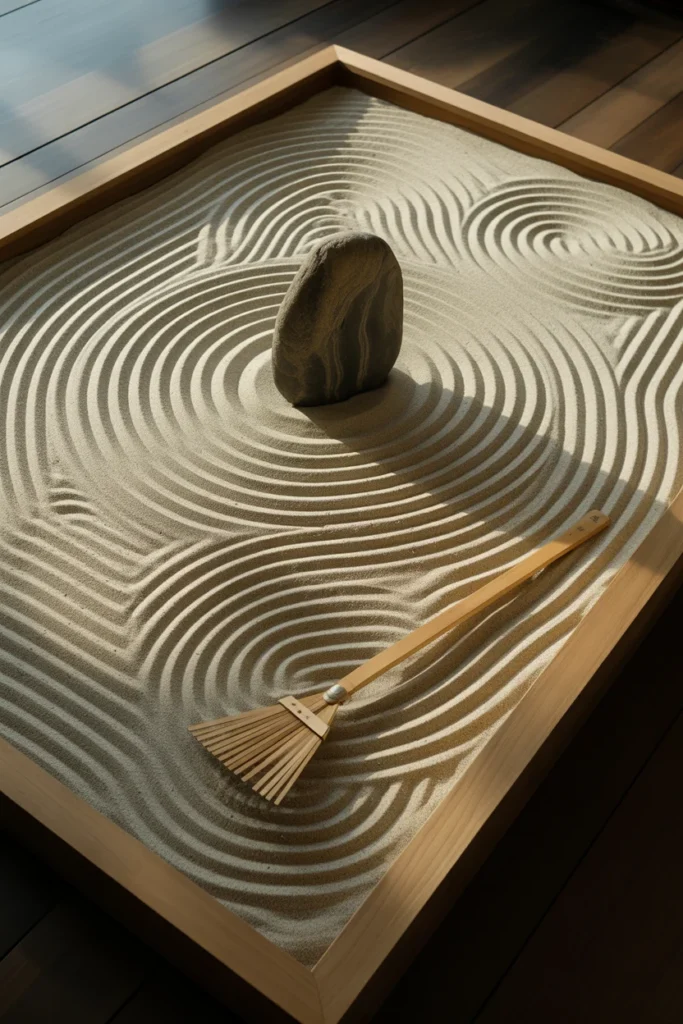
12. Raked Sand Meditation Garden
A raked sand meditation garden is the outdoor space that most directly provides the mental benefits of meditative practice to people who have not yet established a sitting meditation practice, because the act of raking the sand pattern requires exactly the quality of focused present moment attention that meditation practices develop, and provides that quality of focused attention as a natural consequence of the physical act rather than as a discipline that must be separately practiced and separately maintained.
Tip: Rake the meditation garden sand at the same time each day for the most consistent and most deeply meditative benefit from the daily raking practice. The consistent daily timing establishes the sand raking as a genuine contemplative practice with its own ritual quality rather than a garden maintenance task that happens when remembered. Morning raking before the day begins is the most traditionally appropriate and most genuinely calming time, as the undisturbed sand reflects the quality of the new day’s possibilities and the fresh raked pattern represents the clean beginning that morning most naturally provides.
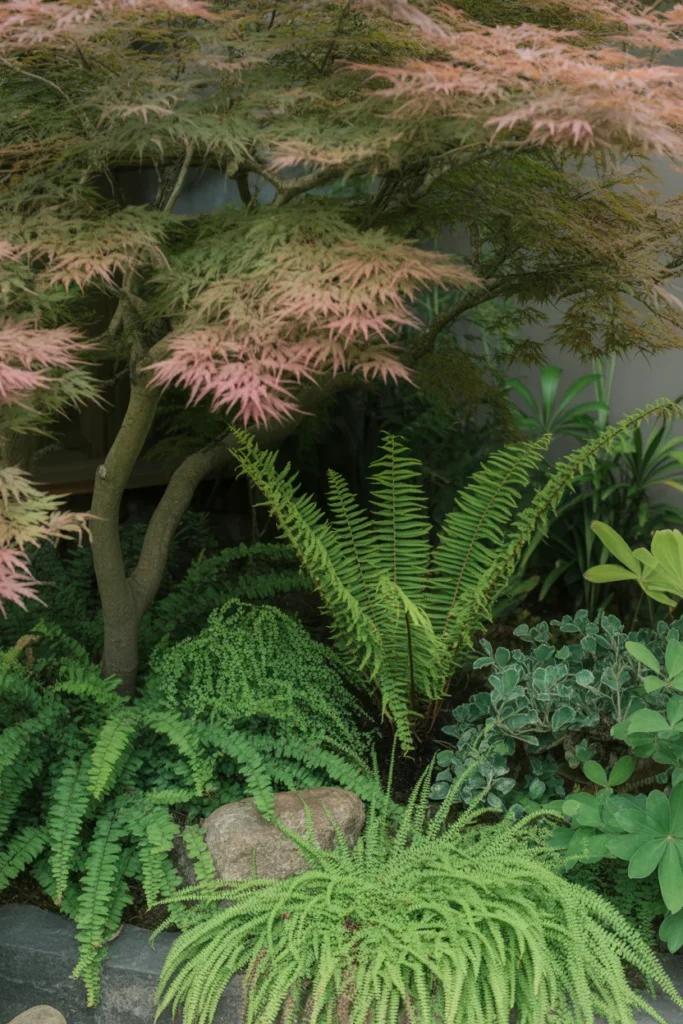
13. Japanese Maple and Fern Garden
A Japanese maple and fern garden is the most botanically generous and most naturally layered Japanese garden planting design available for shaded garden conditions because it combines two of the most beautiful and most Japanese of all garden plants in a planting composition where each genuinely benefits the other, the maple providing the dappled filtered light that ferns most require, and the ferns providing the lush organic ground layer that makes the maple’s elevated presence most dramatic and most beautiful.
Tip: Amend the soil in the Japanese maple and fern garden area with a generous quantity of organic matter, composted bark, well rotted leaf mould, or composted garden waste, to a depth of at least thirty centimeters before planting, for the moisture retaining and nutritionally rich soil conditions that both Japanese maples and ferns require for their most vigorous and most beautiful long term garden performance. Japanese maples and ferns share identical soil preference needs that standard garden soil rarely provides naturally, and the soil amendment investment made before planting is the most important single gardening decision for the long term health and beauty of the combined planting.
14. Stone Bridge Garden Water Crossing
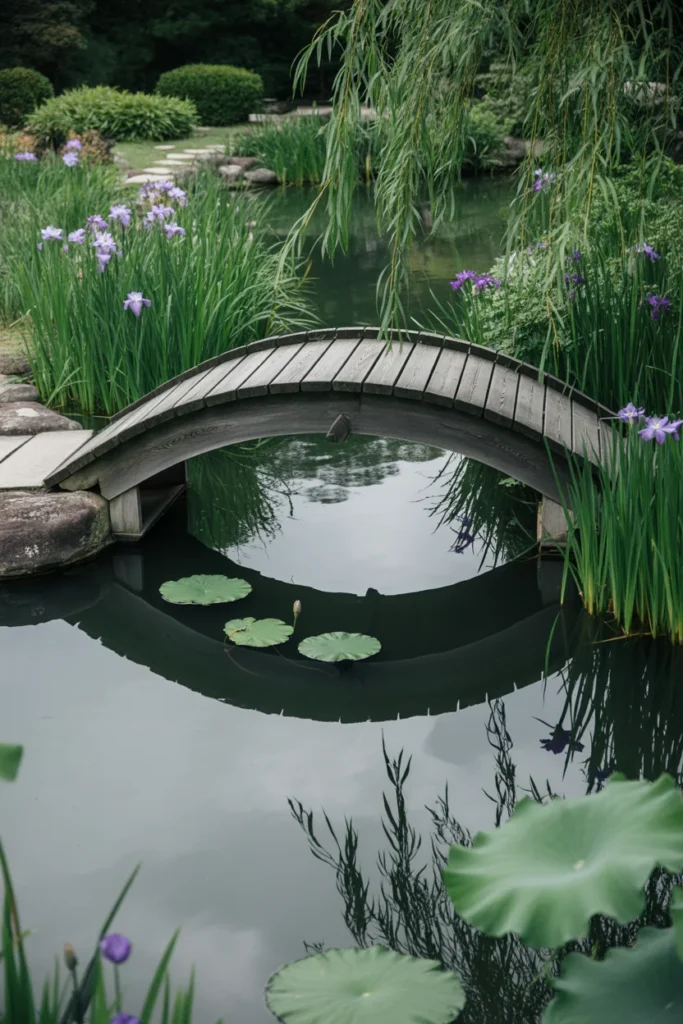
A stone bridge crossing a garden stream or koi pond is the Japanese garden focal element where the bridge and its water reflection together create something more complete and more beautiful than either could be alone, and that completeness through reflection, that understanding that every beautiful thing has an equal and opposite version of itself visible in still water, is one of the most genuinely Japanese ideas about beauty, form, and the nature of completeness that the garden tradition has ever expressed.
Tip: Position the stone bridge at the narrowest point of the garden water feature for the most elegant proportional bridge arc and the most structurally simple bridge construction. A bridge spanning the narrowest crossing point requires the shortest bridge length, the shallowest arc, and the simplest structural approach of any crossing position, making the bridge more elegant in proportion, more economical in construction, and more genuinely Japanese in its preference for elegant simplicity over elaborate engineering complexity. The most beautiful Japanese garden bridges are almost always the simplest ones.
Conclusion
A Japanese garden does not simply happen. It is created through patient, deliberate, and philosophically informed design decisions made with a genuine understanding of what the Japanese garden tradition values most, simplicity, natural material honesty, seasonal awareness, meditative calm, and the particular Japanese quality of finding the most beautiful things in the most ordinary natural materials when those materials are arranged with complete care and intention.
Every idea in this list is a different entry point into the Japanese garden tradition. The Zen rock garden for the person who seeks the most meditative and most minimalist outdoor space available. The koi pond for the person who wants their garden to be most genuinely alive. The wisteria pergola for the person who is willing to wait years for the most spectacular seasonal reward any garden can provide. The moss carpet for the person who understands that the most beautiful green is the one closest to the ground. The stone lantern path for the person who wants the garden to be most beautiful at the precise moment when the day and the evening change places.
Begin with the Japanese garden element that speaks most genuinely to the quality of outdoor calm you most deeply need. Plant the Japanese maple. Rake the sand garden. Position the stone lantern. Set the stepping stones. Train the wisteria. Establish the bamboo screen. Plant the ferns beneath the maple canopy. Install the shishi odoshi and listen for the first time to the sound it makes when the bamboo tips and strikes the stone and the garden tells you, in the most genuinely Japanese way possible, exactly where you are and exactly when you are and that both of those things are always exactly right.
Read More:-
23 Tan Bedroom Decor Ideas That Feel Warm, Cozy & Effortlessly Chic
27 Small Living Room Decorating Ideas That Make Every Inch Count
17 Bathroom Closet Ideas That Make Every Morning Run Smoother